
Forget the crowded tourist traps. There's a world of ancient, sacred beauty hidden deep within forgotten forests, places locals guard with reverence. This isn't just about discovery; it's about connecting with history, nature, and spirit in a way few ever experience. ---
The air was thick with the scent of damp earth and blooming jasmine, a symphony of cicadas thrumming through the dense canopy above. My guide, a weathered man named Pak Cok, paused, his hand raised. “Almost there,” he whispered, a knowing smile crinkling the corners of his eyes. We’d been trekking for hours, scrambling over slippery roots and through ankle-deep mud, far from any paved road or marked trail. My legs ached, my clothes clung to me with tropical humidity, but a thrill, sharp and electric, buzzed through my veins. This was it. The moment I’d been chasing for years: the promise of a place untouched, unseen, a secret whispered only amongst the oldest villagers.
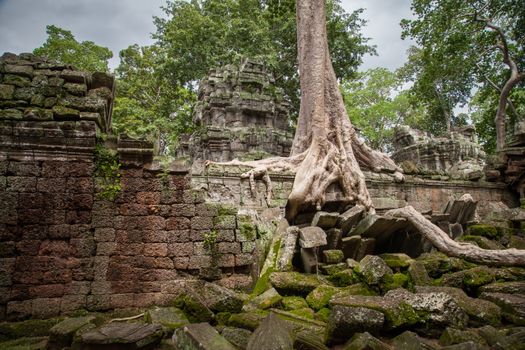
Then, through a sudden break in the foliage, it appeared. Not a grand, sprawling complex, but a cluster of moss-covered stones, intricately carved, rising from the forest floor like ancient, petrified beings. Sunlight, dappled and ethereal, filtered through the leaves, illuminating a forgotten Buddha head, its serene face gazing into eternity. There was no entrance fee, no souvenir stand, no selfie stick-wielding crowds. Just silence, the hum of nature, and the palpable weight of centuries. It was a moment of pure, unadulterated discovery, a feeling that has since driven my quest for the world’s most elusive, breathtaking hidden temples – the ones locals don't want tourists to know about.
And for good reason. These aren't just ruins; they are living, breathing spiritual sites, often still tended by a handful of devoted locals. Their secrecy is their protection, preserving their sanctity, their magic, and their raw, untamed beauty. But with the right approach – one steeped in respect, patience, and a genuine desire for connection – you can find them. And trust me, the reward is beyond anything a guidebook could ever promise.
The Allure of the Unseen: Why These Temples Hold Such Power
What makes a hidden temple so much more captivating than its famous, well-trodden counterparts? It’s the journey, yes, but it’s also the profound sense of intimacy and reverence that surrounds these places. Angkor Wat is magnificent, Borobudur breathtaking, but they are also spectacles. The hidden temples are sanctuaries.
Imagine the feeling of being the only soul to witness ancient carvings emerge from a curtain of vines, the only one to hear the wind whisper through forgotten prayer flags, or to feel the cool, smooth stone beneath your fingertips, undisturbed for generations. This isn't just sightseeing; it's time travel. It’s a communion with history, with nature, and with the spiritual essence of a place before it becomes a commodity.
These sites often predate recorded history, or were abandoned during periods of conflict or natural disaster, only to be slowly reclaimed by the very earth from which they rose. They tell stories not just of gods and kings, but of resilience, of nature's relentless power, and of the enduring human spirit. They are a stark reminder of what once was, and what, with careful stewardship, can remain.
The Art of Discovery: How to Uncover What's Hidden (Respectfully)
Finding these temples isn't about following Google Maps – often, they aren't even on Google Maps. It’s an adventure in itself, demanding a blend of detective work, intuition, and above all, respectful engagement with local communities.
- Befriend the Locals, Earn Their Trust: This is paramount. Start by staying in smaller, family-run guesthouses or homestays in villages far from major tourist hubs. Engage with your hosts, learn a few phrases in the local language, share a meal, and show genuine interest in their culture and history. Don't immediately ask, "Where are your secret temples?" Instead, listen to their stories, ask about local legends, sacred places, or places of natural beauty. If trust is built, they might, just might, hint at something. Often, they’ll want to share their heritage, but only with someone they feel will respect it.
- Look for Clues, Not Directions: Sometimes, you'll see a small, weathered shrine by a stream, or an unusual stone carving used as a fence post. These are hints. Ask about them. Locals often repurpose ancient stones or maintain small, seemingly insignificant altars that are connected to larger, hidden sites deeper in the forest.
- Hire a Local Guide (When Offered): If a local offers to take you, consider it a privilege. This isn't just about navigation; it's about cultural exchange and direct support for the community. Agree on a fair price beforehand, and understand that their knowledge is invaluable. They know the safe paths, the local etiquette, and the stories behind the stones. This is not a "tour guide" in the traditional sense, but a guardian of local heritage.
- Satellite Maps & Old Topographical Charts: Sometimes, if you know what to look for, satellite imagery can reveal anomalies in dense forest – a clearing, an unusual geometric shape, or a cluster of stones. Cross-reference this with old maps, which might show abandoned villages or ancient trails. This is a last resort and should always be combined with local knowledge.
- Patience is Your Greatest Tool: These secrets aren't revealed on demand. Sometimes it takes days, or even multiple trips to a region, to gain the trust and understanding needed. Embrace the slow travel, the quiet observation, and the serendipity of discovery.
My Top 3 Unforgettable, Off-Grid Temple Discoveries (Composite Experiences)
While I can't give exact GPS coordinates for places locals have entrusted me with – that would betray their trust and undermine the very essence of respectful travel – I can paint a vivid picture of the types of experiences waiting for you. These are composites, inspired by real discoveries, to give you a taste of the magic.
1. The Whispering Sanctuary of Lumina (Northern Laos/Thailand Border)
- The Journey: My journey to what I've dubbed "The Whispering Sanctuary" began in a remote village nestled in the Golden Triangle. After days of helping a local family with their rice harvest and sharing stories over weak, sweet tea, the village elder, a man with eyes that held centuries of wisdom, finally gestured towards the dense jungle. "Follow the old hunter's trail, past the waterfall where the spirits bathe," he murmured. It was a three-hour hike, uphill, through thick bamboo groves and across rushing streams. The air grew cooler, heavier, and the sounds of the village faded, replaced by the rustle of leaves and the distant call of exotic birds.
- The Discovery: The trail eventually opened into a small, natural clearing. There, almost completely swallowed by moss and massive tree roots, stood three stupas, their once-white plaster now a mottled green and grey. What truly struck me was the silence, broken only by a gentle, constant hum – the "whispering" of the wind through ancient chimes hung by locals from low branches. In the center, a small, weathered stone altar held fresh offerings of flowers and rice. It was clear this place was still revered, still visited. I spent an hour there, meditating, feeling the profound peace.
- Cost/Details: No official entrance fee. I paid my guide (the elder's grandson) 500,000 LAK (approx. $25 USD) for his time and knowledge, plus brought gifts for his family. The experience was priceless. Proper hiking boots, insect repellent, and plenty of water are essential. Be prepared for leeches.
2. The Emerald Serpent Shrine (Central Java, Indonesia)
- The Journey: Deep within a nature reserve, not far from a famous volcano, lies a temple that locals believe is guarded by ancient spirits. My guide, a young man named Adi who worked as a park ranger, agreed to take me after I spent a day volunteering with a local conservation project. The path was barely discernible, a tangle of vines and mud, leading downwards into a valley where the air was thick with mist and the smell of volcanic earth. We navigated by following a narrow, gurgling stream, its waters a vibrant emerald green from mineral deposits.
- The Discovery: Suddenly, the stream widened into a small pool, and from the misty banks, a series of intricately carved stone blocks emerged. These weren't grand structures, but rather a collection of relief carvings depicting coiled serpents, guardians of water and wisdom, seemingly rising from the earth itself. One large, flat stone served as an altar, perpetually damp, with fresh incense sticks smoking gently. The sound of a hidden waterfall echoed, adding to the mystical atmosphere. It felt like stepping into an ancient myth.
- Cost/Details: No formal cost, but I gave Adi a generous tip of 300,000 IDR (approx. $20 USD) for his unofficial guiding and support for his conservation work. Bring quick-drying clothes, sturdy sandals or water shoes, and a waterproof bag for electronics. The ground is often slippery.
3. The Sunken City Altar (Tonle Sap Lake Region, Cambodia)
- The Journey: This one required a different kind of transport. From a floating village on the edge of Tonle Sap Lake, I hired a local fisherman and his small, long-tail boat. The journey was dictated by the seasons – only during the deep dry season, when the lake waters receded significantly, could this place be reached. For hours, we navigated through a maze of submerged forests, the skeletal remains of trees reaching out of the water like gnarled fingers.
- The Discovery: As the water level dropped further, a small island of dry land appeared, previously hidden beneath the lake. And there, partially buried in the cracked earth, was a single, remarkably preserved sandstone pedestal, adorned with faded but still discernible carvings of Apsara dancers. Around it, scattered and broken, were fragments of other structures, hinting at a larger temple complex now lost to the lake. It was a poignant, melancholic sight – a testament to the impermanence of human endeavor against the might of nature. The fisherman explained that this was once part of a "sunken city," a forgotten outpost of the Khmer Empire.
- Cost/Details: Boat hire was 40 USD for the half-day. This is a sensitive ecological area, so ensure your boatman is respectful of the environment. Bring sun protection, plenty of drinking water, and binoculars to spot wildlife on the lake. The site itself is very exposed, so early morning or late afternoon is best.
Beyond the Map: Navigating with Respect and Reverence
Finding these places is only half the adventure; experiencing them correctly is the other. Remember, you are a guest in someone else's sacred space.
- Dress Modestly: Always cover your shoulders and knees. This is a universal sign of respect in most spiritual sites, regardless of religion.
- Ask Permission: If you encounter locals at the site, a simple nod, smile, and a respectful gesture can go a long way. If they are performing rituals, keep a respectful distance and observe quietly. Never interrupt.
- Leave No Trace: This cannot be stressed enough. Carry out everything you carry in. Do not disturb the stones, take souvenirs, or leave any offerings other than those explicitly provided or traditionally used by locals (e.g., fresh flowers, if appropriate).
- Silence is Golden: These are places of contemplation. Keep your voice low, or ideally, remain silent. Immerse yourself in the sounds of nature and the quiet energy of the place.
- Photography Etiquette: Always ask permission before photographing people, especially if they are engaged in prayer or ritual. At the temple itself, be discreet. Avoid flash photography, and be mindful that your presence doesn't disrupt the sanctity of the site for others. Capture the essence, not just a selfie.
- Understand Local Beliefs: Many of these sites are believed to be inhabited by spirits or deities. Be mindful of local superstitions or practices. For example, in some cultures, it's considered disrespectful to point your feet at a Buddha image. Your local guide will be invaluable here.
The Challenge and Reward: What to Pack & Prepare
Venturing into remote areas requires preparation. Your comfort, safety, and ability to fully appreciate the experience depend on it.
- Sturdy Footwear: Hiking boots with good ankle support are non-negotiable. Trails can be uneven, muddy, slippery, and full of roots.
- Appropriate Clothing: Lightweight, breathable, long-sleeved shirts and trousers protect against sun, insects, and scratches. Choose quick-drying fabrics.
- Water & Snacks: Carry at least 2-3 liters of water per person, even for shorter treks. Energy bars or trail mix are good for sustained energy.
- Insect Repellent: Tropical forests are teeming with mosquitoes, leeches, and other biting insects. A strong repellent is crucial.
- First-Aid Kit: Small cuts, scrapes, blisters, and insect bites are common. Include pain relievers, antiseptic wipes, bandages, and any personal medications.
- Sun Protection: Hat, sunglasses, and high-SPF sunscreen. Even under a canopy, UV rays can penetrate.
- Headlamp/Flashlight: If there's any chance you might be returning after dusk, or exploring a darker interior.
- Power Bank: For your phone (for emergencies, not constant scrolling) and camera.
- Small Backpack: To carry all your essentials comfortably.
- Cash: Small denominations for guides, local transport, or unexpected needs. ATMs will be non-existent.
- Open Mind & Patient Heart: The most important items in your pack. Be ready for the unexpected, the challenging, and the utterly magical.
The pursuit of these hidden temples is more than just a travel trend; it's a philosophy. It’s about slowing down, connecting deeply, and understanding that the greatest treasures are often not those advertised on billboards, but those whispered in hushed tones, guarded by nature, and revealed only to those who seek them with an open heart and genuine respect.
These experiences changed me, deepened my appreciation for ancient cultures, and reminded me of the profound beauty that still exists beyond the well-worn paths. They are a testament to human ingenuity, spiritual devotion, and the relentless power of nature.
So, are you ready to trade the crowds for quiet contemplation, the tour bus for a jungle trek, and the glossy brochure for an authentic, once-in-a-lifetime discovery? The secrets are out there, waiting for the respectful adventurer.
Have you ever stumbled upon a truly hidden gem? Share your stories and tips in the comments below! Let's inspire each other to explore more consciously and respectfully.
---
More pictures


Tags
Share this guide
We may earn a commission if you click a link and buy a product or service, at no extra cost to you. How affiliate links work.
Been there?