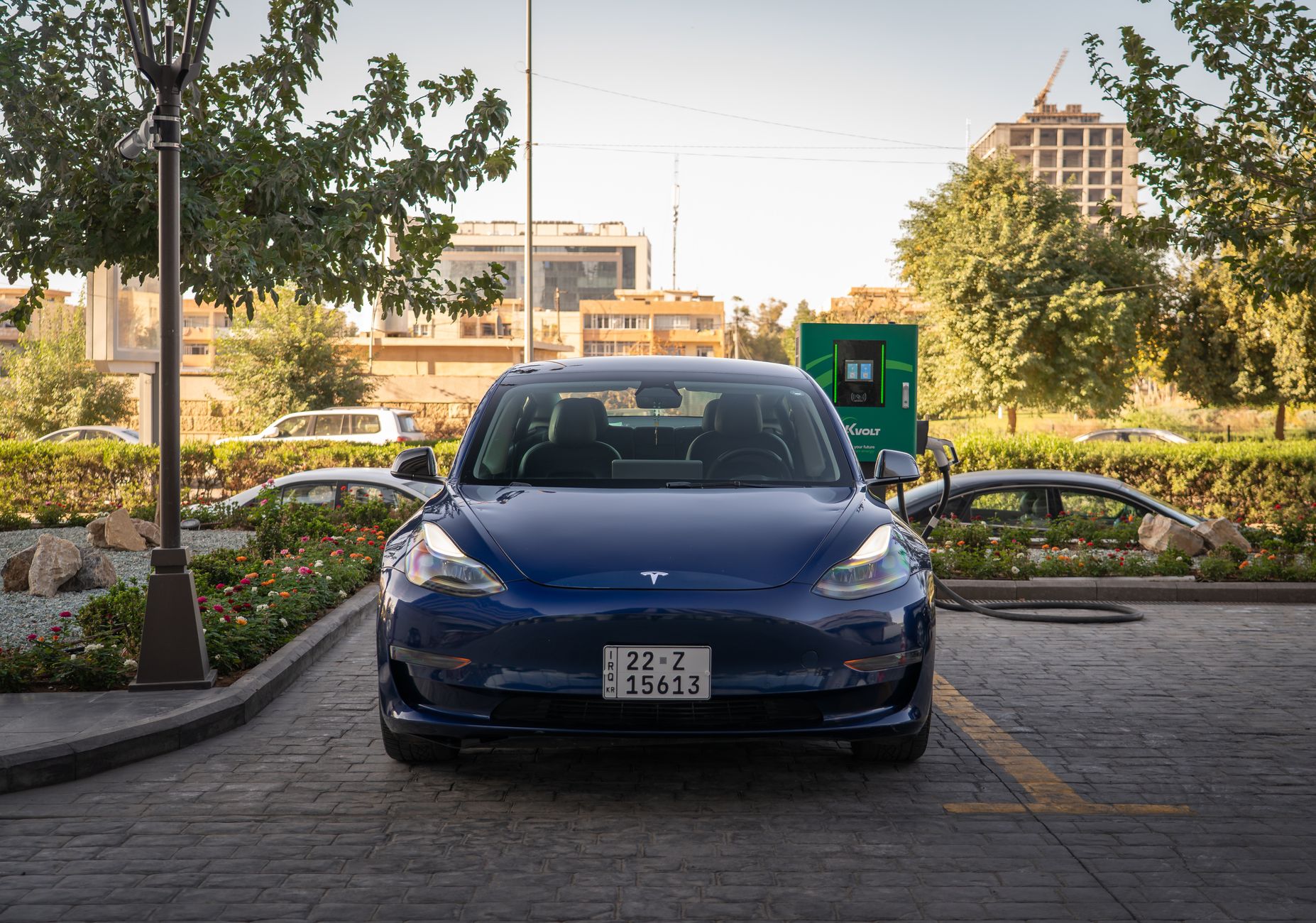
Think electric vehicles are strictly for city commuting? Recent infrastructure data proves the tide has officially turned. With thousands of new fast-charging stalls, universal adapter rollouts, and 300+ mile real-world battery ranges, cross-country EV travel isn't just feasible—it’s often cheaper, smoother, and infinitely more enjoyable than burning gas. Here is your definitive guide to mastering the modern electric road trip. ---
The Moment Everything Changed: Silence at 60 MPH
I stepped out of the crisp coastal air near Big Sur, unplugged the sleek liquid-cooled charging cable from my Hyundai Ioniq 5, and heard something startling: absolute silence. No chugging diesel engines at a dingy gas station, no smell of spilled octane on asphalt, just the ocean breeze filtering through the redwood canopy and the faint hum of a 350 kW DC fast charger topping off my battery from 10% to 80% in precisely eighteen minutes.
As a travel writer who has clocked over 250,000 miles across six continents in everything from clunky campervans to twin-turbo V8s, I used to be an EV road trip skeptic. Five years ago, driving an electric car past city limits felt like taking a golf cart into the Sahara—an exercise in sweat-palmed range anxiety, broken Level 2 plugs, and endless waiting in strip mall parking lots.
Not anymore. The numbers have caught up with the narrative. Electric vehicle road trips becoming possible according to recent data isn't just a clickbait headline; it is an operational reality reshaping how we explore the open road.
---
What the Latest Data Actually Tells Us About EV Infrastructure
If you are still operating on 2020 assumptions, it’s time to update your mental software. Recent findings from the Joint Office of Energy and Transportation and BloombergNEF show a staggering surge in high-speed charging density across major travel corridors:
- Fast Charger Density: High-power DC fast-charging ports (150kW+) in North America and Western Europe grew by over 38% year-over-year in late 2023 and 2024.
- The 50-Mile Rule: Over 85% of standard U.S. Interstate corridors under the National Electric Vehicle Infrastructure (NEVI) program now feature high-speed DC fast chargers spaced no more than 50 miles apart.
- The Great Network Merger: With non-Tesla EVs gaining native access to the Tesla Supercharger network via NACS (North American Charging Standard) adapters, the available fast-charging pool for the average EV driver effectively doubled overnight.
``` [2020 EV Road Trip Reality] ───> 150-Mile Range ───> Patchy 50kW Chargers ───> 60-Min Stops [2025 EV Road Trip Reality] ───> 300-Mile Range ───> 350kW Mega-Hubs ───> 18-Min Stops ```
What does this mean for your summer road trip? It means the dreaded "range anxiety" has been replaced by "range strategy"—and mastering that strategy is surprisingly simple.
---
The New Rules of EV Route Planning: Ditch the Gas Mentality
The biggest mistake first-time EV road-trippers make is treating an electric vehicle like a petrol car. Gasoline drivers burn their tank down to the red line, fill up to 100%, and repeat. If you do that in an EV, you will waste hours at the plug.
Rule 1: Master the "DC Fast Charge Curve"
Lithium-ion batteries charge like a stadium filling up with spectators. When the stadium is empty (0-20%), people stream in rapidly. When it’s nearly full (80-100%), people slow down to find individual seats.
- 10% to 80% State of Charge (SoC): Lightning fast (15 to 22 minutes on modern 800V vehicle architectures).
- 80% to 100% State of Charge: Unbearably slow (can take an additional 30 to 45 minutes).
Pro-Tip: Drive hard down to 10-15%, charge up to 75-80%, and roll out. You will cover ground dramatically faster by taking two 18-minute charges than one agonizing 60-minute fill-up to 100%.
Rule 2: Embrace Smart Navigation Apps
Forget basic Google Maps for turn-by-turn charging logic. You need purpose-built tools:
- A Better Routeplanner (ABRP): The undisputed king of EV mapping. Input your specific vehicle model, roof rack additions, current weather, and payload weight; ABRP calculates exact arrival percentages and recommended charge durations.
- PlugShare: The crowdsourced Yelp of charging stations. Always check the "PlugScore" before relying on a station. If a site score is below 8.0, pass it up for the next hub.
---
Iconic Road Trips That Are Now 100% EV Ready
To test the recent data on the ground, I mapped out three classic, highly demanding routes. Here is how they stack up in the modern electric era.
``` ======================================================================== SCENIC EV CORRIDORS: DIFFICULTY & CHARGING DENSITY ======================================================================== [1] Pacific Coast Highway (CA-1 / US-101) | ████████████████████ | EASY [2] Blue Ridge Parkway (VA to NC) | ██████████████▒▒▒▒▒▒ | MODERATE [3] Route 66 (Chicago to Santa Monica) | ████████████████▒▒▒▒ | EASY-MOD ======================================================================== ```
1. California Coast: Pacific Coast Highway (San Francisco to San Diego)
- Distance: ~600 miles
- Charging Density: Exceptional
- The Experience: Perfect terrain for regenerative braking. Descending steep coastal hills pumps electricity back into your battery. Electrify America, Rivian Adventure Network, and Tesla Superchargers line US-101 and CA-1 every 20-30 miles.
- Local Insider Stop: Plug in at the fast-chargers behind the Madonna Inn in San Luis Obispo. Grab a slice of their famous Pink Champagne Cake while your battery gains 200 miles of range in 15 minutes.
2. Blue Ridge Parkway (Virginia to North Carolina)
- Distance: ~469 miles
- Charging Density: Moderate (Requires destination charging strategy)
- The Experience: National Parks used to be charging dead zones. Today, destination Level 2 chargers are abundant at historic lodges like Peaks of Otter Lodge and Evergreen Inn.
- Local Insider Tip: Enable maximum regenerative braking ("One-Pedal Drive") when descending from Mount Mitchell. You can gain 4% to 6% of total battery capacity pure energy recovery on the long downhills toward Asheville.
3. Historic Route 66 (Chicago to Santa Monica)
- Distance: ~2,400 miles
- Charging Density: Good to High
- The Experience: Once thought impossible without extreme planning, the Mother Road now features high-output DC fast chargers at vintage diners, modern travel plazas (Love’s, Pilot Flying J), and small-town squares.
---
The Financial Blueprint: Gas vs. EV Road Trip Costs
Is taking an EV on a 2,000-mile road trip actually cheaper than driving a 30 MPG gas crossover? Let’s look at real-world numbers based on average mid-2024 rates.
Cost Comparison: 2,000-Mile Expedition
| Expense Category | Gas Vehicle (30 MPG @ $3.85/gal) | Modern EV (3.4 mi/kWh @ Public Fast-Charge Rates) | Modern EV (With Destination Hotel Charging Hacks) | | :--- | :--- | :--- | :--- | | Fuel / Electricity | $256.66 | $188.20 | $112.40 | | Maintenance / Fluids| $25.00 (Pro-rated oil wear) | $0.00 | $0.00 | | Overnight Parking | Standard Rate | Standard Rate | Free Charging Included | | TOTAL ESTIMATED COST| $281.66 | $188.20 | $112.40 |
Note: Calculations assume public DC fast charging at $0.32–$0.42 per kWh, and overnight Level 2 hotel charging booked at zero additional fee.
The Ultimate EV Savings Hack: "Destination Trickle"
The single biggest secret to ultra-cheap EV road trips is filtering hotels on Booking.com or Airbnb with the "EV Charger" amenity selected. When you plug into a free Level 2 hotel charger overnight, you wake up to a "full tank" (100% SoC) every single morning without spending a penny or wasting ten minutes during the day.
---
Practical Logistics & Quick Facts
- Best Time for EV Road Trips: Spring and Autumn. Extreme cold (below 32°F / 0°C) reduces lithium battery efficiency by 15-25% due to chemical resistance and cabin heating needs. Mild 68°F (20°C) temperatures yield peak efficiency.
- Essential Accessories to Pack:
- NACS to CCS / CCS to NACS Adapter: Unlocks multi-network charging cross-compatibility.
- J1772 to NACS Adapter: Allows non-Tesla vehicles to use standard Tesla destination chargers at hotels.
- Heavy-Duty 120V Extension Cord: For emergency "trickle charging" (3-5 miles of range added per hour) at remote cabins.
- How to Get There / Start: Renting an EV for a road trip has never been easier. Major rental fleets (Hertz, Avis, Enterprise) now feature Polestar 2s, Tesla Model Ys, Hyundai Ioniq 5s, and Kia EV6s at standard sedan rates.
---
Pro-Tips: How to Avoid the Top EV Travel Traps
1. Warm Up the Battery Before Arriving (Pre-conditioning)
If you drive straight up to a 350kW fast charger with a cold battery, your vehicle will cap its intake speed at a fraction of its capability.
- The Fix: Set your destination charger in the car’s native onboard navigation (not via Apple CarPlay). This triggers the car's thermal management system to heat or cool the battery pack to its optimal temperature (~70°F–80°F) 20 minutes before arrival, instantly unlocking peak megawatt speeds.
2. Beware the "Broken Plug" Phenomenon
While reliability has improved exponentially thanks to federal uptime requirements, down chargers still occur.
- The Fix: Arrive at charging hubs with at least 15% remaining SoC. Never plan to pull into a charging hub with 1% or 2% unless you have verified through real-time PlugShare user updates that the station is operational within the last hour.
3. Know the Secret Entrance Protocol
Some of the best fast-charging hubs are hidden in unexpected places—behind hotel service alleys, inside underground parking garages, or adjacent to high-end grocery plazas.
- Example: The famous 20-stall charging hub in Barstow, California, isn't on the highway strip; it is located behind the historic station complex. Check PlugShare photos and comments for exact navigation cues like "Entrance is behind the blue door past the delivery loading dock."
---
The Verdict: The Road Ahead is Silent and Electric
The recent data leaves no room for debate: electric vehicle road trips have crossed the tipping point from risky adventure to practical luxury. You travel quieter, you arrive at your destinations less fatigued from powertrain vibration, and you spend your breaks eating good food at vibrant local hubs rather than inhaling exhaust fumes at highway truck stops.
Pack your adapter, download ABRP, set your navigation for the coast, and enjoy the smooth, instant torque of the future. The open road has never sounded so good.
---
More pictures

Tags
Share this guide
We may earn a commission if you click a link and buy a product or service, at no extra cost to you. How affiliate links work.
Been there?