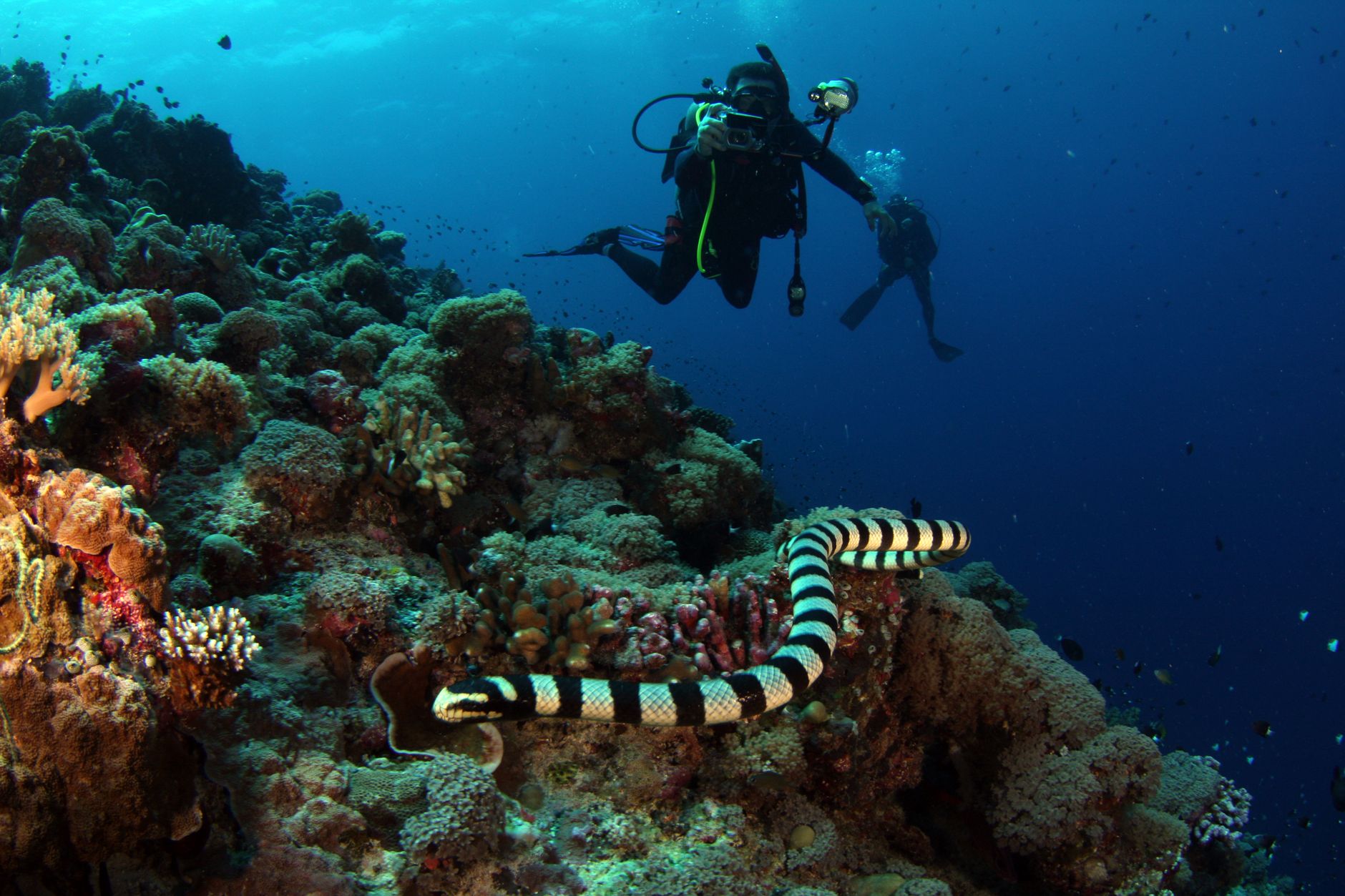
Ready to trade passive sunbathing for high-impact marine conservation? This definitive guide reveals the absolute best hands-on coral restoration programs you can actively participate in during June 2026. From scrubbing algae-coated coral trees in the Florida Keys to installing cutting-edge Biorock structures in Indonesia, we’ve mapped out the exact destinations, costs, and insider hacks to turn your next dive trip into a lifeline for our oceans. ---
The Hook: A Morning Under the Atlantic
I rolled backward off the dive platform of the Coral Reef II, the sudden shock of 81°F (27°C) Atlantic water waking me up far better than the lukewarm drip coffee at the marina had.
As the bubbles cleared, the familiar, reassuring shhh-clink, shhh-clink of my regulator filled my ears. The scent of salt and neoprene was replaced by the clean, dry taste of compressed air. Ten meters below me, suspended in the crystal-clear blue of Key Largo, was a forest. Not of trees, but of PVC pipes shaped like elms, dangling hundreds of delicate, finger-like fragments of Acropora cervicornis—staghorn coral.
My mission for the morning? Not to look, but to clean. Armed with a wire brush and a plastic scraper, my dive buddy and I spent the next 50 minutes scraping fire coral and turf algae off the fiberglass frames.
By the afternoon, we were swimming down to a barren limestone reef patch, squeezing golf-ball-sized dollops of two-part marine epoxy onto the rock, and gently pressing a healthy, nursery-grown coral fragment into its new home.
When I looked back at our work, I didn't just see a dive site; I saw a future reef. This is not passive tourism. This is the sweaty, salt-encrusted, deeply rewarding world of active coral restoration. If you want to make a tangible difference, June 2026 is your prime window to dive in.
---
Why June 2026 is the Ultimate Window for Coral Restoration
June is the sweet spot for marine conservation travel. In the Northern Hemisphere, summer is just beginning, bringing calm seas, excellent underwater visibility, and warm water temperatures that allow for long, comfortable working dives. Crucially, June sits just before the late-summer heating events that can trigger coral bleaching, making it a critical month for scientists to get healthy corals outplanted so they can adapt and strengthen before the peak heat of August.
Furthermore, June 2026 marks a milestone year for global reef initiatives. Following the massive heatwaves of recent years, marine foundations worldwide have scaled up their public volunteer programs, transitioning from elite scientific projects to community-driven, crowdsourced conservation. You no longer need a PhD in marine biology to save a reef; you just need a rescue diver certification, a positive attitude, and a willingness to get your hands dirty.
---
5 Hands-On Coral Restoration Programs to Join in June 2026
1. Key Largo, Florida: The Coral Restoration Foundation (CRF)
The undisputed heavyweight of the reef restoration world, CRF operates the largest open-ocean coral nursery on the planet. Based in Key Largo, their programs are highly organized, scientifically rigorous, and incredibly rewarding.
- The Experience: You’ll start with a morning classroom session at their state-of-the-art exploration center, learning about microfragmentation—a process where corals are cut into tiny pieces to stimulate rapid growth up to 40 times faster than normal. In the afternoon, you board a charter boat to the offshore nurseries. You’ll assist in maintaining the "coral trees" and outplanting mature colonies using specialized marine epoxy.
- The Vibe: High-energy, professional, and deeply educational. You will be working alongside passionate young interns and world-class marine biologists.
- Pro-Tip: Book your CRF volunteer charter at least six months in advance. June slots are highly coveted by university groups and sell out by January. If the main charters are full, check with local dive shops like Silent World or Horizon Divers, which run dedicated CRF-support dives.
2. Cairns, Australia: The Coral Nurture Program on the Great Barrier Reef
If you want to work on the world's most famous reef system, head to Tropical North Queensland. The Coral Nurture Program (CNP) is a unique partnership between tourism operators and researchers from the University of Technology Sydney (UTS).
- The Experience: Operating out of Cairns and Port Douglas, volunteers work alongside operators like Passions of Paradise. Instead of traditional nurseries, CNP uses a revolutionary "Coralclip" device—a small metal spring-clip that secures coral fragments directly to the reef substrate without using chemical glues. It is incredibly fast, allowing divers to plant hundreds of corals in a single dive.
- The Vibe: Laid-back Aussie camaraderie meets cutting-edge citizen science. After a day of hard work, you’ll be sharing a cold Great Northern lager on the bow of a sleek catamaran as it sails back to Cairns.
- Pro-Tip: Book the "Reef Ranger" day package with Passions of Paradise. It’s a dedicated program where a portion of your ticket directly funds the conservation work, and you get to assist the onboard marine biologist with monitoring and planting.
3. Roatan, Honduras: Roatan Marine Park & Reef Renewal
Roatan is located on the Mesoamerican Barrier Reef, the second-largest reef system in the world. The island is a diver’s paradise, characterized by dramatic walls, warm water, and a thriving local conservation community.
- The Experience: Reef Renewal Roatan offers a multi-day Coral Restoration Diver distinctive specialty course. You’ll learn how to clean the hanging coral trees, harvest fragments, and use underwater drills to secure anchors for new nursery structures.
- The Vibe: Intimate and community-focused. Roatan's West End is a walkable strip of dive shops, rustic cafes, and over-water bars. You'll feel like a local within 48 hours.
- Pro-Tip: Stay in West End rather than West Bay. It’s significantly cheaper, puts you within walking distance of the Roatan Marine Park headquarters, and spares you from the massive cruise ship crowds that descend on West Bay daily.
4. Gili Trawangan, Indonesia: Gili Eco Trust
For a completely different technological approach, head to the Gili Islands in Indonesia. Here, the Gili Eco Trust utilizes Biorock technology to restore heavily damaged reefs.
- The Experience: Biorock involves running a safe, low-voltage electrical current through steel underwater structures. This current causes dissolved minerals in seawater to crystallize on the steel, forming a natural limestone coating similar to that of wild coral reefs. Corals transplanted onto Biorock structures grow up to six times faster and are significantly more resilient to bleaching. Volunteers help build these steel structures on land, assist in sinking them, and dive to transplant wild "corals of opportunity" (fragments broken by anchors or storms) onto the electrified frames.
- The Vibe: Bohemian, eco-conscious, and vibrant. There are no motorized vehicles on Gili Trawangan; you’ll get around by bicycle or horse-drawn cart.
- Pro-Tip: Take the fast boat from Padang Bai (Bali) to Gili Trawangan at 9:00 AM. The afternoon swells in the Lombok Strait can turn the crossing into a punishing, stomach-churning roller coaster ride.
5. Praslin, Seychelles: Nature Seychelles (Reef Rescuers)
For those looking for a truly remote, once-in-a-lifetime conservation expedition, the inner islands of the Seychelles offer a masterclass in large-scale reef rehabilitation.
- The Experience: Nature Seychelles runs the "Reef Rescuers" program, which has pioneered the use of land-based and ocean-based nurseries to restore degraded reefs around Praslin and Cousin Island Special Reserve. This is a highly intensive program, often requiring a 4-to-6-week commitment, where you will be trained in advanced scientific monitoring, nursery construction, and ecological surveying.
- The Vibe: Rugged, exclusive, and scientifically rigorous. You are surrounded by some of the most beautiful beaches on earth (like Anse Lazio), but the work is physically demanding.
- Pro-Tip: This program is best suited for gap-year students, career-breakers, or dive professionals looking to transition into marine biology. It requires a formal application process, so start your outreach by late 2025.
---
Essential Gear & Certifications You Need Before June 2026
Do not expect to show up with an Open Water card and zero dives under your belt and be handed a tray of fragile corals. Outplanting requires exceptional buoyancy control. If you kick a newly planted coral or crash into a nursery tree because you can't control your trim, you are doing more harm than good.
Required Certifications:
- Minimum: PADI Advanced Open Water (or equivalent) with at least 30 logged dives.
- Highly Recommended: Peak Performance Buoyancy specialty.
- The Golden Standard: Nitrox (Enriched Air) certification. You will be doing multiple dives a day at depths of 10 to 18 meters; Nitrox keeps your nitrogen loading down and your energy levels up.
Recommended Gear:
- Reef-Safe Sunscreen: This isn't just a marketing buzzword. Ensure your sunscreen is active-ingredient-free of Oxybenzone and Octinoxate. Look for non-nano zinc oxide formulas like Stream2Sea.
- Neoprene Gloves: While standard recreational diving discourages gloves to prevent touching the reef, restoration work is different. You will be handling abrasive PVC, wire brushes, and stinging fire coral. A pair of durable 1.5mm or 2mm grip gloves is essential.
- A Reliable Dive Computer: You will be monitoring your no-decompression limits closely during multi-dive days. A clear, easy-to-read computer like the Shearwater Peregrine is perfect for this kind of work.
---
Quick Facts & Budget Planner for June 2026
| Destination | Est. Program Cost (USD) | Min. Certification | Nearest Airport | Best Local Food to Try | | :--- | :--- | :--- | :--- | :--- | | Key Largo, USA | $150 - $250 (per day) | Advanced Open Water | Miami International (MIA) | Mahi-mahi tacos at The Fish House | | Cairns, Australia | $280 - $350 (per day) | Open Water + | Cairns Airport (CNS) | Fresh barramundi at the night markets | | Roatan, Honduras | $400 - $600 (1-week course) | Advanced Open Water | Juan Manuel Gálvez (RTB) | Baleadas at Estela’s Clinic | | Gili Trawangan, Indo| $300 - $500 (1-week project) | Open Water | Lombok Airport (LOP) | Nasi Campur at the Trawangan Night Market | | Seychelles | $2,500 - $4,000 (4-week exp.)| Rescue Diver | Seychelles International (SEZ) | Octopus curry with coconut milk |
---
Ethical Voluntourism: How to Spot "Greenwashing"
As coral restoration grows in popularity, some less-than-reputable dive shops use "eco-tourism" as a marketing gimmick to charge premium rates for standard dives. To ensure your money and time are going to legitimate scientific endeavors, ask these three questions before booking:
- "Who is your scientific partner?" Legitimate programs are always tied to a university, a registered NGO, or a government marine authority (e.g., NOAA in the US, GBRMPA in Australia). If they cannot name their scientific advisor, walk away.
- "What is your long-term monitoring protocol?" Planting a coral is easy. Keeping it alive is hard. A real conservation program spends at least 50% of its time monitoring, cleaning, and tracking the survival rates of past outplants. Ask to see their data.
- "Do you limit group sizes?" A single dive guide should never take more than four restoration volunteers underwater at once. If a shop offers to take a boatload of twelve novice divers to "plant corals," it is a cash grab that will likely result in damaged reef structures.
---
The Verdict: Dive with Purpose
There is a unique kind of exhaustion that comes from a day of underwater labor. It’s the feeling of salt crusting on your eyebrows, the dull ache in your calves from maintaining a perfect hover, and the satisfying sting of soap on minor coral scrapes.
But as you sit on the dock watching the sun sink below the horizon, you aren't just a tourist who took photos and left footprints. You are a custodian of the sea. You left the ocean slightly better than you found it.
Make June 2026 the month you stop just looking at the reef, and start rebuilding it.
---
More pictures
Tags
Share this guide
We may earn a commission if you click a link and buy a product or service, at no extra cost to you. How affiliate links work.
Been there?