
Forget sterile luxury resorts and greenwashed eco-lodges. The most transformative travel trend of the year involves getting dirt under your fingernails. This is the definitive guide to agricultural tourism that bypasses corporate middlemen to put your travel dollars directly into the pockets of smallholder farmers. From harvesting heirloom blue corn in Oaxaca to raking sea salt in Brittany, we show you exactly where to go, how to book, and how to travel with genuine purpose. ---
The Hook: A Morning in the Milpa
I stepped off the wooden flatbed into the damp, cool air of Oaxaca’s Central Valleys at 5:15 AM. The smell of burning copal incense and wet earth hung heavy over the fields. Around me, the towering stalks of ancestral bolita maize rustled in the pre-dawn breeze. My host, Don Jorge, handed me a clay mug of café de olla—sweetened with raw piloncillo and spiced with a stick of real Mexican cinnamon that warmed my hands against the mountain chill.
This wasn’t a curated tourist performance. Don Jorge’s family has farmed this three-hectare plot in San Jerónimo Tlacochahuaya for five generations. Like thousands of smallholders worldwide, they face volatile commodity prices, climate unpredictability, and pressure to sell their land to developers.
But today, small-scale farmers are fighting back through regenerative agricultural tourism. By opening their gates to curious, respectful travelers, they are diversifying their income, preserving endangered biodiversity, and proving that traditional farming is not just a relic of the past—it is the blueprint for our future.
---
1. The Agritourism Revolution: Why Your Next Trip Matters
For decades, tourism and agriculture existed in separate silos. Tourism consumed resources; agriculture supplied them. Today, a powerful convergence is happening. Travelers are exhausted by hyper-tourism and disconnected urban life. At the same time, small-scale farmers need resilient, alternative revenue streams to survive.
``` Traditional Tourism Model Regenerative Agritourism Model [Traveler] -> [Corporate Resort] [Traveler] -> [Direct to Farmer] | | [Depletes Local Resources] [Supports Soil & Heritage Preservation] ```
When you book an authentic agritourism experience, your money does not get diluted by multinational booking platforms or luxury hotel conglomerates. Instead, it pays for organic compost, ancestral seed preservation, fair wages for indigenous field workers, and the maintenance of historic rural infrastructure. This is travel as a direct economic intervention.
---
2. Ancestral Maize Preservation: Oaxaca, Mexico
In the southern highlands of Mexico, the milpa—an ancient polyculture system of corn, beans, and squash—is under threat from industrialized, genetically modified imports.
The Experience
Stay at a family-run rancho in the Tlacolula Valley. You will rise early to harvest heirloom criollo corn varieties that range from deep obsidian black to creamy pastel yellow. Under the guidance of local campesinos, you will learn the art of nixtamalization—cooking corn in an alkaline solution of wood ash and water to unlock its nutritional value—before grinding it on a volcanic stone metate to pat out your own tortillas.
- Insider Language: Ask your hosts about the sistema milpa. It is not just a crop rotation; it is a spiritual and ecological philosophy where the corn provides support for climbing beans, the beans fix nitrogen in the soil, and the squash leaves shade the ground to prevent weeds and moisture loss.
- Pro-Tip: Skip the commercial day-tours from Oaxaca City. Book directly through local community-led cooperatives like Fundación En Vía or stay at Rancho San Isidro.
---
3. The Olive Harvest: Puglia, Italy
Puglia’s red earth is home to some of the oldest living olive trees on earth—gnarled, sculptural giants that have produced oil since the Roman Empire. However, a devastating bacterium (Xylella fastidiosa) and corporate agricultural pressure have threatened these ancient groves.
The Experience
Check into a working masseria (a fortified historic farmhouse) during the late autumn harvest (October to December). You will spend your days laying out massive nets beneath 500-year-old trees, using hand-rakes to gently release the olives, and driving the day’s yield to the local frantoio (mill) to watch the cold-pressing process.
- The Sensory Detail: Freshly pressed, unfiltered extra virgin olive oil of the Coratina variety does not taste like the bland oil in your supermarket. It is vibrant green, smells of freshly cut grass, and has a peppery kick at the back of your throat so intense it will make you cough—a sign of exceptionally high polyphenol antioxidants.
- Pro-Tip: Look for masserias that are certified Biologica (organic). Masseria Brancati in Ostuni features trees that are over 2,000 years old and offers hands-on harvesting programs where you work alongside local agricultural historians.
---
4. Volcanic Shade-Grown Coffee: Chiriquí, Panama
The highlands of Boquete and Volcán in Panama boast some of the most nutrient-rich volcanic soils on earth, courtesy of the dormant Barú Volcano. This microclimate produces the world’s most prized coffee variety: Geisha.
The Experience
Work alongside the Ngäbe-Buglé indigenous community, who are the traditional guardians and primary harvesters of these steep, misty slopes. You will learn to identify only the perfectly ripe, cherry-red coffee pods, depulp them using traditional water-powered machinery, and study the delicate fermentation processes that give Geisha coffee its signature floral, jasmine-like flavor profile.
- The Architecture of the Farm: Authentic coffee farms here feature multi-tiered shade canopies. Instead of clear-cutting forests, coffee plants grow under native cedar, avocado, and banana trees, providing vital corridors for migratory birds.
- Pro-Tip: Avoid the large-scale industrial plantations along the main highway. Head to the higher elevations of Bajo Mono and book a stay at a smallholder finca like Janson Coffee Farm or Finca Lerida, where you can stay in restored historic picker cabins.
---
5. The Salt Harvesters of the Atlantic: Brittany, France
In the salt marshes of Guérande, France, the landscape is a geometric labyrinth of clay pools. Here, the paludiers (salt marshes workers) harvest sea salt using techniques that have remained unchanged since the Carolingian era.
The Experience
This is physical, rewarding work. Under the Atlantic breeze, you will learn to use a las—a long, flexible wooden rake—to gently skim the fragile fleur de sel (flower of salt) from the surface of the water before it sinks.
- The Taste of the Place: The salt here is naturally grey because it crystallizes in contact with the local clay, absorbing rich concentrations of magnesium and trace minerals. It tastes of the ocean, with a distinct violet aroma.
- Pro-Tip: The harvesting season is short and highly weather-dependent, running from June to September. The best time to visit the marshes is at 7:00 AM when the wind is low, the water is perfectly still, and the morning sun reflects off the salt pans like giant mirrors.
---
6. The Satoyama Terraced Rice Paddies: Niigata, Japan
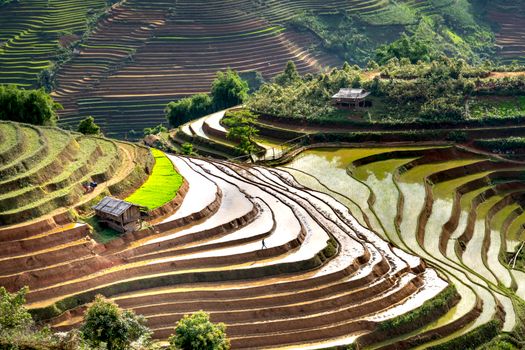
The mountainous regions of Niigata, Japan, are home to Satoyama—the border zone where arable flat land meets the foothills of the mountains. Here, steep, terraced rice paddies (tanada) prevent erosion and preserve water, but they require intensive hand-labor that Japan's aging rural population struggles to maintain.
The Experience
Stay in a converted minka (traditional thatched-roof farmhouse) in the village of Tokamachi. Depending on the season, you will either assist in taue (spring hand-planting of Koshihikari rice seedlings in knee-deep mud) or inekari (autumn harvesting and hanging the stalks on wooden racks to dry naturally in the mountain wind).
- The Cultural Etiquette: When entering a minka, always swap your outdoor shoes for indoor slippers at the genkan (entryway). During communal dinners, it is customary to pour sake or local draft beer for your host farmer before filling your own glass.
- Pro-Tip: The Hoshitoge Rice Terraces are famous for their "water mirror" effect in spring. To experience this without the crowds of photographers, stay overnight in a local farm homestay booked through the Echigo-Tsumari Art Field rural revitalization initiative.
---
How to Spot "Greenwashing" in Agritourism
As agricultural tourism grows in popularity, corporate resorts are jumping on the trend. Use this checklist to ensure your booking supports real smallholders:
- Follow the Money: Does the accommodation booking platform pay the farmer directly, or does a foreign management company run the "farm experience"? Look for direct booking options or certified B-Corps.
- Labor Practices: Are local workers treated as tourism props, or are they the leaders and educators of the experience? Authentic agritourism centers the farmer’s voice and expertise.
- Working Farm vs. Landscaped Garden: A real farm is messy. There will be mud, insects, farm machinery, and unpredictable weather. If a property looks like a manicured golf course with a few decorative tomato plants, it is not an authentic working farm.
---
The Budget & Logistics Masterclass
| Destination | Best Time to Visit | Est. Daily Cost (USD) | How to Get There | | :--- | :--- | :--- | :--- | | Oaxaca, Mexico | October to February (Harvest) | $45 - $80 | Fly to OAX, take a local colectivo (shared taxi) from Central de Abastos to Tlacolula. | | Puglia, Italy | October to November | $120 - $220 | Fly to Bari (BRI), rent a hybrid car to navigate the narrow rural stone-walled lanes of Ostuni. | | Chiriquí, Panama | December to March | $75 - $150 | Fly to David (DAV), take a local 4x4 mountain bus up to Boquete or Volcán. | | Brittany, France | July to August | $110 - $190 | Take the TGV train from Paris to Saint-Nazaire, then rent a bicycle to explore the salt marshes. | | Niigata, Japan | May (Planting) or Sept (Harvest) | $130 - $210 | Take the Joetsu Shinkansen (bullet train) from Tokyo to Echigo-Yuzawa station, then transfer to local rail. |
---
The Takeaway: Leave the Land Better Than You Found It
Agricultural tourism is more than a vacation; it is an act of active citizenship. When we step off the beaten tourist path and onto a working farm, we exchange the passive role of "consumer" for the active role of "supporter."
We learn that food does not originate in plastic wrap on a supermarket shelf, but from the tireless, skilled labor of passionate individuals. By choosing to spend our travel dollars directly with these small-scale guardians of our soil, we ensure that their traditions, their lands, and their communities will thrive for generations to come.
---
More pictures

Tags
Share this guide
We may earn a commission if you click a link and buy a product or service, at no extra cost to you. How affiliate links work.
Been there?