
Skip the standard beach vacations. This is the ultimate guide to the world's most spectacular salt flats where gourmet salt is harvested worth considering. From the ancient Incan terraces of Peru to the wind-swept marshes of Brittany, we explore the origins of the world's finest finishing salts, complete with insider travel tips, logistics, and culinary secrets. ---
The Hook: A Pinch of Pink Clay and Atlantic Wind
I stepped off the local regional train in Le Croisic, Brittany, and was immediately hit by the sharp, iodine-rich scent of the Atlantic Ocean. The air here doesn't just smell like salt; it feels heavy with it. Twenty minutes later, I was standing on a narrow clay dike in the Guérande peninsula, watching a paludier (salt worker) glide a long, wooden rake called a lousse across the surface of a shallow pool.
There was no mechanical roar, no heavy machinery. The only sounds were the wind whipping through the marsh grass and the rhythmic, hypnotic scritch-scritch of the wooden tool skimming the water.
Under the late afternoon sun, a delicate, lace-like crust of white crystals was forming on the water's surface. "This is the Fleur de Sel," the paludier told me, offering me a damp pinch of the freshly harvested crystals. I placed them on my tongue. It didn’t burn like standard table salt; instead, it dissolved slowly, leaving behind a complex, slightly floral taste of the sea and violet flowers.
That single moment changed how I look at food forever. Salt isn't just a chemical compound; it is a reflection of geography, wind, clay, and centuries of human sweat. If you are a traveler who lives for flavor, visiting the salt flats where gourmet salt is harvested is worth considering for your next itinerary.
Here are six spectacular destinations where the world’s finest salts are born.
---
1. Guérande, France: The Birthplace of Fleur de Sel
If gourmet salt has a capital, it is the Guérande peninsula in western France. Here, salt harvesting is an unbroken, 2,000-year-old tradition dating back to the Iron Age. The landscape is a labyrinth of clay canals, settling basins, and crystallization pans (oeillets).
``` [Sea Water] -> [Gobier (Settling)] -> [Fare (Evaporation)] -> [Oeillet (Crystallization)] ```
The Craft and the Flavor
The magic of Guérande lies in its grey clay. As the ocean water flows through the hand-dug clay channels, it absorbs trace minerals, particularly iron and magnesium. This gives the coarse salt (sel gris) its signature grey hue and rich, earthy flavor.
The crown jewel, however, is Fleur de Sel (Flower of Salt). This delicate crust only forms on hot, dry, windy afternoons. It must be skimmed off the top of the water using a delicate touch before it sinks to the clay bottom.
- Pro-Tip: Do not purchase your salt from the tourist shops in the town center of Guérande. Instead, drive out to the cooperative shop Terre de Sel in Pradel. Buy the Fleur de Sel bags stamped with the name of the individual harvester (paludier) for the most authentic experience.
- The Culinary Pairing: Sprinkle Guérande Fleur de Sel over salted butter caramels or fresh radishes spread with unsalted French butter.
---
2. Maras, Peru: The Incan Terraces of Pink Gold
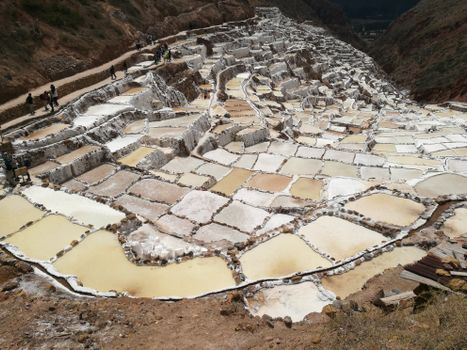
High in the Sacred Valley of the Incas, at an altitude of over 10,000 feet, lies one of the most visually stunning salt-harvesting operations on earth. The Salt Mines of Maras (Salineras de Maras) consist of over 3,000 terraced, pale-pink pools clinging to the canyon walls of the Qaqawiñay mountain.
``` ▲ [Qoripujio Spring (Hyper-saline, warm water)] / \ / \ (Water channeled down the mountain) /_____\ [ Pool ] -> [ Pool ] -> [ Pool ] (3,000+ terraced family plots) ```
The Craft and the Flavor
The source of the salt is a single, warm, subterranean spring called Qoripujio. The water is so saturated with sodium chloride that it emerges warm to the touch. Local families channel this brine into terraced basins that are no deeper than 10 centimeters.
As the Andean sun evaporates the water, a thick crust of pink salt crystals forms on the surface. The salt is harvested by scraping the dry crystals from the edges of the pool.
- Pro-Tip: To capture the iconic photograph of the pink terraces without the crowds, arrive at the viewpoint by 7:00 AM. The morning light hits the canyon at a low angle, highlighting the pastel pinks and ochres of the pools. Note that tourists are no longer allowed to walk inside the salt pans to prevent contamination, but the viewing platform offers spectacular panoramic views.
- The Culinary Pairing: Maras pink salt is highly mineralized. It pairs spectacularly with grilled alpaca steaks or thick-cut roasted Andean potatoes.
---
3. Trapani, Sicily: The Windmill-Framed Pyramids of the Mediterranean
Stretching along the coast of western Sicily between Trapani and Marsala is the Via del Sale (Salt Road). This coastal strip is dotted with historic windmills, white salt pyramids covered in terracotta tiles, and shallow lagoons where salt has been harvested since the Phoenicians ruled the Mediterranean.
The Craft and the Flavor
The Trapani salt pans are a masterclass in ancient engineering. The windmills, some of which have been fully restored, were originally used to pump water from the open sea into the evaporation basins and to grind the harvested salt.
The salt here is harvested by hand during the hot, dry summer months of July and August. Because the water is high in potassium, magnesium, and calcium, the salt has a clean, intensely salty flavor without any bitterness.
- Pro-Tip: Book a guided tour with the Salina Culcasi in Nubia. They allow you to put on rubber boots and walk out into the salt pans with a traditional wooden shovel. Afterward, dine at the on-site museum restaurant and order the Busiate pasta with Trapani pesto, seasoned with their own sea salt.
- The Culinary Pairing: Use Trapani sea salt to crust a whole wild sea bass before baking.
---
4. Maldon, Essex, United Kingdom: The Pyramidal Crunch of Royalty
While most gourmet salt flats rely on intense solar evaporation, the Blackwater Estuary in Maldon, Essex, uses a different, fire-based method. The Maldon Salt Company has been harvesting salt here since 1882, though the region's salt-making history goes back to the Roman occupation.
The Craft and the Flavor
The estuary is unique because of its low rainfall and high salinity. During spring tides, the seawater is drawn into large, shallow metal pans. The brine is then heated to a gentle boil in salt pans housed inside traditional brick buildings.
As the water evaporates, the salt crystals begin to form and grow into distinctive, hollow, four-sided pyramids. The salt makers manually shovel these fragile pyramids out of the pans once they reach the perfect size.
- Pro-Tip: The Maldon salt works themselves are not open to the general public for safety reasons, but you can experience the salt culture by visiting during the Maldon Mud Race or by visiting the local heritage center. Walk along the seawall of the Blackwater Estuary to see where the water is drawn, then head to The Blue Boar Hotel for a pint of local ale and food seasoned with Maldon flakes.
- The Culinary Pairing: Maldon is the ultimate finishing salt. Its dry, flaky texture provides a clean, immediate crunch. Sprinkle it over dark chocolate chip cookies or a medium-rare ribeye steak just before serving.
---
5. Nin, Croatia: The Roman Legacy and Ecological Sanctuary
Located in a shallow lagoon of the Adriatic Sea, the Nin Saltworks (Solana Nin) covers an area of 55 hectares. This salt flat has been operating continuously for over 1,500 years, with Roman emperors reportedly using the salt from Nin as currency for their soldiers.
The Craft and the Flavor
Nin is a certified organic salt producer. The salt pans are part of a delicate, biodiverse ecosystem home to rare birds and the tiny brine shrimp Artemia salina.
The salt is harvested completely by hand using wooden scrapers. The Cvijet Soli (Flower of Salt) from Nin is particularly prized because it is rich in natural iodine from the local marine algae, giving it a sweet, complex flavor profile.
- Pro-Tip: Visit during the Salt Festival in August. You can participate in salt-harvesting competitions, try your hand at packing salt, and taste local delicacies like salt-cured sardines and sheep's cheese from the nearby island of Pag.
- The Culinary Pairing: Nin’s Flower of Salt is exceptionally good on fresh Adriatic tuna carpaccio or drizzled over Dalmatian olive oil and crusty bread.
---
6. Kampot, Cambodia: The Unsung Mineral-Rich Flakes of the Gulf
Kampot is world-famous for its black pepper, but its coastal salt fields (Sre Ambel) are equally deserving of culinary fame. Located along the Gulf of Thailand, these salt flats are a vital part of Cambodia's agricultural heritage.
The Craft and the Flavor
During the dry season from January to April, seawater is pumped from the ocean into large, flat clay fields. Once the water evaporates, the salt is collected into gleaming white mounds by local workers carrying wooden baskets on shoulder poles.
The salt here is exceptionally clean, with a high mineral content that gives it a mild, sweet finish rather than a harsh saltiness.
- Pro-Tip: Rent a scooter in Kampot town and drive south toward Kep. The salt fields lie just off the main road. The best time to visit is at 5:30 PM during the dry season. The reflection of the setting sun on the flooded salt fields creates a perfect mirror effect, making for incredible photos of the workers carrying their baskets against a burning orange sky.
- The Culinary Pairing: Combine Kampot sea salt with ground Kampot black pepper and lime juice to create Teuk Mrech, the classic Cambodian dipping sauce for grilled seafood.
---
Quick Facts & Logistics for Gourmet Salt Travel
To help you plan your culinary pilgrimage, here is a quick-reference guide to the logistics and estimated costs of visiting these iconic salt flats:
| Destination | Best Time to Visit | Estimated Cost (Tour/Entry) | How to Get There | Key Salt Variety | | :--- | :--- | :--- | :--- | :--- | | Guérande, France | June to September | €10 – €15 (Tours) | Train from Paris Montparnasse to Le Croisic, then local taxi/bike. | Fleur de Sel, Sel Gris | | Maras, Peru | May to October (Dry Season) | 20 PEN (~$5 USD) | Private taxi or tour bus from Cusco (1.5 hours). | Maras Pink Salt | | Trapani, Italy | July to August (Harvest) | €5 – €20 (Museum/Pan Tour) | Fly to Palermo, drive 1 hour west to Trapani. | Sale Marino di Trapani | | Maldon, UK | Year-round (Coastal walks) | Free (Public paths) | Train from London Liverpool Street to Hatfield Peverel, then bus. | Maldon Sea Salt Flakes | | Nin, Croatia | June to September | €8 (Museum & Salt Pan Tour) | Drive 20 minutes north from the historic city of Zadar. | Cvijet Soli (Flower of Salt) | | Kampot, Cambodia | January to April | Free (Respectful viewing) | Private taxi or bus from Phnom Penh (3 hours). | Kampot Sea Salt |
---
The Verdict: Why Salt Travel is Worth Considering
In a world of mass-produced, chemically bleached table salt, these six locations stand as monuments to traditional craftsmanship, geography, and natural flavor. When you travel to these salt flats, you aren't just sightseeing; you are witnessing the preservation of ancient culinary heritage.
The next time you season a dish, you won't just taste salt. You'll taste the Atlantic wind of Brittany, the mineral-rich springs of the Andes, or the historic sea breeze of the Adriatic. Safe travels, and bon appétit!
---
More pictures
Tags
Share this guide
We may earn a commission if you click a link and buy a product or service, at no extra cost to you. How affiliate links work.
Been there?