
Discover high-impact eco-adventures transforming degraded landscapes this summer. Explore vetted voluntourism projects, costs, and itineraries. Book your 2026 trip now!
The Mud, The Soil, and The Sapling: My Dawn in the Sacred Valley
I stepped off the open-air wooden truck bed at 4,100 meters above sea level, and the thin Andean air hit my lungs like cold peppermint. The morning fog hung low over the degraded slopes above Ollantaytambo, smelling faintly of damp earth, burned eucalyptus, and wild sage. My boots sank three inches into dark, volcanic loam, and within five minutes, my fingers were numb, coated in cold, rich clay.
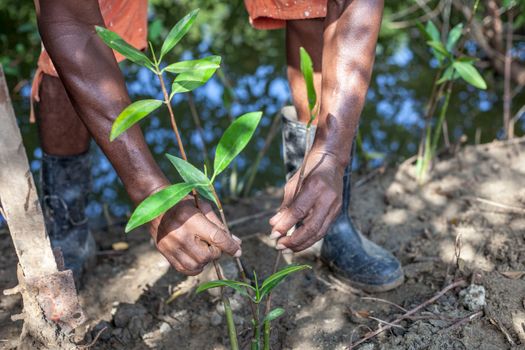
Around me, thirty local Quechua villagers—wearing hand-woven crimson ponchos that popped against the grey shale—were already swinging narrow-bladed pickaxes with rhythmic precision. Mateo, a local field director with weathered skin and eyes that crinkled when he smiled, handed me a foot-tall Polylepis sapling. Its roots were wrapped in a biodegradable husk made of local alpaca wool and dried moss.
"Plant it three fingers below the soil line," Mateo told me, pointing his wooden dibber toward a freshly carved terrace. "The winds come hard in late August. Give her a deep foundation."
By noon, our crew had put 1,400 native trees into the mountain. My lower back ached, my calluses were bleeding through my canvas work gloves, and I felt more connected to this planet than I had in a decade of luxury travel writing. Reforestation isn't a passive donation; it is dirty, sweaty, deeply satisfying physical labor that permanently rewires how you see the landscapes you visit.
If you are planning to take part in tree-planting trips in deforested regions in August 2026, this guide provides the blueprint to skip greenwashed tourist traps and join genuine, high-impact ecological restoration field operations.
---
Why August 2026 is the Critical Window for Reforestation Travel
Tree planting isn't something you can do whenever you feel like taking a vacation. Nature operates on precise hydrologic calendars. August is a unique ecological pivot point across multiple climate zones:
- The Tropical Andes (Peru/Ecuador): August falls squarely in the dry-to-shoulder transition. High-altitude mountain paths are passable without major landslides, yet subterranean moisture levels are ideal for cold-hardy native species like Polylepis to take root before early spring rains arrive.
- The East African Rift (Kenya/Tanzania): August aligns with the cool, misty post-long-rains season. Saplings planted now settle into damp soil without suffering root scald from intense equatorial summer sun.
- Southeast Asian Highlands (Northern Thailand): August is peak monsoon season. While wet, planting during monsoon guarantees a near 90% sapling survival rate in degraded dipterocarp ecosystems without artificial irrigation.
- Subpolar North (Iceland/Scotland): August provides 18 hours of daylight and mild ground temperatures—the ultimate window to establish native birch and willow saplings before arctic frosts lock the soil in October.
---
4 Vetted Tree-Planting Expeditions for August 2026
1. The High Andes Polylepis Forest Revival (Peru)
- The Context: Centuries of livestock overgrazing and firewood harvesting depleted 97% of native Andean high-altitude cloud forests. This loss destabilized local water tables and threatened species like the critically endangered Royal Cinclodes bird.
- The Work: Joining local indigenous communities under the banner of regional restoration initiatives (Acción Andina partner networks), volunteers hike to remote high-altitude sites (3,800–4,500m) to plant native Polylepis (queñua) trees.
- The Experience: You'll stay in community homestays in the Sacred Valley, eating steaming bowls of quinoa-vegetable soup and boiled native potatoes.
> Pro-Tip: Apply a heavy coat of natural beeswax boot seal to your leather hiking boots the night before heading out. High-altitude Andean mud contains acidic clay that will penetrate and ruin unsealed Gore-Tex within two hours of heavy planting.
``` Location: Sacred Valley & Vilcanota Range, Peru Partner Network: Acción Andina / ECOAN Minimum Commitment: 5 Days Difficulty Rating: 4.5/5 (High Altitude) ```
---
2. The Mau Forest Ecosystem Recovery (Kenya)
- The Context: Kenya’s Mau Forest Complex—the largest water tower in East Africa—lost over 100,000 hectares to illegal logging and agricultural encroachment over the last three decades. August 2026 marks a massive, coordinated push by local Community Forest Associations (CFAs) to restore critical elephant migration corridors.
- The Work: Volunteers work alongside local ranger teams, carrying nursery-grown indigenous saplings (Markhamia lutea, Podocarpus, and African Olive) into degraded perimeter buffers. You will clear invasive brambles, dig two-foot pit traps for water retention, and stake young trees.
- The Experience: Base camp consists of fixed canvas tents near the forest margin. Nights are filled with the sounds of bushbabies, crackling acacia wood campfires, and spiced chai brewed with fresh milk.
> Pro-Tip: Register directly through local Community Forest Association offices in Narok rather than booking through international luxury voluntourism agencies. You will save up to 70% in middleman fees, ensuring 100% of your daily stipend directly funds local nursery staff wages.
``` Location: Narok County / Mau Escarpment, Kenya Partner Network: Kenya Forest Service & Local CFAs Minimum Commitment: 7 Days Difficulty Rating: 3.5/5 (Moderate Terrain) ```
---
3. Doi Suthep Highland Cloud Forest Regeneration (Northern Thailand)
- The Context: Decades of slash-and-burn maize farming and wildfire damage severely eroded the steep mountain valleys surrounding Chiang Mai, destroying micro-watersheds vital to local mountain communities.
- The Work: Using the Framework Species Method (FSM) pioneered by Chiang Mai University’s Forest Restoration Research Unit (FORRU), volunteers plant 20–30 fast-growing native canopy species that naturally attract seed-dispersing wildlife.
- The Experience: Wet, muddy, and wildly rewarding. You will work in soft monsoon rain, wearing lightweight ponchos, surrounded by lush mist-shrouded jungle. Meals feature local northern Thai dishes—think sticky rice, steamed pumpkin, and northern-style pork curry with wild ginger.
> Pro-Tip: Trade your modern high-tech daypack for a traditional woven bamboo back-basket provided at the camp kitchen. They balance load weight significantly better on 40-degree muddy slopes and won't trap heat against your lower back in humid monsoon conditions.
``` Location: Chiang Mai Province, Thailand Partner Network: FORRU-CMU Community Projects Minimum Commitment: 3 Days Difficulty Rating: 3/5 (Humid/Slippery) ```
---
4. Hekla Volcanic Desert Reforestation (Iceland)
- The Context: Early settlement deforested over 95% of Iceland's native birch woodlands, creating giant volcanic deserts prone to severe dust storms and topsoil erosion, particularly around Mt. Hekla.
- The Work: Volunteers work in sprawling black-sand landscapes, planting mountain birch (Betula pubescens) and tea-leaved willow (Salix phylicifolia) using specialized sapling tubes designed to pierce dense basaltic gravel.
- The Experience: Surreal, stark, and beautiful. You'll sleep in eco-cabins powered by geothermal heat, soothe tired muscles in natural hot springs at the end of the shift, and watch the sun hover on the horizon during long August twilights.
> Pro-Tip: Pack three pairs of ultra-thin, windproof neoprene gloves. The fine volcanic ash near Hekla acts like sandpaper when wet; standard cotton work gloves will wear through at the fingertips in less than forty-eight hours.
``` Location: Rangárvallasýsla Region, South Iceland Partner Network: Icelandic Forestry Association (Skógræktin) Minimum Commitment: 5 Days Difficulty Rating: 2.5/5 (Moderate Cold/Wind) ```
---
Field Gear Essentials: What to Pack for August 2026
Do not pack like a standard tourist. Planting 100 to 300 saplings a day requires functional, durable workwear built for mud, moisture, and high movement:
- Footwear: Broken-in, waterproof 8-inch work or hiking boots with aggressive lug soles. (No low-cut trail runners; mud suction will pull them right off your feet).
- Gloves: Two pairs of nitrile-coated palm work gloves (for wet planting) and one pair of heavy leather gloves (for clearing thorny brush).
- Pants: Ripstop canvas or reinforced trekking pants. Avoid thin synthetic leggings—blackberry thorns and jagged volcanic rock will shred them immediately.
- Hydration & Tools: A 3-liter heavy-duty hydration bladder and a personal 7-inch folding multi-tool for field repairs.
- Skin & Sun Protection: Mineral-based SPF 50 sunscreen and zinc oxide cream. The glare at high altitudes in Peru or open plains in Iceland will burn exposed skin through cloud cover.
---
How to Avoid Greenwashing: The 4-Point Checklist
Before booking any tree-planting trips in deforested regions in August 2026, ask the operator these four critical field questions:
- "What is your 3-year sapling survival rate?" (If they don't track survival rates or state a unrealistic "100%," walk away. Honest projects target 75–85% survival and budget for replanting).
- "Are the species monoculture or native biodiverse mix?" (Never fund pine or eucalyptus monocultures, which deplete groundwater and ruin native soil chemistry).
- "Who owns the land once the trees are planted?" (Ensure land ownership belongs to local indigenous communities, public conservation land, or protected trusts—not private logging corporations).
- "How are local residents compensated?" (Ethical trips hire local field leads, source food from nearby farms, and pay fair living wages to local nursery workers).
---
Quick Facts & Budget Breakdown
| Destination | Est. Daily Cost ($ USD) | Primary Native Species | Nearest Travel Hub | Best Arrival Window | | :--- | :--- | :--- | :--- | :--- | | Sacred Valley, Peru | $45 – $75 / day | Polylepis, Buddleja | Alejandro Velasco Astete Airport (CUZ) | Aug 1 – Aug 10 | | Mau Forest, Kenya | $60 – $110 / day | Podocarpus, African Olive | Jomo Kenyatta Intl Airport (NBO) | Aug 5 – Aug 20 | | Chiang Mai, Thailand| $35 – $65 / day | Ficus, Eugenia, Magnolia | Chiang Mai Intl Airport (CNX) | Aug 10 – Aug 25 | | Mt. Hekla, Iceland | $90 – $150 / day | Downy Birch, Tea-leaved Willow| Keflavík Intl Airport (KEF) | Aug 1 – Aug 15 |
---
A Typical Day on the Reforestation Line
What does life actually look like on these expeditions? Here is the field reality:
- 06:30 AM: Wake-up call. Breakfast of local staples—steamed plantains in Kenya, spicy rice porridge in Thailand, or oats with dried bilberries in Iceland.
- 07:30 AM: Equipment check and safety brief. Loading sapling trays onto pack mules, trucks, or personal back-baskets.
- 08:30 AM – 12:30 PM: Primary planting shift. Working in paired teams (one person cutting holes, one setting saplings and packing soil firm).
- 12:30 PM: Field lunch on the trail—cold roasted sweet potatoes, hard-boiled eggs, local cheeses, and hot herbal teas from thermal flasks.
- 01:30 PM – 03:30 PM: Secondary shift focused on mulching, staking, and recording GPS coordinates of new planting plots for satellite monitoring.
- 04:30 PM: Return to base camp. Tool cleaning, blade sharpening, boot washing, and resting tired limbs.
- 06:30 PM: Dinner and community discussion. Local field botanists share insights on regional ecology, wildlife tracking, and upcoming conservation goals.
---
Final Thoughts: The Legacy You Leave Behind
When you leave a standard vacation, your footprint consists of hotel receipts, restaurant bills, and photos saved on a cloud server.
When you return from a dedicated tree-planting expedition, your legacy is physical. Decades from now, while you are sitting at a desk thousands of miles away, a high-altitude cloud forest in the Andes will be catching mountain mist because of a sapling you set into the dirt on a chilly August morning. The soil will be held firm, the birds will have returned to the canopy, and the world will be a little cooler, a little greener, and infinitely more resilient.
Pack your work boots for August 2026. The soil is waiting.
---
More pictures

Tags
Share this guide
We may earn a commission if you click a link and buy a product or service, at no extra cost to you. How affiliate links work.
Been there?