
Tired of 5,000-passenger megaships, endless buffet lines, and hyper-commercialized port stops? You aren't alone. Industry insiders and seasoned travel editors are officially turning their backs on traditional ocean liners. The future of sea travel belongs to small-footprint, wind-powered vessels: catamaran cabin charters, historic wooden gulets, and expedition tall ships. Here is your definitive blueprint to trading the floating resort for authentic, wind-in-your-hair sailing adventures that let you drop anchor in untouched coves, eat freshly caught octopus at family-run tavernas, and rediscover the true romance of the sea. ---
The Death of the Megaship: Why Travel Experts Are Turning to Wind Power
I stepped off the rickety wooden tender onto the polished teak transom of a 48-foot Fountain Pajot catamaran, and the first thing that hit me was not the smell of heavy diesel exhaust or the blare of a mega-ship’s horn. It was the sharp, clean scent of wild rosemary drifting off the limestone cliffs of Vis, mingled with ocean salt spray and sun-warmed cedar.
Behind us, two miles out in the Adriatic, a 17-deck ocean liner sat anchored like a floating suburb, churning out thousands of tourists bound for a sanitized, three-hour port rush. On our boat? There were eight of us. Our skipper, a sun-baked local named Luka, handed me a glass of crisp, chilled Pošip wine, unclipped the mainsheet, and asked a simple question: "Which uninhabited bay do you want to swim in for lunch?"
That single moment captured everything wrong with modern mega-cruising—and everything brilliant about the alternative ocean movement sweeping the travel world.
Over the past three years, a massive shift has occurred among maritime travel experts. Destinations like Amsterdam, Venice, Santorini, and Juneau are imposing strict bans and daily caps on massive cruise ships to combat overtourism and environmental degradation. Concurrently, travelers are realizing that a resort with 5,000 strangers isn't actually a sea voyage—it's a floating mall.
If you crave the rhythm of the ocean without the crowds, sailing adventures offer the ultimate antidote. Here are the top expert-recommended small-vessel alternatives to traditional cruises, complete with insider logistics, costs, and secret routes.
---
1. Catamaran Cabin Charters: The Gateway to Barefoot Luxury
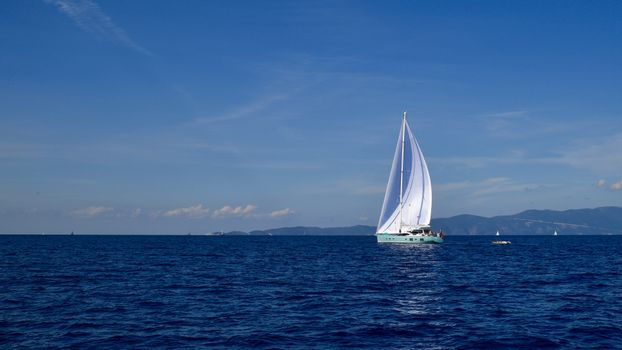
If you have never set sail before, the phrase "yacht charter" might sound like something reserved strictly for billionaires and reality TV stars. Enter the catamaran cabin charter—the exact alternative travel editors are swooping up this year.
``` [CATAMARAN CABIN CHARTER AT A GLANCE] +--------------------+--------------------------------+ | Ideal For | First-time sailors, couples | | Average Capacity | 8–12 guests | | Coastal Draft | Shallow (~4 feet) | | Highlight | Access to secret, skinny bays | +--------------------+--------------------------------+ ```
Instead of booking an entire boat, you rent a single air-conditioned cabin with an en-suite bathroom on a 45- to 50-foot twin-hulled catamaran. A professional skipper and a private chef run the vessel, handling all navigation, mooring fees, and meals.
Why It Beats a Cruise Ship:
Catamarans feature a shallow draft (often less than four feet), allowing them to sail directly into secluded turquoise lagoons where cruise ships would run aground. Twin hulls provide exceptional stability, reducing seasickness dramatically compared to monohulls.
- The Vibe: Informal, intimate, and effortlessly chic. Days are spent lounging on the bow trampolines and paddleboarding straight off the stern sugar scoops.
- Best Regions: The British Virgin Islands (BVI), the Cyclades in Greece, and the Exumas in the Bahamas.
> PRO-TIP: When booking a cabin charter, request an aft starboard cabin. These staterooms sit farthest away from the generator housed in the port hull, guaranteeing whisper-quiet sleep when anchored overnight in calm bays.
---
2. Historic Wooden Gulets: Turkish & Dalmatian Tradition
For travelers who want spacious wooden decks, rich history, and zero work, traditional Gulets are the gold standard.
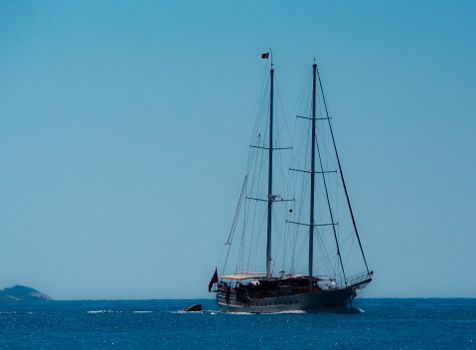
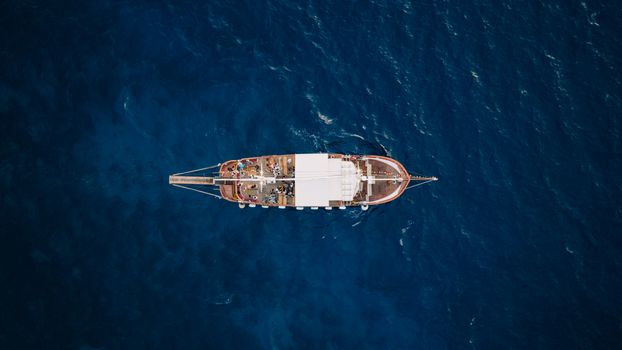
Originally built in southwestern Turkey as working fishing and cargo boats, modern gulets are handcrafted wooden motor-sailers ranging from 70 to 120 feet. Featuring sweeping mahogany decks, plush sun-lounging cushions, and spacious cabins, they offer a vintage nautical aesthetic paired with modern luxury.
``` ____/|___ / \ | GULET | <-- Handcrafted teak & mahogany body ~~~\_________/~~~~~~~~~~~~~~~~~~~~~~~~~~~~~~~~~~~~~~~ \_______/ <-- Deep keel for smooth coastal cruising ```
The Culinary Advantage:
Unlike mega-cruises that serve mass-catered buffets, gulet trips center around fresh, localized culinary experiences. Your onboard chef visits local harbor markets every morning, returning with fresh sea bass, wild sumac, ripe pomegranates, and warm pita.
- The Experience: You anchor in hidden coves along Turkey’s Turquoise Coast or Croatia's southern islands. You'll spend mornings swimming in crystal-clear waters before enjoying a four-course Turkish meze spread on the aft deck.
- The Route to Take: Sail the Blue Cruise route between Bodrum and Fethiye, or trace the coast from Split to Dubrovnik.
> PRO-TIP: Skip the crowded port of Marmaris. Ask your captain to lay anchor in Selimiye Bay, a quiet fishing village where you can walk ashore to Sardunya Restaurant for octopus tenderized on seaside rocks and grilled over wild olive branches.
---
3. Tall Ship Expeditions: Romantic Maritime Thrills
If your idea of a sea voyage involves dramatic canvas sails, historic lines, and the raw thrill of open-ocean transit, swap the cruise ship for a Tall Ship Expedition.
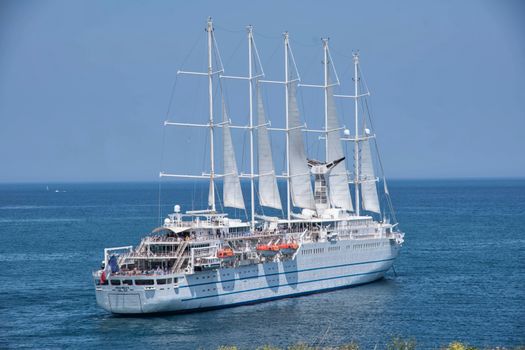
Companies like Star Clippers or non-profit sail-training vessels operate authentic square-riggers and multi-masted barques that harness the wind just as sailors did centuries ago.
``` ============================= TALL SHIP vs. MEGA CRUISE SHIP =============================
TALL SHIP MEGA CRUISE [~150 passengers] [5,000+ passengers]
- Driven by true wind sails - Heavy marine gas oil / diesel
- Can dock at historic town centers - Outer industrial ports only
- Active participation optional - Passive entertainment lines
```
What Makes It Special:
This is not a simulated theme-park ride. These are true working vessels where you can watch the crew climb the rigging—or even harness up and climb to the crow's nest yourself. Because these ships rely predominantly on sail power, their carbon footprint is a fraction of a standard cruise liner's.
- The Vibe: Nautical grandeur meets adventurous storytelling. Evening drinks take place on teak decks beneath towering sails illuminated by floodlights.
- Top Destinations: Transatlantic crossings, the Costa Rica/Panama coastlines, and the Lesser Antilles.
> PRO-TIP: Look for "Repositioning Voyages" in October and April when tall ships move between summer Mediterranean routes and winter Caribbean bases. These 12 to 14-day ocean passages cost up to 50% less per night than standard island-hopping itineraries.
---
4. Flotilla Sailing: The Social, Self-Drive Adventure
What if you hold a basic sailing certification (or want to sail with friends who do), but don't feel confident navigating unfamiliar foreign waters alone? Flotillas are the ultimate solution.
A flotilla consists of a fleet of 5 to 10 bareboat yachts sailing a shared itinerary alongside a "Lead Boat" crewed by a skipper, a marine mechanic, and a host.
``` [Lead Boat: Skipper + Mechanic + Host] | +---> [Yacht 1: Your Group] +---> [Yacht 2: Solo Travelers] +---> [Yacht 3: Family Crew] ```
The Best of Both Worlds:
You enjoy the freedom of skippered or bareboat sailing during the day, choosing your own pace and stopovers. By late afternoon, the lead crew meets you at the destination harbor, takes your mooring lines, and handles docking logistics.
- Social Life: Every night, flotilla members gather at a designated local taverna for shared dinners, marine briefings, and sundowners.
- Where to Go: The Ionian Sea in Greece (gentle winds, line-of-sight navigation) or the Saronic Gulf.
> PRO-TIP: Schedule your flotilla trip for late May or mid-September. The thermal afternoon mistral winds are predictable (12–18 knots), water temperatures are warm, and harbor mooring space in spots like Paxos or Lefkada is easy to secure.
---
5. Small-Ship Expedition Vessels: Reaching the Unreachable
For extreme destinations like Antarctica, Svalbard, or the Galápagos, traditional sailing vessels aren't always practical due to harsh polar winds or strict park regulations. Enter small expedition vessels (carrying 16 to 100 passengers max).
While technically motorized, these ships are the exact opposite of mega-cruises. Designed with reinforced ice-class hulls and equipped with fleets of Zodiac tenders, these ships focus on wilderness immersion rather than onboard casinos or Broadway shows.
``` [POLAR EXPEDITION MATRIX] Mega Cruise Small Expedition (3,000+ Guests) (50-100 Guests) ----------------------------- ----------------------------- ❌ Landings blocked by treaty ✅ Daily Zodiac shore landings ❌ No ice navigation access ✅ Polar ice-sheet access ❌ High environmental noise ✅ Silent electric engines ```
Ecological & Experiential Advantage:
Under IAATO (International Association of Antarctica Tour Operators) rules, no more than 100 passengers are allowed ashore at any single location in Antarctica at one time. On a 3,000-passenger ship, you may only get an hour ashore every few days—or be banned from landing entirely. On a 60-passenger expedition ship, everyone goes ashore simultaneously, multiple times a day.
- The Focus: Daily kayak excursions, marine biology lectures by onboard researchers, and wildlife sightings guided by polar experts.
- Key Locations: Greenland’s Disko Bay, the Svalbard Archipelago, and the Antarctic Peninsula.
---
Master Logistics & Budget Breakdown
Sailing adventures feature different pricing structures than traditional inclusive cruise lines. Here is a clear breakdown of estimated costs, travel windows, and skill levels needed to help you plan your voyage.
| Sailing Style | Estimated Cost (Per Person/Week) | Best Travel Window | Required Skill Level | Best Included Perk | | :--- | :--- | :--- | :--- | :--- | | Catamaran Cabin Charter | $1,800 – $3,500 | May – Oct (Med)<br>Dec – Apr (Caribbean) | None (Skipper Included) | Onboard private chef & water toys | | Traditional Wooden Gulet | $1,400 – $2,800 | June – September | None (Full Crew Included) | Custom seafood meals & spacious decks | | Tall Ship Expedition | $2,200 – $5,000 | April – October | None (Option to assist crew) | Historical navigation experience | | Flotilla Sailing | $1,200 – $2,200 | May – June, Sept | Moderate (1 certified skipper/boat) | Built-in social network & support crew | | Small Expedition Ship | $5,000 – $12,000+ | Nov – March (Antarctica)<br>June – Aug (Arctic) | None | Expeditions led by marine scientists |
---
How to Book & Pack Like a Marine Insider
Switching from a cruise ship to a sailing vessel requires a slight shift in mindset and gear preparation. Keep these golden rules in mind:
``` PACKING CHECKLIST FOR SMALL BOATS [✓] Soft-sided duffel bag (NO hard suitcases) [✓] Non-marking deck shoes / rubber-soled sandals [✓] Reef-safe zinc sunscreen (standard sunscreens stain teak) [✓] Dry bag (10L to 20L) for tender rides [✓] Fast-drying microfiber towel ```
Rule #1: Ditch the Hard-Sided Suitcase
Sailing boat cabins are cleverly designed with built-in storage, but they do not have room for bulky, hard-shelled suitcases. Pack everything in a soft, collapsible duffel bag that can be folded flat and stowed under your berth.
Rule #2: Mind the Marine Head
Boat plumbing systems (the "head") are sensitive. Nothing goes into a boat toilet unless it has passed through your body first. Experienced sailors keep a small scented trash bag in the head for paper products to prevent mid-ocean blockages.
Rule #3: Protect the Teak
Leave your high heels and dark-soled running shoes at home. Hard soles damage delicate wooden decks, and dark rubber leaves scuff marks. Bare feet or clean, non-marking rubber-soled boat shoes are mandatory on board.
---
The Verdict: Reclaiming the Soul of Ocean Travel
The golden age of ocean travel was never about endless buffets, crowded gift shops, or standing in line with thousands of people to exit a gangway. It was about feeling the vessel leap forward as wind caught the canvas, watching phosphorescent algae sparkle in the wake at midnight, and waking up in a silent bay accessible only by sea.
By choosing a small sailing vessel—whether a sleek catamaran in the Virgin Islands, a historic gulet in Turkey, or a tall ship crossing the Atlantic—you do more than escape the crowds. You choose a sustainable, deeply authentic mode of travel that respects fragile ocean ecosystems and supports coastal island communities.
Unclip the lines, leave the megaships behind, and set sail.
---
More pictures
Tags
Share this guide
We may earn a commission if you click a link and buy a product or service, at no extra cost to you. How affiliate links work.
Been there?