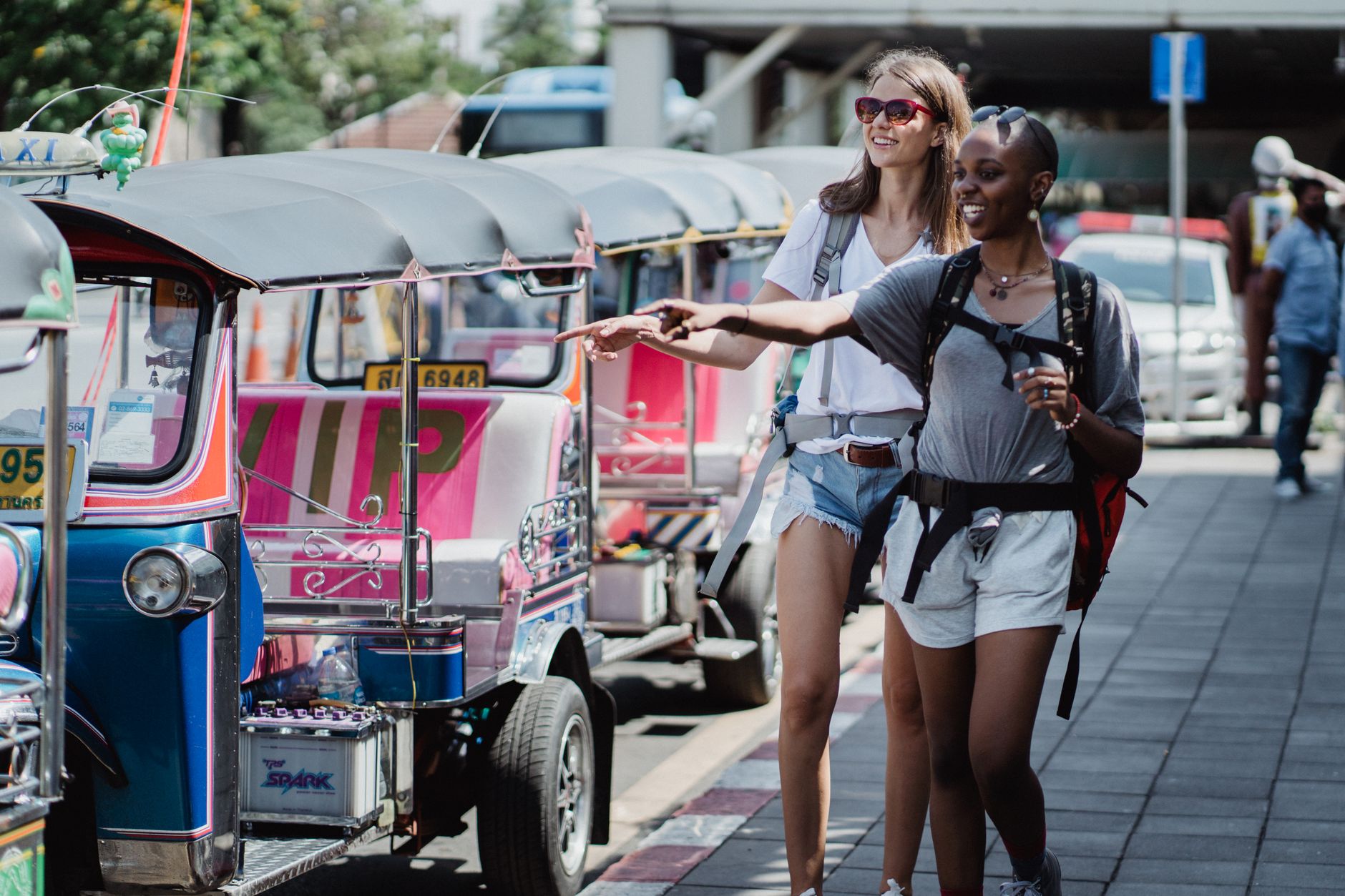
Tired of tourist buses and overpriced taxis? Get ready to unlock the true heart of a destination through its most authentic, thrilling, and often overlooked transportation methods. Locals use these daily, and once you discover them, your travels will never be the same. ---
Locals' Secret Rides: Epic Transportation Methods You NEVER Knew Existed (And How to Ride Them!)
The sun beat down on my face, the air thick with the scent of saltwater and exhaust fumes. I was perched precariously on the back of a motorcycle, my backpack digging into my spine, as we bounced along a dirt track that looked more like a goat path than a road. Below us, the turquoise waters of the Pacific shimmered, and ahead, a tiny, remote village beckoned. My driver, a grinning local named Rico, gestured wildly at the view, shouting something in Tagalog that I mostly understood as "Beautiful, right?!"
My heart pounded, a mix of exhilaration and mild terror. This wasn't a pre-booked tour, nor was it a comfortable taxi ride. This was a habal-habal – a motorcycle taxi, a lifeline for locals in the Philippines, and an adrenaline-fueled adventure for anyone brave enough to try it. And in that moment, as the wind whipped through my hair, I knew I was experiencing something truly authentic, something most tourists, sticking to their air-conditioned vans, would never even know existed.
That’s the thing about travel, isn’t it? We chase iconic landmarks, pristine beaches, and Michelin-starred meals. But often, the real magic lies in the everyday, in the heartbeat of local life that pulses just beneath the surface of the tourist veneer. And nowhere is this heartbeat more vibrant, more raw, and more utterly fascinating than in the unique, often improvised, and always unforgettable transportation methods that locals rely on.
Forget your Uber and your hop-on-hop-off buses. Today, we’re diving deep into the world of transportation methods so obscure, so thrilling, and so utterly ingrained in the local fabric, that most guidebooks wouldn't even dare to mention them. These aren’t just ways to get from A to B; they’re cultural experiences, mini-adventures, and your secret handshake to truly understanding a destination. And trust me, once you try them, your travel stories will be infinitely richer.
Ready to ditch the tourist trap and embrace the local hustle? Let's roll!
1. The Habal-Habal (Philippines): Your Two-Wheeled Daredevil to Paradise
What it is: Imagine a motorcycle. Now imagine three, maybe four, sometimes even five people (plus luggage, chickens, and a sack of rice) piled onto it, navigating winding mountain roads or treacherous jungle paths. That, my friends, is a habal-habal. Named for the Tagalog word for "to sit close to each other," these modified motorbikes are the backbone of rural transport in the Philippines, especially on islands like Palawan, Siquijor, and Siargao, where roads are often unpaved or non-existent.
My Anecdote: My first habal-habal experience was on the enchanting island of Siquijor. I wanted to reach a hidden waterfall, a spot off the main road that Google Maps vaguely acknowledged. My guesthouse owner simply pointed me to a group of men by the roadside, one of whom, a wiry fellow named Jun, offered to take me. We agreed on a price (about 200 PHP, or roughly $4 USD, for a 45-minute round trip), and off we went. We traversed muddy tracks, crossed shallow streams, and climbed impossibly steep inclines, the bike groaning but never giving up. I clung to the back, laughing as the wind tried to tear my hat off, the lush jungle blurring past. When we finally arrived at the secluded Cambugahay Falls, I felt like I'd earned the refreshing dip. It wasn't just a ride; it was a mini-expedition, a testament to local ingenuity and sheer grit.
Practical Tips for the Adventurous Traveler:
- Negotiate, Negotiate, Negotiate: Always agree on the price before you start. Locals might quote you a "tourist price" initially, so a friendly haggle is expected. Ask a local first for a fair price estimate.
- Safety First (ish): Helmets are rare for passengers, but if one is offered, take it. Hold on tight to the driver or the bike itself. These rides can be bumpy!
- When to Use It: Perfect for reaching remote beaches, waterfalls, or villages where cars can't go. Great for island hopping adventures.
- Where to Find Them: Look for groups of motorcycles parked at market squares, ferry terminals, or town centers. Just ask around – someone will point you to a driver.
- Instagram-Worthy Moment: Capture the stunning scenery from the back, or a shot of your bike parked at a remote viewpoint. Be mindful and ask permission before photographing your driver.
2. Matatus (Kenya & East Africa): Moving Art Galleries & Music Halls
What it is: Forget boring white minibuses. Matatus are Kenya's vibrant, customized public transport vehicles – a riot of color, art, and thumping music. Each matatu is a unique canvas, boasting elaborate graffiti, intricate airbrushing, and often a themed interior, complete with plush seating, LED lights, and powerful sound systems. They're not just transportation; they're a cultural phenomenon, a rolling expression of Kenyan youth culture, and an essential part of daily life in cities like Nairobi.
My Anecdote: Stepping into my first matatu in Nairobi was like entering a moving nightclub. The bass throbbed, rattling my teeth, and the interior was a kaleidoscope of spray-painted slogans, portraits of hip-hop stars, and flashing lights. The conductor, or makanga, expertly leaned out the door, shouting the destination, while the driver navigated the chaotic traffic with a dancer's grace. I squeezed into a seat next to a woman carrying a live chicken in a basket and a man engrossed in his phone. The journey was loud, bumpy, and utterly exhilarating. I learned more about local music, slang, and the rhythm of the city in that 30-minute ride than I had in days of walking. It cost me about 50 KES (less than $0.50 USD) for a relatively long journey across town.
Practical Tips for the Brave Traveler:
- Understand the Routes: Matatus operate on fixed routes. Look for the destination written on the side or front window. If in doubt, ask a local or the makanga.
- Paying Up: Fares are usually collected by the makanga once you're moving. Keep small bills (10, 20, 50 KES) handy. Prices can fluctuate based on demand or time of day.
- Embrace the Chaos: They can be crowded, fast, and loud. It's all part of the experience!
- Safety: While generally safe, be mindful of your belongings, especially in crowded situations. Avoid late-night rides if possible.
- Instagram-Worthy Moment: The exterior art is stunning! Get a shot of a particularly colorful matatu at a bus stop, or a candid shot of the lively interior (with permission if people are visible).
3. Colectivos (Latin America): The Shared Van Lifeline
What it is: Across Latin America, from the bustling streets of Mexico City to the remote Andean villages of Peru, colectivos are the unsung heroes of inter-city and intra-city travel. These are typically shared vans, minibuses, or even regular cars that operate on semi-fixed routes, picking up and dropping off passengers along the way. They're faster than local buses, much cheaper than taxis, and offer an authentic glimpse into daily life as locals commute, run errands, and travel between towns.
My Anecdote: In Peru, after exploring the Sacred Valley, I wanted to get from Ollantaytambo to Cusco without paying for an expensive private taxi. A local pointed me to the town square where a line of colectivos waited. I hopped into a van already half-full, and within minutes, we were off. The van filled up quickly, with people, their groceries, and even a couple of sheep in a sack in the back! The driver skillfully navigated the winding mountain roads, stopping frequently to let people on and off. I paid about 10-15 Soles (around $3-4 USD) for a journey that would have cost ten times that in a private car. The conversation, a mix of Spanish and Quechua, flowed around me, and I felt less like a tourist and more like a temporary resident, sharing a slice of everyday Peruvian life.
Practical Tips for the Savvy Traveler:
- How to Flag Them: They often have designated stops, but you can usually flag them down anywhere along their route by waving your hand.
- Confirm Destination & Price: Always confirm the price and your destination with the driver before getting in. "Cuánto cuesta a [destination]?"
- Luggage: Space can be tight. Smaller bags are best. Larger luggage might go on the roof or in the back, but confirm this.
- Patience is Key: They wait until they're full, or nearly full, before departing. This can mean a bit of a wait, but it keeps costs down.
- Cultural Etiquette: Offer your seat to elderly passengers or pregnant women. Be ready to squeeze in!
- Instagram-Worthy Moment: A shot of a bustling colectivo stop, or the view from the window as you speed through scenic landscapes.
4. The Jugaad (India): Ingenious Improvisation on Wheels
What it is: In the rural heartlands of India, where roads are rough and resources are scarce, necessity truly is the mother of invention. Enter the Jugaad. This term, literally meaning "an improvised arrangement or workaround," refers to a variety of homemade, often tractor-engine-powered vehicles, cobbled together from spare parts. They serve as multi-purpose transport, carrying everything from crops and livestock to entire families, connecting remote villages to markets and towns. They are raw, rustic, and a powerful symbol of human ingenuity.
My Anecdote: While traveling through Rajasthan, I ventured off the main tourist circuit into a small farming village. As I walked along a dusty road, a contraption rumbled towards me. It was a Jugaad: a tractor engine mounted on a wooden chassis, with huge wheels and a flatbed piled high with sugarcane. The driver, a young farmer with a beaming smile, waved as he passed. The sheer resourcefulness struck me. This wasn't a manufactured vehicle; it was a testament to local skill and adaptation, built to serve a specific, vital need. While I didn't ride one (they're not typically for passenger transport, and safety is a real concern), witnessing them in action was a profound experience, highlighting the vast difference between urban and rural India.
Practical Tips for the Observant Traveler:
- More for Observation than Riding: For tourists, Jugaads are more of a fascinating cultural sight than a practical mode of transport. They are not built for passenger safety.
- Where to See Them: You'll find them predominantly in rural areas, especially in states like Punjab, Haryana, Rajasthan, and Uttar Pradesh. Look for them on dusty country roads or near agricultural fields.
- Respectful Interaction: If you want to photograph one, always ask permission from the driver first. Be mindful of their work and daily life.
- Instagram-Worthy Moment: A wide shot of a Jugaad against a rural Indian landscape, showcasing its unique, rugged design and the surrounding environment.
5. Bicitaxis / Cyclos (Vietnam, Cuba, India): Slow Travel, Deep Immersion
What it is: In a world obsessed with speed, the bicitaxi (Cuba) or cyclo (Vietnam) offers a delightful antidote. These pedal-powered tricycles, with a passenger seat typically in front of the driver, are a charming, slow-paced way to explore city streets. They are an eco-friendly, intimate, and truly immersive mode of transport, allowing you to soak in the sights, sounds, and smells of a destination at a leisurely pace.
My Anecdote: After a whirlwind of activity in Hanoi, I decided to treat myself to a cyclo ride through the Old Quarter. My driver, a seasoned man with kind eyes, pedaled me through narrow alleyways, past bustling street food stalls, and alongside ancient temples. Unlike a car, there was no glass separating me from the vibrant chaos. I could hear the vendors' calls, smell the fragrant pho, and feel the gentle breeze. He pointed out landmarks I would have missed, shared snippets of local history, and even taught me a few Vietnamese phrases. The 45-minute ride cost me about 150,000 VND (around $6-7 USD), a small price for such a rich, sensory experience. It was a moment of pure, unadulterated travel joy.
Practical Tips for the Immersive Traveler:
- Negotiate Before You Ride: This is crucial. Agree on the price and duration of the ride before you get in. Clarify if the price is per person or per ride.
- Short Distances are Best: They're perfect for exploring compact areas like old quarters, historical districts, or short rides between attractions.
- Enjoy the Pace: Don't be in a rush. This is about soaking in the atmosphere, not getting somewhere quickly.
- Support Local Drivers: This is often their livelihood. A small tip for a good experience is always appreciated.
- Where to Find Them: Look for them congregated around popular tourist areas, markets, and hotels.
- Instagram-Worthy Moment: A classic shot of you in the cyclo with a bustling street scene behind you, or a close-up of the driver with a friendly smile.
6. Willys Jeeps (Colombia's Coffee Region): The Iconic Workhorses of the Andes
What it is: Head to Colombia's Zona Cafetera (Coffee Region), and you'll quickly discover the iconic Willys Jeeps. These rugged, open-sided vehicles, many dating back to World War II, are the lifeblood of transport in this mountainous, agricultural region. They ferry coffee beans, farmers, and tourists alike up and down steep, winding dirt roads, connecting the charming towns with the sprawling coffee plantations and natural wonders like the Cocora Valley. Often packed to the brim, with people standing on the back bumper, they are an exhilarating and utterly characteristic way to experience the region.
My Anecdote: My trip to Salento, a picturesque town nestled in the coffee hills, wouldn't have been complete without a ride on a Willys Jeep. To reach the famous Cocora Valley (home to the towering wax palms), you simply head to Salento's main square, where a convoy of colorful Jeeps awaits. I hopped onto the back of one, clinging to the roll bar as we sped along the bumpy track, the cool mountain air whipping past. The views of the lush green valleys and distant mountains were breathtaking. Sharing the ride with both locals heading to their farms and fellow travelers, the camaraderie was palpable. The 20-minute ride cost about 4,000 COP (just over $1 USD) each way – an absolute steal for such an unforgettable experience.
Practical Tips for the Thrill-Seeking Traveler:
- Where to Find Them: In towns like Salento, they gather in the main square. Just look for the line of Jeeps and ask for your destination.
- Standing on the Back: This is a common and exciting way to ride! Just hold on tight. If you prefer to sit inside, you might have to wait for a less crowded jeep or pay a bit more.
- Times: They run frequently during daylight hours, especially between popular tourist spots like Salento and Cocora Valley.
- Cost: Very affordable. Confirm the price before you get on.
- Instagram-Worthy Moment: The quintessential shot is of people standing on the back of a brightly colored Willys Jeep, framed by the stunning green hills of the Cocora Valley. Pure travel gold!
The Journey Is the Destination
These unique transportation methods aren't just about getting from point A to point B. They are about embracing the unexpected, stepping out of your comfort zone, and truly connecting with the pulse of a place. They are about the conversations you have with locals, the sights you wouldn't see from a tour bus, and the stories you'll tell for years to come.
So, on your next adventure, challenge yourself. Ditch the familiar. Ask a local how they get around. You might just discover a secret ride that transforms your entire trip, taking you deeper into the heart of a destination than you ever thought possible.
What's the most unique local transportation you've ever experienced? Share your stories and tips in the comments below! Let's inspire each other to explore beyond the beaten path.
---
More pictures


Tags
Share this guide
We may earn a commission if you click a link and buy a product or service, at no extra cost to you. How affiliate links work.
Been there?