
Ditch the airport security lines, the baggage-scale roulette, and the middle-seat purgatory. High-speed rail is officially beating short-haul aviation across Europe. From Rome to Milan and Paris to Barcelona, these are the ultra-fast, highly scenic, and incredibly convenient train routes that replaced short flights that are trending this summer. Here is your ultimate guide to booking like an insider, skipping the crowds, and traveling with style. ---
I stepped off the train at Milan’s Stazione Centrale, and instead of the dry, pressurized air of an Airbus cabin and the smell of jet fuel, I was greeted by the rich, roasted aroma of freshly pulled espresso from a nearby platform kiosk. There was no luggage-carousel lottery, no passport control queue, and no 45-minute taxi ride from a distant runway. I was simply there—right in the pulsing center of Lombardy, my collar unbuttoned, ready for lunch.
For decades, we’ve been conditioned to think that flying is the fastest way to get from Point A to Point B. But this summer, a quiet revolution is happening on the tracks. Thanks to massive infrastructure investments, new low-cost rail operators, and a growing collective fatigue with airport chaos, high-speed trains have systematically dismantled the short-haul flight market.
If you are planning a European getaway this season, these are the definitive high-speed rail routes that have made short flights obsolete.
---
1. Paris to Barcelona: The Mediterranean High-Speed Corridor
``` Route: Paris Gare de Lyon ➔ Barcelona Sants Time: 6 hours 41 minutes Key Player: TGV INOUI (SNCF) ```
For years, travelers automatically booked a cheap flight from Orly to El Prat to travel between these two iconic cities. Today, doing so is a rookie mistake. Once you factor in the RER train to the Paris airport, the mandatory two-hour pre-flight arrival, security lines, flight time, and the metro ride from Barcelona’s airport, flying saves you less than an hour of actual transit time—while costing you your sanity.
The direct TGV INOUI high-speed train runs from the historic Gare de Lyon in Paris straight to Barcelona Sants. The journey is a masterclass in shifting geography. You watch the urban sprawl of Paris melt into the rolling vineyards of the Burgundy region, speed past the salt marshes of Narbonne where pink flamingos gather, and skirt the edge of the Mediterranean Sea before cutting through the Pyrenees into Catalonia.
Inside the TGV INOUI Experience
The double-decker Euroduplex trains are incredibly comfortable. Opt for the upper deck ("Salle Haute") for the best panoramic views of the French countryside. While there is an onboard bistro car (Le Bar), the food can be uninspiring.
- Pro-Tip: Before boarding at Gare de Lyon, slip into Le Train Bleu’s takeaway kiosk or the nearby L'Artisan Boulanger on Rue de Charenton. Grab a freshly baked, crispy jambon-beurre (ham and butter baguette) and a couple of salted caramel macarons. Your train picnic will be the envy of the carriage.
- The Hidden Entrance: Gare de Lyon is notoriously crowded. Skip the main Hall 1 entrance and use the underground access via the Metro lines (1 or 14). Follow the signs directly to "Grandes Lignes" Hall 2, which is usually far less congested.
---
2. Rome to Milan: The Route That Grounded an Airline
``` Route: Roma Termini ➔ Milano Centrale Time: 2 hours 59 minutes (non-stop) Key Players: Frecciarossa (Trenitalia) & Italo ```
If you want to understand how high-speed rail can completely destroy an aviation market, look at Rome to Milan. This route was once the crown jewel of Italy’s national airline, Alitalia. Today, the air shuttle is virtually dead, replaced by a sleek red bullet: the Frecciarossa 1000.
Blasting down the Italian peninsula at speeds up to 300 km/h (186 mph), the non-stop Frecciarossa connects Roma Termini and Milano Centrale in just under three hours. It is fast, silent, and runs with the precision of a Swiss watch.
Choosing Your Carrier: Frecciarossa vs. Italo
You have two choices here: the state-run Frecciarossa or the private competitor, Italo. While Italo offers excellent service and competitive pricing, Trenitalia’s Frecciarossa 1000 remains the gold standard for luxury.
If budget permits, book the Executive Class on the Frecciarossa. It features just eight individual, pivoting leather armchairs, a dedicated meeting room, and a high-end meal service designed by renowned Italian chefs, accompanied by unlimited prosecco and regional wines.
- Pro-Tip: If you are traveling on a standard ticket, book the "Silenzio" (Quiet) carriage in Business Class. It guarantees a flight-like quietness without the annoying ringtones of Italian business travelers closing deals at 200 mph.
- Local Secret: Don't buy coffee on board. Instead, arrive 20 minutes early at Roma Termini and head to Moka Bagt on the platform level. Order a shakerato (sweetened espresso shaken over ice) to drink like a local before you board.
---
3. Madrid to Barcelona: The Battle of the High-Speed Rails
``` Route: Madrid Puerta de Atocha ➔ Barcelona Sants Time: 2 hours 30 minutes Key Players: AVE, Iryo, Ouigo España, Avlo ```
The Puente Aéreo (air bridge) between Madrid and Barcelona was once the busiest passenger air route in the world. Today, more than 80% of travelers choose the train. The 2.5-hour journey on the high-speed line is a case study in how competition drives down prices and raises quality.
With four competing brands on this track, travelers are spoiled for choice. You have Spain’s classic high-speed train (AVE), its low-cost sibling (Avlo), the French-owned double-decker (Ouigo), and the ultra-stylish Italian-backed newcomer (Iryo).
Navigating the Options
For a premium experience at a budget-friendly price, book Iryo. Their trains feature custom-designed, red-leather seats with individual power outlets, fast Wi-Fi, and an exceptional dining program called Haizea, which serves authentic tapas like jamón ibérico and local cheeses directly to your seat.
- Pro-Tip: When departing from Madrid Puerta de Atocha, don't wait in the massive ground-floor boarding queue. Head to the upper level departure lounge (Planta Primera). The security screening here (which is just a quick baggage scan, no liquids limits) is much faster, and it leads directly to the high-speed platforms.
- The Sants Escape: Arriving at Barcelona Sants, the taxi line can be a 30-minute ordeal. Skip it entirely and take the L5 Metro line directly from inside the station to Diagonal or Sagrada Família—it’s faster and costs a fraction of the price.
---
4. London to Amsterdam: Ditching the Heathrow-Schiphol Nightmare
``` Route: London St. Pancras International ➔ Amsterdam Centraal Time: 3 hours 52 minutes Key Player: Eurostar ```
Flying between London and Amsterdam is notoriously unpredictable. Between the security meltdowns at Heathrow and the legendary queues at Amsterdam Schiphol, a simple one-hour flight can easily morph into an eight-hour travel nightmare.
Enter the Eurostar. Connecting London St. Pancras directly to Amsterdam Centraal in under four hours, this route runs right through the Channel Tunnel, speeds across the flat pastures of northern France and Belgium, makes a brief stop in Rotterdam, and pulls directly into the canal-lined heart of Amsterdam.
The Eurostar Protocol
Unlike domestic European trains, Eurostar requires border control checks before boarding because the UK is outside the Schengen Zone.
- Pro-Tip: Arrive at St. Pancras exactly 90 minutes before departure. Do not arrive three hours early like you would for a flight—you will not be allowed into the departure lounge, which has limited seating.
- The Seat Hack: On the Siemens Velaro trains (e320) used for this route, try to book seats in Carriages 8 or 9. These are closest to the buffet car (Café Métropole), meaning you can beat the rush for a hot cup of tea and a sausage roll as soon as the train departs.
---
5. Berlin to Brussels: Sleeper Trains and High-Speed Day Runners
``` Route: Berlin Hauptbahnhof ➔ Brussels-South (Midi) Time: 6 hours 45 minutes (Day) / ~10 hours (Nightjet Sleeper) Key Players: ICE (Deutsche Bahn) & ÖBB Nightjet ```
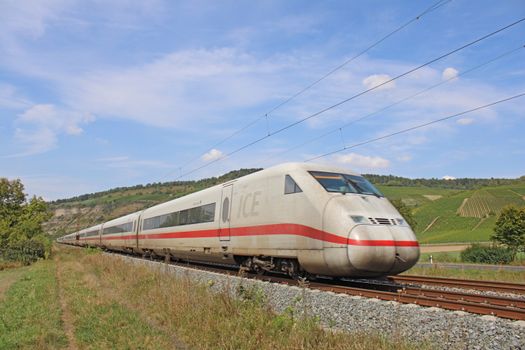
With Germany increasingly discouraging domestic and short-haul flights through environmental taxation, the rail corridor between Berlin and Brussels has become a major travel artery. You have two incredible ways to tackle this journey: a sleek daytime ICE (Intercity Express) or the romantic, eco-friendly ÖBB Nightjet sleeper train.
The daytime ICE is a mobile office and lounge. It features spacious seating, large wooden tables, and a proper onboard restaurant (Bordrestaurant) serving draft beer, organic German sausages, and fresh pretzels.
The Nightjet Experience
If you want to save on a night’s hotel accommodation, the Nightjet is the ultimate travel hack. You board in Berlin at 11:00 PM, fall asleep in a private compartment to the rhythmic click-clack of the rails, and wake up at 9:00 AM in Brussels, ready to tackle a plate of hot, pearl-sugar Liege waffles.
- Pro-Tip: When booking the Nightjet, avoid the crowded 6-berth couchette. Spend the extra money for a "Couchette Comfort" or a private "Sleeper Cabin" (which includes a small sink, fresh linens, and a complimentary breakfast of rolls, jam, and coffee).
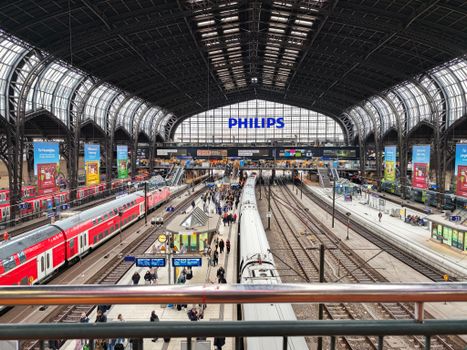
- Station Strategy: Berlin Hauptbahnhof is a massive, multi-level glass labyrinth. If you need to stock up on snacks, head to the basement level (-2). There is a large REWE supermarket where you can buy high-quality German chocolates, local beers, and fresh fruit at normal retail prices instead of inflated station kiosk rates.
---
6. Vienna to Venice: The Alpine Scenic Shortcut
``` Route: Vienna Hauptbahnhof ➔ Venezia Santa Lucia Time: 7 hours 40 minutes Key Player: Railjet (ÖBB) ```
Why fly over the Alps when you can glide through them? The regional flights between Vienna and Venice are notoriously turbulent and offer nothing but views of gray clouds. The ÖBB Railjet, however, takes you along the historic Semmering Railway—a UNESCO World Heritage site featuring dramatic stone viaducts, 15 tunnels, and breathtaking views of deep Alpine gorges.
This is not just a transit route; it’s an experience in its own right. As the train winds down from the Austrian Alps into the flat, sun-drenched plains of the Veneto region, the transition from Germanic order to Italian charm is palpable.
The Railjet Advantage
The Austrian Railjet trains are some of the modern marvels of European rail. They feature a silent zone, a family zone with a small cinema for children, and an excellent dining car serving authentic Austrian dishes.
- Pro-Tip: Book a seat on the right-hand side of the train (going south). This gives you the absolute best views of the Semmering Pass viaducts and the dramatic drop-offs into the valleys below.
- Onboard Dining: Skip the packed lunch. The ÖBB dining car serves a legendary Kaiserschmarrn (shredded caramelized pancakes with plum compote) and a hearty Tafelspitz (boiled beef broth with chives). Enjoying these with a glass of Austrian Grüner Veltliner while looking out at snow-capped peaks is one of the greatest pleasures in travel.
---
The Budget & Logistics Blueprint
To help you plan your ultimate summer rail adventure, here is a quick-reference guide comparing these key routes. Note that train prices are highly dynamic—booking 60 to 90 days in advance is crucial to securing the lowest fares.
| Route | Train Time | Flight Time (Door-to-Door) | Est. Train Cost (Standard) | Est. Flight Cost (With Bag) | Best Booking Window | | :--- | :--- | :--- | :--- | :--- | :--- | | Paris to Barcelona | 6h 41m | ~5h 30m | €49 - €139 | €80 - €180 | 90 Days | | Rome to Milan | 2h 59m | ~4h 15m | €29 - €89 | €70 - €130 | 60 Days | | Madrid to Barcelona | 2h 30m | ~4h 00m | €19 - €79 | €60 - €120 | 90 Days | | London to Amsterdam | 3h 52m | ~5h 00m | £59 - £189 | £80 - £160 | 120 Days | | Berlin to Brussels | 6h 45m | ~5h 15m | €39 - €119 | €90 - €170 | 90 Days | | Vienna to Venice | 7h 40m | ~5h 00m | €29 - €99 | €110 - €210 | 90 Days |
\Flight Time (Door-to-Door) includes: 45-minute transit to the airport, 2-hour pre-flight arrival/security check, actual flight time, 30-minute baggage claim/deplaning, and 45-minute transit from the destination airport to the city center.
---
Insider Rules for European Rail Travel
Before you book your tickets, memorize these three golden rules of the rails:
- Download the Carrier Apps Directly: Never buy tickets through third-party aggregator sites that charge high booking fees and make processing refunds or delays a nightmare. Use the official apps: SNCF Connect (France), Trenitalia or Italo (Italy), Renfe or Iryo (Spain), ÖBB (Austria), and DB Navigator (Germany).
- Watch the Baggage Rules on Low-Cost Rail: Budget rail operators like Ouigo and Avlo have adopted airline-style baggage policies. A standard ticket only includes a cabin bag and a personal item. If you are traveling with a large suitcase, you must pay to add a larger bag during the booking process. If you wait until you are on the platform, the fee triples.
- Validate Your Ticket: In some countries (particularly Italy), if you buy a regional paper ticket or a digital ticket without a fixed reservation, you must "validate" it before boarding. For paper tickets, use the green or yellow machines at the start of the platform. For digital tickets, swipe "Check-in" on the app before the scheduled departure time to avoid a hefty on-board fine.
The era of the stressful, polluting short-haul flight is drawing to a close. This summer, claim your window seat, order a glass of local wine, and watch the world go by at 300 kilometers per hour.
---
More pictures


Tags
Share this guide
We may earn a commission if you click a link and buy a product or service, at no extra cost to you. How affiliate links work.
Been there?