Forget typical souvenirs; imagine bringing home a new skill and a deeper understanding of a culture. This post dives into my life-altering journey of learning traditional music from masters across the globe, revealing how each note resonated far beyond the lesson itself. Get ready to be inspired to find your own musical adventure! ---
The air vibrated, not with the rumble of a train or the chatter of tourists, but with the ancient, soulful cry of a shakuhachi flute. I was tucked away in a quiet Kyoto temple garden, far from the bustling city, and the sound pierced straight through me, resonating with a longing I hadn't known I possessed. It was a pivotal moment – one that made me realize my travels, while exciting, were missing a crucial dimension. I was seeing the world, but was I truly feeling it, understanding it, connecting with it on a profound level?
That day, I decided to swap my tourist checklist for something far more challenging, intimate, and ultimately, life-changing: learning traditional music from local masters. It wasn't about becoming a virtuoso; it was about opening a new door to cultural immersion, a way to listen not just with my ears, but with my entire being. What followed was a series of adventures that taught me patience, discipline, humility, and a universal language that transcended any spoken tongue. From the communal clang of Balinese gamelan to the intricate rhythms of Indian tabla, these weren't just music lessons; they were lessons in life itself. And they changed me forever.
The Hypnotic Pulse of Bali: Learning Gamelan from Bapak Wayan
My first dive into the world of traditional music lessons took me to the lush, spiritual heart of Ubud, Bali. I’d always been captivated by the hypnotic, shimmering sound of gamelan music during temple ceremonies, its intricate layers weaving a tapestry of sound that felt both ancient and alive. I wanted to understand how such a complex, communal sound was created.
My quest led me to Bapak Wayan, a gentle, smiling man with eyes that held the wisdom of generations, living in a traditional family compound just outside Ubud. His small, open-air pavilion, surrounded by frangipani trees, served as his teaching space. It was here, amidst the scent of incense and the distant chirping of geckos, that I first laid my hands on a gangsa, a bronze metallophone, one of the many instruments in a gamelan ensemble.
Bapak Wayan didn't teach with sheet music; he taught through imitation, repetition, and an unspoken understanding of rhythm. "Feel the pulse," he’d say, his fingers dancing effortlessly over the keys, producing a cascade of shimmering notes. My initial attempts were clumsy, a cacophony rather than harmony. But with his patient guidance, I learned to strike the keys with the correct mallet technique, to damp the notes precisely, and most importantly, to listen. Gamelan isn't about individual brilliance; it's about the collective, about each instrument finding its place within the whole. It was a profound lesson in teamwork and humility.
I spent two weeks with Bapak Wayan, taking daily 90-minute lessons, each costing around 250,000 IDR ($17 USD). We started with basic melodies and gradually built up to more complex pieces. The highlight was when I was invited to join a small community practice session. Playing alongside seasoned Balinese musicians, feeling the energy of the ensemble, the vibrations of the instruments resonating through me – it was an unparalleled experience. I wasn't just observing Balinese culture; I was actively participating in it, contributing my small part to its vibrant tapestry.
Practical Tip: To find a gamelan teacher in Bali, start by asking at local cultural centers in Ubud (like the Agung Rai Museum of Art or the Arma Museum) or simply inquire at your guesthouse. Many local musicians are happy to teach, often from their family compounds. Don't be afraid to haggle gently on price, but always respect the value of their art and time.
The Zen of Breath: Mastering the Shakuhachi in Kyoto, Japan
The memory of that shakuhachi melody in Kyoto lingered, a quiet invitation to explore deeper. This time, I sought out the elusive bamboo flute, an instrument deeply intertwined with Zen Buddhism and meditation. My journey led me to Sensei Hiroshi, a soft-spoken master who taught from a minimalist studio overlooking a moss garden in the Gion district.
Learning the shakuhachi was a stark contrast to the communal joy of gamelan. It was an intensely personal, almost solitary pursuit. Sensei Hiroshi, with his serene demeanor, emphasized breath control, posture, and the concept of ma – the space or silence between notes, which is as important as the notes themselves. "The sound comes from your soul, not just your lips," he explained, demonstrating a single, sustained note that seemed to hang in the air indefinitely, rich with harmonics.
My first few days were spent simply trying to produce a consistent sound. The embouchure (the way you shape your mouth to blow across the edge of the flute) is notoriously difficult. I blew and blew, often producing only airy whispers or frustrated squeaks. Sensei Hiroshi never chastised; he simply adjusted my posture, reminded me to relax my shoulders, and encouraged me to breathe from my diaphragm. He taught me to listen to the subtle nuances of my own breath, to find stillness within myself before attempting to create sound.
Each 60-minute lesson, costing around 5,000 JPY ($35 USD), was a meditation in itself. We learned honkyoku – traditional Zen pieces originally played by komusō (wandering Zen monks). These weren't just melodies; they were spiritual exercises designed to foster enlightenment. As I slowly, painstakingly learned to coax a clear, resonant tone from the bamboo, I found myself experiencing a profound sense of calm and focus. The bustling world outside faded away, replaced by the rhythm of my breath and the pure, unadorned sound of the flute. It was a lesson in patience, perseverance, and finding beauty in simplicity.
Practical Tip: Finding a shakuhachi teacher in Japan requires a bit more research. Look for specialized shakuhachi schools or associations in major cities like Kyoto or Tokyo. Online forums dedicated to traditional Japanese music can also be a valuable resource. Be prepared for a more formal student-teacher relationship, emphasizing respect and dedication.
The Fiery Soul of Andalusia: Dancing with Flamenco Guitar in Seville, Spain
From the meditative calm of Japan, I plunged into the fiery passion of Seville, Spain, drawn by the urgent, heart-wrenching cries of flamenco. I’d witnessed countless flamenco shows, mesmerized by the intricate footwork, the soulful singing (cante), and the raw emotion. But it was the guitar, with its passionate strumming (rasgueado) and percussive golpes, that truly called to me. I wanted to understand the heartbeat of this intense art form.
My search for a flamenco guitar teacher led me to Maestro Ricardo, a grizzled, charismatic man in his late 60s, whose small studio in the Triana district felt steeped in history and tobacco smoke. Ricardo lived and breathed flamenco, his fingers gnarled but agile, moving with a speed and precision that defied his age. "Flamenco is not just music, mijo," he declared, "it is life, sorrow, joy, all in one strum!"
Ricardo didn't believe in gentle introductions. My first lesson, an hour costing 40 Euros ($43 USD), began with him handing me a battered guitar and demanding I mimic his complex rasgueados – rapid, rhythmic strumming patterns. My fingers, used to gentler melodies, protested fiercely. They ached, they fumbled, they refused to cooperate. Ricardo would tap his foot, clap his hands, and grunt encouragingly, or sometimes, with a playful growl, declare, "No! Feel it! Feel the compás!"
The compás, the rhythmic cycle, is the soul of flamenco. Ricardo taught me to listen for it, to internalize it, to let it guide my hands and my heart. He showed me basic falsetas (melodic variations) and the percussive golpes (tapping on the guitar body) that add texture and drive. He also stressed the importance of duende – that untranslatable, mystical quality of flamenco that evokes deep emotion. It wasn't about perfection; it was about expression, about pouring your soul into the strings.
I spent three intense weeks with Ricardo, taking lessons every other day. My fingers developed calluses, my wrist gained strength, and slowly, painstakingly, I began to weave simple flamenco rhythms. The greatest reward was when Ricardo would occasionally break into cante while I played, his voice raw and powerful, creating a magical synergy that sent shivers down my spine. It was a lesson in passion, perseverance, and allowing emotion to guide your art.
Practical Tip: Seville is the heartland of flamenco. Look for academies like the Flamenco Dance Museum or smaller, private studios in Triana or Santa Cruz. Many offer introductory guitar courses for beginners. Don't be shy about asking local musicians or tablao performers for recommendations. Be ready for a hands-on, often intense, learning experience!
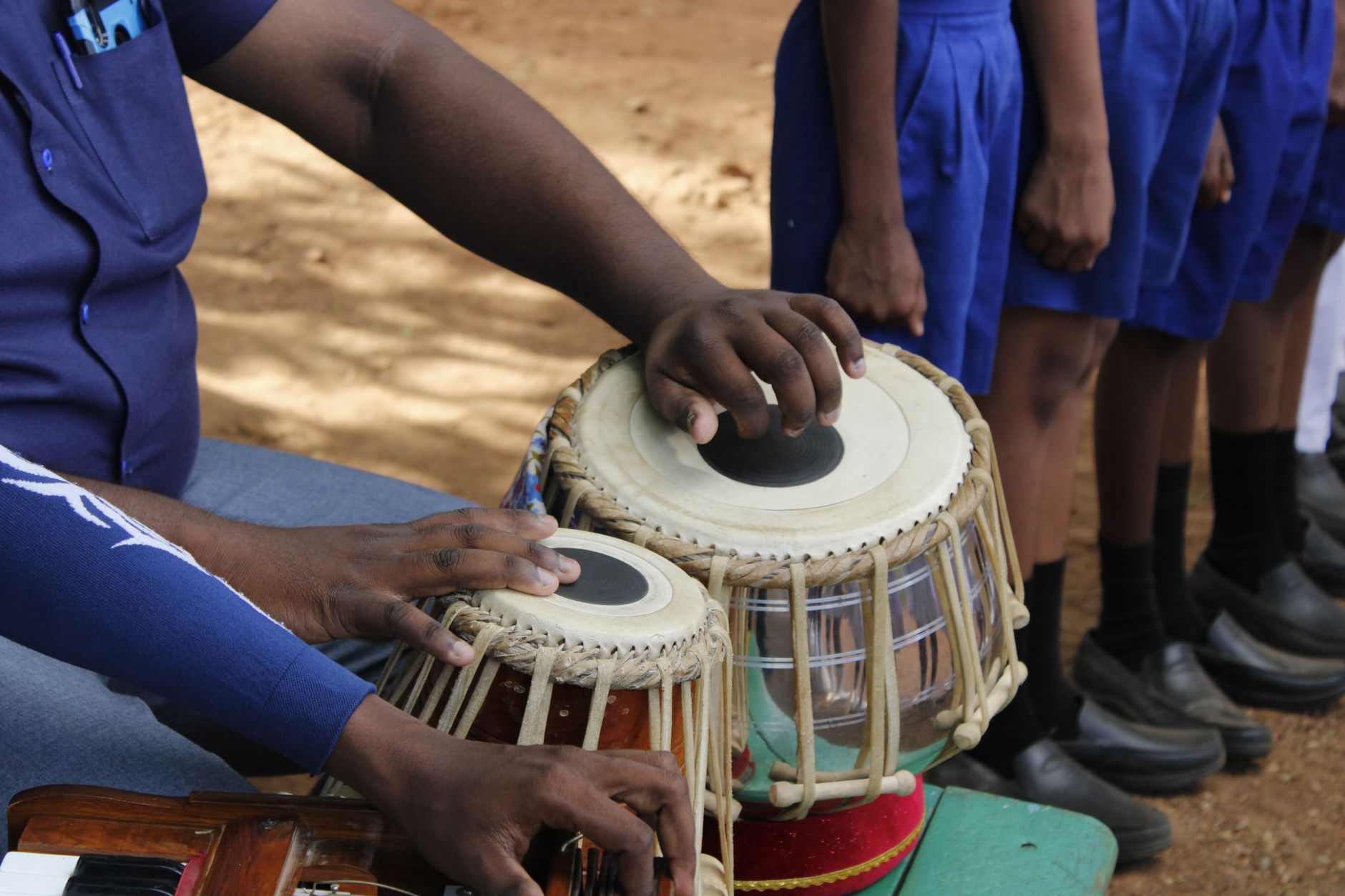
The Divine Rhythm of Varanasi: Unveiling the Tabla with Pandit ji
My final musical pilgrimage took me to the ancient, spiritual city of Varanasi, India. The air here buzzes with a constant hum of life – chanting, temple bells, boat horns, and beneath it all, the intricate, mesmerizing rhythms of Indian classical music. I was particularly drawn to the tabla, the pair of hand drums that form the backbone of so much of this tradition. I wanted to understand the mathematical precision and spiritual devotion behind its complex beats.
Finding a tabla master in Varanasi wasn't difficult; the city is a hub for classical Indian arts. I found Pandit ji (a respectful title for a scholar or master) through a recommendation at my guesthouse near Assi Ghat. His small, sparsely furnished room, filled only with a few instruments and the scent of incense, became my sanctuary for learning. Pandit ji, with his kind eyes and precise movements, embodied the ancient guru-shishya parampara – the teacher-disciple tradition.
Learning tabla is less about reading music and more about a spoken language of rhythmic syllables called bols. "Dha, Dhin, Na, Tin, Ta, Te, Tit, Kata," Pandit ji would chant, demonstrating the exact finger placement and strike for each sound on the dayan (treble drum) and bayan (bass drum). My initial attempts were clumsy, producing muffled thuds instead of crisp, resonant tones. My fingers felt alien, struggling to articulate the subtle nuances required.
Each two-hour lesson, costing around 1,000 INR ($12 USD), was a deep dive into rhythm theory and practice. Pandit ji patiently corrected my posture, the angle of my wrist, the placement of each finger. He taught me basic taals (rhythmic cycles) like Tintal (16 beats) and Keherwa (8 beats), gradually introducing more complex patterns. He explained that tabla is not just about playing notes; it's about a conversation, a dialogue between the drums, and ultimately, a path to meditation and devotion. The precision required was astounding, a rigorous mental and physical exercise.
I spent a month in Varanasi, dedicating myself to daily tabla practice. Slowly, painfully, the bols began to flow, my fingers found their rhythm, and the drums started to sing. It was a profound lesson in discipline, focus, and the spiritual power of rhythm. Playing tabla allowed me to experience a slice of Indian culture that no tourist could ever access, connecting me to a lineage of musicians stretching back centuries.
Practical Tip: Varanasi is an excellent place to learn Indian classical music. Many schools and individual gurus can be found around Assi Ghat. Ask at local music shops, guesthouses, or temples. Be prepared for a more traditional learning environment, where respect for the guru is paramount. Some teachers may prefer offerings or a long-term commitment rather than single lessons.
Beyond the Notes: Why This Changes Everything
You might be thinking, "That sounds amazing, but I'm not a musician!" And that's precisely the point. I didn't set out to become a professional musician, and I certainly didn't master any of these instruments in a few weeks. What I gained, however, was infinitely more valuable than technical proficiency.
- Deeper Cultural Immersion: Learning a traditional instrument thrusts you directly into the heart of a culture. You interact with locals on a deeper level, understand their values, history, and spiritual beliefs through their art. It’s an exchange, not just an observation.
- Unlocking a Universal Language: Music transcends language barriers. Even if you can't speak a word of the local tongue, you can connect through rhythm and melody. It fosters empathy and understanding.
- Mindfulness and Presence: Each instrument, from the meditative shakuhachi to the intricate tabla, demanded complete focus and presence. It was a powerful antidote to the constant distractions of modern life, forcing me to slow down and truly be in the moment.
- Patience and Resilience: Learning something entirely new and challenging in a foreign environment tests your limits. There were moments of frustration, but pushing through them built resilience and taught me the immense satisfaction of incremental progress.
- A Unique Souvenir: Forget magnets or keychains. The ability to play a few notes of gamelan, a flamenco rasgueado, or a tabla bol is the ultimate, unforgettable souvenir – a skill and a memory etched into your very being.
- Breaking Down Barriers: Sitting knee-to-knee with a local master, sharing stories (often through gestures and broken English), and laughing at my own mistakes created genuine connections that would have been impossible through conventional tourism.
These experiences didn't just teach me music; they taught me how to listen more intently, how to adapt, how to connect, and how to appreciate the incredible diversity and beauty of human expression across the globe.
Your Turn: How to Find Your Master and Start Your Musical Journey
Feeling inspired to find your own traditional music mentor? Here's how to make it happen:
- Research, Research, Research: Before you go, research traditional instruments and music styles of your destination. Look for local music schools, cultural centers, or community groups. Websites like "TakeLessons" or "Local Guides" can sometimes list private tutors, but often the best finds are on the ground.
- Ask the Locals: Once you arrive, your guesthouse owner, local shopkeepers, or even fellow travelers can be invaluable resources. Don't be afraid to strike up conversations and ask for recommendations.
- Be Open-Minded and Humble: You're there to learn, not to impress. Approach the experience with humility and a genuine desire to understand. Don't expect to become a master in a few lessons.
- Learn Basic Phrases: Even a few words in the local language (hello, thank you, how much?) will go a long way in showing respect and building rapport.
- Budget Accordingly: Lesson costs can vary widely. Factor in the price per hour/session, potential instrument rental (if available), and any offerings or gifts that might be customary. Don't shy away from negotiating politely, but always value the teacher's expertise.
- Consider Your Commitment: Are you looking for a single introductory lesson, or do you want to commit to several days or weeks? Communicate your intentions clearly.
- Document Your Journey (Respectfully): Take photos and videos (with permission!) to capture your progress and memories. Share your journey on social media to inspire others, using relevant hashtags like #TravelMusic #CulturalImmersion #LearnAnInstrumentAbroad.
- Safety First: If arranging private lessons, always meet in a public place for the first lesson or ensure someone knows where you are going.
The Melody Lingers On...
My passport is now filled with stamps, my camera roll with incredible landscapes, but it's the melodies I learned, the rhythms I embodied, and the connections I forged through music that resonate most deeply. These traditional music lessons from masters weren't just a travel activity; they were profound, transformative experiences that peeled back layers of culture and revealed the universal heart of humanity.
So, the next time you plan a trip, consider stepping beyond the usual tourist trail. Seek out a local master, pick up an unfamiliar instrument, and let the music guide you to a deeper, more authentic understanding of the world – and of yourself. You might just find that the most extraordinary souvenir you bring home is a new song in your heart.
Where will your musical adventure take you next? Share your dreams in the comments below!
---
More pictures

Tags
Share this guide
We may earn a commission if you click a link and buy a product or service, at no extra cost to you. How affiliate links work.
Been there?