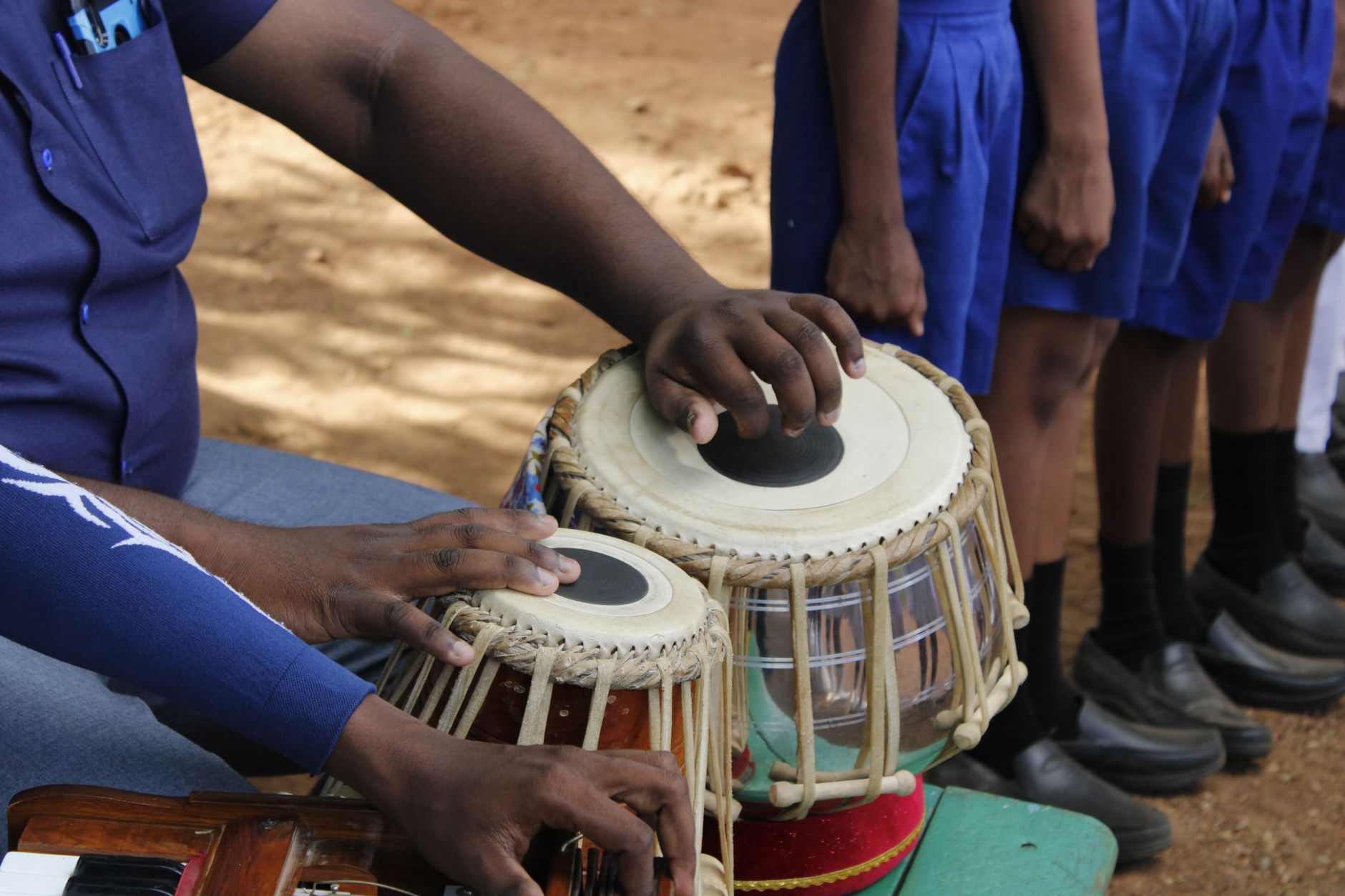
Tired of curated feeds and superficial travel? Imagine truly connecting with a culture, not just seeing it. This isn't about snapping a perfect shot; it's about sitting at the feet of a master, learning ancient melodies that have shaped generations. Discover how to find and learn traditional music from local legends, an immersive experience Instagram influencers rarely capture. ---
The sun was setting over the rice paddies of Ubud, casting long, golden shadows across the village. I sat cross-legged on a bamboo mat, a heavy bronze gangsa (a Balinese metallophone) before me, my hands poised with wooden mallets. Beside me, Pak Wayan, a man whose wrinkles told stories of a thousand sunsets and a million melodies, smiled patiently. "Again," he murmured, his fingers demonstrating the intricate rhythm with effortless grace. This wasn't a staged photoshoot; it was a deeply personal, often fumbling, but utterly profound music lesson. This was the kind of travel Instagram influencers rarely, if ever, show you.
I’d been scrolling through endless feeds of perfect beaches, perfectly posed brunches, and perfectly filtered sunsets. While beautiful, a nagging feeling started to grow: was I just consuming travel, or was I truly experiencing it? I craved something deeper, something that would leave an indelible mark on my soul, not just a fleeting memory on my phone. That's when the idea struck me: traditional music. What better way to understand a culture than through its ancient rhythms, its soulful melodies, passed down through generations?
This isn't about becoming a virtuoso overnight, nor is it about collecting a cool "travel skill" for your LinkedIn. It's about the journey, the connection, and the quiet, unassuming magic that happens when you open yourself up to learning from a true master. It's the kind of authentic immersion that goes beyond the 'gram, offering a richness that no perfectly curated post can ever capture.
Beyond the Scroll: Why Traditional Music Matters
In an age where travel can often feel like a race to check off bucket list items, learning traditional music forces you to slow down. It demands presence, patience, and a willingness to be vulnerable. It’s an antidote to the fast-paced, superficial world of social media, offering a genuine connection that transcends language barriers and cultural differences.
Think about it: music is the heartbeat of a culture. It tells stories of triumph and sorrow, celebrates ancient gods and everyday life, and binds communities together. When you learn a traditional instrument, you're not just learning notes; you're learning history, philosophy, and a way of life. You're participating in a living tradition, not just observing it.
And this is precisely why many influencers might shy away from it. It's not always visually glamorous. It often involves hours of repetitive practice, awkward fumbling, and a distinct lack of "insta-worthy" moments (unless you consider the sweat and concentration on your face aesthetic). It requires effort, commitment, and a deep respect for the craft – qualities that don't always translate into viral content. But for the true traveler, the seeker of depth, these are the very elements that make it so incredibly rewarding.
The Quest for Harmony: Finding Your Master
So, how do you find these hidden gems, these custodians of ancient sounds, when they’re not listed on the top 10 things to do in your travel guide? It requires a different kind of research, a willingness to step off the well-trodden path and embrace serendipity.
- Go Local, Go Offline: Forget Google Maps for a moment. Start by asking. Talk to your guesthouse owner, your local barista, the vendor at the market. Ask about traditional music, ask about local teachers, ask about cultural centers. Often, the best connections are made through word-of-mouth.
- Cultural Centers & Community Hubs: Many cities and towns, especially those rich in cultural heritage, will have local cultural centers or community halls. These are often hubs for preserving traditional arts. They might offer classes or be able to point you towards individual teachers.
- Specialized Music Schools (Non-Touristy): Look for schools dedicated to specific traditional instruments. These might not be flashy, but they're where the real learning happens. A quick search for "[country/region] traditional music school" might yield results, but always cross-reference with local recommendations.
- Attend Local Performances: Go to local festivals, temple ceremonies, or pub sessions. Observe, listen, and if the vibe is right, approach the musicians during a break. Express your admiration and ask if they know of anyone who teaches. Be respectful and humble.
- Language is a Bridge: While not always essential, learning a few basic phrases in the local language can go a long way. "Hello," "thank you," "I love your music," and "Do you know a teacher?" can open doors. If language is a significant barrier, consider hiring a local guide or even a student to help translate your initial inquiries.
- Patience and Respect: Finding a master takes time. Don't rush it. When you do find someone, approach them with utmost respect for their age, their craft, and their culture. Remember, you are asking them to share a piece of their heritage with you.
Melodies of the World: My Journeys to Musical Mastery
My personal quest for authentic musical immersion has taken me to some truly unforgettable places, introducing me to incredible individuals and ancient sounds that resonate deep within.
A. Bali, Indonesia – The Hypnotic Pulse of Gamelan
My first foray into traditional music lessons began in the heart of Bali, Ubud. I’d always been captivated by the intricate, almost mystical sound of Balinese Gamelan – an ensemble of gongs, metallophones, and drums that accompanies everything from temple ceremonies to shadow puppet plays. It's not just music; it's a spiritual experience.
I stayed at a small family-run guesthouse, and on my second evening, I heard the faint, shimmering sounds of a practice session from a nearby banjar (community hall). The guesthouse owner, Ibu Kadek, noticed my fascination. "My uncle, Pak Wayan, he teaches Gamelan," she offered, her eyes twinkling. "He is a master."
The next morning, I found myself in Pak Wayan's open-air studio, surrounded by gleaming bronze instruments. He was a gentle, patient man, with a quiet strength that belied his age. I started with the gangsa, learning basic interlocking patterns. Gamelan isn't about individual virtuosity; it's about collective harmony, where each instrument plays a small, precise part that interweaves with others to create a complex, shimmering tapestry of sound.
Pak Wayan taught me not just the notes, but the philosophy behind the music – the balance, the community, the connection to the divine. Each 90-minute lesson cost me around 200,000 IDR (about $13-15 USD), a small price for such profound wisdom. We communicated through a mix of broken English, Indonesian, and the universal language of music. He’d demonstrate, I’d imitate, often clumsily, and he’d correct with a gentle touch on my wrist. By the end of my two weeks, I wasn't a Gamelan player, but I understood its soul, and I could contribute a small, humble part to its mesmerizing rhythm. It changed how I listened to music forever.
B. County Clare, Ireland – The Soulful Cry of the Fiddle
From the tropical warmth of Bali, my journey took me to the verdant, often rainy, landscapes of County Clare, Ireland. I’d always loved the raw, emotive power of Irish traditional music, particularly the fiddle. My goal wasn't just to hear it in a pub, but to feel it under my own fingers.
I based myself in Doolin, a small coastal village famous for its vibrant pub sessions. Every evening, musicians would gather in O'Connor's Pub, their instruments weaving tales of joy, sorrow, and ancient legends. I spent several nights just listening, mesmerized by the intricate jigs, reels, and hornpipes.
One evening, I struck up a conversation with an older gentleman named Seamus, who was playing a lively fiddle. He had a twinkle in his eye and a laugh that filled the room. I confessed my dream of learning the fiddle. He chuckled. "Ah, the fiddle, she's a tricky mistress! But a rewarding one." He put me in touch with his niece, Fiona, a music teacher in nearby Ennistymon.
Fiona was a whirlwind of energy, her fingers dancing across the fiddle strings with incredible speed and precision. Her lessons, held in her cozy cottage, focused on technique, ornamentation, and the feel of the music – the 'lilt' and 'drive' that are so essential to Irish trad. Each hour-long lesson cost me €40. She started me on basic scales and simple tunes, patiently correcting my bow hold and finger placement. She encouraged me to listen to as much music as possible, and, crucially, to join in the pub sessions, even if it was just tapping my foot in time.
Sitting in a pub, a pint of Guinness in hand, listening to Fiona and Seamus play, feeling the vibrations of the music in my chest, was an education in itself. It taught me about community, storytelling, and the enduring spirit of a people. By the time I left, I could stumble through a few basic tunes, but more importantly, I understood the heart of Irish music – its resilience, its joy, and its profound sense of belonging.
C. Hue, Vietnam – The Whispering Strings of the Dan Bau
My third musical pilgrimage led me to the ancient imperial city of Hue, Vietnam, a place steeped in history and poetic beauty. Here, I discovered the dan bau, a Vietnamese monochord – a single-stringed instrument known for its haunting, ethereal sound. It’s an instrument of incredible subtlety and emotional depth, often used to accompany poetry and traditional storytelling.
Walking through the bustling streets, I heard its distinct, almost human-like voice emanating from a small, unassuming building. It turned out to be a traditional music school, not one aimed at tourists, but at preserving the local heritage. I hesitantly walked in, and was greeted by Ms. Linh, a graceful woman with long, dark hair and a serene smile.
Ms. Linh had been playing the dan bau since she was a child, learning from her grandmother, who had played for the emperor's court. Her English was limited, but her passion for the instrument was boundless. She showed me how to use the small bamboo stick to pluck the single string, while manipulating a flexible rod to create incredible pitch bends and vibrato – a technique that makes the dan bau sound like it’s singing.
My lessons, which lasted an hour and cost around 300,000 VND (about $12-13 USD), were a masterclass in patience and precision. The dan bau is incredibly challenging, requiring delicate control and a keen ear. I struggled to produce the pure, bell-like tones that Ms. Linh created so effortlessly. But she never rushed me, encouraging me with soft words and gentle adjustments. She taught me a simple folk melody, a lullaby, and as I slowly, painstakingly, managed to coax its melancholic beauty from the single string, I felt a deep connection to the history and soul of Vietnam. It was a lesson in perseverance, and in finding profound beauty in simplicity.
The Unseen Curriculum: What You Truly Learn
Beyond the notes and rhythms, these experiences taught me so much more. They were lessons in life itself:
- Patience and Humility: You’re starting from scratch, often in a new cultural context. You will make mistakes. You will sound terrible at first. The masters teach you that patience is not just a virtue, but a necessity.
- Cultural Nuance: Music is a window into a culture’s soul. You learn about history, social structures, spiritual beliefs, and everyday life in a way no museum visit ever could.
- Deep Connection: There’s something profoundly intimate about sharing music. It breaks down barriers, fostering connections with locals that go far beyond transactional tourist interactions. You become a student, not just a visitor.
- Mindfulness and Presence: Learning an instrument demands your full attention. It pulls you away from distractions, forcing you into the present moment – a rare and precious gift in our hyper-connected world.
- The Joy of Slow Travel: This isn't a quick photo op. It’s a commitment, an investment of time and effort. It encourages you to linger longer in a place, to explore its hidden corners, and to truly absorb its essence.
Practical Harmony: Tips for Your Musical Pilgrimage
Ready to embark on your own musical adventure? Here’s some actionable advice to help you hit the right notes:
- Do Your Research (But Not Too Much!): Have a general idea of the traditional music styles in the region you're visiting. Listen to local music beforehand to get a feel for it. But don't over-plan; leave room for spontaneity and local recommendations.
- Budget Wisely: Lessons from local masters are often surprisingly affordable, especially compared to Western music schools. However, factor in the cost of multiple lessons, transport to and from the teacher, and potentially a small gift as a token of appreciation. My lessons ranged from $12-50 USD per hour, which is excellent value for one-on-one instruction.
- Be Open and Respectful: Approach with an open mind and a respectful attitude. You are a guest in their country and a student of their tradition. Be on time for lessons, listen attentively, and be prepared to learn in their way, not necessarily yours.
- Embrace the Language Barrier: Don't let a lack of shared language deter you. Music is a universal language, and much can be conveyed through demonstration, gesture, and patience. A translation app can help with key phrases.
- Document Thoughtfully: While the goal isn't social media fame, you'll want to remember your experience. Ask permission before taking photos or videos. Consider a small audio recorder (again, ask permission) to capture practice sessions. Most importantly, keep a travel journal to capture your thoughts and feelings.
- Don't Expect Perfection: You're not going to become a master in a few weeks. The goal is immersion and connection, not technical perfection. Celebrate small victories and enjoy the process.
- Support Local Artists: If you connect with a musician, consider buying their album or attending their performances. This directly supports their livelihood and keeps these traditions alive.
These experiences are the antithesis of the curated, often superficial content you see from many travel influencers. They are messy, challenging, and deeply personal. They don't always look pretty on camera, but they feel incredible in your heart. They are the true gems of travel, the stories you'll tell for a lifetime, the connections that will shape your understanding of the world.
So, next time you're planning a trip, step away from the scroll. Seek out the hidden harmonies, the ancient rhythms, and the wisdom of the masters. It's an adventure that will resonate long after the final note fades.
What traditional music are you dreaming of learning? Share your thoughts below or tag us on social media with #TripsoraMusicJourney!
More pictures

Tags
Share this guide
We may earn a commission if you click a link and buy a product or service, at no extra cost to you. How affiliate links work.
Been there?