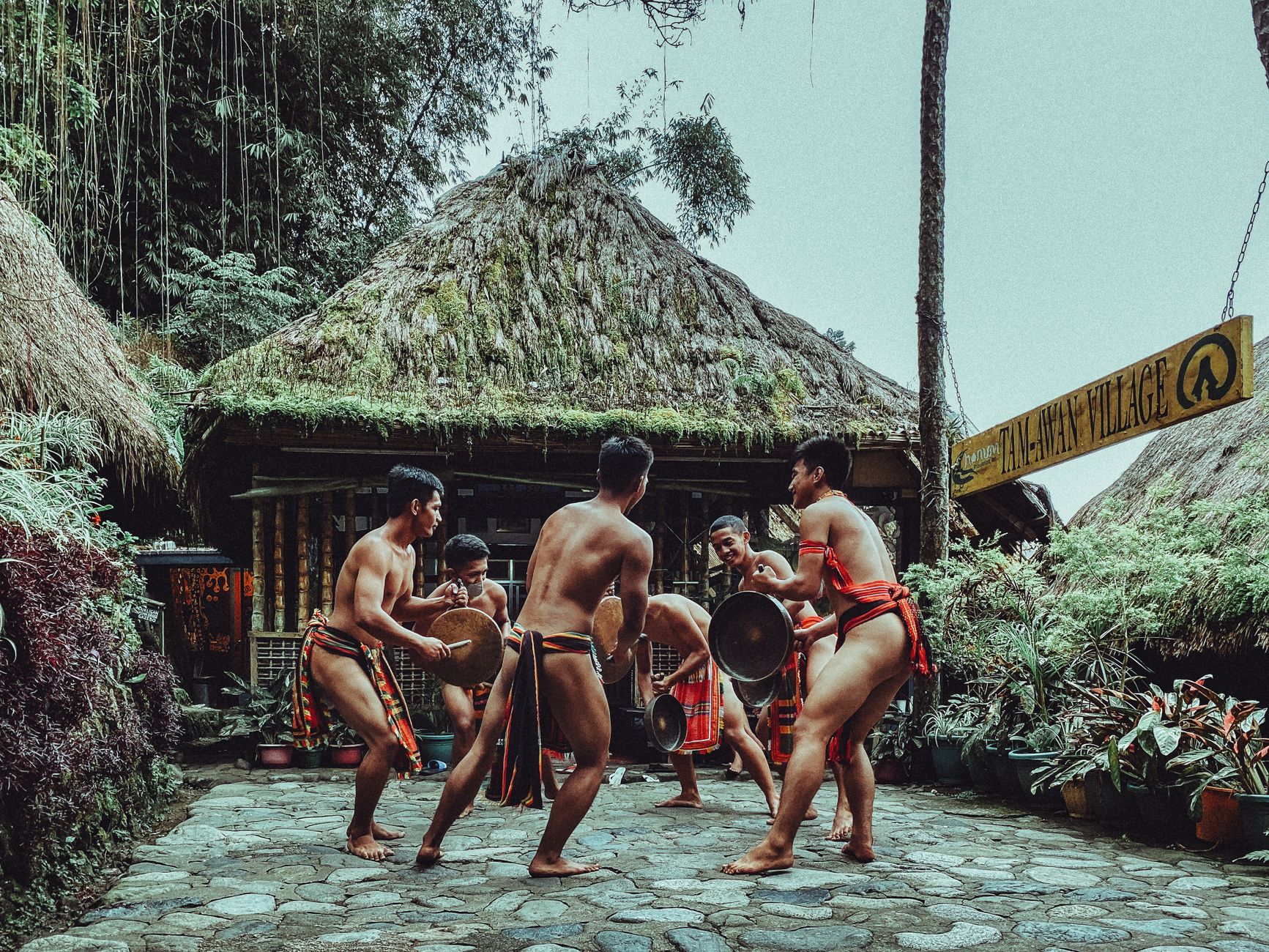
Forget the usual tourist traps. My most profound travel memories aren't from famous landmarks, but from dusty village squares and bustling city parks, learning traditional games from locals. These simple pastimes, steeped in culture and history, didn't just teach me new skills – they completely reshaped my understanding of connection, community, and what it truly means to travel. ---
Forget Souvenirs: These Traditional Games Changed My Life Forever!
I used to be that traveler. You know the one. Checklist in hand, racing from one iconic landmark to the next, snapping photos, feeling a fleeting sense of accomplishment before moving on. I’d seen the Eiffel Tower, trekked the Great Wall, and marvelled at the pyramids. Yet, despite the endless stream of "likes" on my social media, something always felt… missing. A deeper connection, perhaps? A real sense of belonging, even if just for a moment?
It wasn't until a sweltering afternoon in a back alley of Manila, Philippines, that my entire travel philosophy flipped on its head. I was wandering, slightly lost, trying to escape the relentless heat, when I stumbled upon a group of kids, no older than ten, engrossed in a game. They were hopping, skipping, and throwing a small stone with incredible agility across a chalk-drawn grid on the pavement. The air was thick with their laughter, fierce concentration, and the rhythmic thump of bare feet.
Curiosity, as it often does, got the better of me. I paused, watching, a smile creeping onto my face. One of the kids, a girl with braids and eyes that sparkled with mischief, noticed me. She didn't speak English, and my Tagalog was limited to "salamat" (thank you), but her gesture was universal: a pointed finger at the grid, then at me, an unspoken invitation. Hesitantly, I stepped forward. That day, learning to play Piko (the Filipino version of hopscotch) from those boisterous children, changed everything. It wasn’t just a game; it was an invitation into their world, a shared moment of pure, unadulterated joy that transcended language barriers and cultural differences. It was authentic. It was real. And it was just the beginning of a journey that would redefine my travels forever.
The Unexpected Invitation: My First Dive into Local Play
My initiation into the world of traditional games through Piko was clumsy, hilarious, and utterly liberating. The chalk grid was simple, but the rules, communicated through gestures, demonstrations, and a lot of giggles, were surprisingly nuanced. You had to throw your pamato (a small stone or flat object) into a square, hop through the grid, pick it up, and return, all without stepping on lines or losing balance. My first few attempts were abysmal. I tripped, I stumbled, my pamato flew wildly off course. But the kids didn't mock me; they cheered, they patiently re-explained, they clapped when I finally managed a full round.
What struck me most was the sheer inclusivity. There was no entrance fee, no language test, just an open space and a shared desire for fun. In that dusty alley, with the scent of street food wafting by and the distant hum of traffic, I wasn't a tourist anymore. I was just another player, part of their game, part of their community, even if only for an hour. It taught me humility, patience, and the incredible power of a simple smile. It cost me nothing but a little sweat and pride, and in return, I gained a memory more vivid and meaningful than any postcard could convey. This wasn't just observing culture; it was living it.
More Than Just a Game: Unlocking Cultural Secrets with Oware
My Piko experience ignited a spark. From then on, I started actively seeking out local games. My next profound encounter happened in Accra, Ghana, during a trip through West Africa. I was sitting at a local market, sipping a refreshing bissap (hibiscus tea), when I noticed a group of older men gathered under a tree, deeply focused on a wooden board with several rows of scooped-out holes. They were playing Oware, a traditional Mancala-style game, moving seeds with a deliberate, almost ritualistic rhythm.
Oware isn't just a game; it's a cultural cornerstone across many parts of Africa, often passed down through generations. It's a game of strategy, foresight, and mathematical prowess, but also of community and storytelling. I watched for a long time, mesmerized by the intricate patterns of play. Eventually, one of the men, noticing my interest, gestured for me to sit.
His name was Kofi. He spoke excellent English and, with infinite patience, began to teach me the rules. The game involves "sowing" seeds into pits and "capturing" them based on specific rules. It's deceptively simple to learn, yet incredibly complex to master. Kofi explained how Oware teaches life lessons: planning for the future, understanding consequences, and even the importance of sharing resources (as you "sow" seeds into your opponent's pits). We played for hours, the afternoon sun dappling through the leaves, the rhythmic click of seeds filling the air. He told me stories of his childhood, of learning Oware from his grandfather, of how it brought families and villages together.
I bought my own beautiful wooden Oware board from a craftsman at the market for about 80 Ghanaian Cedis (roughly $7 USD) – a tangible souvenir of a far deeper experience. It sits on my coffee table now, a constant reminder of Kofi's wisdom, the warmth of Ghanaian hospitality, and the intricate beauty of a game that transcends mere entertainment. It was a masterclass in cultural understanding, offered freely, under a mango tree.
The Universal Language of Play: Breaking Down Barriers with Pétanque
Language barriers can be a daunting aspect of international travel. But I discovered that a simple game can often bridge the widest linguistic divides. My journey took me to the sun-drenched south of France, to the charming port city of Marseille. One evening, strolling along the waterfront, I saw groups of elderly men and women, their faces etched with years of laughter and sun, engaged in what looked like a graceful, slow-motion bowling game. This was Pétanque.
The game involves throwing hollow metal balls (boules) as close as possible to a small wooden target ball (the cochonnet or "piglet"). It’s a game of precision, strategy, and a surprising amount of subtle body language. I stood watching, captivated by the easy camaraderie, the gentle banter, and the satisfying clink of metal on metal.
Gathering my courage, and armed with a few rudimentary French phrases, I approached a group. "Bonjour! C'est Pétanque?" I asked, pointing to their game. A gentleman with a magnificent mustache, Jean-Luc, smiled warmly. "Oui, monsieur! Vous voulez jouer?" With a nod and a nervous grin, I was in.
My French was terrible, and their English was equally limited, but it didn't matter. Jean-Luc and his friends demonstrated the grip, the stance, the subtle flick of the wrist. They cheered my good throws and offered encouraging groans for my misses. We communicated through smiles, shrugs, and the universal language of shared focus. They offered me a glass of pastis (a local anise-flavored aperitif), and we spent the next two hours in joyful competition.
There were no complex rules to memorize, no intense physical demands, just the simple pleasure of throwing a ball and sharing a moment. It was a beautiful reminder that connection doesn't always require words. It requires presence, willingness, and an open heart. The cost? Zero, just a willingness to engage. The reward? A profound sense of belonging and the simple joy of shared humanity.
A Test of Skill and Spirit: Challenging Myself with Jianzi
Not all traditional games are about gentle camaraderie. Some demand skill, precision, and a healthy dose of persistence. While exploring the bustling streets of Beijing, China, I often saw groups of people, young and old, gathered in parks, kicking what looked like a feathered shuttlecock. This was Jianzi, or Chinese shuttlecock kicking, a game that blends elements of soccer and badminton, but played solely with the feet and body.
Jianzi is mesmerizing to watch. Players keep the shuttlecock airborne using their feet, knees, and sometimes even their shoulders, performing acrobatic feats with incredible grace and control. It's not just a game; it's a form of exercise, a social activity, and for some, almost a meditative practice.
I was drawn to its challenging nature. One afternoon, in a quiet corner of a park near the Temple of Heaven, I saw a lone elderly gentleman, Mr. Li, effortlessly keeping a jianzi aloft. He noticed my captivated gaze and, with a knowing smile, kicked the jianzi directly towards me. I fumbled, tried to kick it, and sent it sailing into a bush. He chuckled, retrieved it, and patiently began to show me the basics: how to balance the shuttlecock on your foot, the correct kicking motion, the importance of rhythm.
Learning Jianzi was a humbling experience. It required immense focus, balance, and coordination. My legs ached, my attempts were clumsy, and the jianzi seemed to have a mind of its own, constantly defying my efforts. But Mr. Li was a patient teacher, his encouragement unwavering. He didn't just teach me the mechanics; he taught me about perseverance, about finding rhythm in chaos, and about the quiet satisfaction of incremental improvement.
I spent several afternoons with Mr. Li, slowly, painstakingly improving. I never reached his level of effortless grace, but I did learn to keep the jianzi airborne for longer periods, feeling a surge of triumph with each successful kick. I bought my own jianzi for about 20 RMB (around $3 USD) from a street vendor – a simple item that represented hours of focus, shared laughter, and a profound personal challenge. It wasn't just about learning a new skill; it was about embracing the discomfort of learning, the beauty of persistence, and the joy of a shared, wordless journey with a kind stranger.
Your Turn to Play: How to Find and Join a Game
Ready to step off the tourist treadmill and dive into the heart of local culture? Here’s how you can find and join traditional games on your next adventure:
- Look Beyond the Obvious: Traditional games rarely happen in designated tourist zones. Venture into local parks, town squares, community centers, beaches, or even quiet side streets. Look for groups of people gathered, laughing, and engaged in a repetitive, focused activity.
- Observe First, Then Approach: Don't just barge in. Take a few minutes to watch the game. Understand the flow, the basic mechanics, and the social dynamics. This shows respect and genuine interest.
- Learn a Few Local Phrases: A simple "Hello," "Thank you," and "May I join?" in the local language goes a long, long way. Even a clumsy attempt will be appreciated.
- Example: In Spanish-speaking countries: "Hola," "Gracias," "¿Puedo unirme?"
- Example: In French-speaking countries: "Bonjour," "Merci," "Puis-je me joindre?"
- Approach with Humility and a Smile: A warm, open smile is your best asset. Approach a smaller, less intense group first. Make eye contact. Genuinely ask if you can join or if they can teach you. Be prepared to look silly and make mistakes – that's part of the fun!
- Be Patient and Respectful: Don't expect to be a master instantly. Embrace the learning process. Listen to instructions, even if communicated through gestures. Respect local customs and rules. If they say no, thank them anyway and move on.
- Offer a Small Token (Optional but Appreciated): While most games are free and about shared experience, sometimes a small gesture can be nice. This could be offering to buy a round of drinks (if appropriate), sharing some snacks, or simply expressing profound gratitude. For children, a small, inexpensive gift from your home country (like a sticker or a postcard) can be a lovely gesture, but always gauge the situation first.
- Don't Be Afraid to Look Foolish: This is perhaps the most important tip. You will make mistakes. You will look clumsy. That's okay! It's part of the authentic experience and often leads to the most memorable laughs and connections.
- Capture the Moment (Respectfully): If you want to snap a photo or video, always ask permission first. Be discreet and don't let your camera become a barrier to genuine interaction. The best "Instagram-worthy" shots are often the candid ones that capture the joy and connection, not just a posed selfie.
The Unforgettable Impact: Why These Games Changed My Life
Looking back, it’s clear why these simple, traditional games had such a profound impact on my travels and, indeed, on my life. They offered a gateway to authentic cultural immersion that no guided tour or museum visit ever could.
- They Taught Me Humility: There's nothing quite like being a clumsy beginner among masters to remind you that you don't know everything. It stripped away my tourist facade and forced me to engage on a human level.
- They Fostered Genuine Connection: Language barriers melted away in the shared focus of play. Laughter, gestures, and shared triumphs (or hilarious failures) created bonds that transcended words. I met incredible people, heard their stories, and felt a true sense of belonging.
- They Revealed Cultural Nuances: Beyond the rules, the games often reflected deeper cultural values – patience, strategy, community, respect for elders, the importance of tradition. Each game was a lesson in a living culture.
- They Slowed Me Down: In a world obsessed with speed and efficiency, these games forced me to be present, to enjoy the moment, and to appreciate the simple joy of human interaction.
- They Shifted My Perspective: I learned that the true richness of travel isn't in ticking off famous sights, but in the unexpected encounters, the shared moments, and the profound connections forged with locals. It's about seeing the world through their eyes, even if just for a few precious hours.
My travel bags are still filled with souvenirs, but now, alongside the trinkets and postcards, you'll find a worn Piko stone, a beautiful Oware board, a polished Pétanque boule, and a feathered Jianzi. These aren't just objects; they are tangible reminders of laughter, friendship, and lessons learned. They are symbols of a different way to travel – a way that is richer, more meaningful, and infinitely more rewarding.
So, next time you plan a trip, consider leaving some space in your itinerary, and in your heart, for the unexpected. Put down your phone, step off the beaten path, and look for a game. Seek out the laughter, the focused eyes, the rhythmic sounds of play. You might just find yourself, and a new world, in the process. And when you do, come back and tell me your story!
What traditional game changed your travel experience? Share your stories and tips in the comments below!
---
More pictures
Tags
Share this guide
We may earn a commission if you click a link and buy a product or service, at no extra cost to you. How affiliate links work.
Been there?