
Ever stared down a plate of something utterly bizarre, convinced it would be your culinary undoing? I have, countless times, and each time, what looked like a nightmare turned into an unforgettable dream. Join me as I recount my most thrilling (and delicious) encounters with street foods that prove you should never judge a dish by its cover! ---
Don't Judge a Dish by Its Cover: Scary Street Foods That Changed My Life Forever
There’s a moment, isn’t there? That split second when you’re standing in a bustling foreign market, the air thick with unfamiliar spices and a symphony of languages, and you spot it. A dish so utterly alien, so visually challenging, that your gut screams "NO!" while your adventurous spirit whispers "YES!" For me, that moment has become a hallmark of my travels, a thrilling internal debate that, more often than not, ends with me taking a deep breath, a shaky hand, and a bite that irrevocably changes my perception of food, culture, and myself.
I'm Alex, your resident food-obsessed nomad and chronicler of culinary adventures for Tripsora. And today, I’m pulling back the curtain on the most intimidating, visually confronting, yet utterly delicious street foods I’ve ever encountered. These aren’t just meals; they’re rites of passage, stories waiting to be told, and perhaps, the most profound taste experiences of your life. Forget your comfort zone; we're diving headfirst into the delicious unknown.
The Unhatched Truth: Balut in the Philippines
My first encounter with balut wasn't a brave decision; it was a dare, fueled by cheap San Miguel beer and the insistent prodding of my newfound Filipino friends in Manila. We were meandering through the chaotic, vibrant streets of Quiapo after dark, the aroma of grilled pork and sweet pastries hanging heavy in the air. Suddenly, Jessa pointed to a vendor with a small, unassuming cart, a pile of warm, dark eggs nestled within a basket. "Balut!" she declared, her eyes sparkling with mischief.
I knew what balut was: a fertilized duck embryo, boiled and eaten in the shell. My stomach did a nervous flip. The thought of seeing a partially formed chick, complete with tiny bones and feathers, was… a lot. But Jessa had already bought three, handing one to me with an expectant grin.
The Experience: Holding the warm egg, I tapped it gently, peeling back the top to reveal the murky broth within. Jessa instructed me to sip the broth first – surprisingly savory and rich. Then came the moment of truth. I peeled more of the shell, revealing… well, exactly what I expected. A tiny, almost-formed duckling. My heart pounded. I took a deep breath, squeezed my eyes shut, and took a bite.
And then, magic.
The yolk was creamy, intensely flavorful, far richer than any chicken egg yolk I’d ever tasted. The "chick" part was tender, almost like a soft pâté, with a subtle gamey flavor. The texture wasn't uniform, but it was far from off-putting. It was a symphony of savory, umami, and an unexpected richness. I ate the whole thing, shell fragments and all, only stopping to marvel at the empty shell.
Why it's amazing: Balut is a protein-packed delicacy, a staple street food, and a true testament to nose-to-tail eating. It’s warm, comforting, and utterly unique. Where to find it: Ubiquitous across the Philippines, especially from street vendors in the evenings. Look for carts with warm baskets of eggs. Price: Expect to pay around 20-40 PHP (approx. $0.35-$0.70 USD) per egg. Tripsora Tip: Don't overthink it. Just go for it. A pinch of salt and a splash of vinegar (often provided by the vendor) enhances the flavor beautifully.
The King of Fruits (and Smells): Durian in Thailand
Before I even saw my first durian in Bangkok, I smelled it. A pungent, unmistakable aroma that wafted through the air, a mix of ripe cheese, gym socks, and something vaguely sweet. It's so potent that many hotels and public transport systems in Southeast Asia ban it outright. My initial reaction was pure repulsion. How could anything that smelled like that be edible, let alone revered?
But the Thais, Malaysians, and Singaporeans I met spoke of durian with a reverence usually reserved for religious artifacts. It was "the king of fruits," a delicacy to be savored. My curiosity, as always, got the better of me.
The Experience: I found a vendor in a bustling market near Chatuchak Weekend Market, a mountain of spiky, green-brown fruits piled high. The vendor, seeing my hesitant but intrigued face, expertly cracked one open with a cleaver, revealing segments of pale yellow, custardy flesh. The smell up close was… intense. It clung to the air, to my clothes, to my very soul.
Taking a deep breath, I scooped a piece into my mouth. The texture was incredibly creamy, like a rich, sweet avocado or a very soft cheesecake. And the taste? Oh, the taste! It was sweet, nutty, custardy, with hints of caramel and onion, and a complex, almost alcoholic undertone. It was a flavor explosion, unlike anything I had ever experienced. The "scary" smell faded into the background, replaced by pure, unadulterated deliciousness. I understood. I truly understood why it was the king.
Why it's amazing: Durian is a flavor paradox – a fruit that defies expectations, offering an unparalleled creamy texture and a complex, sweet-savory profile. It’s an experience for all senses. Where to find it: Abundant in Thailand, Malaysia, Singapore, and Indonesia during its season (typically May to August). Look for specialty fruit stalls in markets. Price: Varies wildly by size, season, and variety, but expect to pay anywhere from 100-500+ THB (approx. $3-$15+ USD) for a good segment. Tripsora Tip: Try different varieties if you can. Some are sweeter, some are more bitter. And definitely try it fresh, not processed. Pair it with water or coffee to cleanse your palate.
Crunchy, Zesty, and Full of Protein: Chapulines in Oaxaca, Mexico
Walking through the vibrant markets of Oaxaca, Mexico, is a feast for the senses. But amidst the colorful textiles, aromatic mole pastes, and fresh produce, there was one sight that consistently made me pause: giant mounds of toasted grasshoppers, or chapulines. They looked exactly like what they were – insects. Legs, antennae, and all.
My initial reaction was a visceral "nope." I'd seen Fear Factor, I knew what bugs looked like. But then I saw locals, from children to grandmothers, casually snacking on them, often offered as a topping for tacos or totopos (tortilla chips). My guide, a jovial Oaxacan named Miguel, caught my hesitant gaze. "Muy ricos, Alex! Try them with a little lime and chili."
The Experience: Miguel offered me a small handful from a vendor's stall. They were a deep reddish-brown, glistening slightly with oil and seasoning. They looked like something you’d sweep out of your garage. Taking a deep breath, I popped a few into my mouth.
CRUNCH! The sound was surprisingly satisfying. The flavor was a revelation: earthy, slightly nutty, with a pronounced tang from the lime and a spicy kick from the chili. They were incredibly addictive, like a more sophisticated, protein-rich potato chip. I found myself reaching for more, my initial apprehension completely forgotten. I even started adding them to my tlayudas (Oaxacan crispy tortillas) and tacos.
Why it's amazing: Chapulines are a sustainable, protein-rich snack that offer a fantastic crunchy texture and a complex savory-sour-spicy flavor profile. They're an ancient delicacy with deep cultural roots. Where to find it: Most commonly found in Oaxaca, Mexico, in local markets like Mercado Benito Juárez or Mercado 20 de Noviembre. Price: Very affordable, usually sold by weight. A small bag might cost 20-50 MXN (approx. $1-$3 USD). Tripsora Tip: Don't be shy about asking for a taste before you buy. Vendors are usually happy to offer a sample. They pair wonderfully with mezcal!
The Fermented Funk: Hákarl in Iceland
Iceland, with its dramatic landscapes and Viking history, offers culinary experiences as rugged as its terrain. But nothing prepared me for hákarl, the infamous fermented shark. My first encounter was in a small, traditional restaurant in Reykjavík, a place recommended for its authentic Icelandic fare. The waiter, a stoic man with a twinkle in his eye, set down a small plate with a few cubes of yellowish, rubbery-looking flesh. The smell hit me first: an intense, ammoniac aroma, like a public restroom mixed with very old cheese. My eyes watered.
This was definitely scary. This wasn't just visually off-putting; it was olfactorily offensive.
The Experience: The waiter explained that hákarl is made by gutting a Greenland shark (which is poisonous when fresh), burying it in a shallow pit, pressing it with stones to drain fluids, and then hanging it to dry for several months. The process removes the toxins and ferments the flesh. He advised me to take a small piece, chew it quickly, and chase it with a shot of Brennivín (Icelandic schnapps, often called "Black Death").
I picked up a cube. The texture was dense, chewy, and somewhat rubbery. I put it in my mouth, chewed quickly as instructed, and immediately reached for the Brennivín. The taste was incredibly strong, intensely fishy, and yes, still carried that ammoniac tang. It wasn't "delicious" in the conventional sense, but it was surprisingly complex, with a deep umami and a lingering, almost spicy aftertaste. It was a true test of my culinary fortitude, and a taste of Iceland's resilience and history. I wouldn't call it my favorite, but it was an unforgettable experience that made me appreciate the ingenuity of ancient food preservation.
Why it's amazing: Hákarl is a profound cultural experience, a testament to ancient survival techniques, and a true challenge for the adventurous palate. It’s a taste of history. Where to find it: Specialty restaurants and markets in Iceland, particularly in Reykjavík. You can also find it at the Bjarnarhöfn Shark Museum on the Snæfellsnes Peninsula. Price: A small tasting portion might cost 1,000-2,000 ISK (approx. $7-$15 USD). Tripsora Tip: Definitely pair it with Brennivín. The strong alcohol helps cut through the potent flavor. And take a deep breath before you put it in your mouth!
The Pungent Perfection: Stinky Tofu in Taiwan
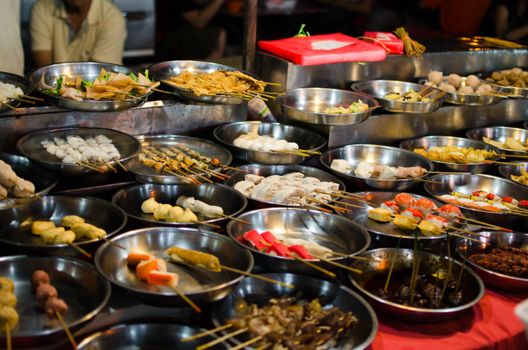
Taiwanese night markets are a sensory overload in the best way possible: the sizzle of grills, the chatter of crowds, the kaleidoscope of neon lights, and a symphony of aromas. But amidst the sweet scents of bubble tea and grilled corn, there's always one smell that stands out, a scent that's either utterly repulsive or strangely alluring: stinky tofu. It smells, quite frankly, like sewage. Or rotten garbage. Or a very, very dirty sock drawer.
My first encounter with stinky tofu was in Shilin Night Market in Taipei. The smell hit me from a block away, growing stronger as I approached a stall with a long line. How could so many people be lining up for something that smelled so… offensive? My Taiwanese friend, Mei, simply smiled. "You must try," she insisted. "It tastes much better than it smells."
The Experience: The vendor was deep-frying cubes of fermented tofu until they were golden brown and crispy. The smell was almost unbearable up close, but the sight of the perfectly fried pieces, served with pickled cabbage and a generous dollop of chili sauce, looked strangely appealing.
I took a piece, dipped it in the chili sauce, and braced myself. The first bite was a revelation. The exterior was wonderfully crispy, giving way to a soft, custardy interior. The flavor was intensely savory, umami-rich, and surprisingly mild compared to the smell. It had a deep, fermented complexity, almost like a very strong blue cheese, but with a unique tofu texture. The pickled cabbage added a refreshing crunch and tang, and the chili sauce provided a perfect kick. I was hooked. The smell still lingered, but my taste buds had completely overridden my nose.
Why it's amazing: Stinky tofu is a masterclass in flavor contrast, offering a crispy exterior and a soft, deeply savory interior that defies its pungent aroma. It’s a quintessential Taiwanese experience. Where to find it: A staple in night markets across Taiwan (e.g., Shilin, Raohe, Ningxia in Taipei) and also popular in Hong Kong and parts of mainland China. Price: A generous serving usually costs around 50-100 TWD (approx. $1.50-$3.00 USD). Tripsora Tip: Start with the deep-fried version, as it tends to be less pungent than the steamed or braised varieties. Don’t forget the chili sauce and pickled cabbage!
The Eight-Legged Snack: Deep-Fried Tarantulas in Cambodia
Cambodia is a land of ancient wonders and resilient people, and sometimes, its culinary traditions reflect that resilience. After exploring the magnificent temples of Angkor Wat, I ventured into the bustling markets of Siem Reap. Here, amidst the usual array of fruits and fish, I spotted something truly unsettling: piles of deep-fried tarantulas. Big, hairy, black spiders, perfectly preserved in their crunchy, deep-fried glory.
My arachnophobia kicked in hard. My stomach churned. This was the ultimate test. But I'd come this far, eaten so many "scary" things. Could I really back down from a spider? My Cambodian guide, Sareth, explained that they became a famine food during the Khmer Rouge regime, and have since remained a popular snack, particularly in the town of Skuon (often called "Spiderville").
The Experience: At a street stall, a vendor offered me one. It was about the size of my palm, legs curled in, and looked disturbingly intact. Sareth assured me the venom glands were removed. Taking a deep, shuddering breath, I bit into the body.
The initial crunch was… intense. The legs were crispy, almost like very thin potato chips. The body, however, was softer, with a texture like a slightly chewy, earthy pâté. The flavor was surprisingly mild, a bit nutty, and faintly reminiscent of crab or chicken, with a slight bitterness. It wasn't the most delicious thing I'd ever eaten, but it was far from disgusting. It was a fascinating experience, a mental hurdle overcome, and a unique taste of Cambodian culture and history. Plus, bragging rights for life!
Why it's amazing: Eating a deep-fried tarantula is an extreme culinary adventure, a symbol of courage, and offers a unique, earthy, and slightly nutty flavor profile. Where to find it: Most famously in Skuon, Cambodia (on the highway between Phnom Penh and Siem Reap), but also available in some markets in Siem Reap and Phnom Penh. Price: Expect to pay around $1-$2 USD per tarantula. Tripsora Tip: Start with a leg if the body is too intimidating. They're usually seasoned with garlic and chili, which helps with the flavor. And have your camera ready for the ultimate Instagram moment!
The Takeaway: Beyond the Fear, Lies Flavor
Every single one of these "scary" street foods pushed me out of my comfort zone, challenged my preconceived notions, and ultimately, rewarded me with incredible flavors and unforgettable stories. What looks strange or smells bad can often hide a culinary masterpiece, a dish steeped in history and culture, waiting to be discovered.
My journey with these foods taught me that travel isn't just about seeing new places; it's about experiencing them with all your senses, about being open to the unexpected, and about embracing the delicious discomfort of the unknown. It's about letting go of judgment and allowing your palate to lead you on an adventure.
So, the next time you encounter a dish that makes your eyebrows raise and your stomach do a little flutter, remember my words. Take a deep breath. Ask a local. And take that bite. You might just discover your next favorite food, and a whole new side of yourself.
What's the scariest food you've ever tried that turned out to be amazing? Share your stories and photos with us using #TripsoraFoodDare! Let's inspire each other to be bolder, one bite at a time!
---
More pictures
Tags
Share this guide
We may earn a commission if you click a link and buy a product or service, at no extra cost to you. How affiliate links work.
Been there?