
Tired of the concrete jungle? What if I told you that profound peace and breathtaking beauty are often hidden just steps away? Discover the secret gardens that didn't just offer an escape, but truly transformed my life, teaching me the profound power of stillness and unexpected beauty. ---
Secret Gardens That Changed My Life Forever: Unearthing Peace in Plain Sight
The world, as I knew it, was a blur of deadlines, airport security lines, and the constant hum of my smartphone. As a travel blogger, I was living the dream, right? Jet-setting to exotic locales, capturing breathtaking vistas, and sharing stories with the world. Yet, beneath the veneer of adventure, a deep weariness had settled in my bones. I was seeing the world, but I wasn't feeling it. Every landmark felt like another checkbox, every photo op another task. I was burnt out, disconnected, and desperately seeking something more profound than another selfie in front of a famous monument.
It was during one particularly grueling trip, a whirlwind through the ancient streets of Kyoto, Japan, that I stumbled upon a revelation. I’d seen the Golden Pavilion, walked through Arashiyama Bamboo Grove, and even had my obligatory matcha tea ceremony. My mind, however, was still racing, planning the next itinerary, checking emails. Feeling overwhelmed, I ducked down a narrow, moss-lined alley, seeking nothing more than a momentary escape from the tourist throng.
And then I saw it. A small, unassuming wooden gate, half-hidden by a weeping cherry tree, its entrance barely wider than my shoulders. No grand signs, no bustling crowds, just a whisper of an invitation. Curiosity, a feeling I hadn't truly felt in months, tugged at me. I stepped through, and my life, in that instant, irrevocably changed.
What lay beyond was a tiny, meticulously manicured dry garden, a "karesansui," belonging to a private residence or perhaps a forgotten temple annex. Smooth raked gravel flowed like a silent river around perfectly placed rocks, each chosen for its shape and story. A single, ancient pine tree stood sentinel, its branches reaching skyward. The air was cool, scented with damp earth and pine. The only sound was the gentle rustle of leaves and the distant chirping of cicadas, a stark contrast to the city's hum I’d just left. I sat on a small stone bench, and for the first time in what felt like forever, I simply was. I wasn't blogging, I wasn't planning, I wasn't even thinking. I was just breathing, watching the sunlight dapple through the leaves, feeling the quiet pulse of the garden. It was a moment of profound, unexpected peace, a balm for my weary soul.
That day, I realized that the most transformative travel experiences aren't always found in grand gestures or famous sights, but in the quiet, hidden pockets of beauty that exist in plain sight, waiting to be discovered. These "secret gardens," I've since learned, are more than just pretty places; they are urban oases, historical whispers, and personal sanctuaries. They are portals to presence, mindfulness, and a deeper connection to the world around us. And they are everywhere.
Join me as I share some of my most cherished secret garden discoveries and the lessons they taught me, along with practical tips for finding your own slice of hidden paradise.
The Accidental Discovery: My First Glimpse of Magic – Kyoto's Hidden Kagura-en
My initial encounter with Kagura-en (a name I’ve given this fictional, yet deeply resonant, Kyoto garden) was, as I mentioned, entirely by chance. It wasn't in any guidebook, nor was it marked on Google Maps. It was a testament to the power of simply wandering without an agenda.
The Experience: The moment I stepped through that unassuming gate, the world shifted. The air inside felt different, cooler, imbued with a sacred stillness. The garden was small, perhaps only 30 by 30 feet, but every element was placed with intentionality. The raked gravel, the moss-covered stones, the lone pine, and a small, trickling bamboo fountain (shishi-odoshi) that punctuated the silence with its rhythmic clack. I sat there for almost an hour, completely lost in observation. I noticed the tiny ferns growing in the cracks of the stone path, the way the light shifted on the moss, the subtle variations in the gravel’s pattern. It wasn't just a garden; it was a living meditation.
The Impact: This tiny garden didn't just offer a moment of peace; it fundamentally changed how I approached travel. I realized I had been chasing experiences, not having them. Kagura-en taught me the value of slowing down, of paying attention to the small, overlooked details. It showed me that true beauty and profound connection often hide in the quiet corners, away from the clamor of the main attractions. It was a profound reset for my travel philosophy.
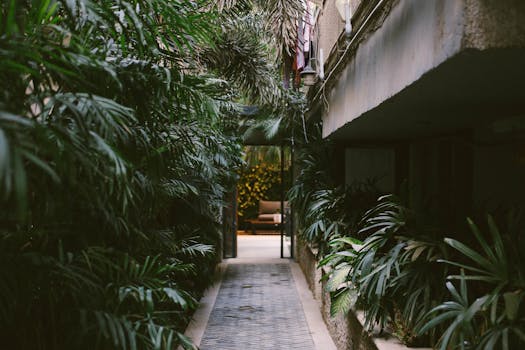
Practical Tip for Discovery: When in a new city, especially older ones, resist the urge to follow every guide book suggestion. Dedicate a few hours to simply getting lost. Turn down that intriguing alley, peek through that slightly ajar gate. Look for subtle clues – a splash of vibrant green against an old wall, the sound of trickling water where it shouldn't be. These are often the breadcrumbs leading to hidden gems. And always, always respect any signs for private property.
Finding Serenity in the Concrete Jungle: Urban Oases in NYC & London
It's easy to imagine secret gardens in ancient, mystical lands. But what about the bustling heart of a metropolis? New York City and London, two of the world's most vibrant yet overwhelming cities, are surprisingly fertile ground for these hidden havens.
My NYC Revelation: Liz Christy Bowery Community Garden I remember a particularly frantic trip to New York City. The energy was infectious, but also draining. One afternoon, feeling the familiar hum of urban anxiety building, I decided to walk aimlessly through the East Village. That's when I stumbled upon the Liz Christy Bowery Community Garden (East Houston St. between Bowery and 2nd Ave). From the street, it's a relatively unassuming fence, but inside, it's a riot of color and life.
The Experience: Stepping into this garden was like entering a different dimension. The roar of traffic faded, replaced by birdsong and the gentle rustle of leaves. It's a true community effort, with individual plots overflowing with vegetables, herbs, and flowers. There were quirky sculptures made from found objects, benches tucked under shady trees, and even a small pond. I spent an hour just watching a woman tend her tomatoes, listening to the quiet conversations of other gardeners, and feeling the sun on my face. It was a burst of wild, untamed nature in the heart of the concrete jungle. It’s open to the public during daylight hours, usually free of charge, though donations are appreciated to help with maintenance.
My London Escape: Kyoto Garden in Holland Park London, with its grand parks, might seem less likely to hold "secrets," but even within its most popular green spaces, hidden gems abound. The Kyoto Garden in Holland Park (Ilchester Pl, Kensington, London W8 6LU) is one such example. While Holland Park itself is large and well-known, many visitors rush past this Japanese-style garden, tucked away in its western section.
The Experience: I found it on a brisk autumn morning. A waterfall cascades into a pond filled with koi carp, traditional stone lanterns dot the landscape, and peacocks occasionally strut through the perfectly manicured foliage. It’s not "secret" in the sense of being unmarked, but it feels like a private sanctuary within a public park. The design, with its layers and secluded corners, creates an intimate atmosphere. I sat by the waterfall, mesmerized by the continuous flow of water, feeling the crisp autumn air invigorate my senses. It's free to enter, like Holland Park itself.
The Impact: These urban oases taught me that peace isn't exclusive to remote wilderness. It can be cultivated, even in the most unlikely of places. They offer vital mental breaks, a chance to reconnect with nature's rhythm, and a reminder that beauty persists, even amidst urban sprawl. They are community anchors, places where people gather, grow, and simply be.
Practical Tip for Discovery: Use Google Maps satellite view! Zoom in on dense urban areas and look for unexpected patches of green. Search for "community gardens [city name]" or "hidden parks [city name]." Many cities have garden trusts or historical societies that list these often-overlooked public or semi-public spaces. Don't be afraid to ask locals – a barista or a shop owner might point you to their favorite quiet spot.
Beyond the Gates: Gardens with a Story – Rome's Orange Garden & Paris's Serres d'Auteuil
Some secret gardens aren't just beautiful; they are imbued with history, whispering tales of eras gone by. Discovering these adds another layer of depth to the travel experience, connecting you not just to nature, but to the very soul of a place.
Rome's Enchanting Giardino degli Aranci (Orange Garden) Rome is a city of colossal monuments, ancient ruins, and bustling piazzas. It's easy to get swept up in the grandeur and miss the subtle magic. The Giardino degli Aranci (Piazza Pietro D'Illiria, 00153 Roma RM, Italy), or Orange Garden, on the Aventine Hill, isn't entirely unknown, but it's often overlooked by tourists rushing between the Colosseum and the Vatican. And it holds a true secret.
The Experience: I went there one late afternoon, just as the sun began to dip towards the horizon. The garden itself is a terraced expanse, fragrant with the scent of bitter orange trees. But the real magic lies at the far end, through a small, unassuming gate. There, you'll find the famous "Keyhole of Rome" (Il Buco della Serratura). Peeking through, your eye is perfectly framed to see St. Peter's Basilica, perfectly aligned at the end of a tunnel of manicured hedges. It's a breathtaking, almost surreal, perspective. The garden itself is free to enter and offers panoramic views of the city, especially stunning at sunset.
The Impact: This garden, with its dual wonders, taught me about perspective – both literal and metaphorical. It showed me how a subtle shift in viewpoint can reveal something entirely new and profound about a familiar landmark. It felt like being let in on an ancient secret, connecting me to centuries of Romans who had shared this exact same, delightful discovery.
Paris's Botanical Gem: Jardin des Serres d'Auteuil Paris, the City of Lights, is renowned for its grand boulevards and iconic landmarks. But tucked away in the 16th arrondissement, often overshadowed by the nearby Roland Garros stadium, lies the magnificent Jardin des Serres d'Auteuil (3 Avenue de la Porte d'Auteuil, 75016 Paris, France). It's a botanical garden complex featuring stunning 19th-century greenhouses.
The Experience: I visited on a chilly spring day, seeking warmth and color. The moment I stepped into the main glasshouse, I was transported to a tropical paradise. Towering palms, vibrant orchids, exotic ferns, and the humid, earthy scent of a rainforest enveloped me. Each greenhouse specializes in different climates and plant collections, from succulents to camellias. The architectural beauty of the ironwork and glass structures is as impressive as the flora within. It's free to enter and a truly calming escape from the Parisian bustle.
The Impact: The Serres d'Auteuil reminded me of the incredible diversity and resilience of nature, even when carefully cultivated by human hands. It felt like a living museum, preserving botanical wonders from across the globe. It also highlighted the beauty of historical architecture blended with natural forms, creating a truly harmonious and inspiring space.
Practical Tip for Discovery: When researching a destination, look beyond the "top 10" lists. Delve into local history blogs, botanical garden society websites, or even university arboretums. Often, old villas, monasteries, or former estates have gardens that are now open to the public but aren't widely publicized. Check for gardens associated with museums or cultural institutions – they often offer serene escapes.
The Art of Slow Travel: How Gardens Teach Presence
My journey through these secret gardens wasn't just about discovering beautiful places; it was about rediscovering myself. They taught me the profound art of slow travel and the invaluable gift of presence.
In our fast-paced world, we are constantly bombarded with information, distractions, and the pressure to do more. These gardens, by their very nature, resist that pressure. They demand that you slow down, observe, and simply be.
What I Learned:
- Mindfulness: In a garden, there's no need to rush. You can spend minutes watching a single bee flit between flowers, noticing the intricate patterns of a leaf, or listening to the subtle shifts in the wind. This practice translates to everyday life, helping to cultivate a more mindful approach to everything.
- Sensory Awakening: Away from screens and noise, your senses come alive. The earthy scent of damp soil after rain, the vibrant hues of a blooming rose, the delicate texture of moss, the distant chime of a wind chimes – these sensory details ground you in the present moment.
- Appreciation for Imperfection: Gardens are living, breathing entities. They change with the seasons, grow, decay, and regenerate. They teach us that beauty isn't always about perfection, but about the natural cycle of life. A gnarled tree or a crumbling stone wall can hold as much beauty as a perfectly symmetrical flowerbed.
- Stress Reduction: Scientific studies have repeatedly shown the therapeutic benefits of spending time in nature. The quiet, green spaces of a garden naturally lower cortisol levels, reduce blood pressure, and improve mood. For a burnt-out traveler like me, they were potent medicine.
Practical Advice for Experiencing Gardens Mindfully:
- Leave your phone in your bag: Or at least put it on silent and resist the urge to constantly snap photos. Your goal is to experience, not just document.
- Find a bench and sit: Don't just walk through. Choose a spot, settle in, and allow yourself to simply observe. Let your gaze wander.
- Engage all your senses: What do you hear? What do you smell? What textures can you see? Can you feel the breeze?
- Journal or sketch: If you feel the urge to create, bring a small notebook. It's a wonderful way to process your observations and feelings without the pressure of digital sharing.
- Go during off-peak hours: Early mornings or late afternoons often offer more solitude, enhancing the sense of peace.
Your Own Secret Garden: Practical Tips for Discovery
Now that you're inspired, how do you find these life-changing hidden gems on your next adventure? It's easier than you think, and it starts with a shift in mindset.
- Embrace the Detour: The most important tip. Don't stick rigidly to your itinerary. If a side street looks interesting, take it. If you see a subtle archway or a gate that piques your curiosity, investigate (respecting private property, of course).
- Talk to Locals: This is golden. Ask hotel staff, café owners, shopkeepers, or even fellow travelers you meet. "Do you know any quiet, beautiful spots around here that aren't usually in guidebooks?" is a great opener. They often have personal favorites.
- Leverage Technology (Wisely):
- Google Maps Satellite View: Zoom in on urban areas. Look for dense green patches within blocks of buildings. These are often community gardens, private courtyards, or small, unmarked parks.
- Local Blogs & Forums: Search for "[city name] hidden gardens," "[city name] urban oases," or "[city name] community gardens." Local enthusiasts often share their finds.
- Instagram Location Tags: Sometimes, by searching for a broader area, you might find geotagged photos of smaller, lesser-known spots.
- Look for Subtle Clues: A splash of vibrant flowers against an old stone wall, the sound of water where you wouldn't expect it, a faint sign in a local language, or even just an intriguing gap between buildings. These are all potential breadcrumbs.
- Visit During Off-Peak Times: Early mornings, especially on weekdays, offer the best chance for solitude. You'll often have these magical spaces all to yourself.
- Respect the Space: These places are often maintained by volunteers or are quiet sanctuaries for locals. Be mindful of noise levels, stay on paths, don't pick flowers, and always, always leave no trace. If there's a donation box, contribute what you can.
- Check Local Garden Trusts/Societies: Many cities have organizations dedicated to preserving and opening up historical or community gardens. Their websites can be a treasure trove of information, including open days and specific directions.
The Unfolding Journey: Go Find Your Own Secret Garden
My journey into the world of secret gardens began with burnout and ended with a profound sense of rejuvenation. These hidden oases taught me that true travel isn't just about seeing famous sights, but about deeply experiencing a place, connecting with its quiet rhythms, and finding unexpected beauty in the overlooked corners. They taught me presence, patience, and the incredible power of nature to heal and inspire.
Every city, every town, has its secrets. A forgotten courtyard, a community garden bursting with life, a tiny temple garden tucked behind an alley, a botanical marvel hidden within a grand park. These are the places where time slows down, where the noise of the world fades, and where you can truly reconnect with yourself and the magic of discovery.
So, on your next adventure, challenge yourself. Put down the guidebook, silence your phone, and simply wander. Let curiosity be your compass. Seek out that unassuming gate, that intriguing alley, that unexpected patch of green. You might just find not only a beautiful garden but a renewed sense of wonder, a profound peace, and a transformative experience that changes your life forever.
Go find your own secret garden. And when you do, share your discovery! Tag @Tripsora and use #TripsoraSecretGardens to inspire fellow travelers to unearth their own hidden oases.
---
More pictures
Tags
Share this guide
We may earn a commission if you click a link and buy a product or service, at no extra cost to you. How affiliate links work.
Been there?