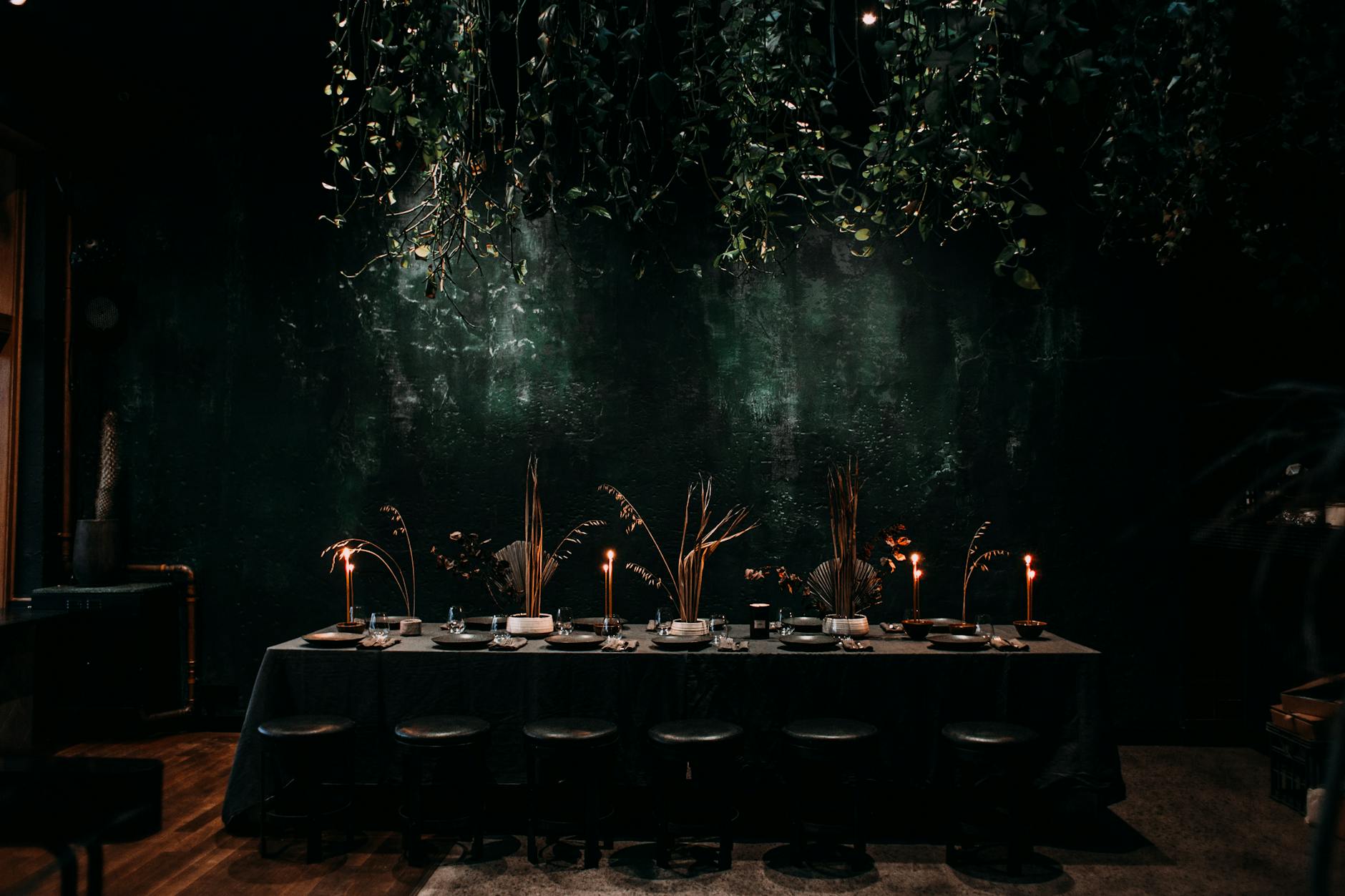
Tired of perfectly curated food feeds? Imagine a meal where taste, touch, and sound take center stage, entirely free from the lens. We're diving into the extraordinary world of dining in complete darkness, an experience so profound, it's virtually un-Instagrammable – and that's precisely its magic. --- ##
The soft glow of my phone screen illuminated my face for the thousandth time that evening. Another perfectly plated avocado toast, another strategically angled latte art, another caption about #foodieadventures. I scrolled, and scrolled, and scrolled, feeling a strange mix of envy and exhaustion. Had food become less about eating and more about showing? Had the quest for the perfect shot overshadowed the simple joy of a delicious meal?
It was around that time, amidst a digital detox attempt, that I stumbled upon an article about "dining in the dark." My initial thought? "Why on earth would anyone want to do that?" But the more I read, the more intrigued I became. It promised a culinary experience stripped bare, a journey where your taste buds, nose, and even your fingertips became your primary guides. No filters, no flattering lighting, no pressure to perform for an invisible audience. Just you, your food, and the profound void of complete darkness.
This, I realized, was the ultimate anti-Instagram experience. It was about being present, not showing presence. It was about raw, unadulterated sensation, a secret rebellion against the visual tyranny of modern dining. And let me tell you, my friends, it changed the way I experience food forever.
So, if you're ready to ditch the phone, challenge your senses, and embark on a culinary adventure that Instagram influencers literally can't capture (and probably don't want you to know about because it doesn't fit their aesthetic!), then buckle up. We're diving into the extraordinary world of dining in complete darkness, and trust me, it's a trip you won't soon forget.
The Philosophy of Darkness: Why Go Blind?
Let's be honest, we eat with our eyes first. The vibrant colors of a fresh salad, the golden-brown crust of a perfectly baked pastry, the intricate garnish on a gourmet dish – these visual cues prime our brains, setting expectations for what we're about to taste. But what happens when you remove that sense entirely? The answer, my friends, is nothing short of revolutionary.
When your sight is taken away, your other senses don't just pick up the slack; they go into overdrive. Suddenly, the subtle aroma of basil becomes a fragrant explosion. The delicate crunch of a vegetable is amplified. The texture of a sauce, smooth or grainy, becomes a tactile revelation on your tongue. Flavors that might have blended into the background in a brightly lit setting now pop with astonishing clarity, demanding your full attention. You'll find yourself dissecting every bite, trying to identify ingredients you'd normally just swallow without a second thought.
Beyond the heightened sensory experience, there's a profound psychological element at play. Dining in the dark forces you to confront a certain vulnerability. You're relying entirely on trust – trust in your companions, trust in the staff (who are often visually impaired themselves, providing an incredible sense of empathy and guidance), and trust in your own senses. It breaks down barriers, fosters deeper conversation (because you're not distracted by visual cues or, let's be real, your phone), and encourages a level of mindfulness that's rare in our overstimulated world. It's not just a meal; it's a journey into yourself, an exercise in surrendering control, and an unforgettable lesson in appreciating the non-visual aspects of life.
What to Expect: Navigating the Unknown
So, you've decided to take the plunge. What exactly does a blind dining experience entail? Don't worry, it's not a free-for-all in a pitch-black room. These establishments are meticulously designed for safety and comfort.
Typically, your journey into darkness begins in a well-lit reception area. Here, you'll usually select your menu – often a "surprise" menu with options like "meat," "fish," or "vegetarian," keeping the exact dishes a mystery until after your meal. This adds another layer of intrigue to the experience! You'll be asked to secure all light-emitting devices – phones, smartwatches, lighters – in a locker. This is crucial; even a tiny pinprick of light can disrupt the total darkness for everyone.
Once briefed, you'll be led by your server (who is often visually impaired and expertly navigates the dark space) in a "conga line" fashion, placing your hand on the shoulder of the person in front of you. This is where the disorientation begins, but also where the trust builds. You'll be guided to your table, carefully seated, and given instructions on where your cutlery, glass, and plate are located.
The initial moments in complete darkness can be startling. Your eyes will strain, trying to find a speck of light, but there will be none. A wave of sensory deprivation washes over you, sometimes inducing a touch of anxiety, sometimes a wave of calm. But quickly, your other senses begin to adjust. You'll start to discern the clinking of glasses at another table, the murmur of voices, the subtle aroma of cooking food. You'll learn to locate your water glass by feel, to cut your food by sound and texture. It's a truly humbling and exhilarating process of adaptation.
Global Hotspots for Dining in the Dark
Ready to book your ticket into the void? Here are some of the pioneering and most renowned establishments worldwide where you can experience this extraordinary culinary adventure:
1. Dans le Noir? (Paris, London, Barcelona, Madrid, and more)
The Pioneers of Pitch Black
My first foray into dark dining was at Dans le Noir? in Paris, and it was nothing short of transformative. The concept, founded by Edouard de Broglie, revolutionized the dining scene by employing blind or visually impaired staff, turning their perceived "disability" into an incredible asset. Our server, Benjamin, navigated the room with an effortless grace that put my sighted self to shame.
I remember distinctly the first course: a small bowl placed before me. I cautiously dipped my spoon, tasting what I thought was a creamy mushroom soup. Later, in the light, I discovered it was a rich, earthy parsnip puree with a hint of truffle oil – a flavor profile I might have dismissed visually but savored deeply in the dark. The main course, a perfectly cooked piece of fish, had me convinced it was chicken due to its unexpected texture. It was a humbling reminder of how much we rely on our eyes.
- What to expect: A curated surprise menu (often 2-3 courses), served by visually impaired guides. The focus is on sensory awakening and social interaction.
- Price range: Expect to pay €60-€90 (approx. $65-$100 USD) per person for a multi-course meal, excluding drinks.
- Locations: Paris, London, Barcelona, Madrid, and various pop-ups globally. Check their website for the most current locations.
2. O.Noir (Montreal & Toronto, Canada)
North America's Sensory Hotspot
Across the Atlantic, O.Noir offers a similarly compelling experience. Inspired by the Dans le Noir? concept, O.Noir has become a staple for unique dining in Canada, also employing a staff of visually impaired individuals. My trip to Montreal included a stop here, and it was a fantastic continuation of my dark dining journey.
I ordered the "surprise" meat menu. The starter came, and I swore it was a delicate scallop dish. The texture was undeniably that of a perfectly seared scallop. Imagine my absolute shock when, upon seeing the menu afterwards, it was revealed to be a pan-seared mushroom. A mushroom! My mind was blown. It truly showcased how much visual expectation influences our perception of taste and texture. The camaraderie with my dining companions, all equally baffled and delighted by their own guessing games, was a highlight.
- What to expect: A fixed-price menu with starter, main, and dessert. Emphasis on local ingredients and a refined culinary experience.
- Price range: C$40-C$60 (approx. $30-$45 USD) per person for a 2-3 course meal.
- Locations: Montreal and Toronto.
3. Blindekuh (Zurich & Basel, Switzerland)
The Original Dark Dining Experience
For a truly historical perspective, look no further than Blindekuh (meaning "Blind Cow" or "Blind Man's Buff") in Switzerland. Opened in 1999 in Zurich, it's often credited as the world's first truly dark restaurant, born from a project to create jobs for visually impaired people. Their mission is not just about dining, but about social integration and changing perceptions of blindness.
Blindekuh offers a slightly different ambiance, feeling more like a community project than a commercial restaurant (though it is certainly professional!). The food is hearty, Swiss-inspired, and comforting, designed to be easily navigated by touch. It’s a profound experience, knowing you're participating in a concept that pioneered this entire movement.
- What to expect: A focus on social mission alongside the culinary experience. Traditional Swiss and European dishes.
- Price range: CHF 70-100 (approx. $75-$110 USD) for a multi-course menu.
- Locations: Zurich and Basel.
4. Nocti Vagus (Berlin, Germany)
Darkness with a Twist
Berlin's Nocti Vagus takes the dark dining concept and adds a touch of German flair, often incorporating themed events and cultural performances (acoustic, of course!) into the experience. They also pride themselves on employing visually impaired staff, maintaining the authentic spirit of the dark dining movement.
I haven't personally dined here yet, but friends who have rave about the quality of the food and the unique atmosphere. One friend mentioned a "crime dinner" where they had to solve a mystery using only their hearing and sense of touch – talk about immersive! It sounds like a fantastic option if you're looking for an experience that combines the sensory adventure with a touch of entertainment.
- What to expect: Diverse menu options, often themed events, and a vibrant atmosphere.
- Price range: €50-€80 (approx. $55-$90 USD) depending on the menu and any included entertainment.
- Location: Berlin.
5. Dialogue in the Dark (Various Pop-ups & Exhibitions)
Beyond the Restaurant
While not strictly restaurants, the global Dialogue in the Dark exhibitions offer an incredible, often shorter, sensory experience that can include a "dark dinner" component. These are powerful social impact projects designed to raise awareness about the challenges faced by visually impaired individuals. They are guided by blind mentors and involve navigating various everyday scenarios in complete darkness. Keep an eye out for these pop-ups in major cities worldwide – they offer a profound, albeit sometimes more educational, taste of the dark.
The Culinary Revelation: More Than Just a Meal
Beyond the novelty, what truly stands out about dining in the dark is the profound culinary revelation. When your eyes are out of the equation, food takes on an entirely new dimension.
I remember a moment at O.Noir where I was eating what I thought was a simple piece of roasted chicken. But without the visual, I focused on the crispy skin, the succulent juiciness of the meat, the subtle herb rub. I'd eaten chicken hundreds of times, but never with such intense, almost microscopic attention. Each bite was an exploration, a puzzle. Was that rosemary? A hint of garlic? The texture of a perfectly cooked potato became a creamy dream, its slight char a smoky whisper.
The guessing game with your companions is half the fun. "What do you think this is?" "I swear it's beef, but it tastes like lamb!" The laughter, the bewildered expressions (which, thankfully, no one can see!), and the shared sense of discovery create a bond that's unique to this setting. Conversations flow more freely, becoming richer and more personal because the visual distractions – the phone, the decor, even your companion's facial expressions – are gone. You're forced to truly listen, to truly engage.
This is why Instagram influencers don't want you to know about it. There's no "money shot." No perfectly styled flat lay. No flattering selfie with your meal. The true "capture" is the memory, the heightened senses, the deep conversation, the personal growth. It's an experience that defies documentation, existing purely in the realm of personal sensation. And in a world obsessed with broadcasting every moment, that makes it truly special.
Practical Tips for Your Blind Dining Adventure
Ready to book your own journey into the dark? Here are some essential tips to ensure a smooth and unforgettable experience:
- Book in Advance: Dark dining restaurants are often unique and popular. Reservations are almost always required, sometimes weeks or months in advance.
- Communicate Dietary Restrictions: When booking, clearly state any allergies, dietary needs (vegetarian, vegan, gluten-free), or strong dislikes. They are usually very accommodating, but need to know beforehand as menus are often set or a surprise.
- Go to the Restroom Beforehand: Trust me on this one. Navigating to the restroom in complete darkness is possible with staff guidance, but it's much easier to take care of business before you enter.
- Dress Comfortably (and Maybe Not in White!): Without sight, spills are more common. Wear something comfortable that you wouldn't mind getting a little messy. Darker colors are a safe bet.
- Leave Valuables (and Lights) in the Locker: As mentioned, absolutely no light-emitting devices are allowed in the dining area. This includes phones, smartwatches, and even lighters. Embrace the digital detox!
- Trust Your Guide: Your visually impaired server is an expert in that environment. Listen to their instructions, ask for help if you need it (e.g., locating your fork, finding your water glass), and trust their guidance.
- Embrace the Unknown: Don't try to cheat by peeking (even if you could!). The magic of the experience lies in the complete sensory deprivation. Let go of control and allow yourself to be surprised.
- Don't Be Afraid to Get Your Hands Dirty: Sometimes, especially with certain foods, using your hands is the easiest and most effective way to eat in the dark. Don't be shy!
- Engage with Your Companions: This is an incredible opportunity for genuine connection. Talk, laugh, guess the food together. The absence of visual distractions often leads to deeper, more meaningful conversations.
- Reflect Afterwards: After your meal, when you're back in the light, take some time to discuss your experience with your dining partners. It's fascinating to compare notes on what you thought you ate versus what it actually was!
Beyond the Lens: A True Taste of Life
Dining in complete darkness is more than just a meal; it's a profound journey of self-discovery, sensory awakening, and genuine connection. It's an experience that challenges your perceptions, heightens your appreciation for food, and reminds you of the richness of life beyond the visual. In a world saturated with carefully curated images, it offers a refreshing escape, a truly authentic moment that cannot be filtered, edited, or hashtagged.
It's a secret that Instagram influencers might not want you to know because it defies their very medium. But for those of us seeking deeper, more meaningful travel and culinary adventures, it's a revelation. It teaches you to truly taste your food, to truly listen to your companions, and to truly feel the moment.
Are you ready to truly experience food in a way you never thought possible? Are you ready to ditch the screen and embrace the void? Book your blind dining experience today. Trust me, your senses will thank you, and you'll come away with a story far more compelling than any photo could ever capture.
Have you ever dined in the dark? Or are you planning your first sensory adventure? Share your thoughts, questions, and non-visual stories with us in the comments below!
---
More pictures


Tags
Share this guide
We may earn a commission if you click a link and buy a product or service, at no extra cost to you. How affiliate links work.
Been there?