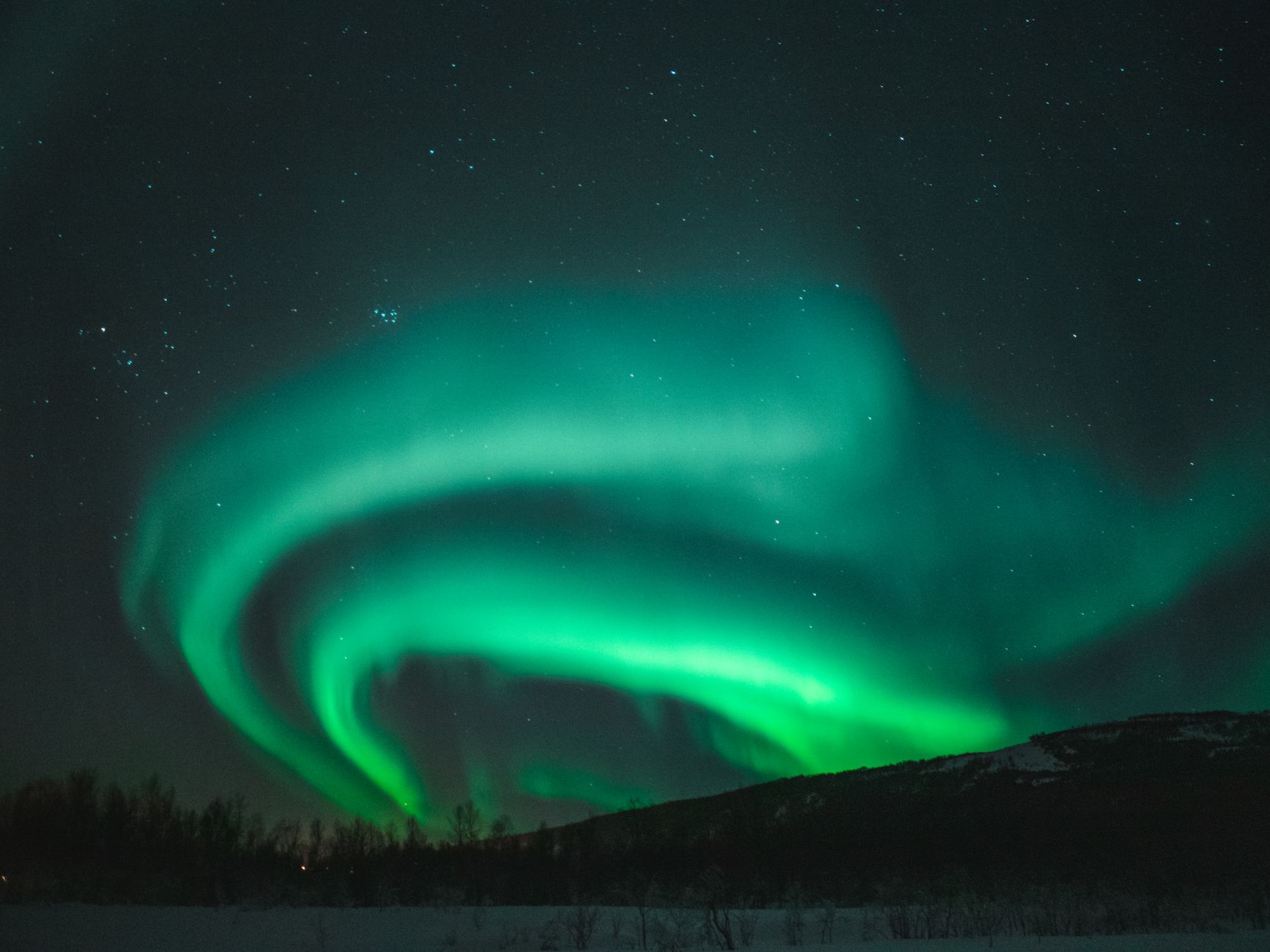
Forget crowded tour buses and icy tourist traps. I went off the beaten path, guided by locals, to find the true magic of the Aurora Borealis. Prepare for a journey that will not only show you the lights but change your perspective forever.
Northern Lights: The Local Secrets That Changed My Life Forever
The first time I saw the Northern Lights, it was a blurred green smudge on the horizon, glimpsed from a crowded tour bus window in Iceland. It was beautiful, yes, but it wasn't the ethereal, life-altering spectacle I'd dreamed of since childhood. I felt… underwhelmed. Disappointed, even. That experience taught me a crucial lesson: sometimes, the most profound adventures aren't found on the well-trodden path, but whispered in hushed tones by those who call these magical lands home.
What followed was a quest, a multi-year pilgrimage across the Arctic Circle, driven by a desire to truly experience the Aurora, not just witness it. I traded tourist maps for local recommendations, crowded viewpoints for quiet, hidden gems, and generic tours for authentic encounters. And what I found, thanks to the generosity and wisdom of locals, didn't just show me the Northern Lights; it changed my life forever. It taught me patience, humility, and the immense power of nature when viewed through an uncommercialized lens.
If you, like me, dream of a truly unforgettable Aurora experience, one that resonates deep within your soul, then this guide is for you. These are the spots, the stories, and the practical tips I gathered from the incredible people who shared their secrets with me, transforming my chase for the lights into something truly magical.
The Icelandic Whisper: Beyond Reykjavík's Glow
My journey began in Iceland, a land of fire and ice, where the Aurora is a regular winter visitor. My initial disappointment near Reykjavík pushed me to seek out more authentic experiences. It was Gunnar, a gruff but kind guesthouse owner in the remote Snæfellsnes Peninsula, who first opened my eyes. "The lights," he’d said, gesturing vaguely towards the dark, star-dusted sky, "they like the quiet. Away from the city, away from the roads. They like the water."
He pointed me to a small, unmarked track leading down to a black sand beach near Búðir, a tiny hamlet famous for its iconic black church. "Park here, walk a bit. Find a spot by the rocks. The reflection on the water, that’s where the magic is."
Following his advice, I rented a small 4x4 (essential for Icelandic winter roads, costing around €60-€100 per day) and drove to Búðir. The air was crisp, the only sound the gentle lapping of waves. I found a secluded spot, wrapped in layers, tripod set. And then, it began. Not a smudge, but a vibrant, dancing ribbon of emerald green, stretching across the entire sky, reflecting perfectly on the still, dark ocean. It pulsed, it swayed, it painted the heavens with an artist's brush. It was raw, intimate, and utterly breathtaking.
Practical Tips for Iceland:
- Rent a 4x4: Especially in winter, for navigating potentially icy or unpaved roads to local spots.
- Stay outside Reykjavík: While tours depart from the capital, truly dark skies are found in areas like Snæfellsnes, the South Coast (near Vík), or the Eastfjords.
- Utilize local guesthouses: Owners often have the best, most up-to-date info on current conditions and hidden spots. A night in a rural guesthouse can range from €80-€150.
- Weather is key: Always check the Icelandic Met Office (vedur.is) for cloud cover and aurora forecasts.
Norway's Arctic Embrace: A Sami Secret in Lyngen
My next stop was Norway, specifically the Tromsø region, often dubbed "the Capital of the Arctic." Here, I sought out a Sami guide, understanding that indigenous communities hold ancient wisdom about their lands. Through a small, locally run tour operator (Aurora Alps, which cost about €150-€200 for an evening tour including transport and a meal), I met Johan, a Sami elder with eyes that held the wisdom of generations.
Johan took our small group far into the Lyngen Alps, a majestic fjord and mountain landscape an hour and a half east of Tromsø. He didn't just drive us to a spot; he led us on a short snowshoe hike through a hushed forest, the only light from our headlamps and the stars. We emerged into a clearing by a frozen lake, surrounded by towering, snow-capped peaks.
"The spirits of our ancestors dance here," Johan whispered, as we huddled around a crackling fire, sipping hot lingonberry juice. The sky was a canvas of deep indigo. And then, the lights burst forth, not just green, but streaks of violet and pink, swirling directly above us. They moved with an incredible speed and intensity I hadn't witnessed before, as if responding to Johan's quiet drumming and chanting. It was a deeply spiritual experience, connecting me not just to nature, but to the ancient culture of the Sami people.
Practical Tips for Norway:
- Embrace local culture: Seek out Sami-run experiences for a deeper connection to the land and its history.
- Consider a small group tour: Many local operators in Tromsø (e.g., Arctic Explorers, Northern Lights Chase) limit group sizes and use experienced guides who know the best spots. Costs range from €100-€250 depending on inclusions.
- Dress for extreme cold: Tromsø can be brutally cold. Thermal layers, wool, down jackets, insulated boots, hats, and mittens are non-negotiable.
- Explore beyond Tromsø: Areas like Senja, Lofoten Islands, or the Lyngen Alps offer stunning backdrops and fewer crowds.
Finnish Lapland's Frozen Fairy Tale: A Cabin in the Wilderness
Finland's Lapland had always conjured images of Santa Claus, but I discovered it was also a haven for Aurora hunters seeking solitude. In the small village of Inari, far north of the Arctic Circle, I rented a simple, traditional wooden cabin by a lake (around €100-€180 per night, check sites like Booking.com or local tourism offices for options). The owner, a soft-spoken woman named Aila, who had lived her entire life in Inari, gave me directions to her "secret spot."
"Walk across the frozen lake," she instructed, pointing to the vast expanse of ice. "On the other side, there is a small hill. No trees, just snow. The wind keeps it clear. The lights love the open space."
The walk across the frozen Lake Inari felt like stepping into a silent, white dream. The cold bit at my cheeks, but the sheer vastness and silence were exhilarating. On the hill, under a sky ablaze with stars, I waited. And waited. For nearly two hours, nothing. Just the biting cold and the vast emptiness. I almost gave up.
Then, a faint shimmer. It grew, rapidly, into a colossal, undulating curtain of green, stretching from one horizon to the other. It was so intense, so close, it felt like I could reach out and touch it. The silence amplified its majesty, making it feel like a personal performance, just for me. This wasn't just viewing; it was being enveloped by the Aurora. The patience, the solitude, the sheer scale of it all – it was profoundly moving.
Practical Tips for Finland:
- Seek out remote cabins: Staying away from towns significantly reduces light pollution. Look for accommodations near Inari, Saariselkä, or Levi.
- Embrace the cold: Finnish Lapland is incredibly cold. Invest in proper thermal clothing; many rental places offer winter gear packages.
- Frozen lakes are your friend: They offer vast, unobstructed views, but always ensure the ice is safe before venturing out. Locals will know.
- Try ice fishing: It’s a peaceful way to wait for the lights, and locals are often happy to share tips (equipment rental around €20-€30).
Canada's Wild North: Yukon's Untamed Canvas
My final, and perhaps most wild, Aurora adventure took me to Canada's Yukon Territory. Whitehorse, the capital, is a small, friendly city, but the true magic lies further out, in the vast, untamed wilderness. I connected with a local bush pilot and guide named Mike, who ran small, personalized Aurora tours (around CAD$150-CAD$250 per person for an evening).
Mike drove us an hour outside of Whitehorse, away from any semblance of light pollution, to a secluded cabin nestled on the shores of a frozen lake. "The Yukon lights," he’d said, "they're different. They're wilder, more untamed, just like this land."
We sat inside the cozy cabin, sipping hot chocolate, sharing stories, and keeping an eye on the sky through a large window. When the call came that the lights were out, we bundled up and stepped into a world of breathtaking silence. The Aurora here wasn't just green; it was a fiery spectrum of yellow, orange, and even deep red, painting the massive, endless sky. It pulsed and shimmered with an almost violent energy, reflecting off the pristine snow and the dark, silent forest.
What struck me most was the sheer scale. The Yukon sky felt infinite, and the Aurora filled every inch of it, making me feel incredibly small, yet profoundly connected to something ancient and powerful. Mike shared stories of First Nations legends about the lights, adding another layer of depth to the experience. It was a reminder that the world is far vaster and more mysterious than we often imagine.
Practical Tips for Canada (Yukon/Yellowknife):
- Prepare for extreme cold: Yukon winters are legendary. Layers, insulated parkas, snow pants, and extreme-cold boots are essential.
- Consider guided tours: While you can rent a car, local guides know the safest and best spots, especially in remote areas.
- Stay at an Aurora lodge: Many lodges outside Whitehorse or Yellowknife specialize in Aurora viewing, offering comfortable facilities and expert guidance (e.g., Northern Lights Resort & Spa, prices vary widely but expect €200+ per night).
- Patience is a virtue: The Yukon is vast, and weather can be unpredictable. Be prepared to wait, and enjoy the pristine wilderness in the meantime.
The Aurora Chase Toolkit: Essential Tips from a Local Convert
My journey taught me that chasing the Northern Lights isn't just about finding the right spot; it's about being prepared, being patient, and embracing the entire experience. Here are my hard-earned, locally-inspired tips:
- Dress Like an Onion (Layers!): This cannot be stressed enough. Thermal base layers (wool or synthetic), a mid-layer (fleece), and a waterproof/windproof outer shell. Don't forget insulated boots, wool socks, hat, gloves/mittens, and a neck gaiter. Hand and foot warmers are lifesavers.
- Monitor the Forecasts: Use apps like "My Aurora Forecast" or "Aurora Alerts," and websites like "Space Weather Live" for KP-index (geomagnetic activity) and local meteorological services for cloud cover. A high KP-index with clear skies is your golden ticket.
- Go During New Moon: Less moonlight means darker skies and more vivid Aurora displays. Check moon phases when planning your trip.
- Escape Light Pollution: Even a small village can create enough light pollution to diminish the Aurora's intensity. Drive at least 30-60 minutes outside any town. Locals will always point you to the darkest spots.
- Master Your Camera Settings (Before You Go):
- Tripod is mandatory: Absolutely essential for long exposures.
- Wide-angle lens: Captures more of the sky.
- Manual focus: Set to infinity.
- High ISO: Start around 800-3200 (adjust based on light intensity).
- Wide aperture: f/2.8 or lower (e.g., f/1.4, f/1.8) lets in more light.
- Shutter speed: Start at 10-20 seconds. Adjust shorter for stronger, faster lights; longer for fainter, slower lights.
- Remote shutter release: Prevents camera shake.
- Extra batteries: Cold drains them quickly. Keep spares in an inside pocket.
- Pack Snacks & Hot Drinks: A thermos of hot tea or chocolate and some energy bars can make a long wait much more comfortable.
- Patience and Flexibility: The Aurora is a natural phenomenon; it doesn't perform on demand. Be prepared for multiple nights of waiting, and be flexible with your plans to chase clear skies.
- Respect the Locals and Environment: These are their homes. Drive carefully, don't litter, and respect local customs. Ask before entering private land.
- Embrace the Unexpected: Sometimes the best experiences come when you least expect them – a chance encounter, a sudden burst of lights, a quiet moment of reflection.
The Unforgettable Dance: A Life Transformed
My journey to find the Northern Lights, guided by the wisdom of locals, was more than just a successful chase. It was a profound education in patience, resilience, and the sheer, unadulterated beauty of our planet. Each encounter, each shared secret, each silent moment under the dancing lights, chipped away at my preconceived notions and left me with a deeper appreciation for the world and its people.
The Aurora is not just a light show; it’s a living, breathing entity that connects you to the cosmos, to ancient legends, and to the quiet power of nature. When you step away from the crowds and listen to the whispers of those who live under these skies, you don't just see the lights – you feel them, you understand them, and they truly change you forever.
So, pack your bags, prepare for the cold, and open your heart to the magic. Seek out the locals, ask for their wisdom, and let the Northern Lights guide you to an experience that will stay with you long after the last green curtain fades from the sky.
Have you had a life-changing Aurora experience? Share your stories and tips in the comments below! And if you're planning your own chase, share this guide with your fellow adventurers!
---
More pictures



Tags
Share this guide
We may earn a commission if you click a link and buy a product or service, at no extra cost to you. How affiliate links work.
Been there?