Forget the sticky tray tables and stale, recycled cabin air of yesteryear. A quiet revolution is sweeping through the global travel industry, turning airports, hotels, and trains into high-tech sanctuaries of cleanliness. From self-disinfecting elevator buttons to invisible shields of Far-UVC light, these are the
The Invisible Revolution: My Wake-Up Call at 30,000 Feet
I stepped off the sleek Shinkansen bullet train at Tokyo’s Tokyo Station, and the first thing that hit me wasn't the smell of bento boxes or the rush of commuters. It was the scent of nothing. Or rather, the crisp, slightly sweet smell of active forest-air ionization.
For years, travel writing was all about the grit and the grime—the romanticized dirt of a Moroccan souk or the shared sweat of a crowded chicken bus in Central America. But let’s be honest: nobody actually misses the sticky residue on an airplane armrest or the mystery stains on a hotel TV remote.
``` [Old Travel Era] [The New Era] Sticky touchscreens ---> Biometric facial scans Stale cabin odors ---> HEPA-filtered, ionized air Mystery remote controls ---> App-based room controllers ```
During my latest 40,000-mile journey across three continents, I realized we have entered a golden age of bio-security. This isn't about performative hygiene theater—like those annoying plastic barriers that just block airflow. It is about quiet, highly sophisticated engineering. These are the new hygiene standards improving travel worth considering if you want to travel smarter, healthier, and with absolute peace of mind.
---
1. Zero-Touch Terminals: The Biometric Highway
The dirtiest part of any journey has always been the administrative friction: handing over passports, tapping greasy touchscreens at check-in kiosks, and passing paper boarding passes back and forth.
Today, the world’s leading hubs are turning your face into your passport.
At Singapore Changi Airport (SIN) and Tokyo Haneda (HND), I experienced the seamless joy of "Single Token" biometric technology. You register your passport and facial biometrics at a contactless kiosk. From that moment on, you do not pull out your passport or boarding pass again.
The baggage drop, the security gates, and the boarding doors all open automatically just by looking into a high-speed camera.
Why This Matters for Your Health
Every touchpoint you avoid is a vector of transmission eliminated. Biometric boarding speeds up the boarding process by up to 30%, meaning you spend less time breathing shoulder-to-shoulder with strangers in a cramped jet bridge.
> Pro-Tip: Before you fly, download your airline's app and pre-upload your passport details and a high-resolution selfie. Airlines like Delta and Emirates now allow you to opt-in to biometric boarding before you even arrive at the terminal, cutting your check-in time in half.
---
2. Far-UVC Light: The Invisible Germ Slayer
For decades, we’ve known that ultraviolet (UV) light is incredibly effective at killing pathogens. The catch? Traditional UV-C light (254 nm) causes skin cancer and cataracts, making it unusable in active public spaces.
Enter Far-UVC light (222 nm). This specific wavelength of light cannot penetrate the outer, dead-cell layer of human skin or the tear layer of our eyes, but it easily penetrates and destroys viruses and bacteria floating in the air.
``` +-------------------------------------------------------------+ | HOW FAR-UVC (222nm) WORKS | | | | [Far-UVC Light Source] | | | | | v | | ~~~~~~~~~~~~~~~ (Safe for human skin & eyes) | | | | | v | | [ Airborne Pathogens ] ---> [ INSTANTLY NEUTRALIZED ] | +-------------------------------------------------------------+ ```
During a layover in the premium lounges of Doha’s Hamad International Airport, I noticed a subtle, soft blue glow emitting from overhead architectural arches. These are Far-UVC sanitizing lamps. They work continuously, disinfecting the air and high-touch surfaces in real-time while passengers sip their champagne below.
Where You’ll See It Next
- Aviation: Boeing is actively developing self-cleaning lavatories that use Far-UVC light to sanitize all surfaces in just three seconds between passenger uses.
- Public Transit: Premium train cabins in Europe and Japan are testing overhead Far-UVC strips to sanitize high-traffic vestibules.
---
3. Hospital-Grade Hospitality: The New Hotel Room Seal
Remember the anxiety of walking into a hotel room and wondering if the housekeeper actually cleaned the remote control? That era is officially dead, replaced by rigorous, third-party audited sanitization protocols.
Leading the charge is the GBAC STAR™ accreditation—the gold standard of facility cleanliness. When you book a hotel with this rating (such as Hyatt or major Marriott properties), you are staying in a room that has been subjected to hospital-grade disinfection protocols.
``` .----------------------------------------. / HILTON CLEANSTAY / HYATT GBAC \ | [X] Electrostatic disinfectant spray | | [X] Digital key entry (no plastic cards) | | [X] TV remote sealed in sanitizing wrap | | [X] Physical door seal broken by YOU | \ / '----------------------------------------' ```
When I checked into the Conrad in New York, a physical sticker sealed the door frame. Breaking that paper seal was incredibly satisfying; it guaranteed that no human foot had stepped inside the room since it was deep-cleaned using electrostatic sprayers.
The New Gold Standards in Hotel Rooms:
- Electrostatic Sprayers: These machines atomize disinfectant solutions, giving them an electric charge that allows them to wrap around and evenly coat oddly shaped surfaces (like chair legs and telephone keypads).
- App-Based Controls: Your smartphone is now your key, your thermostat, and your TV remote. The citizenM hotel chain lets you control your entire room's environment via their app, meaning you never have to touch a dirty wall switch again.
---
4. The Breath of Fresh Air: HEPA and Cabin Ionization
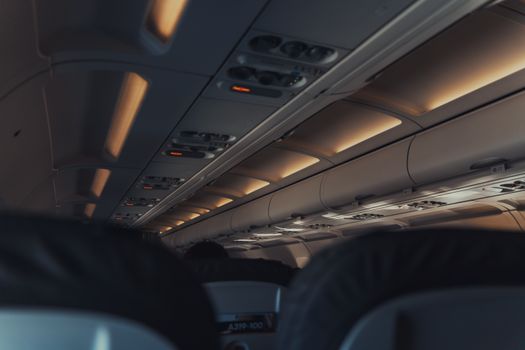
The myth that airplane cabins are giant petri dishes of recirculated germs has finally been debunked. Modern commercial aircraft are equipped with HEPA (High-Efficiency Particulate Air) filters, which are identical to those used in hospital operating rooms.
These filters capture 99.97% of airborne particles, including bacteria and viruses. The air in a modern cabin (like the Airbus A350 or Boeing 787 Dreamliner) is completely refreshed every two to three minutes with a mix of fresh outside air and recirculated, HEPA-filtered air.
``` +-----------------------------------------------------------------+ | AIRPLANE CABIN AIRFLOW | | | | Fresh Outside Air ---> [ HEPA H13 Filter ] ---> Cabin Inflow | | | | | Stale Cabin Air <--- [ Expelled Outward ] <---------+ | | | | Air is completely refreshed every 2-3 minutes. | +-----------------------------------------------------------------+ ```
But the real game-changer worth looking out for is Active Bipolar Ionization.
This technology releases positive and negative ions into the air stream. These ions bind to microscopic pathogens, making them larger and heavier, causing them to fall out of the breathing zone or become easily trapped by air filters. Airlines like Qatar Airways and private charter companies are retrofitting their fleets with these active purification systems.
> Pro-Tip: Turn on your overhead air vent (the gasper) as soon as you sit down. Direct the airflow straight down in front of your face. This creates an invisible air curtain that pushes away any ambient droplets from neighboring passengers.
---
5. Self-Cleaning Surfaces: The Rise of Antimicrobial Materials
What if the surfaces we touched cleaned themselves? This isn't science fiction; it is material science.
On a recent trip through London Heathrow, I noticed the handrails on the escalators felt slightly textured. They were coated with nanotechnology-based self-cleaning mats. These skins contain mineral nanocrystals that react with natural or artificial light to create a powerful oxidation process, continuously destroying organic contaminants on a molecular level.
Materials to Watch:
- Antimicrobial Copper: Copper has natural oligodynamic properties—it kills bacteria and viruses on contact within minutes. Look for copper-infused grab bars on modern metro systems and airport shuttle buses.
- Silver-Ion Fabrics: Premium airlines are beginning to construct seat covers and cabin blankets using fabrics infused with silver ions, which permanently inhibit the growth of bacteria and microbes.
---
6. The Personal Bio-Security Kit: What an Expert Actually Carries
While travel providers are doing their part, your personal gear is your final line of defense. Toss out those sticky, drying hand gels that smell like cheap tequila. The new wave of personal hygiene gear is sleek, sustainable, and highly effective.
``` [ LARQ UV Bottle ] [ K95 Air Mask ] [ Organic Wipes ] .----------. .---------. .-------. | ( :: ) | | _--_ | | (o_o) | | | | / \ | |_______| | Active | | \____/ | Lavender | Purify | '---------' Scented '----------' ```
Here is what is in my carry-on bag on every single flight:
- The LARQ Bottle PureVis: This vacuum-insulated stainless steel bottle features a built-in UV-C LED light in the cap. Every two hours, it automatically activates, destroying 99.9999% of bio-contaminants in your drinking water and keeping the bottle completely odor-free.
- Hypochlorous Acid (HOCl) Mist: This is the darling of dermatologists and sanitization experts. HOCl is naturally produced by our white blood cells to fight infection. It is 100 times more effective than bleach at killing pathogens, yet it is completely non-irritating, biodegradable, and safe to spray directly on your face and hands to stay fresh.
- Biodegradable Bamboo Wipes (Infused with Eucalyptus): Avoid plastic-laden baby wipes. Opt for organic bamboo wipes that naturally disinfect while leaving a clean, spa-like scent.
---
Clean Travel Logistics: At-A-Glance Guide
Planning a trip with health and wellness in mind? Here is a quick reference guide to help you budget and plan your next pristine journey.
| Category | High-Tech Standard to Look For | Estimated Cost / Premium | Best Time/Way to Experience | | :--- | :--- | :--- | :--- | | Air Travel | Airbus A350 or Boeing 787 (better cabin pressure and humidity + HEPA) | Same as standard economy/business fares | Book flights on newer wide-body aircraft. Check the aircraft type during booking. | | Hotels | GBAC STAR™ Accredited or Hilton CleanStay | $0 (Standard brand benefit) | Look for the GBAC seal on the hotel’s homepage or filter by "enhanced cleaning" on booking engines. | | Personal Gear | LARQ Self-Purifying Water Bottle | $99 USD | Buy online before your trip; saves money on plastic bottled water in the long run. | | Transit | Biometric Terminals (e.g., Star Alliance Biometrics) | Free (requires opt-in) | Register via your airline app 24 hours before departure. | | Sanitizers | Hypochlorous Acid (HOCl) Spray | $15 - $25 USD | Purchase travel-sized spray bottles (under 3 oz / 100ml) to pass TSA security. |
---
The Verdict: A Cleaner Way to See the World
The new hygiene standards improving travel worth considering are not about living in fear; they are about reclaiming the joy of exploration.
By embracing touchless technology, advanced filtration, and smart material science, we can travel further, stay healthier, and focus on what truly matters: the crisp mountain air of the Swiss Alps, the rich aroma of a piping-hot bowl of ramen in Tokyo, and the thrill of the open road.
Pack your bags, register your biometrics, and step into the clean, bright future of global travel.
---
More pictures
Tags
Share this guide
We may earn a commission if you click a link and buy a product or service, at no extra cost to you. How affiliate links work.
Been there?