
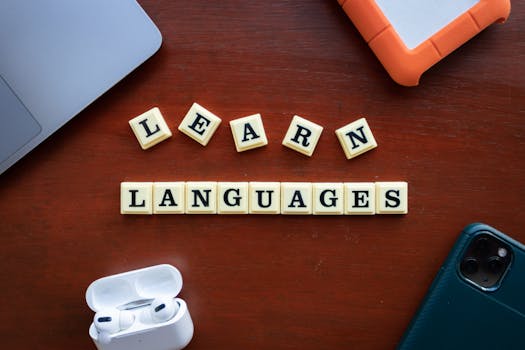
Imagine ordering coffee like a local or haggling at a market, all in a language you just started learning! This November 2025, transform your travel experience by picking up essential phrases in just one week. Get ready to dive into cultural immersion and unlock a deeper connection with your destination.
Unlock a New World: Can You Really Learn a Language in a Week? (Yes, You Can! Your Nov 2025 Guide)
The scent of freshly baked pastries mingled with the lively chatter of a bustling Roman piazza. I was standing in line, stomach rumbling, ready to order my cornetto and cappuccino. My Italian language skills at that point? Barely existent. I fumbled with my phrasebook, mumbled something that sounded vaguely like "one croissant, please," and received a blank stare from the barista. Red-faced, I pointed.
Fast forward a few years, and a week-long trip to Mexico City changed everything. Armed with a few days of Duolingo and a fierce determination to avoid a repeat of my Roman embarrassment, I managed to order tacos, ask for directions to Frida Kahlo's house, and even haggle for a beautiful textile in a local market—all in Spanish. It wasn’t perfect, but it was effective. And the smiles, the nods of understanding, the genuine warmth I received in return? Priceless.
That’s the magic I want to share with you. Forget the idea that learning a language takes years. While fluency certainly does, gaining functional, confidence-boosting conversational basics can absolutely be achieved in just one focused week. And November 2025, with its crisp air and often fewer crowds, is the perfect time to embark on this linguistic adventure.
Ready to dive deeper into a culture, beyond the tourist traps and English menus? Let’s explore how you can make a powerful linguistic leap in just seven days.
The "Why" and "How": Mastering Travel Essentials, Not Fluency
Let's be clear: in one week, you won't be debating philosophy with locals or reading classic literature. Your goal isn't fluency; it's functional proficiency for travel. This means mastering:
- Greetings & Politeness: "Hello," "Goodbye," "Please," "Thank you," "Excuse me." These are your golden tickets to respectful interaction.
- Basic Introductions: "My name is…," "I am from…"
- Ordering Food & Drink: "I would like…," "How much is it?," "The bill, please."
- Asking for Directions: "Where is…?", "Left," "Right," "Straight."
- Numbers: Essential for prices, times, and counting.
- Emergency Phrases: "Help!," "Doctor," "Police."
Why bother? Because even a handful of words transforms your trip. It shows respect, opens doors to genuine interactions, and makes you feel less like an observer and more like a participant. My Mexico City experience taught me that even a simple "¡Hola! ¿Cuánto cuesta?" (Hello! How much does it cost?) often led to a longer, friendlier exchange, sometimes even in English, but always with a shared laugh and a sense of connection that wouldn't have happened otherwise.
The "how" is a combination of strategic pre-trip preparation and intense in-country immersion. Think of it as a linguistic sprint, not a marathon.
Your Pre-Trip Prep: Laying the Groundwork for Success
Before you even step on that plane in November 2025, you need to arm yourself. This isn't about rote memorization; it's about building a foundational toolkit.
- Choose Your Weapon (App):
- Duolingo: Fantastic for gamified learning, daily streaks, and building vocabulary. Dedicate 20-30 minutes a day for a few weeks leading up to your trip. Focus on the "Travel" or "Basics" sections.
- Memrise: Excellent for memorizing phrases and useful vocabulary with spaced repetition. The "Learn with Locals" videos are invaluable for pronunciation.
- Pimsleur: If you learn best by listening, Pimsleur is audio-based and focuses on conversational phrases and pronunciation from day one. It's pricier but highly effective for auditory learners.
- My Tip: I usually combine Duolingo for daily practice and Memrise for specific phrase memorization. For my Portugal trip, I used a combination of Duolingo and a basic phrasebook, focusing on ordering pasteis de nata and coffee. Priorities, right?
- Grab a Phrasebook (Physical or Digital): A small, pocket-sized phrasebook is your best friend on the go. Highlight key phrases you want to master. Google Translate is great for quick look-ups but don't rely on it for full conversations. Download the language pack for offline use!
- YouTube Tutorials: Search for "Spanish for Travelers" or "Italian Survival Phrases." Many creators offer quick, digestible lessons focused on practical scenarios. Mimic their pronunciation!
- Flashcards (DIY or Digital): Write down 20-30 essential words/phrases you want to know cold. Practice them daily. Think "hello," "thank you," "water," "coffee," "exit," "toilet."
- Set Realistic Goals: Aim for 50-100 key words and 20-30 useful phrases. Don't overwhelm yourself. The goal is communication, not perfection.
By the time you board your flight in November, you should already be able to say "hello," "thank you," "please," and a few other crucial phrases. This pre-work builds confidence and makes your immersion week far more effective.
Top Destinations for Rapid Language Acquisition (November 2025 Picks)
November offers fantastic travel conditions in many parts of the world – fewer crowds, pleasant weather, and often better prices. Here are my top picks for a one-week language sprint:
1. Spanish: Mexico City, Mexico or Seville, Spain
- Why it's great for a week: Spanish is widely spoken, relatively phonetic, and resources are abundant. The culture is vibrant and welcoming to language learners.
- Mexico City (November Perks): Pleasant temperatures (mid-60s to low 70s F), less rain, and the Day of the Dead celebrations often extend into early November, creating a magical atmosphere.
- Focus Phrases: Ordering street food ("Un taco al pastor, por favor"), asking for prices ("¿Cuánto cuesta?"), directions ("¿Dónde está el metro?").
- Immersion Tips: Stay in a casa particular (guesthouse) or an Airbnb with a local host. Take a cooking class focused on traditional Mexican cuisine. Spend time in markets like Mercado de Artesanías La Ciudadela.
- Estimated Cost (for a week of basic language focus, excluding flights):
- Accommodation: $200-$400 (budget hostel/Airbnb room)
- Food: $150-$250 (lots of delicious, affordable street food!)
- Basic Group Language Class (10-15 hrs): $100-$200
- Transportation/Activities: $50-$100
- Total: ~$500-$950
- Seville, Spain (November Perks): Mild temperatures (high 60s F), perfect for exploring without the summer heat. Flamenco season is in full swing.
- Focus Phrases: Ordering tapas ("Una tapa de jamón, por favor"), asking about flamenco shows, navigating the labyrinthine streets.
- Immersion Tips: Find a local tapas bar and try to order everything in Spanish. Attend a flamenco show. Wander through the Triana neighborhood.
- Estimated Cost (for a week, excluding flights):
- Accommodation: $300-$600
- Food: $200-$350
- Basic Group Language Class: $150-$250
- Transportation/Activities: $70-$120
- Total: ~$720-$1320
- My Anecdote: In Mexico City, I once tried to ask for "hot sauce" and accidentally asked for "spicy socks." The vendor, bless his heart, burst out laughing and then patiently taught me the correct word. It was embarrassing but led to a great conversation!
2. Italian: Rome, Italy or Florence, Italy
- Why it's great for a week: Italian is melodic and incredibly rewarding to speak. Locals are often delighted when you try.
- November Perks: Fewer tourists, cooler weather perfect for walking the ancient streets, and the chance to experience local life without the summer crush.
- Focus Phrases: Ordering coffee ("Un caffè, per favore"), asking about art ("Dov'è il David?"), expressing appreciation ("È bellissimo!").
- Immersion Tips: Start your day at a local bar (café) and order your cappuccino standing at the counter. Take a pasta-making class. Visit a local market like Campo de' Fiori in Rome or Mercato Centrale in Florence.
- Estimated Cost (for a week, excluding flights):
- Accommodation: $350-$700
- Food: $250-$400
- Basic Group Language Class: $200-$300
- Transportation/Activities: $80-$150
- Total: ~$880-$1550
- My Anecdote: My initial Roman coffee blunder eventually turned into a small victory. On a subsequent trip, after a week of intense phrasebook study, I confidently ordered "due caffè e un cornetto, per favore!" and received a genuine "Prego!" (You're welcome!) from the barista. It felt like winning an Olympic medal.
3. Portuguese: Lisbon, Portugal
- Why it's great for a week: Portuguese shares similarities with Spanish but has its own unique charm and pronunciation. The people are incredibly friendly and appreciative of any effort.
- November Perks: Mild, pleasant weather (mid-50s to low 60s F), fewer crowds means more intimate Fado experiences, and comfortable walking conditions.
- Focus Phrases: Ordering pastries ("Um pastel de nata, por favor"), asking for directions ("Onde é a Baixa?"), expressing thanks ("Obrigado/Obrigada").
- Immersion Tips: Spend time in Alfama, listening to Fado. Take a cooking class for traditional Portuguese dishes. Practice ordering at tascas (traditional eateries).
- Estimated Cost (for a week, excluding flights):
- Accommodation: $250-$500
- Food: $200-$350
- Basic Group Language Class: $150-$250
- Transportation/Activities: $60-$100
- Total: ~$660-$1200
- My Anecdote: I remember asking a tram driver in Lisbon for "two tickets" and getting a blank stare. I then pulled out my phrasebook, pointed to "dois bilhetes," and his face lit up. He even gave me a quick pronunciation lesson right there!
4. Thai: Chiang Mai, Thailand
- Why it's great for a week: While tonal, basic polite phrases are easy to learn and highly valued. Thai culture is incredibly welcoming.
- November Perks: Marks the beginning of the cool, dry season – perfect weather! Loy Krathong and Yi Peng festivals often happen in November, offering an unforgettable cultural immersion (check specific dates for 2025).
- Focus Phrases: Greetings ("Sawadee ka/krap"), thank you ("Kob kun ka/krap"), asking for food ("Ao pad Thai mai pet"), numbers for bargaining.
- Immersion Tips: Take a Thai cooking class. Visit local markets (Warorot Market). Practice with street food vendors. Acknowledge the tones matter, but don't let them deter you from trying!
- Estimated Cost (for a week, excluding flights):
- Accommodation: $100-$250
- Food: $100-$200 (street food is incredibly cheap and delicious!)
- Basic Group Language Class: $80-$150
- Transportation/Activities: $40-$80
- Total: ~$320-$680
- My Anecdote: I once tried to order "no spicy" pad Thai ("mai pet") but got the tone wrong, and the vendor thought I said "very spicy." We both had a good laugh, and she patiently helped me get it right. The effort was always appreciated.
5. Indonesian: Bali, Indonesia
- Why it's great for a week: Indonesian (Bahasa Indonesia) has relatively simple grammar and is phonetic, making it one of the easiest languages for English speakers to pick up.
- November Perks: End of the wet season, so you might catch some rain, but it's often short bursts, leaving lush landscapes and fewer crowds. Good surfing conditions.
- Focus Phrases: Greetings ("Selamat pagi/siang/sore/malam"), thank you ("Terima kasih"), how much ("Berapa harganya?"), yes/no ("Ya/Tidak").
- Immersion Tips: Stay in a homestay in Ubud or Canggu. Take a surfing lesson and practice with your instructor. Visit local temples and markets.
- Estimated Cost (for a week, excluding flights):
- Accommodation: $150-$300
- Food: $100-$200
- Basic Group Language Class: $70-$120
- Transportation/Activities: $50-$100 (scooter rental, tours)
- Total: ~$370-$720
- My Anecdote: Learning "Terima kasih banyak" (thank you very much) in Bali was a game-changer. The genuine smiles and extra kindness I received from locals for just those two words were incredibly heartwarming.
Immersion Strategies: Maximizing Your Week on the Ground
Once you’ve landed in November 2025, it’s go-time! Every interaction is a learning opportunity.
- Stay Local: Opt for homestays, guesthouses, or small, family-run hotels. Your hosts are your first and best teachers. Ask them for local phrases.
- Say "Yes" to Local Activities: Cooking classes, guided walking tours (ask if they offer one in the local language, even if you just pick up words), market visits. These are natural environments for language practice.
- Order in the Local Language (Always!): Even if you stumble, try. Point if you must, but start with the local words. "Un caffè, per favore." "Dos tacos, por favor." It works wonders.
- Carry a Small Notebook: Jot down new words or phrases you hear. Ask locals to write them down for you. Review them during downtime.
- Listen Actively: Pay attention to conversations around you. Even if you don't understand, try to pick out familiar words.
- Don't Be Afraid to Make Mistakes: This is the most crucial tip! Locals appreciate the effort. Laughter is universal, and often, mistakes lead to memorable interactions and gentle corrections. My "spicy socks" story is a testament to this!
- Utilize Downtime: On a bus or waiting for food? Pull out your phrasebook or language app and review. Watch local TV (even kids' shows!) with subtitles.
Beyond the Words: Cultural Nuances and Body Language
Language isn't just about words; it's about culture. A few cultural tips can enhance your week of learning:
- Greetings are Key: Learn the appropriate greeting (e.g., "Hola" in Spanish, "Sawadee ka/krap" in Thai) and use it liberally. In many cultures, a polite greeting before asking a question is essential.
- Gestures: Be aware of common gestures. A thumbs-up might mean something different in some cultures. Observe locals.
- Politeness Pays: "Please" and "Thank you" (in the local language!) go a very long way. Always be respectful.
- Eye Contact: In some cultures, direct eye contact is a sign of respect; in others, it can be seen as aggressive. Again, observe.
- Bargaining: In many markets, bargaining is part of the culture. Learn "How much?" and a few numbers. Be polite and smile!
Budgeting for Your Language Adventure
Learning a language in a week doesn't have to break the bank. Here's a breakdown to help you plan your November 2025 trip:
- Pre-Trip Resources:
- Free apps (Duolingo, Memrise basic versions)
- YouTube tutorials (free)
- Phrasebooks ($10-$20)
- Total: $0-$20
- In-Country Costs (per week, excluding flights):
- Accommodation:
- Hostels/Budget homestays: $100-$300
- Mid-range Airbnb/Guesthouse: $300-$700
- Food:
- Street food/Local eateries: $100-$250
- Mix of local/some restaurants: $250-$400
- Language Classes/Tutors:
- Basic group class (10-15 hours): $80-$300
- A few hours of private tutoring ($20-$40/hour): $40-$120
- Transportation/Activities: $40-$150
- Buffer: Always add 10-15% for unexpected expenses.
Overall Budget Estimate (per person, per week, excluding flights): You could realistically do this for $300 (Thailand/Indonesia budget travel) to $1500 (Italy mid-range), depending on your chosen destination, accommodation style, and how many paid language lessons you opt for. The beauty is you can tailor it to your budget!
Your Language, Your Adventure: The Call to Action
November 2025 is calling. Imagine the stories you'll tell, the connections you'll make, and the incredible feeling of truly engaging with a new culture. Learning a language in a week isn't about becoming an expert; it's about unlocking a deeper, more authentic travel experience. It’s about being brave enough to try, to stumble, and to laugh.
So, what language will you conquer? Which vibrant destination will you choose for your linguistic sprint? Start your Duolingo streaks now, book that flight for November 2025, and get ready to transform your next trip from a vacation into an unforgettable cultural immersion. The world is waiting for you to say "hello" in its own tongue.
More pictures

Tags
Share this guide
We may earn a commission if you click a link and buy a product or service, at no extra cost to you. How affiliate links work.
Been there?