Forget the misconception that exploring ancient ice requires expensive, heavy-duty gear. I'm here to reveal how some of the most awe-inspiring glacier walks on Earth are surprisingly accessible, even in your trusty sneakers, transforming how I viewed adventure forever. Prepare for an unforgettable journey into the heart of icy landscapes that will leave an indelible mark on your soul. ---
Glacier Walks in Sneakers: My Life-Changing Icy Adventure!
The wind whipped around me, carrying the scent of ancient ice and a thrill I hadn’t known existed. Below my feet, the world was a canvas of brilliant whites, ethereal blues, and stark, volcanic blacks. And on my feet? My favorite, well-worn pair of hiking sneakers. Not the heavy, rigid mountaineering boots I'd always assumed were mandatory for such an expedition, but my everyday, comfortable trainers. This wasn't just a walk; it was a revelation – a glacier walk that changed my life forever, proving that some of the most epic adventures are far more accessible than we dare to imagine.
For years, the idea of walking on a glacier felt like a distant, unattainable dream. I pictured myself hauling enormous, specialized gear, enduring brutal cold, and needing the fitness level of an Olympic athlete. It was a bucket-list item, yes, but one perpetually pushed to the "someday, maybe" pile. Then, a trip to Iceland shattered every single one of those preconceived notions. I booked a guided glacier hike, hesitantly packed my sneakers, and prepared to be told off. Instead, I was handed a pair of microspikes – light, flexible crampons designed to strap right over my regular shoes – and ushered onto a landscape that felt utterly alien and profoundly beautiful.
That first crunch of ice underfoot, the sheer scale of the frozen river stretching before me, the vivid hues of blue trapped within the millennia-old ice – it wasn't just a walk; it was an awakening. It was a powerful reminder that adventure isn't always about conquering the highest peak or enduring the harshest conditions. Sometimes, it's about stepping out of your comfort zone in the most unexpected ways, and discovering the world's wonders are waiting, even for those of us who prefer our adventures with a side of comfort.
The Myth of the "Impossible" Glacier Walk: Debunking Gear Obsession
Let's be honest, the image of glacier trekking is often intimidating. We see extreme adventurers with ice axes, ropes, and boots that look like they could scale Everest. And for truly challenging, multi-day expeditions into heavily crevassed or high-altitude glacial terrain, that gear is absolutely essential. But what if I told you that a significant number of guided glacier experiences around the world are designed to be accessible to the average traveler – no specialized mountaineering training required, and often, no need for heavy, expensive boots?
The key lies in understanding the type of glacier walk you're undertaking. Many popular tourist glaciers, particularly those in places like Iceland or New Zealand, have specific sections or 'tongues' that are relatively stable, less crevassed, and managed by experienced tour operators. These operators specialize in offering introductory walks that focus on safety, education, and awe-inspiring views, rather than extreme mountaineering.
The secret weapon? Strap-on microspikes or light crampons. These aren't the rigid, 12-point crampons used for ice climbing. Instead, they're typically made of durable rubber with small metal spikes or chains that fit snugly over your existing hiking shoes or even sturdy sneakers. They provide incredible traction on ice and packed snow, transforming your regular footwear into glacier-ready boots in seconds. This small innovation single-handedly democratizes glacier exploration, making it available to a wider audience and, yes, even to those of us who prioritize packing light and comfortable. It's about smart design meeting natural wonder, proving that the dream of walking on ancient ice is closer than you think.
My First Icy Steps: A Journey onto Iceland's Svínafellsjökull
My first "sneaker glacier walk" took place on Svínafellsjökull, a breathtaking outlet glacier of Vatnajökull, Europe's largest ice cap, nestled within Iceland's Skaftafell Nature Reserve. The moment we arrived at the meeting point, a sense of nervous excitement bubbled within me. Would my sneakers really cut it?
Our guide, a jovial Icelander named Björn with a beard as rugged as the landscape, greeted us with a warm smile. He quickly dispelled any lingering doubts. "As long as your shoes are sturdy, with good ankle support, and you can walk comfortably in them for a few hours, they'll be perfect," he announced, holding up a pair of microspikes. "These do all the hard work."
After a quick safety briefing and demonstration on how to attach the microspikes (it’s surprisingly easy, like putting on a pair of snow chains for your shoes), we began our ascent towards the ice. The short hike to the glacier's edge was already stunning, with views of the black volcanic sand meeting the brilliant white ice.
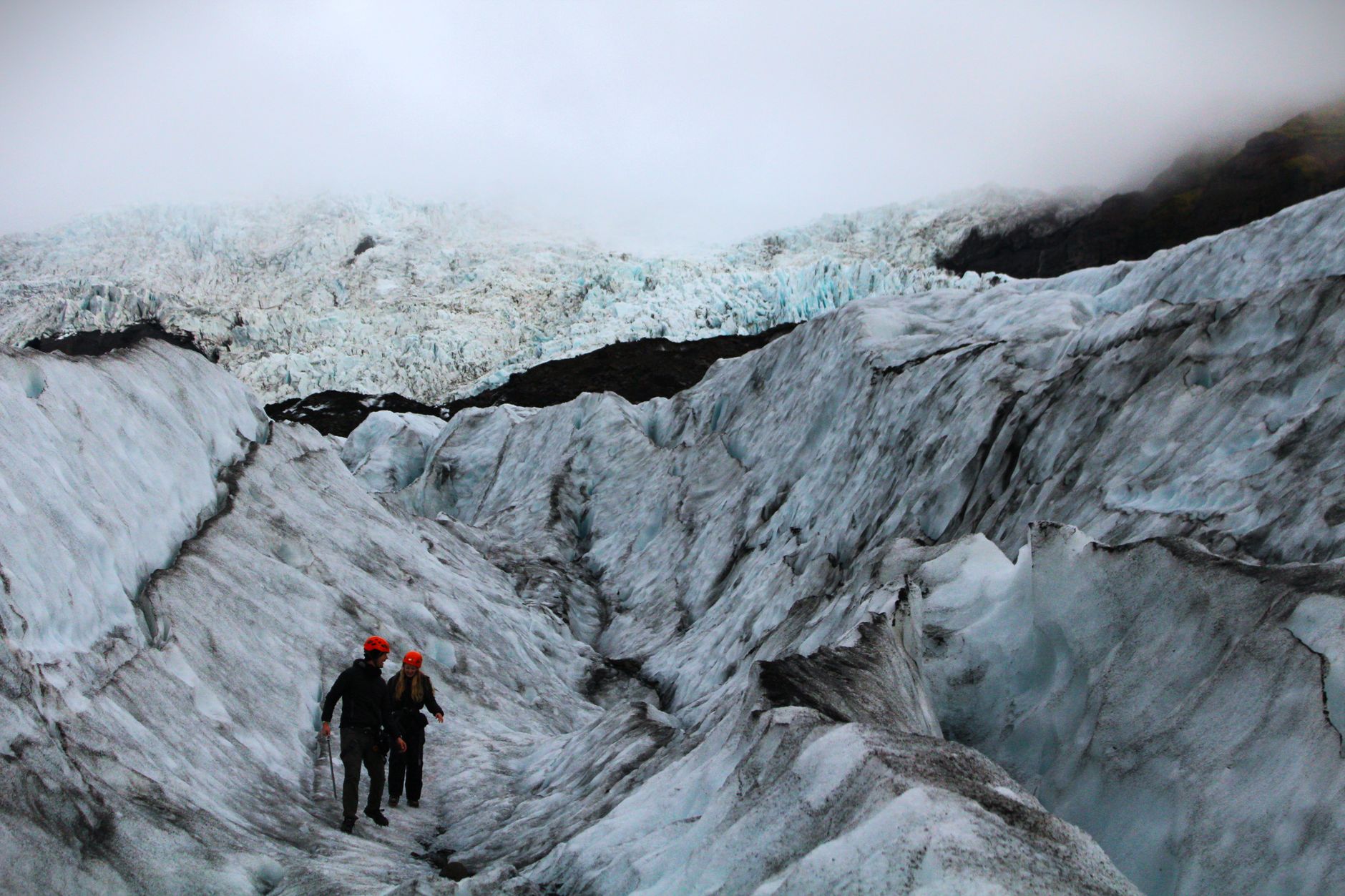
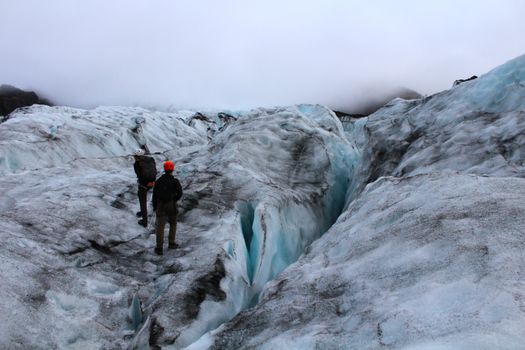
Stepping onto the glacier itself was an otherworldly experience. The world instantly transformed. The air felt crisper, the silence profound, broken only by the crunch of our microspikes and Björn's insightful commentary. We navigated gentle slopes and shallow ice formations, marveling at the intricate patterns carved by time and water. Björn pointed out deep crevasses (which we safely avoided, of course!), explained how the glacier moves, and even showed us how to drink the purest meltwater straight from tiny streams running across the ice.
The colors were unbelievable: electric blues where the ice was densest, striking whites reflecting the sun, and streaks of black volcanic ash giving texture to the ancient surface. Every step felt like a privilege, a walk through geological history. My sneakers, equipped with their trusty microspikes, handled every surface with surprising ease. I felt secure, comfortable, and utterly immersed in the raw, powerful beauty of the ice. It was humbling, exhilarating, and undeniably life-changing. That day, Svínafellsjökull didn't just show me a glacier; it showed me a new way to experience adventure.
Top Destinations for Sneaker-Friendly Glacier Experiences
While Iceland holds a special place in my heart for this experience, several other incredible destinations offer similar accessible glacier walks, allowing you to strap on those microspikes over your sneakers and explore:
- Iceland (Again, because it's that good!):
- Svínafellsjökull & Sólheimajökull: These are two of the most popular and accessible outlet glaciers. Tour operators like Extreme Iceland, Arctic Adventures, and Icelandic Mountain Guides offer a range of tours, from 2-3 hour easy walks perfect for beginners (and sneakers) to longer, more challenging treks.
- What to Expect: Guided tours are mandatory. Guides provide all necessary safety equipment, including helmets, ice axes (for balance, not climbing), and those crucial microspikes. You’ll learn about glacial geology, climate change, and experience breathtaking views of ice formations, crevasses, and meltwater streams.
- Prices: Expect to pay between €70-€120 for a 2.5-4 hour guided tour. Booking in advance, especially during peak season, is highly recommended.
- Why Sneakers Work: These tours stick to relatively flat, stable sections of the glacier, and the provided microspikes offer excellent grip.
- New Zealand (South Island):
- Fox Glacier & Franz Josef Glacier: While helicopter access is common for longer, higher-altitude hikes, both glaciers offer "terminal face walks" or "valley walks" that get you close to the glacier's edge. Some guided tours might even take you onto the very toe of the glacier, where microspikes over sturdy shoes are sufficient for short periods.
- What to Expect: Check with local operators like Fox Glacier Guiding or Franz Josef Glacier Guides. Some tours offer a combination of a valley walk and a short experience on the ice. The focus here is often on the sheer scale of the glacier and the lush rainforest that surrounds it.
- Prices: Valley walks can be free or low-cost for self-guided options, but guided tours onto the ice will be similar to Iceland, around NZD $100-$200 depending on duration and accessibility (e.g., if a short helicopter ride is involved for access).
- Why Sneakers Work: For the very lowest, most stable parts of the glacier, or for viewing from close proximity, sturdy hiking sneakers are suitable. Always confirm with the tour operator if they provide crampons for your type of shoe.
- Patagonia (Argentina & Chile):
- Perito Moreno Glacier (Argentina): While the famous "Mini-Trekking" and "Big Ice" tours on Perito Moreno do require specialized boots (often provided by the tour company), the extensive network of boardwalks offers unparalleled, up-close views of the glacier. You can spend hours walking these paths in your sneakers, feeling the thunder of calving ice and witnessing its immense beauty without ever stepping on the ice. It’s an immersive glacier experience in itself!
- Torres del Paine National Park (Chile): While not on the glacier, many iconic hikes in Torres del Paine, like the Grey Glacier lookout or the base of the Towers, offer spectacular glacier views. Your sturdy hiking sneakers will be your best friend here, allowing you to comfortably traverse the trails leading to these breathtaking vistas.
- What to Expect: For Perito Moreno, the walkways are well-maintained. For Torres del Paine, expect varied terrain from gravel paths to rocky ascents, all manageable in good hiking sneakers.
- Prices: Entry to Los Glaciares National Park (Perito Moreno) is around ARS $12,000 (approx. USD $15-20 for foreigners). Torres del Paine entry is CLP $30,000 (approx. USD $35-40).
- Why Sneakers Work: These locations offer incredible glacier experiences from adjacent trails or viewpoints, which are perfectly suited for comfortable hiking sneakers. For actual ice walking on Perito Moreno, specialized gear is usually provided.
Always, always check with the specific tour operator about their footwear requirements and what equipment they provide. Most reputable companies will clearly state what you need to bring and what they supply.
Essential Gear & Safety Tips for Your Sneaker Glacier Adventure
Even though you’re opting for sneakers, a glacier environment demands respect and preparation. Here’s what you absolutely need to know:
- Sturdy Sneakers/Hiking Shoes: Your shoes should have good ankle support, a robust sole, and be comfortable for walking several hours. Waterproofing is a huge bonus! Don't wear flimsy fashion sneakers.
- Layers, Layers, Layers: The weather on a glacier can change in an instant.
- Base Layer: Moisture-wicking material (not cotton!).
- Mid-Layer: Fleece or wool for insulation.
- Outer Layer: Waterproof and windproof jacket and trousers. Even if it's sunny, the wind can be biting, and you might sit on wet ice.
- Gloves & Hat: Crucial for retaining body heat.
- Sunglasses & Sunscreen: Glaciers reflect a massive amount of UV radiation. Protect your eyes and skin.
- Water & Snacks: Stay hydrated and energized.
- Backpack: To carry your layers, water, and snacks.
- Camera: You'll want to capture every stunning moment (ensure it's protected from moisture!).
- Microspikes/Crampons (Provided): As discussed, these will be supplied by your tour operator. They'll also show you how to attach them correctly.
- Helmet & Ice Axe (Provided): For most introductory tours, helmets are mandatory for safety, and a small ice axe is often provided for balance and stability, not for technical climbing.
Safety First:
- Always Go with a Certified Guide: This is non-negotiable. Glaciers are dynamic, dangerous environments with hidden crevasses and unpredictable icefalls. Guides know the safe routes and are trained for emergencies.
- Listen to Your Guide: They are experts. Follow their instructions precisely.
- Stay on Marked Paths: Do not wander off on your own.
- Be Aware of Your Surroundings: Pay attention to the ice, the weather, and your group.
- Communicate: If you feel unwell or uncomfortable, tell your guide immediately.
- Leave No Trace: Pack out everything you pack in. Protect these fragile environments.
Beyond the Ice: The Deeper Impact of a Glacier Walk
Walking on a glacier is more than just a physical activity; it's a profoundly spiritual and educational experience. It’s impossible to stand on millennia-old ice and not feel an overwhelming sense of awe and humility. The sheer scale of these frozen giants, the vibrant blues that tell tales of compressed time, the constant, subtle movement of the ice – it all conspires to make you feel incredibly small, yet deeply connected to the planet's powerful forces.
For me, it was a moment of stark clarity about climate change. Seeing the meltwater rivers carving pathways through the ice, hearing the creaks and groans of a living, breathing glacier, and having guides explain its rapid retreat, brought the abstract concept of global warming into sharp, tangible focus. It wasn't just data on a screen; it was the ground beneath my sneakers, slowly but surely disappearing. This experience instilled in me a renewed sense of responsibility and a deeper appreciation for the fragile beauty of our world.
It also changed my perception of my own capabilities. By stepping onto that ice in my comfortable sneakers, I broke down a mental barrier I'd built around "adventure." It taught me that sometimes, the biggest obstacles are the ones we create in our minds. It empowered me to seek out more unique experiences, to ask "why not?" instead of "can I?" And that, truly, is a life-changing lesson.
Planning Your Own Sneaker Glacier Adventure
Feeling inspired? Here’s how to turn this dream into your next travel reality:
- Choose Your Destination: Iceland, New Zealand, or Patagonia are excellent starting points for accessible glacier experiences. Research which specific glaciers offer the type of walk you're looking for.
- Research Tour Operators: Look for reputable companies with excellent safety records and reviews. Check what equipment they provide and their footwear requirements. A quick Google search for "[Glacier Name] guided walk" will yield many options.
- Book in Advance: Especially during peak travel seasons, glacier tours can fill up quickly. Secure your spot to avoid disappointment.
- Pack Smart: Refer to the "Essential Gear & Safety Tips" section. Layers are your best friend!
- Prepare for the Unexpected: Glacial environments are unpredictable. Weather can change rapidly, and tours might be delayed or rerouted for safety. Embrace the adventure!
- Embrace the Moment: Put down your phone (after getting those Instagram-worthy shots, of course!). Take a deep breath. Feel the crunch of the ice. Listen to the silence. Let the grandeur of the glacier wash over you. This is an experience to be savored.
My glacier walk in sneakers wasn't just a highlight of my trip; it was a turning point in how I approach travel and adventure. It taught me that true exploration isn't always about extreme feats, but about finding accessible pathways to incredible experiences, shattering personal limitations, and connecting deeply with the natural world. So, lace up your sneakers, find a reputable guide, and prepare for an icy adventure that might just change your life forever.
---
More pictures


Tags
Share this guide
We may earn a commission if you click a link and buy a product or service, at no extra cost to you. How affiliate links work.
Been there?