
Ever scrolled through Instagram and wondered if a travel photo was *too* perfect to be real? You're not alone! Prepare to have your mind blown as we unveil incredible, genuine destinations that look like they've been plucked straight from a fantasy novel or a digital artist's wildest dream.
Beyond the Filter: Unveiling Earth's Most Unbelievably Real Photo Spots
I’ll admit it. I’m a skeptic. When I first started seeing those impossibly vibrant, perfectly symmetrical, or downright alien-looking travel photos pop up on my feed, my first thought was always, "Photoshop." Or a really good filter. Or maybe even AI art. I mean, how could a lake really be bubblegum pink? How could mountains genuinely float in the clouds? And a desert that turns into the world’s largest mirror? Come on.
Then, I started traveling. And one by one, these "fake" places revealed their stunning, undeniable reality to me. My jaw literally dropped, my camera roll filled faster than ever, and my skepticism turned into pure, unadulterated awe. What I discovered is that Earth is a far more imaginative artist than any human, and some of its masterpieces are just begging to be seen – and photographed.
At Tripsora, we’re all about inspiring your next adventure, and today, I’m pulling back the curtain on the most mind-bending, visually arresting photo spots on the planet. These aren't just places; they're experiences that will challenge your perception of reality and leave you with photos so incredible, your friends will accuse you of using Photoshop. So, pack your bags, charge your camera, and get ready to chase the unbelievable.
---
1. Salar de Uyuni, Bolivia: Where the Sky Meets the Earth (and Your Reflection)
Imagine standing on a surface so vast and flat, it stretches to the horizon in every direction, reflecting the sky above with such perfect clarity that you can’t tell where the ground ends and the heavens begin. That, my friends, is the Salar de Uyuni, the world's largest salt flat, located high in the Bolivian Andes.
My "Is This Real?" Moment: My first trip to Salar de Uyuni was during the rainy season. After days of bouncing around in a 4x4, we finally arrived at a patch of water-covered salt, and what unfolded before my eyes was nothing short of magic. The clouds above were mirrored so flawlessly below that our jeep appeared to be floating in an endless expanse of sky. I remember stepping out, feeling disoriented, and then just dissolving into a fit of laughter because it was so utterly, gloriously absurd. We spent hours taking perspective photos – giant people holding tiny jeeps, friends walking on clouds – and every single shot looked like a digital manipulation.
Why It Looks Fake (But Isn't): The unique combination of a vast, flat salt crust and a thin layer of standing water during the wet season (December to April) creates an unparalleled natural mirror. It’s like walking through a dream.
Tripsora Traveler's Tips:
- Best Time to Visit: For the iconic mirror effect, aim for the rainy season (December-April). For the hexagonal salt patterns and clearer skies, visit during the dry season (May-November).
- Getting There: Most tours depart from Uyuni (Bolivia) or San Pedro de Atacama (Chile). A 3-day/2-night tour is popular, typically costing around $200-$300 USD including accommodation and meals.
- What to Pack: Layers (temperatures fluctuate wildly), sunscreen, sunglasses (the glare is intense!), a wide-angle lens for epic shots, and props for fun perspective photos.
- Photo Advice: Get low! The closer your camera is to the water, the more seamless the reflection. Experiment with composition to play with scale.
---
2. Antelope Canyon, USA: Nature's Swirling Sandstone Masterpiece
Deep within the Navajo Nation in Arizona lies Antelope Canyon, a slot canyon carved by millennia of water and wind. Stepping inside is like entering a liquid sculpture, where light dances through narrow openings, illuminating the sandstone walls in a kaleidoscope of oranges, purples, and reds.
My "Is This Real?" Moment: I’d seen countless photos of Antelope Canyon, but nothing prepared me for the actual experience. As our Navajo guide led us deeper into the narrow crevice, a shaft of sunlight pierced through an opening high above, creating a ethereal beam that seemed to glow from within. The walls swirled around me like soft clay, and the colors shifted with every step. It felt less like a natural formation and more like a carefully designed art installation. The silence, broken only by the occasional gasp of awe from fellow travelers, was profound.
Why It Looks Fake (But Isn't): The unique geological formations, combined with the way sunlight filters into the narrow canyon, create dramatic contrasts, fluid lines, and an almost otherworldly glow that makes every photograph look professionally lit and edited.
Tripsora Traveler's Tips:
- Booking is Essential: Antelope Canyon is on Navajo land and must be visited with a permitted Navajo guide. Book your tour well in advance, especially for Upper Antelope Canyon.
- Upper vs. Lower: Upper Antelope Canyon is famous for its light beams (best seen midday, roughly 10 AM - 1 PM) and is wider. Lower Antelope Canyon is narrower, requires climbing ladders, and offers more intricate, snaking formations. Both are incredible.
- Cost: Tours typically range from $80-$100+ USD per person, depending on the canyon and time of year.
- Photo Advice: Don't rush! Your guide will often point out the best angles and even help adjust your camera settings. Tripods are generally not allowed in Upper Canyon due to crowds, but check current rules. Embrace the shadows and highlights.
---
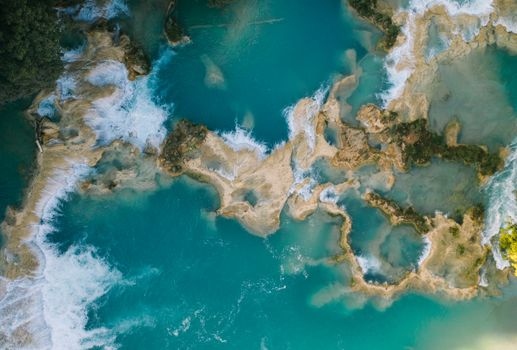
3. Pamukkale, Turkey: The Cotton Castle's Thermal Oasis
Perched on a hillside in southwestern Turkey, Pamukkale (meaning "cotton castle") is a natural wonder comprised of brilliant white travertine terraces filled with warm, mineral-rich blue water. It looks like a pristine, snow-covered landscape, even in the middle of summer.
My "Is This Real?" Moment: I visited Pamukkale on a hot summer day, and the contrast was stunning. One minute, I was walking through arid Turkish countryside; the next, I was confronted by these blindingly white, tiered pools. It felt like stepping onto a giant, sparkling wedding cake. Taking off my shoes and wading through the warm, shallow pools, with the ancient ruins of Hierapolis just above, was a surreal blend of natural beauty and historical grandeur. The photos I took of friends lounging in the milky blue waters, with the white terraces stretching behind them, looked like they were on another planet.
Why It Looks Fake (But Isn't): The calcium carbonate-rich thermal waters flow down the hillside, depositing minerals that harden into bright white travertine formations over thousands of years, creating these unique, tiered pools.
Tripsora Traveler's Tips:
- Entrance Fee: Around $20-$30 USD (check current Lira exchange rates). This often includes access to Hierapolis.
- Footwear: You'll need to remove your shoes to walk on the travertine terraces to protect them. Bring a bag to carry them.
- Best Time: Early morning or late afternoon for softer light and fewer crowds. Sunset offers incredible hues reflecting off the white terraces.
- Combine with Hierapolis: The ancient Roman city of Hierapolis sits atop Pamukkale, offering incredible historical context and panoramic views. Don't miss Cleopatra's Pool for a unique thermal swim!
- Photo Advice: Focus on the contrast between the white terraces and the blue water. Use leading lines created by the terraces to draw the eye into your shot.
---
4. Zhangjiajie National Forest Park, China: The Avatar Mountains Come to Life
If you've seen James Cameron's "Avatar," you've already had a glimpse of Zhangjiajie National Forest Park. This UNESCO World Heritage site is famous for its towering sandstone pillars, shrouded in mist, that truly give the illusion of mountains floating in the sky.
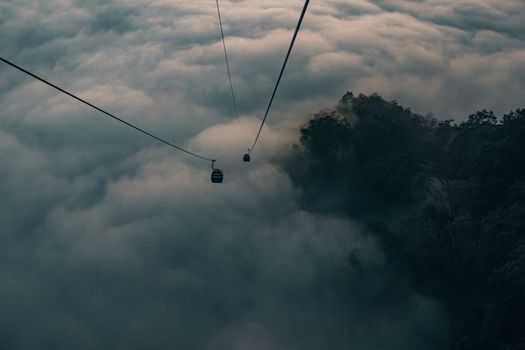
My "Is This Real?" Moment: I’d heard about the "Avatar Mountains" and seen the movie, but nothing truly prepares you for the sheer scale and ethereal beauty of Zhangjiajie. On a particularly misty morning, as we rode the Bailong Elevator (the world's highest outdoor elevator) up the side of a cliff, the clouds swirled around us, revealing glimpses of these colossal pillars emerging from the mist. It felt like an ancient, mystical world. Standing on one of the viewing platforms, gazing out at the "Southern Sky Column" (renamed "Avatar Hallelujah Mountain"), I actually felt a shiver down my spine. It was exactly like being on Pandora.
Why It Looks Fake (But Isn't): The unique geology of quartzite sandstone, combined with millions of years of erosion and the frequent misty weather, creates these incredible, isolated pillars that often appear to float in the clouds, especially from elevated viewpoints.
Tripsora Traveler's Tips:
- Entrance Fee: A multi-day pass (usually 4 days) costs around $40-$50 USD.
- Navigating the Park: It's vast! Utilize the park's excellent network of cable cars, shuttle buses, and elevators (like the Bailong Elevator) to maximize your time.
- Weather: Misty days, while potentially obscuring distant views, actually enhance the "floating mountain" effect. Don't be deterred by a little fog!
- Avoid Peak Holidays: Chinese national holidays can see massive crowds. Check the calendar before you go.
- Photo Advice: Experiment with different viewpoints – there are countless platforms. Use the mist to create depth and mystery in your shots. A wide-angle lens is a must to capture the scale.
---
5. Grand Prismatic Spring, Yellowstone, USA: Earth's Most Vivid Hot Spring
Yellowstone National Park is a wonderland of geothermal activity, but nothing quite compares to the Grand Prismatic Spring. It's the largest hot spring in the United States, famous for its dazzling, rainbow-like rings of vibrant blue, green, yellow, orange, and red.
My "Is This Real?" Moment: The first time I saw Grand Prismatic, I actually laughed out loud in disbelief. The colors were so impossibly bright, so perfectly arranged, it looked like a giant, psychedelic eye staring up at the sky. The steam rising from the center added to the drama, creating a constantly shifting veil that only enhanced the mystique. Walking the boardwalk around it, I felt like I was witnessing a living, breathing painting. Every photo I took looked like it had been saturated to the max, but that's just how it is in real life!
Why It Looks Fake (But Isn't): The vibrant colors are not due to minerals, but to mats of thermophilic bacteria that thrive in the extreme temperatures of the spring. Different types of bacteria flourish at different temperatures, creating the distinct, concentric rings of color. The deep blue center is too hot for bacteria to survive.
Tripsora Traveler's Tips:
- Entrance Fee: Yellowstone National Park charges an entrance fee, typically around $35 USD per private vehicle for a 7-day pass.
- Best Viewing: You can view it from the Midway Geyser Basin boardwalk, but for the iconic, panoramic shot showing all the rings, hike the Grand Prismatic Spring Overlook Trail (a relatively easy 1.2-mile round trip).
- Safety First: Always stay on designated boardwalks and trails. The ground around hot springs is fragile and dangerous.
- Photo Advice: The best time for photos is often midday when the sun is high, reducing glare. From the overlook, a wide-angle lens is great. Be patient with the steam – wait for breaks to get clearer shots.
---
6. Lake Hillier, Australia: The Bubblegum Pink Enigma
Imagine flying over a remote island and spotting a lake so vibrantly, impossibly pink, it looks like a giant blob of bubblegum dropped into the landscape. That's Lake Hillier, off the coast of Western Australia. Surrounded by a rim of white salt, a dense eucalyptus forest, and the deep blue of the Southern Ocean, its color is a truly baffling spectacle.
My "Is This Real?" Moment: I first saw Lake Hillier from a scenic flight. As the plane banked, and this incredible pink ellipse came into view, I genuinely gasped. It was so pink. Like, cartoonishly, confectionary pink. My brain struggled to process it, even as my eyes confirmed its reality. The contrast with the dark green forest and the azure ocean was so stark, it looked like someone had painted it there. It remains one of the most visually stunning and utterly inexplicable things I've ever witnessed.
Why It Looks Fake (But Isn't): Scientists aren't 100% certain, but the prevailing theory is that the pink hue comes from the presence of Dunaliella salina microalgae, which produce carotenoids (the same pigment found in carrots), and a reaction with halophilic bacteria in the salt crust. The high salt content contributes to the vividness.
Tripsora Traveler's Tips:
- Accessibility: Lake Hillier is on Middle Island, part of the Recherche Archipelago. It's best (and most commonly) viewed via scenic flights departing from Esperance, Western Australia. Land access is restricted.
- Cost: Scenic flights can range from $200-$300+ AUD per person.
- Photo Advice: Aerial photography is key here. A good zoom lens can help capture details, but a wide-angle will showcase the incredible contrast with the surrounding landscape. Drones are restricted in many areas of Australia's national parks, so check regulations if you're considering it.
---
Your Guide to Capturing the Unreal: Photography Tips for Mind-Blowing Shots
These places are stunning on their own, but with a few photography tips, you can ensure your photos truly convey their unbelievable reality:
- Embrace the Wide Angle: Many of these locations boast immense scale. A wide-angle lens (16-35mm on a full-frame) will help you capture the grandeur and immersive feel.
- Chasing the Light: Pay attention to the sun. Golden hour (sunrise/sunset) often provides the most magical light, but for places like Antelope Canyon or Grand Prismatic Spring, midday can be best for specific effects.
- Perspective is Key: For places like Salar de Uyuni, bring props (toy dinosaurs, bottles, hats) and play with forced perspective to create truly bizarre and memorable shots.
- Patience, Patience, Patience: Weather changes, crowds ebb and flow. Be patient, wait for the right moment, and don't be afraid to experiment with different angles.
- Respect the Environment: These are natural wonders. Stay on marked paths, don't touch delicate formations, and leave no trace. Your photos should inspire conservation, not damage.
- Don't Over-Process: The beauty of these places is that they are real. A little color correction is fine, but resist the urge to heavily saturate or manipulate the image. Let their natural splendor shine!
---
Ready to Question Your Reality?
There you have it – six incredible destinations that will make you rethink everything you thought you knew about "real" travel photos. From the ethereal reflections of Salar de Uyuni to the vibrant spectacle of Grand Prismatic Spring, these places are proof that Earth is full of wonders far more imaginative than anything we could conjure digitally.
These are the trips that fill your soul, challenge your perceptions, and leave you with stories and photos that will spark conversations for years to come. So, stop scrolling past those "too good to be true" images with a skeptical sigh. Start planning your journey to witness them for yourself. Trust me, the real thing is always better than any screen.
Which of these "fake but real" wonders will you add to your Tripsora bucket list first? Share your dream destination in the comments below! And when you go, don't forget to tag #Tripsora and #UnrealTravel in your mind-blowing photos – we can't wait to see them!
---
More pictures
Tags
Share this guide
We may earn a commission if you click a link and buy a product or service, at no extra cost to you. How affiliate links work.
Been there?