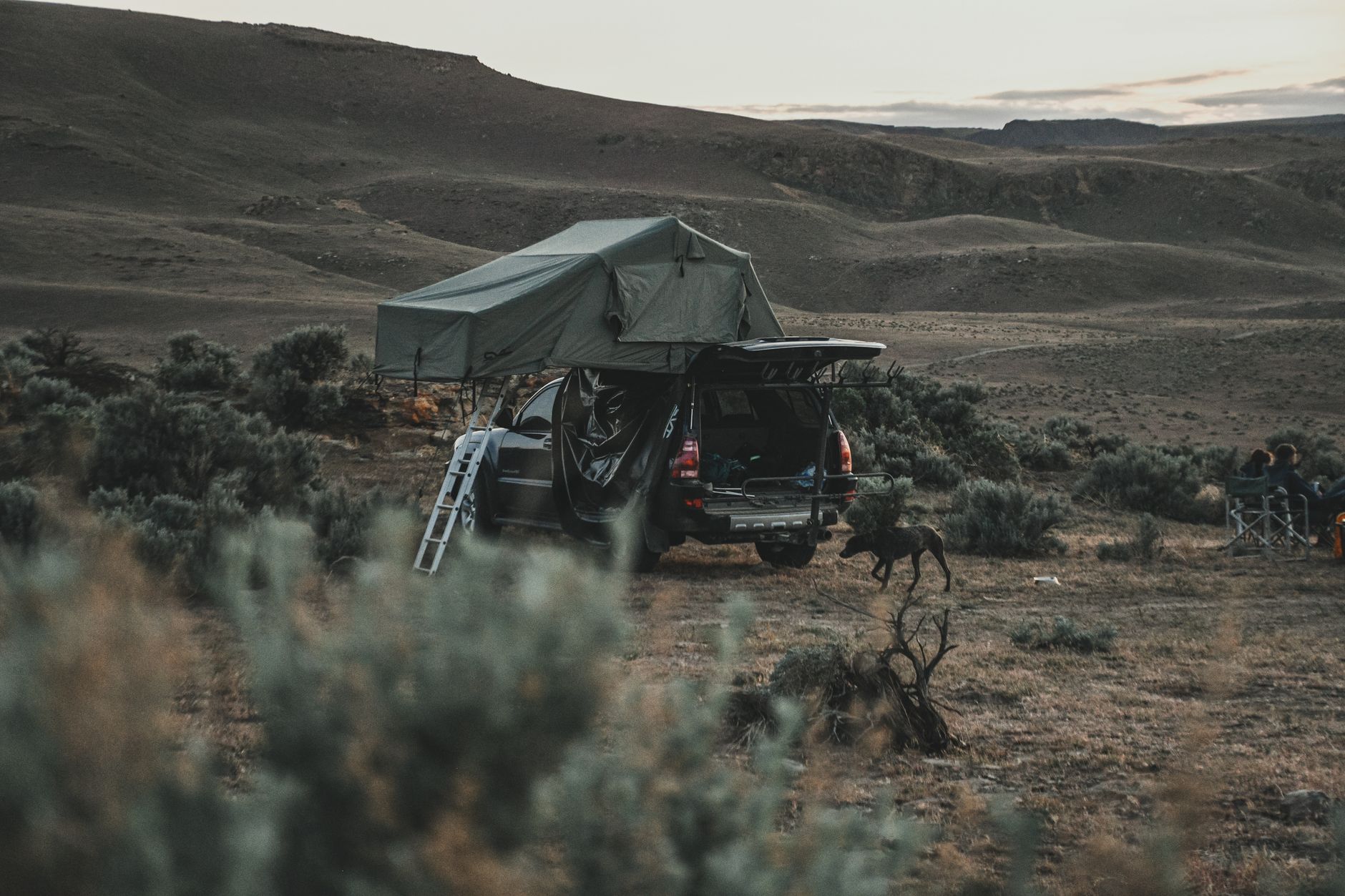
Tired of expensive hotels and crowded campgrounds? Imagine waking up to unparalleled natural beauty, completely free of charge. Join me as I reveal the secret to unforgettable adventures and the incredible free camping spots that reshaped my understanding of travel and freedom.
My Journey to Freedom: How Free Camping Changed Everything
It was a cold, rainy evening in rural Montana. My old Subaru, packed to the brim with camping gear, a cooler, and a few weeks' worth of clothes, was sputtering slightly. I’d just blown through my budget on a string of mediocre, overpriced campgrounds, and my bank account was screaming for mercy. Doubts gnawed at me: Was this "travel blogger dream" even sustainable? Was I just setting myself up for financial ruin, one paid campsite at a time?
Then, a flicker of hope. A fellow traveler I’d met at a gas station had mentioned "dispersed camping" – the mystical art of finding free spots on public lands. Skeptical but desperate, I pulled over, huddled under a leaky tarp, and started furiously researching on my phone. What I discovered that night wasn't just a way to save money; it was a gateway to an entirely new philosophy of travel, a profound connection to nature, and an undeniable sense of freedom that would, quite literally, change my life forever.
Free camping, often called boondocking or dispersed camping, isn't just about saving a few bucks. It's about waking up to sunrises over untouched wilderness, falling asleep under a blanket of a million stars, and experiencing places that most people only ever see from a crowded overlook. It's about solitude, self-reliance, and finding your own slice of heaven, far from the madding crowds.
In this post, I'm going to take you on a journey through some of the most incredible, life-changing free camping spots I’ve discovered across North America. I'll share personal anecdotes, practical tips, and all the nitty-gritty details you need to embark on your own unforgettable, wallet-friendly adventures. Get ready to ditch those reservations and embrace the wild!
The Desert's Embrace: Starry Nights and Endless Horizons
My first truly "life-changing" free camping experience happened in the vast, silent expanses of the American Southwest. After that fateful night in Montana, I made a beeline for the desert, specifically the Bureau of Land Management (BLM) lands surrounding Moab, Utah.
I remember turning off the paved highway onto a dusty, washboard road, my heart thumping with a mix of excitement and trepidation. The landscape immediately transformed from red rock canyons to wide-open plains dotted with sagebrush and juniper. Following the advice of a few online forums, I drove a few miles in, found a flat spot far from any other vehicles, and set up my small tent.
That first night was magic. The silence was absolute, broken only by the occasional rustle of desert creatures. As the sun dipped below the horizon, painting the sky in fiery oranges and purples, the stars began to emerge, one by one, until the entire cosmos seemed to unfold above me. I laid outside my tent for hours, completely awestruck, feeling smaller and more connected to the universe than ever before. There were no RV generators humming, no kids screaming, just me and the infinite.
Specific Spot Vibe: Imagine waking up to the first rays of sun hitting towering sandstone formations, sipping coffee as a jackrabbit hops by, and having immediate access to world-class hiking and mountain biking trails without paying a dime for accommodation. The BLM lands around Moab (e.g., Willow Springs Road, Dalton Wells Road) offer this in spades. While some areas might have pit toilets, most are completely undeveloped.
Practical Tips for Desert Boondocking:
- Water is Gold: Carry way more water than you think you'll need for drinking, cooking, and basic hygiene. Sources can be extremely scarce.
- Leave No Trace: The desert ecosystem is fragile. Pack out everything you pack in, including human waste (yes, seriously – wag bags are your friend).
- Weather Extremes: Desert temperatures can swing wildly. Be prepared for scorching days and surprisingly cold nights, especially at higher elevations.
- Road Conditions: Many desert roads are unpaved and can be rough, sandy, or washboarded. High clearance and sometimes 4WD are highly recommended. Always check conditions before venturing too far.
Mountain Majesty: Alpine Lakes and Forest Seclusion
After the desert, I yearned for the cool embrace of the mountains. The Rocky Mountains, with their towering peaks and endless National Forest lands, became my next target. I ventured into Colorado, specifically the areas around Silverton and Ouray, known for their stunning "Million Dollar Highway" and countless forest service roads.
One particular spot stands out. After a grueling climb up a winding, gravel forest road – a true test for my Subaru – I found a clearing nestled beside a pristine alpine lake, reflecting the snow-capped peaks like a mirror. The air was crisp and clean, smelling of pine and damp earth. I spent three days there, completely off-grid. I hiked to a nearby waterfall, watched marmots play among the rocks, and woke up each morning to the most incredible sunrise I'd ever witnessed, painting the peaks in hues of gold and pink. The only sounds were the wind rustling through the pines and the distant call of an elk. It felt like I had the entire wilderness to myself.
Specific Spot Vibe: Picture yourself brewing coffee by a roaring campfire (where permitted), surrounded by towering evergreens, with panoramic views of jagged peaks. These spots are often a bit harder to reach, requiring a more robust vehicle, but the reward is unparalleled solitude and natural beauty. Look for designated dispersed camping areas within National Forests like the San Juan National Forest in Colorado or the Bridger-Teton National Forest in Wyoming.
Practical Tips for Mountain Camping:
- Altitude Sickness: If coming from sea level, take it easy the first day or two. Stay hydrated.
- Bear Safety: This is crucial. Store all food, scented items, and trash in bear-resistant containers or hung from a tree. Never cook or eat in your tent.
- Fire Regulations: Always check local fire restrictions. Mountain areas are prone to wildfires, and bans are common, especially in dry seasons.
- Weather Changes: Mountain weather is notoriously unpredictable. Sunny skies can turn into thunderstorms or even snow in minutes. Pack layers and rain gear.
- Topo Maps & Navigation: Cell service is often non-existent. Download offline maps or carry physical maps and a compass. Know your route in and out.
Coastal Whispers: Forested Retreats Near the Ocean's Roar
Finding truly free camping directly on the beach is a rarity, often restricted due to environmental concerns or private land. However, the Pacific Northwest offered me an incredible alternative: dispersed camping within National Forests that are just a stone's throw from the dramatic coastline.
I discovered a gem near the Olympic National Forest in Washington. While not directly on the sand, my campsite was nestled deep within a lush, moss-draped forest on a quiet forest service road. From there, it was a mere 15-minute drive to a rugged, wild stretch of coastline, where colossal driftwood logs littered the beach and the Pacific Ocean crashed against sea stacks.
Each morning, I'd wake to the gentle mist filtering through the trees, the air smelling of pine and salt. I'd spend my days exploring tide pools, hiking through ancient forests, and watching eagles soar overhead. In the evenings, I'd return to my secluded camp, build a small fire, and listen to the distant roar of the ocean as I cooked dinner. It was the perfect blend of forest tranquility and coastal adventure, all without a single camping fee.
Specific Spot Vibe: Imagine waking up surrounded by towering old-growth trees, the air cool and damp, knowing that a breathtaking, wild beach is just a short drive away. These spots offer a sense of deep immersion in nature, with the added benefit of coastal exploration. Look for National Forest lands adjacent to coastlines, like parts of the Olympic National Forest in Washington or Siuslaw National Forest in Oregon.
Practical Tips for Coastal-Adjacent Camping:
- Rain Gear: The Pacific Northwest is famous for its rain. Be prepared with waterproof everything!
- Fog & Mist: Expect misty mornings and potentially foggy days, which add to the atmospheric beauty but can reduce visibility.
- Tide Charts: If you plan to explore tide pools or walk along the beach, always check tide charts to avoid getting stranded or caught by incoming waves.
- Bug Protection: Damp, forested areas can mean mosquitos and other biting insects. Pack repellent.
- Respect Wildlife: Coastal areas are rich in wildlife, from marine mammals to forest creatures. Observe from a distance and never feed animals.
Serene Lakes and Hidden Riverbanks: Water's Edge Wonders
Not all incredible free camping involves mountains or deserts. Some of my most peaceful and reflective moments have been spent beside a quiet lake or a gentle river, far from any paved road. One such spot I stumbled upon was in the Okanogan-Wenatchee National Forest in Washington State, near a lesser-known reservoir.
I'd been driving for hours, feeling the pull of needing to find a place for the night, when I saw a barely visible turn-off. Following the rough track, I emerged into a clearing right on the shore of a glass-still lake, surrounded by rolling hills and Ponderosa pines. There was no one else around. I set up my hammock between two trees and spent the entire afternoon reading, swimming in the cool, clear water, and simply existing in the moment. The sunset over the water was spectacular, and the next morning, a family of deer grazed peacefully on the opposite shore. It was pure, unadulterated bliss.
Specific Spot Vibe: Imagine waking up to the gentle lapping of water, the morning mist rising from the lake, and the sounds of birdsong. These spots are perfect for reflection, fishing, kayaking, or simply unwinding. Look for National Forests or BLM lands with lakes, reservoirs, or rivers – often accessible via forest service roads.
Practical Tips for Lakeside/Riverside Camping:
- Water Access: Ensure your chosen spot allows for safe and legal access to the water.
- Mosquitoes: Water bodies often mean more mosquitoes, especially at dawn and dusk. Bring strong repellent.
- Fishing Licenses: If you plan to fish, make sure you have the appropriate state fishing license.
- Water Safety: Be mindful of currents if camping by a river, and always supervise children near water.
- Check for Algae Blooms: In some lakes, especially in warmer months, toxic algae blooms can occur. Check local advisories before swimming.
The Ultimate Guide to Finding Your Own Slice of Heaven: Practical Advice
Now that I've shared some of my favorite types of spots, you're probably wondering: "How do I find these magical places?" It's easier than you think, but it requires a bit of research and preparation.
- Embrace the Apps & Websites: These are your best friends for finding free camping:
- iOverlander: My absolute favorite. User-generated database with reviews, photos, and GPS coordinates for everything from established campgrounds to wild boondocking spots.
- FreeCampsites.net: Another fantastic resource, specifically focused on free camping.
- Campendium: Great for filtering by amenities (or lack thereof) and reading detailed reviews, especially for RVers.
- The Dyrt: Growing rapidly with a good community and filtering options.
- BLM & US Forest Service Websites: The official sources for land management. Look for "dispersed camping" regulations specific to the area you're visiting.
- Master the Art of Map Scouting:
- Google Maps/Earth: Use satellite view to identify potential pull-offs, clearings, and access roads. Look for flat areas away from private property.
- Gaia GPS/OnX Offroad: These apps offer detailed topographical maps, showing forest service roads, land ownership boundaries, and elevation changes. Essential for off-grid navigation.
- MVUM Maps (Motor Vehicle Use Maps): These are free maps provided by the Forest Service, showing which roads are open to public vehicle use and where dispersed camping is permitted. Crucial for legal camping.
- Vehicle & Gear Prep:
- High Clearance/4WD: Many of the best spots are down rough, unmaintained roads. A vehicle with higher ground clearance (like an SUV or truck) is often a huge advantage. 4WD opens up even more possibilities.
- Water Storage: A reliable way to carry and store at least 5-7 gallons of water per person for a few days.
- Power: Solar panels, a portable power station, or a dual battery system are essential for charging devices and running small appliances off-grid.
- Waste Management: Pack out all trash. For human waste, either use existing pit toilets (if available) or be prepared to pack it out (wag bags) or dig a cathole far from water sources and trails (check local regulations).
- Emergency Kit: First aid, jumper cables, tire repair kit, shovel, flashlight/headlamp, extra food.
- Navigation: Offline maps on your phone, a GPS device, or a physical map and compass. Cell service is unreliable in remote areas.
- Practice Leave No Trace Principles (LNT): This is non-negotiable.
- Plan Ahead & Prepare: Know the area, weather, and regulations.
- Travel & Camp on Durable Surfaces: Stick to existing roads and clearings.
- Dispose of Waste Properly: Pack it in, pack it out.
- Leave What You Find: Don't take souvenirs or disturb natural objects.
- Minimize Campfire Impacts: Use established fire rings or a fire pan. Check for fire bans! Keep fires small.
- Respect Wildlife: Observe from a distance. Don't feed animals.
- Be Considerate of Other Visitors: Camp away from others. Keep noise levels down.
Beyond the Campsite: The Life-Changing Impact
Free camping isn't just a budget hack; it's a lifestyle, a philosophy, and a profound journey of self-discovery.
Financial Freedom: For me, it unlocked the ability to travel longer and see more. Without the burden of daily accommodation costs, my travel budget stretched further than I ever imagined, allowing me to explore remote corners of the country I might never have reached otherwise.
Deeper Connection to Nature: When you're truly immersed in the wilderness, without the distractions of modern life, you develop an incredible appreciation for the natural world. The subtle changes in light, the sounds of wildlife, the raw beauty of untouched landscapes – these become your entertainment, your solace, your classroom. It fosters a profound sense of environmental stewardship.
Self-Reliance and Problem-Solving: Free camping often means being self-sufficient. You learn to manage your resources, troubleshoot minor issues (like a flat tire on a dirt road), and adapt to unexpected challenges. This builds confidence and resilience that spills over into every aspect of life.
Mindfulness and Disconnection: In a world constantly buzzing with notifications and demands, free camping offers a rare opportunity to truly disconnect. The absence of cell service becomes a blessing. You find yourself more present, more mindful, and more attuned to your inner thoughts and feelings. It's a digital detox for the soul.
Community and Shared Stories: While often solitary, free camping has also introduced me to an incredible community of like-minded adventurers. Sharing stories around a campfire, exchanging tips, or simply waving to a fellow boondocker on a remote road creates a unique bond.
Are You Ready to Embrace the Wild?
The open road, the starry nights, the endless possibilities – free camping offers an adventure unlike any other. It’s not always glamorous; there will be dusty roads, unexpected detours, and the occasional battle with mosquitoes. But these small challenges are dwarfed by the immense rewards: the breathtaking views, the profound sense of peace, and the unparalleled freedom that comes with knowing you can set up camp virtually anywhere the wild calls.
This way of travel transformed my life, opening my eyes to a world of beauty and possibility I never knew existed. It taught me resilience, appreciation, and the true meaning of freedom. It can do the same for you.
So, what are you waiting for? Pack your bags, download those apps, and embark on your own life-changing free camping adventure. The wilderness is calling, and your next incredible, free campsite is out there, waiting to be discovered.
Share your favorite free camping spots and tips in the comments below! Let's inspire each other to explore more, spend less, and live more fully.
---
More pictures


Tags
Share this guide
We may earn a commission if you click a link and buy a product or service, at no extra cost to you. How affiliate links work.
Been there?