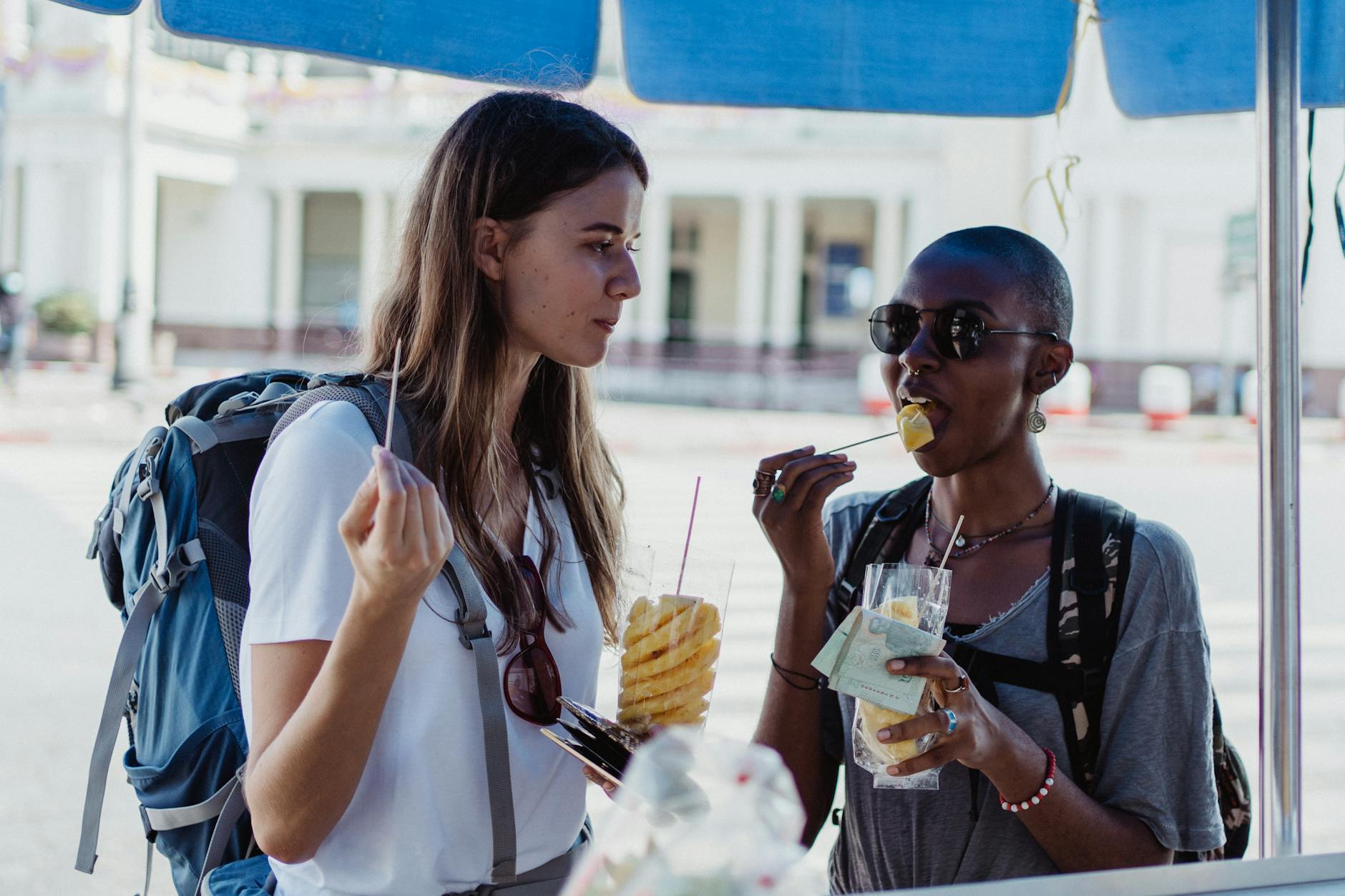
Savory foods that resemble doughnuts, pastries and sweet buns, organised by where travellers find them, with simple tips for ordering confidently.
Travel makes you hungry in a particular way. You walk past a counter full of golden, glossy, powdered or swirled things, and your brain files them all under dessert. Often, you are right. Sometimes you are wonderfully wrong. This guide takes a different route from the usual country-by-country list. It sorts savory lookalikes by where you are likely to meet them: the bakery counter, the street stall, the brunch table and the market. That way, whatever you are walking past, you have a clue about what might be hiding behind the pastry.
Recipes and names vary from place to place, so treat these descriptions as general. When in doubt, ask. Cooks tend to enjoy the question.
The golden rule of lookalikes
Appearance tells you about technique, not flavour. A round, golden, puffed shape could be a doughnut or a cheese puff. A neat, glazed pastry could be filled with custard or minced meat. Learn to read the secondary clues instead:
- Aroma. Garlic, onion, cheese, soy and smoke usually mean savory.
- Display context. Items beside coffee and sugar are often sweet, while items near pickles, sauces or hot trays are often savory.
- Crowd behaviour. Office workers buying one at 12:30 are probably after lunch.
- Toppings. Sesame, herbs, fish flakes, mayonnaise and grated cheese point to savory, though not always.
At the bakery counter
Bakeries are where the confusion starts, because pastry skills are used for both sweet and savory food.
Pão de queijo, Brazil
These small, puffy cheese breads are made with tapioca starch, giving them a chewy, stretchy interior and a crisp outside. They look like little golden rolls or choux buns. They are naturally gluten-free in many traditional recipes, though you should confirm with the bakery if that matters to you. They are eaten at breakfast, with coffee and in the afternoon.
Coxinha, Brazil
A teardrop-shaped croquette with a crisp coating, usually filled with shredded chicken and creamy cheese. Its smooth, golden shape looks like a pastry, but it is a savory snack sold in lanchonetes and bakeries.
Karelian pies, Finland
Karjalanpiirakka are oval, open-faced pies with a thin rye crust and a filling of rice porridge. They are brushed with butter and often topped with egg butter, a spread of chopped boiled egg and butter. They look like small tarts but are savory. They are sold in Finnish bakeries and supermarkets and are a friendly breakfast or snack.
Gougères, France
These airy cheese puffs are made from choux pastry mixed with grated cheese, such as Gruyère. Without the cheese, they are almost identical to profiteroles. They are common in Burgundy, where they are served with wine.
Börek, Turkey and the Balkans
Layers of thin pastry filled with cheese, spinach, potato or minced meat. Some are coiled like snail pastries, while others are baked in trays and cut into squares. At a Turkish pastane, börek sits beside baklava and cakes, which does not help.
At the street stall
Street food relies on speed, heat and bite-sized shapes, which often mimic desserts.
Takoyaki, Japan
Round, golden balls with a crisp shell and a molten centre, takoyaki are made from batter and diced octopus. They are brushed with sauce, topped with mayonnaise and bonito flakes, and look like doughnut holes or choux balls. The flakes seem to move because of the rising steam, which makes it an entertaining dish to watch. The first bite is hot, so wait a moment.
Taiyaki, Japan
Fish-shaped waffles often filled with sweet red bean paste, but also available with savory fillings like cheese, sausage or curry in some shops. The shape is the same, so you need to check the label or ask.
Gyeran-ppang, Korea
Egg bread is a small loaf with a whole egg baked into a sweet-savory batter. It looks like a muffin and tastes like a mixture of cake and breakfast. It is a classic cold-weather street snack.
Empanadas, Latin America
Half-moon pastries filled with beef, chicken, cheese or vegetables. From Argentina to Colombia and Chile, styles differ, including baked and fried versions. The crimped edge and glossy egg wash resemble sweet turnovers, and some places do offer sweet empanadas, such as with dulce de leche or fruit. Ask which is which.
Lángos, Hungary
A deep-fried flatbread served at markets and festivals. It is usually topped with sour cream and grated cheese, sometimes with garlic. Its round, golden shape resembles a funnel cake, but the toppings tell the truth.
Tamales, Mexico and Central America
Steamed corn dough wrapped in husks or banana leaves. Fillings can be savory, such as pork in red chile sauce, chicken with green salsa or cheese with peppers, or sweet, with pineapple or raisins. Unwrapped, the soft, pale parcels look like cakes. Sellers usually know which is which and will tell you.
At the brunch table
Brunch and breakfast menus are packed with items that look like dessert but are intended as savory plates.
Soufflé omelettes
Fluffy, tall omelettes whipped with beaten egg whites, such as those served in some French and Japanese cafes. They look like a cloud-like cake. Some are sweet, but many are seasoned with cheese or herbs.
Savory pancakes and waffles
Waffles topped with fried chicken, pancakes made from potato or corn, and Japanese okonomiyaki, a cabbage pancake with sauce and toppings, can be mistaken for sweet breakfast items. If the menu shows a drizzle, check whether it is syrup or sauce.
Quiche and savory tarts
A quiche is essentially a custard tart. With a flaky crust and a smooth, golden surface, it can look like a dessert in a glass case. Slices of vegetable and cheese tarts are common in bakeries and cafes across Europe.
Shakshuka and baked eggs
Eggs poached in spiced tomato sauce are served in a pan with bread for dipping. The glossy red surface and wobbly yolks can look like a fruit tart from a distance, although the smell gives away the cumin and peppers.
At the market
Markets offer samples, sights and surprises.
Cheese spreads and whipped dips
Whipped feta, labneh drizzled with olive oil, and hummus swirled in a bowl look like frosting or soft-serve ice cream. They are creamy, tangy and savory, meant for bread and vegetables.
Rice cakes and steamed puddings
In several Asian markets, you will find steamed rice cakes in all colours. Some are sweetened with coconut or sugar, while others are seasoned with salt, shallots or dried shrimp. Look for toppings such as fried onions, which hint at savory.
Savory preserves
Jars of pickled vegetables, fermented bean pastes and spiced chutneys resemble jams. If a vendor offers a spoon to taste, give it a go, but be aware that some are intensely salty or hot.
Cheese and cured meats shaped like pastries
Rolled cheeses, stuffed pastries and braided breads in European markets may be sold alongside sweet versions. Look at the signs, which often list ingredients.
A mini-glossary of clues
Here are a few handy words, offered as general guidance. Pronunciation and spelling vary, so verify with a trusted translator if you rely on them.
- Spanish: dulce means sweet, salado means salty or savory.
- French: sucré is sweet, salé is savory.
- Italian: dolce is sweet, salato is savory.
- German: süß is sweet, herzhaft is hearty or savory.
- Portuguese: doce is sweet, salgado is savory.
Salgado in Brazil actually refers to savory snacks sold in bakeries and cafes, such as coxinhas and cheese pastries. So if you ask for a salgado, you are asking for something savory.
Dietary and allergy notes
Because lookalikes hide their ingredients, travellers with allergies or dietary restrictions should take extra care.
- Eggs, dairy, wheat, nuts and shellfish are common in baked and fried snacks.
- Vegetarians should check for lard, meat stock, fish sauce or bonito flakes.
- Halal and kosher travellers should check preparation and ingredients with the vendor.
- Cross-contamination is common in street stalls where one fryer or griddle is used for everything.
This is general information only. If you have a serious allergy, carry a translated allergy card and consider medical advice before travelling.
How to build a lookalike tasting day
Why not turn this into a game? Choose a neighbourhood with lots of food options and set a simple challenge.
- Start at a bakery. Choose three items that look sweet and ask about each.
- Move to a street stall. Pick something bite-sized and warm.
- Pause for a coffee or tea. Observe what locals pair with it.
- Visit a market. Try samples, buy a small portion of cheese or dip and some bread.
- End with an actual dessert. After the savory surprises, a sweet treat is a gentle finish.
Share portions with a friend and keep small bills for easy payment.
Common mistakes to avoid
- Buying a dozen without asking. Start with one or two.
- Assuming sweet equals dessert. Some savory dishes include a little sugar or sweet glaze.
- Eating too fast. Fried snacks may have hot fillings.
- Ignoring hygiene. Choose busy stalls with high turnover and clean handling.
- Forgetting to carry water. Salty and rich foods can leave you thirsty.
Frequently asked questions
Why are so many foods in different countries similar in shape? Cooks everywhere use common techniques such as frying, steaming and baking, and common ingredients such as flour, eggs, rice and cheese. Shapes often converge naturally.
Are savory lookalikes usually cheap? Many are everyday snacks sold at modest prices, but costs depend on place and quality.
What if I do not like what I ordered? Try a bite, be polite, and share it with someone else if you can. Not every dish suits every palate.
Is it rude to ask whether something is sweet? Not at all. Vendors are used to the question, particularly in tourist areas.
Summary
Savory lookalikes appear wherever bakers and cooks share techniques with pastry makers: at bakery counters, street stalls, brunch tables and markets. From Brazil's cheese breads and Japan's takoyaki to Finland's rice pies and Hungary's lángos, they reward curious eaters. Use aroma, toppings and context as clues, learn a few words, mention dietary needs and enjoy the surprise. Once you know what to look for, every display case becomes a small guessing game, and every wrong guess is likely to be delicious anyway.
More pictures
Tags
Share this guide
We may earn a commission if you click a link and buy a product or service, at no extra cost to you. How affiliate links work.
Been there?