
Prepare for a wild ride as I recount my most daring culinary adventures – tasting foods deemed illegal or highly restricted in much of the world. From the thrilling danger of pufferfish to the controversial creaminess of maggot cheese, these forbidden flavors didn't just challenge my palate; they profoundly changed my perspective on food, culture, and life itself. ---
Forbidden Flavors: My Life-Changing Encounters with Foods Banned in Most Countries
As a professional travel blogger for Tripsora, I live for the unexpected. I chase sunsets in remote corners, trek through ancient ruins, and dive into oceans teeming with life. But perhaps my greatest thrill comes from the plate – specifically, the plate that holds something utterly unique, deeply cultural, and often… forbidden.
My philosophy has always been to say "yes" to new experiences, especially when it comes to food. I believe that a country's cuisine is a direct portal into its soul, its history, and its people. But what happens when that portal leads you to a dish so controversial, so dangerous, or so downright illegal in most parts of the world, that merely contemplating it gives you a rush?
That's precisely where I found myself on several occasions, staring down culinary challenges that promised not just a meal, but a story, a memory, and perhaps, a brush with the truly transformative. These aren't just exotic dishes; they are gastronomic legends, often banned or heavily restricted globally, yet cherished and expertly prepared in their native lands. And let me tell you, eating them didn't just change my palate; it changed my life forever.
Join me as I recount my most daring culinary adventures, navigating the legal, ethical, and often terrifying landscapes of the world's most forbidden foods.
The Dance with Death: Mastering Fugu in Japan
My first true dive into the world of "illegal" foods began, naturally, in Japan. The land of meticulous precision, profound respect, and the infamous fugu – the pufferfish. Known for its potent neurotoxin, tetrodotoxin, fugu is lethal if not prepared with absolute perfection. In most countries, handling or serving fugu is strictly prohibited due to its deadly potential. But in Japan, it's an art form, a culinary ballet performed by master chefs.
I had heard the whispers, read the legends, and seen the documentaries. The idea of knowingly consuming a dish that could, quite literally, end my trip (and my life) was both terrifying and utterly captivating. My quest led me to a small, unassuming restaurant in Osaka, Fugu Ryori Tomoe, renowned for its multi-generational fugu masters. The exterior was traditional, discreet, giving no hint of the high-stakes drama unfolding within.
Stepping inside, the atmosphere was hushed, almost reverent. I was seated at a counter, watching the chef, a man with decades of experience etched into his face, begin his work. His movements were fluid, precise, almost meditative. He deboned, skinned, and meticulously removed the liver, ovaries, and intestines – the parts containing the deadly toxin – with surgical precision. Each discarded piece was placed in a locked, labeled container, destined for incineration, a testament to the gravity of the task.
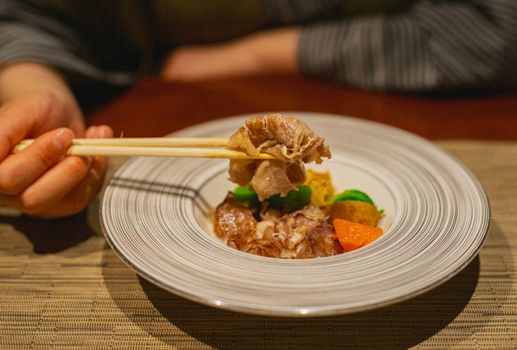
My heart pounded as the first course arrived: fugu sashimi, paper-thin slices arranged in the shape of a chrysanthemum, so translucent I could see the pattern of the plate beneath. The chef explained that the aim wasn't to eliminate all toxin, but to leave a barely perceptible trace, a "kick" that would numb the lips and tongue, a sign of the chef's skill.
I took my first bite. It was delicate, firm, and surprisingly mild, with a subtle sweetness. Then, it happened. A tingling sensation spread across my lips, a gentle buzz on my tongue. It wasn't unpleasant; it was exhilarating. It was the taste of danger, carefully controlled, a testament to human mastery over nature. I felt alive, hyper-aware, every sense heightened. We continued through the multi-course meal: fugu karaage (fried fugu), fugu chiri (hot pot), and finally, fugu zosui (rice porridge cooked in the broth). Each dish showcased the fish's versatility, but it was the initial sashimi and the subtle tingle that truly defined the experience.
The bill, around 20,000 JPY (approx. $130 USD) for the full course, felt like a small price to pay for such a profound experience. It wasn't just a meal; it was a psychological journey, a test of trust, and an unparalleled lesson in culinary artistry and the deep cultural respect for both life and death. I walked out of that restaurant feeling like I had danced with death and emerged victorious, forever changed by the thrill of the forbidden.
The Wriggling Delight: Conquering Casu Marzu in Sardinia
From the meticulous precision of Japan, my next "illegal" food quest took me to the rugged, sun-drenched island of Sardinia, Italy. Here, I encountered a culinary marvel that defies conventional notions of food safety and hygiene, yet is a cherished tradition: Casu Marzu.
Casu Marzu, which literally translates to "rotten cheese," is a sheep's milk cheese that has been intentionally infested with the larvae of the cheese fly (Piophila casei). These maggots digest the cheese, breaking down its fats and creating a deeply pungent, soft, and creamy consistency. The catch? The maggots are typically consumed alive, and they have a tendency to jump several inches when disturbed.
The sale of Casu Marzu is illegal throughout the European Union due to health regulations concerning live insects in food products. However, in Sardinia, it's considered a cultural heritage, often made for personal consumption or sold on the black market. Finding it required local connections and a good deal of trust. I was introduced to a local shepherd, Nonno Giovanni, through a friend of a friend. His small farm, nestled in the hills near Orgosolo, was where the magic (or madness) happened.
Nonno Giovanni, with a twinkle in his eye, presented a large wheel of Pecorino Sardo, its top cut open to reveal the creamy, yellowish interior teeming with wriggling white larvae. The smell was intense – sharp, ammoniac, and deeply earthy, far more potent than any normal cheese. My stomach did a little flip, but my adventurous spirit pushed through.
He sliced a piece, thick and oozing. The maggots, disturbed by the light, began to jump. "Close your eyes!" Nonno Giovanni chuckled, explaining that they could jump into your eyes. I bravely took a piece of pane carasau (Sardinian flatbread), spread a generous amount of the creamy, maggot-filled cheese onto it, and closed my eyes.
The texture was unexpectedly smooth and incredibly rich, almost liquid. The flavor was sharp, spicy, and intensely savory, with a distinct tang that lingered. And yes, I could feel the subtle, almost imperceptible "pop" of the maggots as I chewed. It was an explosion of flavor and sensation unlike anything I had ever experienced. It was challenging, confronting, and utterly unforgettable.
Eating Casu Marzu wasn't about savoring a delicious meal in the traditional sense; it was about embracing a radical cultural experience, pushing the boundaries of what I considered edible, and connecting with a tradition that defied modern conventions. It was a visceral reminder of humanity's incredible adaptability and diverse culinary heritage. The taste of that "rotten" cheese, the feeling of those wriggling creatures, and the warmth of Nonno Giovanni's hospitality are forever etched into my memory. It cost nothing but courage, a testament to the invaluable experiences that often lie beyond the tourist trail.
The Banned Haggis: A Taste of Scottish Soul
My final "illegal" food encounter, while less overtly dangerous than fugu or visually shocking than casu marzu, offered a fascinating insight into the arbitrary nature of food bans and the deep cultural significance of cuisine. This journey took me to the misty Highlands of Scotland, where I sought out the iconic Haggis.
Haggis, for the uninitiated, is a savory pudding containing sheep's pluck (heart, liver, and lungs), minced with onion, oatmeal, suet, spices, and salt, traditionally encased in the animal's stomach. It's the national dish of Scotland, a symbol of its rugged spirit and culinary heritage. So, why "illegal"?
For decades, the import of haggis containing sheep lung has been banned in the United States due to USDA food safety regulations, specifically regarding the consumption of lungs, which are considered a potential choking hazard for humans. This ban, in place since 1971, has made traditional haggis a forbidden delicacy for many Americans.
My trip to Edinburgh led me to The World's End Pub, a cozy, historic spot just off the Royal Mile. The air was thick with the scent of malt whisky and hearty food. I ordered the "Traditional Haggis, Neeps, and Tatties" (turnips and potatoes), eager to finally taste the dish that had caused such an international stir.
When it arrived, it was a comforting, earthy mound, fragrant with spices and oatmeal. I took a spoonful, mixing the haggis with the creamy mashed turnips and potatoes. The flavor was rich, savory, and deeply satisfying – a complex blend of spices, meatiness, and a slightly nutty texture from the oatmeal. It was hearty, warming, and utterly delicious. It tasted like home, like history, like Scotland itself.
The irony wasn't lost on me. Here I was, enjoying a dish that was a staple in its homeland, yet deemed unsafe and illegal in another major country. It highlighted how cultural perceptions, historical context, and even bureaucratic regulations can shape our access to food. The cost for a generous portion was around £12 (approx. $15 USD), a small price for a meal that offered such a powerful lesson in global food politics.
Haggis might not give you a tingling sensation or the thrill of live maggots, but its "illegal" status in the US made its consumption a poignant experience. It underscored the fact that "illegal" doesn't always mean dangerous or unethical; sometimes, it's just a matter of differing regulations and cultural norms.
Beyond the Ban: Practical Tips for the Adventurous Eater
My adventures with forbidden foods have taught me invaluable lessons, not just about taste, but about responsible travel and cultural immersion. If you're inspired to push your own culinary boundaries, here are some essential tips:
- Do Your Homework: Research the food, its origins, its preparation, and its legal status. Understand why it might be considered illegal or dangerous elsewhere.
- Seek Out Reputable Experts: For truly dangerous foods like fugu, only eat at establishments with certified, highly experienced chefs. Look for long-standing restaurants, local recommendations, and official certifications. Never attempt to prepare such foods yourself.
- Understand Local Laws and Customs: Some "illegal" foods are cultural traditions that exist outside formal regulation (like Casu Marzu). In these cases, rely on trusted local guides or friends who can connect you with legitimate, safe sources within the community. Be discreet and respectful.
- Know Your Limits: While adventure is great, don't risk your health or violate your ethical boundaries. If a food makes you truly uncomfortable or seems genuinely unsafe, it's okay to say no.
- Travel Insurance is Your Friend: Always have comprehensive travel insurance that covers medical emergencies. It's a small precaution for big adventures.
- Embrace the Cultural Context: These foods are more than just ingredients; they are stories, traditions, and expressions of identity. Appreciate the history and culture behind them.
- Be Prepared for the Unexpected: From intense flavors to unusual textures, forbidden foods will challenge your palate. Go in with an open mind and a sense of humor.
My Life, Forever Changed by Forbidden Bites
Eating foods that are illegal in most countries isn't about recklessness; it's about a profound respect for diverse cultures and a desire to truly understand the world through its most daring expressions. Fugu taught me about precision, trust, and the exquisite balance between danger and delight. Casu Marzu challenged my perceptions of "edible" and connected me to raw, ancient traditions. Haggis revealed the fascinating complexities of global food regulations and cultural pride.
These experiences didn't just expand my culinary repertoire; they expanded my worldview. They forced me to confront my own biases, push past my comfort zones, and embrace the sheer diversity of human experience. They taught me that what is forbidden in one place is cherished in another, and that true adventure often lies beyond the conventional.
So, the next time you're planning a trip, look beyond the usual tourist traps. Ask the locals, dig a little deeper, and perhaps, with careful research and a daring spirit, you might just find your own life-changing encounter with a forbidden flavor. What culinary adventure will you embark on next? Share your thoughts and daring food experiences in the comments below!
---
More pictures




Tags
Share this guide
We may earn a commission if you click a link and buy a product or service, at no extra cost to you. How affiliate links work.
Been there?