
Forget the usual suspects! We’ve scoured recent data to unearth European cities that secretly channel the soul of Asia. Think aromatic street food, vibrant markets, and serene temples nestled amidst historic cobblestones. Ready for an unexpected adventure?
The scent hit me first – a heady, intoxicating mix of star anise, sizzling garlic, and something sweet and floral, entirely at odds with the crisp, cool air I’d expected. I stepped off the train in Prague, not into the familiar Gothic grandeur I’d anticipated, but into a bustling Sapa district that felt a world away from the Astronomical Clock. This wasn't just a few scattered noodle shops; this was a living, breathing microcosm of Southeast Asia, a vibrant splash of color and life against the stoic backdrop of Europe. And it was just the beginning of my journey to uncover Europe's most surprising Asian enclaves.
Recent data points to a fascinating trend: a growing number of European cities are embracing and integrating Asian cultures, creating pockets of unexpected authenticity that delight and surprise intrepid travelers. This isn't about sterile tourist traps; it's about genuine cultural exchange, delicious food, and experiences that will make you question which continent you're truly on.
1. Prague, Czech Republic: The Unsung Dragon of Bohemia
When you think of Prague, you probably picture Charles Bridge, Prague Castle, and a sky full of spires. But venture a little further, and you'll find Prague's Sapa district, a sprawling, vibrant marketplace that’s often dubbed "Little Hanoi." This isn't just a food court; it's a community, a testament to the resilience and entrepreneurial spirit of the Vietnamese diaspora.
The Sensory Overload of Sapa
Walking through Sapa is an assault on the senses, in the best possible way. The air is thick with the aroma of pho broth, grilled meats, and sweet pastries. Stalls overflow with exotic fruits, fragrant herbs, and colorful textiles. You’ll hear a symphony of languages, the clatter of woks, and the chatter of vendors. It’s chaotic, it’s energetic, and it’s utterly captivating.
Pro-Tip: Visit on a weekend for the full buzz, but for a more relaxed experience and better photo opportunities, aim for a weekday morning. Don't miss the fresh spring rolls (nem rán) and the Vietnamese iced coffee (cà phê sữa đá) – they are legendary.
Beyond the Market: A Deeper Dive
While Sapa is the undisputed heart, pockets of Asian influence are sprinkled throughout Prague. You’ll find authentic Vietnamese restaurants tucked away in unexpected corners, and even some Buddhist pagodas offering moments of quiet contemplation.
Quick Facts: Prague (Sapa District)
| Category | Details | Estimated Cost ($) | | :--------------- | :---------------------------------------------------------------------------- | :----------------- | | Best Time to Visit | Spring (April-May) & Autumn (September-October) for pleasant weather. | $ (Budget-friendly) | | How to Get There | Metro Line C to Ládví station, then bus 131 or 184. Or Tram 5 to Sídliště Barrandov and then bus 131. | $ (Public Transport) | | Accommodation| Wide range from hostels to boutique hotels. | $$ - $$$ | | Food | Incredible value for authentic Asian cuisine. | $ |
2. Berlin, Germany: The Multicultural Melting Pot with a Yen for East Asia
Berlin is a city that thrives on reinvention and embraces diversity like no other. While it's celebrated for its edgy art scene and historical significance, it also boasts a surprisingly robust and authentic Asian presence, particularly in its Vietnamese and Chinese quarters.
Berlin's "Little Asia" in Lichtenberg
The Dong Xuan Center in Lichtenberg is Prague's Sapa’s bigger, bolder cousin. This enormous complex is a labyrinth of shops, restaurants, and wholesale markets. It’s a place where you can buy everything from silk scarves and dragon statues to industrial kitchen equipment. The food court is a revelation, offering a dizzying array of regional Chinese and Vietnamese specialties that are a far cry from your average takeaway.
Pro-Tip: Get lost! The beauty of Dong Xuan is its sheer scale. Explore the back alleys and lesser-known food stalls for the most authentic and delicious discoveries. Try the Lanzhou beef noodle soup – a true gem.
Beyond Lichtenberg: A Spectrum of Asian Flavors
Berlin’s Asian influence extends far beyond this one hub. Chinatown around the Kantstraße in Charlottenburg offers a more traditional Chinese experience with dim sum restaurants and specialty grocery stores. And for Japanese food lovers, Prenzlauer Berg and Mitte have an abundance of excellent sushi bars and ramen shops.
Quick Facts: Berlin (Dong Xuan Center & Chinatown)
| Category | Details | Estimated Cost ($) | | :--------------- | :---------------------------------------------------------------------------- | :----------------- | | Best Time to Visit | Late Spring (May-June) & Early Autumn (September-October) for mild weather. | $ (Budget-friendly) | | How to Get There | Dong Xuan: S-Bahn to Friedrichsfelde Ost or U-Bahn to Lichtenberg. Kantstraße: U-Bahn to Savignyplatz or Zoologischer Garten. | $ (Public Transport) | | Accommodation| Vast options across all boroughs. | $$ - $$$ | | Food | Excellent value for diverse Asian cuisines. | $ |
3. Paris, France: Elegance Meets the Orient in Belleville and Beyond
Paris, the city of romance and haute couture, might seem an unlikely candidate for Asian vibes. Yet, beneath its polished Haussmannian façade, Paris harbors vibrant Asian communities, particularly in the Belleville neighborhood, which is a hub for Chinese and Vietnamese culture, and the more established Chinatown in the 13th arrondissement.
Belleville: A Bohemian Burst of Asia
Belleville is a gritty, artistic, and wonderfully diverse district. Here, the aroma of pho mingles with freshly baked baguettes, and vibrant street art adorns the walls. The narrow streets are packed with small, family-run restaurants, bustling markets selling exotic produce, and shops selling everything from herbal remedies to lucky charms. It feels authentic, lived-in, and a world away from the Champs-Élysées.
Pro-Tip: Explore the Rue de Belleville and its side streets. Look for the small bakeries selling delicious bánh mì and the bustling grocery stores with an incredible selection of Asian ingredients. The atmosphere is electric on market days.
Paris's Traditional Chinatown
The 13th arrondissement’s Chinatown is more manicured, marked by grand archways and a greater concentration of larger restaurants and supermarkets. It’s a fantastic place for dim sum and exploring a more established Asian commercial district.
Quick Facts: Paris (Belleville & 13th Arrondissement)
| Category | Details | Estimated Cost ($) | | :--------------- | :---------------------------------------------------------------------------- | :----------------- | | Best Time to Visit | Spring (April-May) & Autumn (September-October) for pleasant weather. | $$ (Moderate) | | How to Get There | Belleville: Metro lines 2 & 11 to Belleville station. 13th Arr.: Metro lines 7 & 14 to Porte de Choisy or Porte d'Italie. | $ (Public Transport) | | Accommodation| Wide range, but can be pricey in central areas. | $$$ - $$$$ | | Food | Excellent value in Belleville, slightly higher in the 13th. | $$ |
4. London, UK: A Global Hub with Deep Asian Roots
London’s multicultural tapestry is legendary, and its Asian influences are deeply woven into its urban fabric. From the bustling streets of Chinatown in Soho to the vibrant markets of Southall (often called "Little India"), London offers a spectrum of Asian experiences.
Soho's Iconic Chinatown
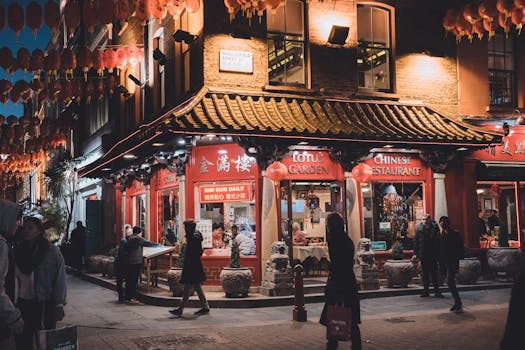
London’s Chinatown, nestled between Shaftesbury Avenue and Leicester Square, is a vibrant hub of Chinese culture. Red lanterns adorn the streets, and the air is filled with the enticing aromas of Cantonese cuisine. It’s a place for delicious dim sum, vibrant souvenir shops, and a lively atmosphere.
Pro-Tip: Beyond the main thoroughfare, explore the smaller alleys for hidden culinary gems. Look for restaurants specializing in regional Chinese cuisines like Sichuan or Shanghainese for a more authentic taste.
Southall: The Heartbeat of South Asia
For an immersive South Asian experience, a trip to Southall in West London is a must. This area is a vibrant explosion of Indian, Pakistani, and Bangladeshi culture. The streets are lined with shops selling colorful saris, intricate jewelry, and fragrant spices. The food scene is incredible, with authentic street food stalls and traditional restaurants serving up mouthwatering curries and sweets.
Pro-Tip: Visit Southall Market for an authentic taste of South Asian street food. Try the pani puri and vada pav for a true explosion of flavor. Also, don't miss the sweet shops for traditional Indian desserts.
Quick Facts: London (Chinatown & Southall)
| Category | Details | Estimated Cost ($) | | :--------------- | :---------------------------------------------------------------------------- | :----------------- | | Best Time to Visit | Spring (April-May) & Autumn (September-October) for pleasant weather. | $$ (Moderate) | | How to Get There | Chinatown: Tube to Leicester Square or Piccadilly Circus. Southall: National Rail from Paddington or Ealing Broadway. | $ (Public Transport) | | Accommodation| Extensive options, but can be very expensive. | $$$ - $$$$ | | Food | Generally good value, especially in Southall. | $$ |
5. Budapest, Hungary: The Unexpected Silk Road Stopover
While not as widely recognized as Prague or Berlin, Budapest is emerging as a surprising destination for those seeking Asian flavors and cultural pockets. The lower Józsefváros district, particularly around Kőbánya, has become a hub for a growing Asian community, with a significant Vietnamese presence.
Kőbánya's Asian Bazaar
This district is home to the Ázsia Center, a large wholesale and retail complex that feels like a mini-Asian market. Beyond the textiles and electronics, you'll find a fantastic food court serving authentic Vietnamese and Chinese dishes at incredibly reasonable prices. It’s a less polished, more raw experience than other European Chinatowns, offering a glimpse into a vibrant, working community.
Pro-Tip: Venture into the Ázsia Center’s food court for some of the most authentic and affordable Vietnamese food you’ll find in Central Europe. The phở here is a revelation.
Beyond the Bazaar: Growing Influence
While Kőbánya is the main hub, smaller Asian restaurants and grocery stores are popping up across Budapest, reflecting the city's increasing diversity.
Quick Facts: Budapest (Kőbánya District)
| Category | Details | Estimated Cost ($) | | :--------------- | :---------------------------------------------------------------------------- | :----------------- | | Best Time to Visit | Late Spring (May-June) & Early Autumn (September-October) for mild weather. | $ (Budget-friendly) | | How to Get There | Kőbánya: Tram 28 or 37, or bus lines. | $ (Public Transport) | | Accommodation| Wide range of options. | $$ - $$$ | | Food | Excellent value for money, especially in the Ázsia Center. | $ |
The Allure of East Meets West
These European cities, with their burgeoning Asian enclaves, offer more than just a change of scenery. They provide a unique opportunity to experience the collision of cultures, the vibrant energy of immigrant communities, and the incredible diversity of global cuisine, all within the familiar embrace of Europe. The recent data shows this trend is only growing, with more cities developing their own unique East-meets-West narratives.
So, next time you're planning a European getaway, consider veering off the beaten path. Seek out the fragrant noodle stalls, the bustling markets, and the quiet temples that are quietly transforming these historic cities. You might just find yourself falling in love with the unexpected Asian soul of Europe.
More pictures
Tags
Share this guide
We may earn a commission if you click a link and buy a product or service, at no extra cost to you. How affiliate links work.
Been there?