
Forget Paris and Rome! Eastern Europe is BURSTING with jaw-dropping architecture that's stealing the show. Think ancient castles, opulent palaces, and mind-bending modern marvels – all without the Western price tag. Ready for your next epic adventure?
Eastern European Architecture: The West's Unexpected Rival This Year
I stepped off the train in Krakow, the crisp autumn air carrying the faint, comforting scent of roasting kielbasa and something vaguely floral. It wasn't the hushed reverence of a Louvre gallery or the postcard-perfect hum of a Roman piazza. This was different. It was alive, raw, and utterly captivating. The cobblestones beneath my feet whispered tales of centuries past, and as I rounded a corner, the sheer, unadulterated grandeur of the Main Market Square hit me like a gust of wind. This, I realized, was just the beginning. Eastern Europe isn't just catching up; it's forging its own architectural destiny, a vibrant tapestry of styles that rival, and in many cases, surpass the established Western titans. This year, the spotlight is unequivocally on its burgeoning architectural prowess.
The Gothic Majesty of the North: Prague's Fairy Tale Canvas
Prague. The very name conjures images of spires piercing the sky and a castle brooding over a meandering river. And it delivers. Stepping into the Old Town Square is like walking onto a meticulously crafted film set. The Astronomical Clock, a mechanical marvel dating back to the Middle Ages, is more than just a timepiece; it's a pulsating heart, drawing crowds with its hourly spectacle of apostles and the skeletal figure of Death.
H3: St. Vitus Cathedral: A Symphony in Stone
But it's the St. Vitus Cathedral within the Prague Castle complex that truly steals the show. This Gothic masterpiece is a testament to centuries of architectural evolution. My first glimpse of its soaring towers, intricate gargoyles, and breathtaking stained-glass windows (especially the famous Mucha window) left me speechless. The sheer scale is humbling, and the details – from the delicate tracery to the imposing buttresses – are a masterclass in Gothic design.
- Pro-Tip: Visit St. Vitus Cathedral at 7 AM to experience its grandeur with near-empty halls. The soft morning light filtering through the stained glass is pure magic.
- Insider Insight: Don't just admire the exterior. Explore the Royal Mausoleum and the Chapel of St. Wenceslas for a deeper understanding of its historical significance.
Budapest's Belle Époque Bloom: A City of Grandeur
Budapest, the "Pearl of the Danube," is a city that wears its Belle Époque heart on its sleeve. After a devastating fire in the 19th century, much of the city was rebuilt with an opulence that still dazzles. The Hungarian Parliament Building is arguably the city's crown jewel. Its neo-Gothic splendor, illuminated at night, is a sight that will forever be etched in my memory. The sheer symmetry, the intricate detailing of its 88 statues, and its commanding position on the Danube are simply breathtaking.
H3: Thermal Baths: Architectural Sanctuaries
Beyond the grand public buildings, Budapest's thermal baths are architectural marvels in themselves. The Gellért Baths, with their stunning Art Nouveau interior, complete with mosaic tiles, stained-glass ceilings, and Roman-inspired columns, feel more like a palace than a place to soak. The Széchenyi Thermal Baths, while more Neo-Baroque in style, offer an equally grand experience with their expansive outdoor pools.
- Pro-Tip: Book your tickets for the Parliament Building tour online in advance to secure your spot.
- Budget Bite: Enjoy a traditional Hungarian Lángos (fried dough with toppings) from a street vendor for a delicious and affordable lunch.
Krakow's Medieval Soul: Echoes of the Past
Krakow, as I discovered, is a city that has masterfully preserved its medieval soul. The Main Market Square, one of the largest medieval town squares in Europe, is a living museum. The Cloth Hall (Sukiennice), with its Renaissance arcades, stands proudly at its center, a testament to Krakow's historical importance as a trading hub. Wandering through its stalls, filled with amber jewelry and local crafts, I could almost hear the echoes of medieval merchants.
H3: Wawel Castle: A Royal Resplendent Residence
Perched on a hill overlooking the Vistula River, Wawel Castle is a complex that showcases centuries of Polish history and architectural evolution. From its Romanesque foundations to its Renaissance courtyard and Baroque additions, it's a fascinating study in layered design. The Wawel Cathedral, within the castle grounds, is the coronation and burial site of Polish monarchs, its interiors adorned with stunning Gothic, Renaissance, and Baroque elements.
- Authenticity: Look for the dragon's head statue at the base of Wawel Hill. Legend has it, it breathes fire when hungry – a fun, local touch!
- Getting Around: Krakow's Old Town is incredibly walkable. Consider a horse-drawn carriage ride for a romantic, albeit touristy, way to see the sights.
Vienna's Imperial Grandeur: A Timeless Elegance
While often associated with Western Europe, Vienna's architectural legacy is so profound and influential that it deserves a mention in this conversation. It’s the bridge between empires, the custodian of a regal past. The Hofburg Palace, the former imperial palace of the Habsburg dynasty, is a sprawling complex that embodies centuries of architectural styles, from Gothic to Renaissance, Baroque, and Neoclassical.
H3: The Ringstrasse: A Boulevard of Dreams
The Ringstrasse, a grand boulevard built on the site of the old city walls, is a showcase of 19th-century Viennese architecture. Here, you'll find magnificent buildings like the Vienna State Opera, the Parliament Building, and the City Hall, all designed to project imperial power and artistic achievement. The sheer scale and uniformity of the Ringstrasse are awe-inspiring.
- Pro-Tip: Enjoy a coffee and Sachertorte at one of Vienna's historic coffee houses for a true Viennese experience.
- Budget Hack: Many of Vienna's most impressive churches, like St. Stephen's Cathedral, offer free entry to the main nave, allowing you to admire their Gothic splendor without breaking the bank.
The Balkan Renaissance: Emerging Architectural Gems
Moving south, the Balkan region is a treasure trove of often-overlooked architectural wonders. Cities like Belgrade, Sarajevo, and Sofia are undergoing a renaissance, blending historical layers with modern developments.
H3: Sarajevo's Ottoman & Austro-Hungarian Fusion
Sarajevo is a city where East truly meets West, architecturally speaking. The Baščaršija, the old bazaar, is a vibrant echo of its Ottoman past, with its narrow, winding streets, copper workshops, and mosques. Then, just a short walk away, you encounter the Austro-Hungarian architecture of Ferhadija Street, with its grand boulevards and elegant buildings. This juxtaposition is what makes Sarajevo so unique.
- Insider Insight: Try Bosnian coffee in Baščaršija. It’s a ritual, served in a traditional copper pot (džezva) and a small cup (fildžan).
- Logistics: Sarajevo is well-connected by bus and train to other Balkan cities.
H3: Sofia's Layered History
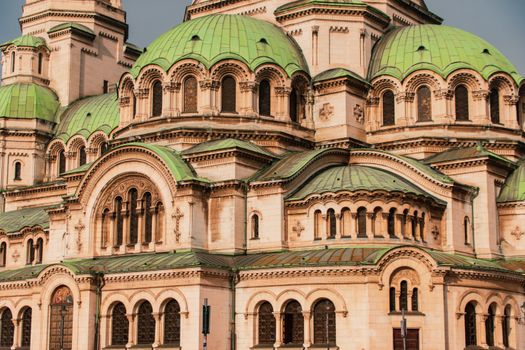
Sofia, Bulgaria's capital, is a fascinating blend of ancient Roman ruins, Orthodox churches, and Soviet-era Brutalism. The Alexander Nevsky Cathedral is a breathtaking example of Neo-Byzantine architecture, its golden domes dominating the skyline. But venture further, and you'll find remnants of Serdica, an ancient Roman city, peeking out from beneath modern streets.
- Hidden Gem: Look for the Presidential Palace with its changing of the guard ceremony – a small but charming spectacle.
- Pro-Tip: Explore the Vitosha Boulevard for a taste of modern Sofia, with its shops and cafes nestled amongst more contemporary architecture.
The Boldness of Brutalism: A Post-War Legacy
While often controversial, Eastern Europe boasts some of the most striking examples of Brutalist architecture in the world. Cities like Tbilisi, Bucharest, and Berlin (East) showcase the raw power and imposing forms of this post-war style.
H3: Tbilisi's Concrete Wonders
Tbilisi, Georgia, is a city of stark contrasts. Amidst its charming Old Town, you'll find incredible Brutalist structures like the Bank of Georgia headquarters and the former Ministry of Highways. These buildings, with their geometric shapes and exposed concrete, offer a powerful counterpoint to the city's more traditional architecture.
- Photographer's Paradise: The Chronicle of Georgia monument, though not strictly Brutalist, is a colossal Soviet-era artwork that offers dramatic photographic opportunities.
- Authenticity: Seek out local guides who specialize in architectural tours to truly understand the context and history behind these buildings.
Quick Facts: Your Eastern European Architectural Adventure
| Feature | Details | | :---------------------- | :---------------------------------------------------------------------------------------------------------------------------------------------------------------- | | Estimated Costs ($) | Budget: $50-80/day (hostels, street food, public transport). Mid-Range: $100-150/day (boutique hotels, restaurant meals, some tours). Luxury: $200+/day. | | Best Time to Visit | Spring (April-May) and Autumn (September-October) offer pleasant weather, fewer crowds, and vibrant foliage. Winter can be magical but very cold. | | How to Get There | Major international airports in Prague (PRG), Budapest (BUD), Vienna (VIE), Krakow (KRK). Increasingly well-connected by budget airlines. Rail travel between cities is efficient. | | Language Basics | While English is widely spoken in tourist areas, learning a few basic phrases (hello, thank you) is always appreciated. | | Currency | Varies by country. Euro (€) is common in some, while others have their own currencies (e.g., Czech Koruna CZK, Polish Zloty PLN, Hungarian Forint HUF). |
The Final Verdict: Your Next Architectural Pilgrimage
Eastern Europe is no longer a footnote in the architectural world; it's a headline. This year, the opportunity to witness its unparalleled blend of historical grandeur and bold, emerging design is simply too good to pass up. From the Gothic spires of Prague to the Belle Époque boulevards of Budapest, and the raw power of Brutalist concrete, these cities offer an architectural feast that is both visually stunning and incredibly rewarding. So, pack your bags, bring your camera, and prepare to be amazed. The West has a new, formidable rival, and it’s waiting to be explored.
More pictures

Tags
Share this guide
We may earn a commission if you click a link and buy a product or service, at no extra cost to you. How affiliate links work.
Been there?