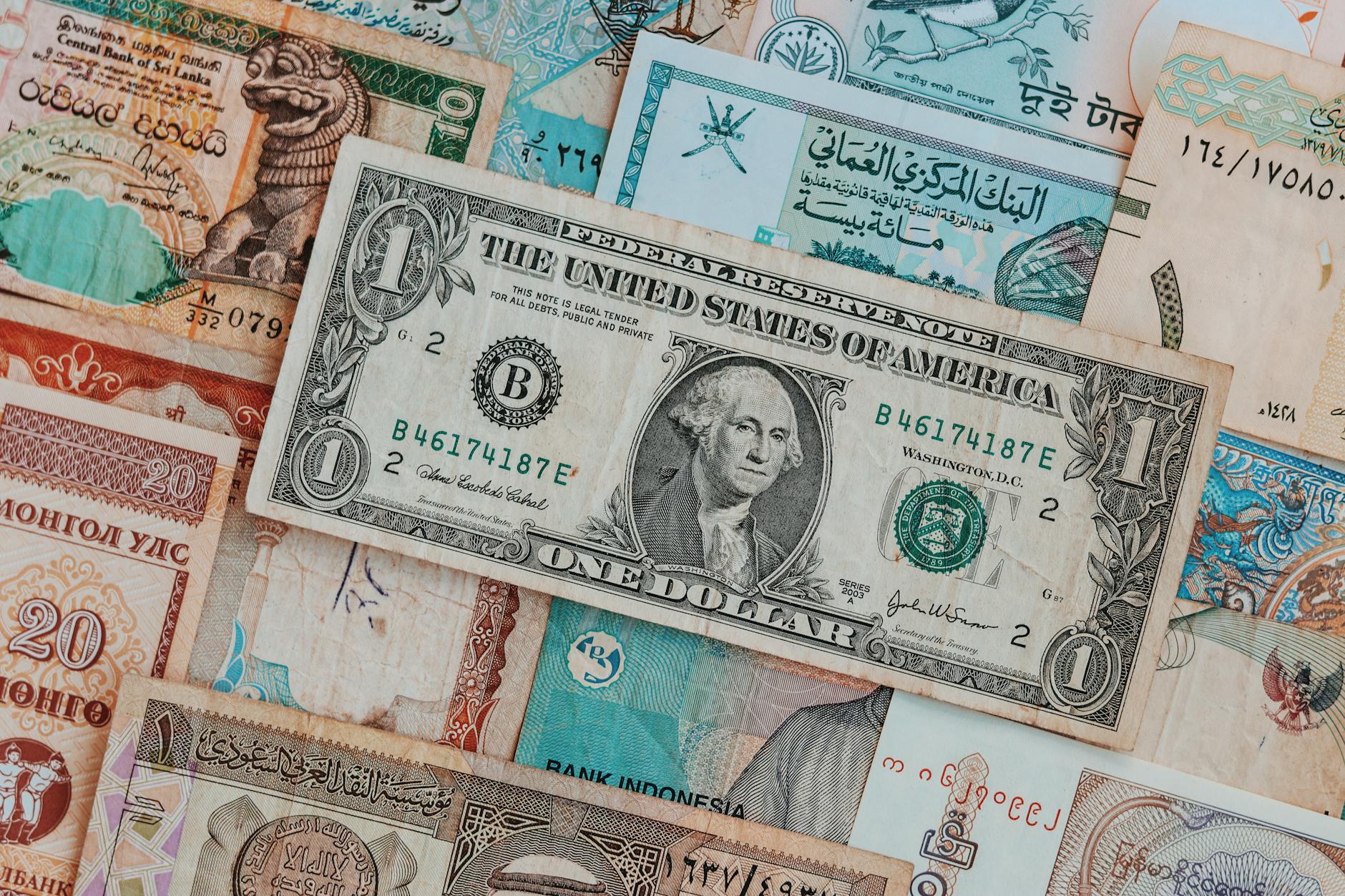
Tired of banks eating into your travel budget with hidden fees and abysmal exchange rates? We've uncovered the revolutionary currency exchange hacks that savvy travelers are already using to keep more cash in their pockets. Get ready to transform how you handle money abroad and save big on your next adventure, before these secrets become mainstream knowledge! ---
Remember that gut-wrenching feeling? The one where you’re standing at an airport currency exchange counter, exhausted from a long flight, and the smiling agent hands you a pathetic stack of local bills for what felt like a small fortune in your home currency. That sinking realization hits you: you’ve just been fleeced.
That was me, fresh off a red-eye into Rome, years ago. I exchanged $500 USD, expecting a decent stack of Euros. What I got back felt like a cruel joke – a handful of notes that barely covered my taxi to the hotel, let alone a proper Roman dinner. I walked away feeling foolish, ripped off, and utterly defeated. It was a baptism by fire into the dark underbelly of international banking, and it sparked a mission: to uncover every single trick, hack, and loophole to ensure no fellow traveler ever feels that sting again.
For years, banks have quietly profited from our ignorance, making billions on opaque exchange rates, hidden fees, and confusing jargon. But the travel landscape is changing, and a new breed of financial tools and smart strategies are emerging. These aren't just "tips"; these are game-changing currency exchange hacks that banks really don't want you to know about, because they threaten their lucrative hold on your travel money. And trust me, you want to master them before they become mainstream. Let's dive in!
The Airport Trap & The Myth of "Zero Fee": Your First Lesson in Saving
Let’s be brutally honest: airport currency exchange booths are the financial equivalent of a tourist trap gift shop. They exist for convenience, and they charge a premium for it. Their rates are notoriously terrible, often hiding hefty commissions behind a deceptive "0% commission!" sign. The commission isn't what gets you; it's the spread – the difference between the buy and sell price, which is significantly wider than anywhere else.
My Roman misadventure was just one of many early lessons. I remember another time in London, needing a few quick pounds after landing at Heathrow. I exchanged a small amount, thinking "it's just a little." The exchange rate was so abysmal, I essentially paid a 15% premium for the convenience. Imagine doing that on a larger sum!
The Hack: Never, ever exchange a significant amount of cash at an airport. If you need a small amount of local currency immediately (for a taxi or bus ticket), withdraw it from an ATM inside the airport that belongs to a major bank (like Barclays in the UK or BNP Paribas in France), using a card with no foreign transaction fees (more on that later). The ATM rate will always be superior to the exchange counter. Better yet, pre-plan and arrive with a small amount of local currency from your home bank (if they offer good rates) or, ideally, rely on your digital multi-currency account from the get-go.
The Digital Wallet Revolution: Multi-Currency Accounts Are Your Best Friend
This is arguably the biggest game-changer in travel finance, and it’s still flying under the radar for many. Forget carrying wads of cash or relying solely on your traditional bank card. Companies like Wise (formerly TransferWise) and Revolut have pioneered multi-currency accounts that offer near-perfect interbank exchange rates and incredibly low, transparent fees.
I first discovered Wise a few years ago when planning a long trip through Southeast Asia. My traditional bank was charging me 3% on every transaction, plus ATM fees. With Wise, I opened a multi-currency account, loaded it with USD, and instantly converted it to Thai Baht, Vietnamese Dong, and Malaysian Ringgit at the real exchange rate, only paying a tiny, upfront conversion fee. When I needed cash, I used their debit card at local ATMs, often getting a few fee-free withdrawals per month, or paying a minimal fee far less than my old bank.
The Hack: Sign up for a multi-currency account with Wise or Revolut before your next international trip.
- Open an account: It’s quick and easy, often done entirely online.
- Order their debit card: This card is key. It allows you to spend directly in local currency, avoiding conversion fees.
- Load your account: Transfer money from your regular bank account.
- Convert funds: Convert your home currency to the local currency of your destination when the exchange rate is favorable. You can even set up alerts for your desired rate.
- Spend like a local: Use the card for purchases or withdraw cash from ATMs. Wise and Revolut often give you access to local bank details (e.g., a UK sort code, an EU IBAN) which can be incredibly useful for receiving payments or making transfers within those regions.
I vividly remember using my Revolut card in Japan, a country still very cash-heavy. Every time I paid for a bowl of ramen or a train ticket with my card, I saw the real-time exchange rate on my phone – no hidden markups. When I did need yen, I’d withdraw a larger sum from a 7-Eleven ATM (which are fantastic for tourists in Japan), minimizing the small ATM fees. Over a two-week trip, I estimated I saved well over $100 compared to using my old bank's card. This isn't just a hack; it's a paradigm shift in travel money management.
The ATM Game Changer: Ditching Dynamic Currency Conversion (DCC)
This is one of the most insidious tricks banks and ATM operators play, and it catches countless travelers off guard. You’re at an ATM abroad, you've selected your withdrawal amount, and then a screen pops up asking, "Do you want to be charged in [Your Home Currency] or [Local Currency]?"
Always, always, ALWAYS choose to be charged in the local currency.
If you choose your home currency (e.g., USD while in Europe), you’re opting into something called Dynamic Currency Conversion (DCC). This means the local ATM operator (or merchant) gets to set their own, often terrible, exchange rate, which is almost always worse than what your bank or multi-currency card would offer. They pocket the difference, and you lose money.
I nearly fell for this in Rome (again, Rome being my financial education ground!). Standing at an ATM near the Colosseum, the screen popped up. For a split second, "USD" felt comforting and familiar. But then I remembered a travel forum tip: "Always local currency!" I selected Euros, and my bank handled the conversion at the interbank rate, saving me probably 5-7% on that transaction alone.
The Hack: When using an ATM or paying with card abroad, always opt to be charged in the local currency. If the machine or POS terminal gives you the option, select "local currency" (e.g., EUR in Europe, JPY in Japan, MXN in Mexico). This ensures your own bank or multi-currency provider (like Wise or Revolut) processes the conversion at their much better rates.
Pro-Tip: Stick to ATMs attached to reputable, major banks. Avoid standalone ATMs in convenience stores or tourist areas, as these often have higher fees and are more likely to push DCC. And try to withdraw larger sums less frequently to minimize fixed ATM fees.
Credit Cards vs. Debit Cards: The No-Foreign-Transaction-Fee Powerhouses
While multi-currency accounts are fantastic for day-to-day spending and cash withdrawals, having the right credit card is equally crucial, especially for larger purchases, hotel bookings, or as a backup. The key here is to find cards with no foreign transaction fees (FTF).
Many traditional credit and debit cards charge a 2-3% foreign transaction fee on every purchase made in a foreign currency. This adds up incredibly quickly. Imagine spending $2,000 on a trip; a 3% FTF means an extra $60 straight into your bank's pocket for nothing.
The Hack: Invest in credit and/or debit cards that explicitly state they have NO foreign transaction fees.
- Credit Cards: Many travel-focused credit cards (like Chase Sapphire Preferred/Reserve, Capital One Venture, some American Express cards) offer no FTFs, plus rewards points. These are ideal for hotels, rental cars, and larger purchases.
- Debit Cards: Certain online banks (like Charles Schwab Investor Checking) offer debit cards with no FTFs and even reimburse all ATM fees worldwide. This is a golden ticket for cash withdrawals!
I've used my Chase Sapphire Preferred card for countless trips, racking up points while avoiding FTFs. In Iceland, where almost everything is paid by card, I never once worried about extra charges. For cash, my Charles Schwab card has been a lifesaver, allowing me to withdraw Icelandic Krona from any ATM without a second thought about fees, knowing they'd all be reimbursed.
Actionable Advice:
- Check your current cards: Call your bank or credit card company to confirm their foreign transaction fee policy.
- Apply for new cards: If your existing cards have FTFs, consider applying for one or two no-FTF options well before your trip. (Allow time for approval and delivery).
- Always have a backup: Carry at least two different cards (one credit, one debit, ideally from different networks like Visa and Mastercard) in separate locations in case one is lost, stolen, or doesn't work.
Local Hacks & Strategic Cash Management: Beyond the Bank
While digital solutions are king, cash still holds sway in many parts of the world, especially in local markets, smaller towns, or for street food vendors. The trick is how you acquire it and how you manage it.
The Hack: For physical cash, seek out independent, reputable currency exchange shops in major cities, especially those catering to locals, not tourists.
- Avoid Tourist Traps: Just like airport exchanges, exchange bureaus in hyper-touristy areas (e.g., Times Square, Eiffel Tower vicinity) often have worse rates.
- Look for Competition: In cities like Istanbul or Bangkok, certain districts are known for having many competing exchange shops. This competition often drives rates up (in your favor). In Istanbul's Grand Bazaar area, I once found a small exchange office offering significantly better rates than the bank across the street – a solid 3% difference on a large sum.
- Bargain (sometimes): In some countries, for larger sums, you might even be able to politely negotiate a slightly better rate at independent exchange shops. It never hurts to ask!
Strategic Cash Management:
- Withdraw larger sums: If your ATM charges a fixed fee per transaction, withdraw a larger amount less frequently to minimize those fees.
- Split your cash: Never carry all your cash in one place. Divide it into different pockets, a money belt, or between your travel companions.
- Small denominations: When you get cash, ask for some smaller bills. Breaking a large bill for a small purchase can be difficult in many places.
I learned this the hard way in Mexico City. I had withdrawn a large bill (a 500 peso note), and trying to buy a small street taco for 20 pesos was a nightmare. The vendor couldn't make change, and I ended up overpaying or having to find a larger store to break the bill first. Now, I always request a mix of denominations.
The "Cash vs. Card" Conundrum & Emergency Stashes
Knowing when to use cash and when to swipe your card is another crucial hack. It’s not a one-size-fits-all answer; it varies wildly by country and even by city.
The Hack: Research local payment habits before you go, and always have a multi-layered emergency fund strategy.
- Cash-Heavy Countries: Japan, Germany (surprisingly!), parts of Southeast Asia, and many Latin American countries still prefer or even require cash for smaller transactions, local markets, and independent shops.
- Card-Dominant Countries: The Nordics, UK, Australia, and Canada are largely cashless societies. You can often go days without touching physical money.
- Hybrid: Most of Western Europe and the US fall into a hybrid category where both are widely accepted.
Personal Anecdote: In rural Vietnam, my multi-currency card was useless at a small guesthouse. Cash was king. In Stockholm, I paid for a coffee with my phone – cash wasn't even an option at some places. Being adaptable and informed is key.
Emergency Stash Strategy:
- Primary Card: Your no-FTF debit card for ATMs and everyday spending.
- Backup Card: A no-FTF credit card for larger purchases and emergencies. Keep it separate from your primary.
- Emergency Cash: A small amount of USD or EUR (crisp, new bills) hidden separately. These are widely accepted for emergency exchange in many parts of the world, even if the rate isn't perfect.
- Digital Backup: Ensure you have access to funds through your multi-currency app even if your physical cards are gone (e.g., link to Apple Pay/Google Pay, or ability to send money to a travel companion).
I once lost my wallet in Portugal. Panic set in. But because I had my emergency credit card stashed in my backpack and some emergency Euros hidden in my shoe, I was able to cancel my debit card, get by for a few days, and eventually arrange a replacement without derailing my trip. That feeling of preparedness? Priceless.
The Future is Now: Don't Get Left Behind!
The world of currency exchange is evolving rapidly, and travelers who stick to old habits are simply throwing money away. These hacks aren't just about saving a few dollars; they're about empowering you to travel smarter, further, and with more peace of mind. They’re about reclaiming control over your money, money that you worked hard for, and ensuring it goes towards unforgettable experiences, not bank profits.
So, ditch the airport exchange booths, embrace the digital revolution, master the ATM game, and equip yourself with the right cards. These aren't just tips for the "expert" traveler; they are essential knowledge for every traveler who wants to maximize their adventure and minimize their expenses.
What are YOUR favorite currency hacks? Share your wisdom in the comments below! Let's build a community of financially savvy travelers and make sure these hacks go viral before the banks can catch up!
---
More pictures


Tags
Share this guide
We may earn a commission if you click a link and buy a product or service, at no extra cost to you. How affiliate links work.
Been there?