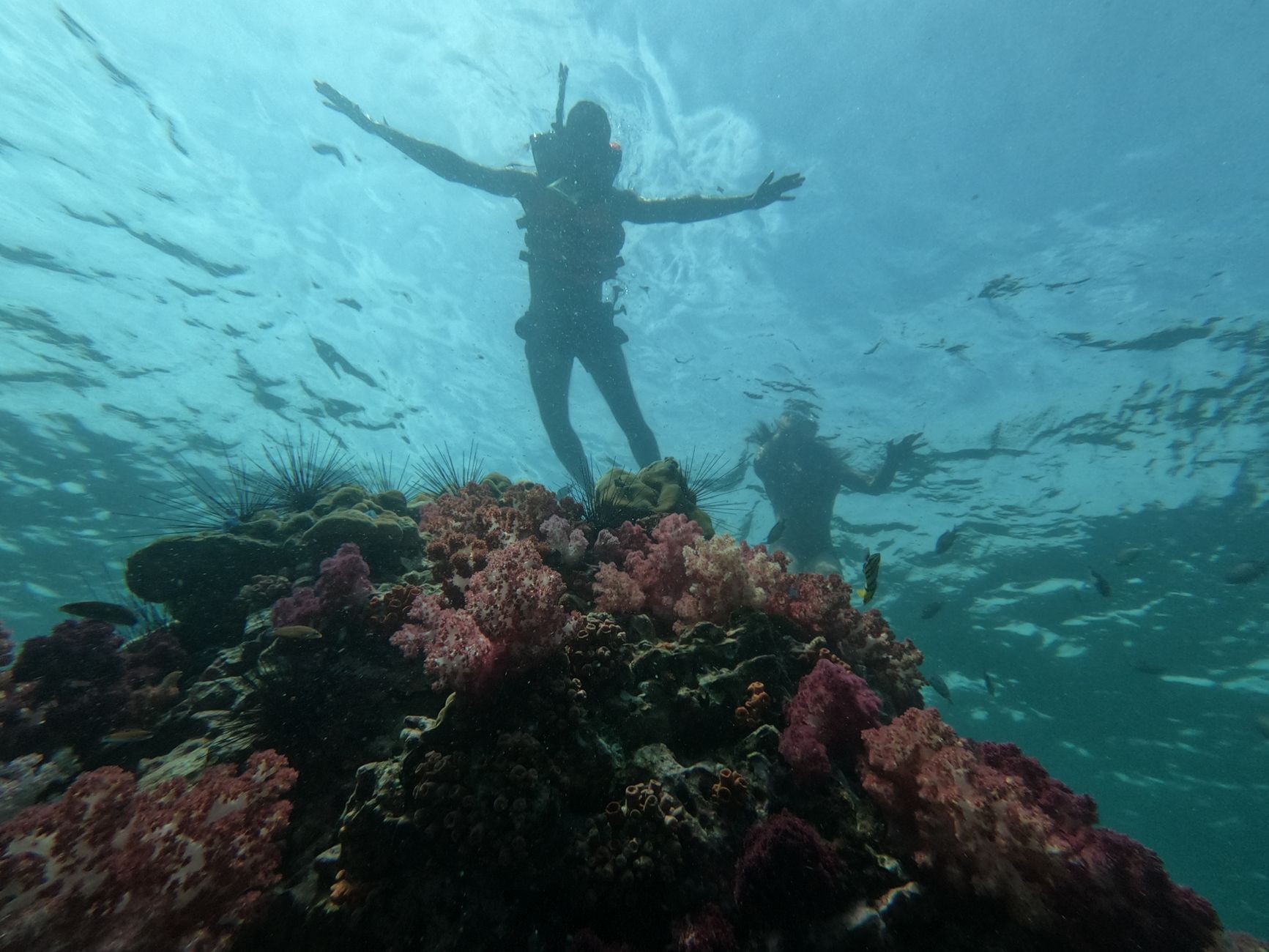
Skip the standard beach chair vacay. Ocean restoration travel is exploding, allowing travelers to dive, snorkel, and outplant living coral alongside marine scientists. From French Polynesia to the Florida Keys, here is your definitive guide to the hands-on coral restoration programs you can participate in emerging this year—complete with costs, gear specs, and insider booking secrets. ---
The Day I Nailed My First Acropora Fragment to the Ocean Floor
I spit into my dive mask, rubbed the tempered glass with my thumb, and rolled backward off the starboard side of the aluminum skiff. The slap of 82°F Atlantic sea water instantly stripped away the humid heat of the Florida Keys. Below me lay a forest unlike any on land: dozens of PVC "trees" suspended tethered to the white sand bed at 30 feet, swaying gently in the blue current like dynamic marine sculptures.
Attached to their branches were hundreds of thumb-sized fragments of staghorn coral (Acropora cervicornis).
My mission for the afternoon wasn't taking underwater photographs or hovering idly over a reef. Armed with a stiff wire brush, a marine-grade zip tie, and a small blob of two-part epoxy resin, I was working as a field technician for a day. I scrubbed algae off fiberglass branches, snipped a healthy coral clone off its tether, swam it to a depleted limestone spur, and secured it in place.
When you attach a baby coral to a degraded reef and know that three years from now it will form a sprawling habitat for juvenile parrotfish and hawksbill turtles, something in your traveler soul permanently shifts.
Passive tourism is officially fading. Travelers no longer just want to witness fragile ecosystems before they disappear—they want to roll up their wetsuit sleeves and physically fix them. Across the globe, high-impact coral restoration you can participate in emerging this year is shifting from elite academic marine labs into accessible, immersive citizen-science expeditions.
---
The Shift: Why Action Travel is Saving Our Ocean Ecosystems
Corals support over 25% of all marine life despite covering less than 1% of the ocean floor. But rising sea temperatures, coastal runoff, and ocean acidification have decimated wild reefs over the past three decades.
Enter the modern citizen scientist.
Pioneering marine restoration organizations have realized that scaling up reef recovery requires muscle, capital, and global awareness. By training recreational divers, snorkelers, and eco-conscious travelers in micro-fragmentation, nursery maintenance, and reef outplanting, these programs are dramatically speeding up reef regeneration.
This isn't about token tree-planting scams or performative "voluntourism." The emerging wave of coral programs uses rigorous scientific protocols. Volunteers learn exact micro-fragmentation methods (cutting corals into tiny pieces to trigger hyper-fast growth), maintain in-water nurseries, and collect real-time survival data.
---
5 Cutting-Edge Coral Restoration Programs You Can Join This Year
``` SURFACE / DECK LEVEL ~~~~~~~~~~~~~~|~~~~~~~~~~~~~~~~~~~~~~~~~~~~~~~~~~~~~~~~|~~~~~~~~~~~~~~ | [Dive Boat / Citizen Science Vessel] | |________________________________________| | | (Descent Line) v UNDERWATER NURSERY ZONE (15 - 30 ft depth) ======================================================== | | | [PVC Tree 1] [PVC Tree 2] [PVC Tree 3] / | \ / | \ / | \ (Coral Clones) (Coral Clones) (Coral Clones) | | | ======================================================== | | (Transfer to Reef) v OUTPLANTING REEF SITE (20 - 50 ft depth) ======================================================== [Substrate Scrubbing] ---> [Epoxy/Clip Attachment] ---> [Grown Reef] ```
1. Coral Gardeners – Moorea & Tahiti, French Polynesia
Best for: Snorkelers, ocean advocates, and non-certified divers.
Founded by a passionate group of local Polynesian ocean lovers, Coral Gardeners has evolved into a global restoration powerhouse. While historically focused on reef adoption from afar, their newly expanded immersive visitor experience in French Polynesia allows travelers to get their hands wet in crystal-clear lagoons.
- The Hands-On Work: You’ll join local ocean guides at their land-based and lagoon nurseries. Guests learn the mechanics of coral clipping, help clean nursery ropes overgrown with macroalgae, and physically secure micro-fragments onto specialized substrate plugs.
- The Vibe: Energetic, youthful, and intensely focused on indigenous Polynesian ocean stewardship.
> Pro-Tip: Book the custom morning workshop directly through their Moorea hub at least two months in advance; spots are strictly capped at 8 participants per day to keep environmental stress to a minimum.
``` _____ / \ | Acrop | <-- Coral micro-fragment suspended on line \ __ / || =====||===== <-- PVC branch || ```
2. Coral Restoration Foundation (CRF) – Key Largo, USA
Best for: Certified scuba divers looking for intense, highly structured fieldwork.
Based out of Key Largo, Florida, CRF operates the largest offshore coral reef restoration program on Earth. Their massive open-water tree nurseries hold tens of thousands of growing coral colonies across the Florida Reef Tract.
- The Hands-On Work: CRF offers two-day immersion programs. Day one takes place in their state-of-the-art educational facility, covering coral biology, species identification, and outplanting mechanics. Day two consists of a two-tank dive: Tank 1 focuses on nursery maintenance (scraping algae and checking lines); Tank 2 focuses on outplanting staghorn or elkhorn corals using non-toxic epoxy.
- The Vibe: Highly professional, disciplined, and deeply educational.
> Pro-Tip: Stay at an eco-partner lodge nearby and ask for the "Morning Dock Pick-up" behind the blue dock office at Horizon Divers to bypass the main marina crowd.
3. Reef Renewal Foundation – Kralendijk, Bonaire
Best for: Shore divers and buoyancy junkies looking for long-term skill refinement.
Bonaire is a scuba paradise due to its calm currents and fringing shore reefs. Reef Renewal Bonaire has capitalized on this environment by building a network of marine nurseries growing boulder corals (Montastraea cavernosa) and branching acroporids.
- The Hands-On Work: Complete their PADI Reef Renewal Specialty certification over 2 days. You'll master advanced buoyancy techniques (critical so you don't crush wild reef while working), harvest coral fragments from underwater trees, and attach them to degraded reef zones using specialized stainless-steel nails and zip ties.
- The Vibe: Relaxed, meticulous, and dive-centric.
> Pro-Tip: Head to the Buddy Dive Resort dock at 7:30 AM on Tuesdays to watch the crew load the restoration boats; the marine biologists often hand out last-minute volunteer spots if booked slots clear out.
4. Coral Nurture Program – Port Douglas & Cairns, Australia
Best for: Great Barrier Reef travelers looking to work alongside local dive operators.
The Coral Nurture Program represents an innovative partnership between tourism operators and marine researchers from the University of Technology Sydney. Rather than relying solely on volunteers, they train travelers alongside commercial dive crews to re-seed iconic Outer Barrier Reef sites.
- The Hands-On Work: Utilizing the revolutionary "Coralclip®"—a specialized spring clip hammered directly into limestone without needing epoxy mixture—volunteers help plant thousands of fragments per day across sites like Agincourt Reef.
- The Vibe: Epic scale, wild marine life encounters, and fast-paced field work.
> Pro-Tip: Book your day trip out of Port Douglas on small-capacity catamarans. Ask specifically for boats carrying CNP staff to guarantee your spot on the working restoration deck.
5. Reefscapers & Marine Savers – Baa Atoll, Maldives
Best for: Luxury eco-travelers wanting high-impact resort science.
If you want to spend your morning outplanting reefs and your evening in an overwater bungalow, the Maldives offers the ultimate synthesis of high-end travel and active marine conservation. Reefscapers operates out of several resorts across the archipelagos.
- The Hands-On Work: Guests construct and weld customized wire "coral frames" coated in resin and sand. You’ll sit on the beach attaching harvested coral fragments to these frames using cable ties, then join marine biologists in swimming the frame out to deep lagoon zones where electric currents promote rapid skeletal growth.
- The Vibe: Sophisticated, accessible, and high-tech.
> Pro-Tip: Look for programs operating within the UNESCO Biosphere Reserve of Baa Atoll during manta season (May to November) for the ultimate underwater double-header.
---
What Actually Happens on a Restoration Expedition?
Many travelers worry they lack the scientific background or physical skill to contribute. Here is the step-by-step breakdown of a standard restoration dive day:
``` [08:00 AM] Deck Prep & Briefing -> Understanding tools & site safety [09:30 AM] Dive 1: Nursery Scrubbing -> Clearing algae off PVC branches [12:00 PM] Surface Interval -> Mixing non-toxic marine epoxy resin [01:30 PM] Dive 2: Outplanting -> Securing fragments onto dead substrate [04:00 PM] Debrief & Logging -> Data entry into global restoration databases ```
Phase 1: The Land Briefing
You won't be dropped into the ocean unprepared. Every program begins with a thorough land-based workshop. You'll practice handling coral fragments, learn how to mix marine epoxy without creating air pockets, and master the use of specialized wire brushes.
Phase 2: Nursery Cleaning & Harvesting
Your first dive takes you to the offshore nursery. Armed with wire brushes and plastic scrapers, your job is to clean algae, fireworms, and snails off the growth structures. Algae competes with young coral for sunlight and space. Once clean, healthy branches are clipped using sterilized bypass pruners.
Phase 3: Site Preparation & Outplanting
At the degraded target reef, dive buddies work in pairs.
- Scrubbing: Worker A uses a wire brush to scrub a patch of dead coral substrate clean of turf algae and sediment down to bare limestone.
- Securing: Worker B mixes a Golf-ball-sized clump of two-part epoxy resin, presses it firmly into the clean spot, and inserts the base of the coral fragment into the epoxy, creating a secure hold.
- Monitoring: A numbered identification tag is secured near the new colony to track its growth rate over coming years.
---
How to Spot Authentic Restoration vs. Greenwashed Voluntourism
As demand for active conservation travel surges, greenwashing has crept into the marine space. Protect your money and the ocean by vetting operators against these four criteria:
- Scientific Partnerships: Valid programs always partner with recognized universities, government agencies (like NOAA or GBRMPA), or accredited non-profits. If an operator can't name their scientific director, walk away.
- Long-Term Monitoring Data: True restoration isn't just about throwing coral into the sea—it's about measuring survival rates over 1, 3, and 5 years. Ask to see their latest monitoring report.
- Permitting: Legitimate operators hold strict permits to harvest, hold, and outplant corals. Never participate in an unsanctioned dive where guests break wild coral.
- Buoyancy Mandates: Responsible operators will test your buoyancy control before handing you sharp tools near fragile reefs. If they let divers drag fins over live coral while outplanting, it's a major red flag.
---
Essential Prep & Recommended Gear
Working underwater requires a subtle shift in dive habits and gear choices. Here is what I pack for an outplanting expedition:
``` +-------------------------------------------------------------------------+ | RESTORATION TRAVEL PACK LIST | +-------------------------------------------------------------------------+ | [ ] Open-Heel Fins & Boots : Essential for stability on rubbly bottoms.| | [ ] 3mm Full Wetsuit : Protects skin from fire coral & sharp PVC.| | [ ] Non-Nano Zinc Sunscreen : Chemical sunscreens poison baby corals. | | [ ] Blunt-Tip Slate Knife : For cutting cable ties cleanly underwater.| | [ ] Writing Slate : For recording species tags & GPS markers. | +-------------------------------------------------------------------------+ ```
- Buoyancy Mastery: Practice hover techniques beforehand. The absolute best thing you can do for a reef is avoid touching it with your fins while working close to the seabed.
- Sun Protection: Traditional chemical sunscreens containing oxybenzone and octinoxate bleach coral larvae. Switch exclusively to non-nano zinc oxide formulas like Raw Elements or Stream2Sea.
- Exposure Suits: Even in warm tropical waters, you’ll spend long periods hovering nearly motionless while attaching corals. Wear a 3mm full wetsuit to retain body heat and protect your knees and forearms from scrapes.
---
Budget & Logistics Matrix
Planning your eco-expedition? Here is a breakdown of costs, skill requirements, and logistics for the world's leading coral restoration experiences this year:
| Destination | Program Operator | Est. Experience Cost ($) | Skill Level Required | Best Season | How to Get There | | :--- | :--- | :--- | :--- | :--- | :--- | | Florida Keys, USA | Coral Restoration Foundation | $180 – $250 / day | PADI Open Water (10+ dives) | May – October | Fly to Miami (MIA), drive 1 hour south down Overseas Highway to Key Largo. | | Moorea, French Polynesia | Coral Gardeners | $120 – $300 / day | Snorkelers & Divers | April – November | Fly to Tahiti (PPT), take a 30-minute ferry ride to Moorea island. | | Bonaire, Caribbean | Reef Renewal Bonaire | $200 – $400 (Course + Dives) | PADI Open Water Certified | Year-Round | Direct flights to Flamingo International (BON) via Atlanta, Miami, or Amsterdam. | | Great Barrier Reef, Australia | Coral Nurture Program | $250 – $450 / day | Advanced Open Water | June – November | Fly to Cairns (CNS), drive 1 hour north to Port Douglas Marina. | | Baa Atoll, Maldives | Reefscapers | $150 – $500 / frame | All Levels / Resort Guests | May – November | International flight to Malé (MLE), transfers via domestic flight or seaplane. |
---
The Lasting Impact: Leaving a Legacy Below the Surface
On my last day in Key Largo, I returned to an outplanting site that had been seeded three years prior by volunteers just like me.
What had once been a barren field of bleached, broken rubble was now an underwater oasis. Fast-growing staghorn corals had fused together, forming dense thickets two feet high. Damselfish aggressively defended their new homes, a juvenile nurse shark slept under an overhang formed by outplanted brain coral, and brilliant parrotfish crunched lazily on surrounding algae.
Travel has the power to consume or restore. Choosing coral restoration you can participate in emerging this year turns your travel investment into concrete, ecological protection. You won't just bring back memories or photos—you'll leave behind a living, growing ocean legacy that will thrive long after your passport stamps fade.
---
More pictures


Tags
Share this guide
We may earn a commission if you click a link and buy a product or service, at no extra cost to you. How affiliate links work.
Been there?