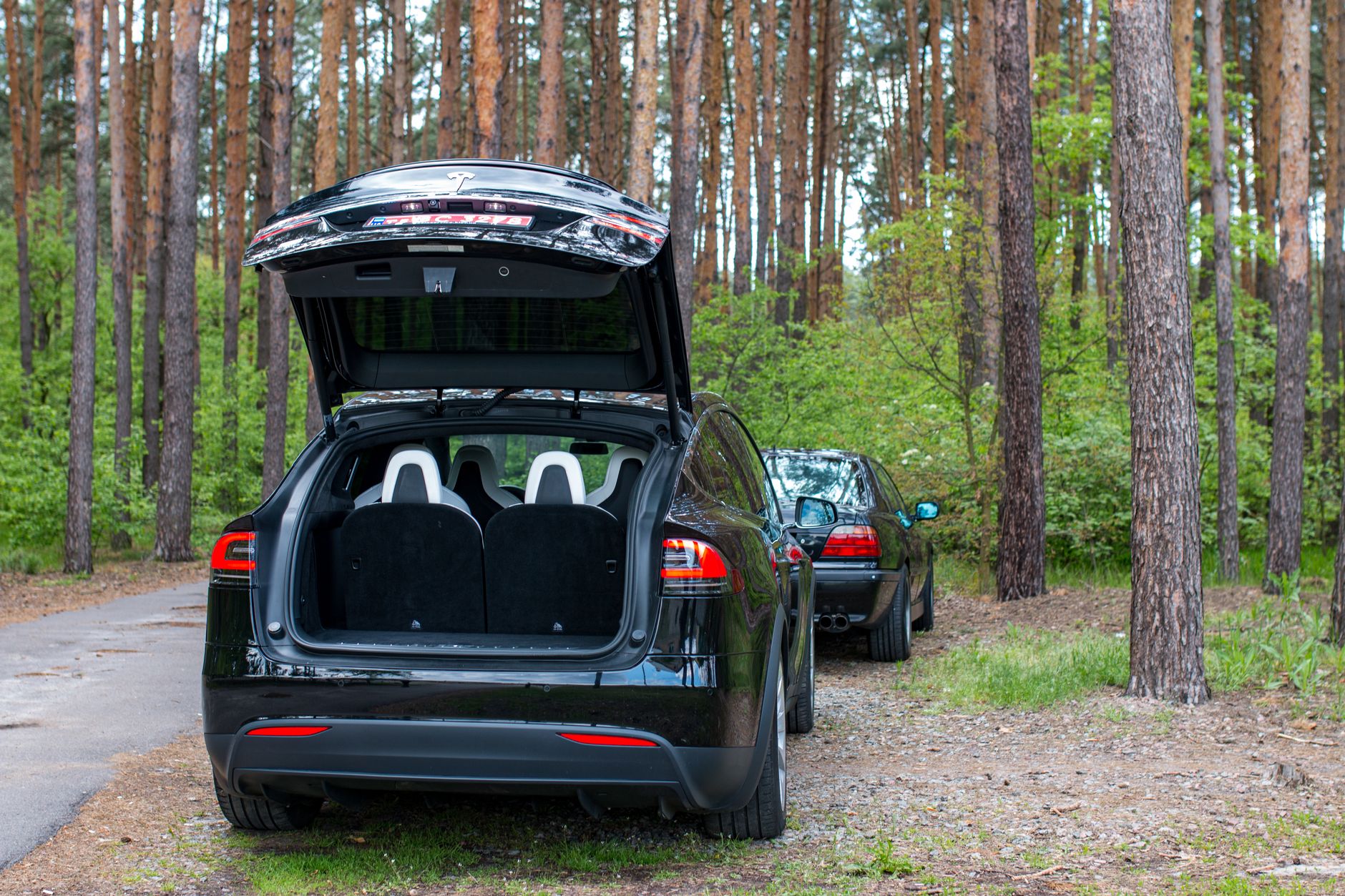
Range anxiety is officially dead. Thanks to unified plug standards, 350kW hyper-chargers, expanded rural infrastructure, and vehicle-to-load (V2L) tech, long-distance EV overland travel isn't just feasible—it's superior to gas. Here is your definitive, high-altitude guide to planning, executing, and loving an electric road trip right now. ---
The Silent Dawn over Tioga Pass
I stepped out of the driver’s seat at 9,943 feet above sea level, the crisp, needle-sharp air of Yosemite’s Tioga Pass filling my lungs. There was no hot oil smell, no ticking heat-shield of a stressed V6 engine, and zero exhaust haze drifting into the sub-alpine pines. Instead, the only sound was the faint hum of my camping kettle boiling water on the tailgate, powered directly by my car’s battery via its Vehicle-to-Load (V2L) port.
Five years ago, attempting this high-elevation traverse across the Sierra Nevada in an electric car required a military-grade logistics plan, three different charging adapters, and a prayer to the kilowatt gods. Today? I glided up the 12% grade with instant 450 lb-ft torque, recovered 8% of my state-of-charge on the regenerative descent into Mono Lake, and plugged into a 350kW DC fast charger while eating fresh fish tacos in Lee Vining.
Electric vehicle road trips becoming possible right now isn't a future marketing promise—it is an active, frictionless reality. Infrastructure has finally caught up with battery technology. If you know how to read the landscape, leverage smart software, and tap into new charging networks, cross-country electric travel offers a quieter, cheaper, and infinitely more refined way to see the world.
``` +-----------------------------------------------------------------------------------+ | THE EV ROAD TRIP TRANSITION AT A GLANCE | +------------------------------------+----------------------------------------------+ | 2019 EV Travel Era | Today's EV Travel Reality | +------------------------------------+----------------------------------------------+ | Broken 50kW chargers in mall slots | 350kW liquid-cooled hyper-chargers along HWYs| | Fragmented, app-heavy networks | Plug-and-Charge / Universal NACS access | | 150-mile real-world highway range | 300–400+ mile real-world highway range | | Severe cold/elevation anxiety | Battery pre-conditioning & heat pumps | +------------------------------------+----------------------------------------------+ ```
---
The Infrastructure Tipping Point: Why Now?
The narrative surrounding EV travel flipped almost overnight due to three major shifts: standard convergence, high-voltage battery architecture, and strategic grid expansion.
1. The Great Adapter Unification (NACS Standard)
The biggest bottleneck for non-Tesla drivers was always network fragmentation. With major automakers shifting to the North American Charging Standard (NACS) and opening up Tesla’s vast Supercharger network via official adapters, accessible fast-charging plugs along major corridors have tripled virtually overnight. You no longer need six different phone apps and subscriptions just to drive across two state lines.
2. 800-Volt Architecture and 18-Minute Pitstops
The era of sitting at a charger for an hour reading a dusty paperback is over. Modern 800-volt battery architectures (found in vehicles like the Hyundai Ioniq 5/6, Kia EV6, Porsche Taycan, and Audi e-tron GT) can draw power at speeds up to 350kW. In real-world conditions, this means charging from 10% to 80% in 18 minutes. By the time you use the restroom and grab an espresso, your vehicle has added 200 miles of range.
3. Destination Charging at Heritage Sites & National Parks
Fast chargers get you down the interstate, but Level 2 "Destination Chargers" keep you off the grid. State parks, historic inns, mountain resorts, and remote wineries are installing 240V chargers at a rapid pace. Plugging in overnight means starting every morning with a "full tank" without ever visiting a gas station or charging station during daylight hours.
---
3 Iconic EV Corridors You Can Drive Today
Forget boring interstate runs. These three epic routes showcase how electric vehicles excel over internal combustion engines in terrain, convenience, and cost.
``` [Seattle] | (Pacific Coast) | [Big Sur] ----> (Regen Power on Coastal Descents!) | [Los Angeles] ```
Route 1: The Pacific Coast Highway (California Hwy 1 to US-101)
- Distance: 655 miles (Seattle to San Francisco or LA down to San Diego)
- The Vibe: Ocean cliffs, redwoods, and coastal fog.
- Why it shines in an EV: Constant speed variations and coastal grade descents maximize regenerative braking. Coastal towns like Mendocino, Monterey, and Cambria are packed with hotel chargers.
- Pro-Tip: Stop at the Electrify America station in Bank of America parking lot in Fort Bragg. Grab clam chowder at Princess Seafood while topping up at 150kW.
Route 2: The Norwegian Fjords Route (E39 / E6 Corridor)
- Distance: 680 miles (Oslo to Bergen and North to Trondheim)
- The Vibe: Glaciers, cascading waterfalls, and world-heritage fjords.
- Why it shines in an EV: Norway is the undisputed EV capital of the world. Even ferry crossings feature onboard EV charging. You will find fast chargers at almost every remote convenience store and fjord landing.
- Pro-Tip: Drive over the Atlantic Ocean Road. Turn your EV's regenerative braking to max power on steep underwater tunnel drops to generate free energy for the climb back up.
Route 3: The American Southwest National Park Loop
- Distance: 950 miles (Las Vegas -> Zion -> Bryce -> Moab/Arches -> Grand Canyon)
- The Vibe: Red rock canyons, high desert, and dark-sky reserves.
- Why it shines in an EV: Extreme elevation shifts are effortlessly handled by instant electric torque. High ambient temperatures are offset by modern liquid-cooled battery thermal management systems.
- Pro-Tip: The Utah Department of Transportation installed fast chargers along rural stretches like Hanksville and Green River. Use the Rivian Adventure Network or ChargePoint stations along UT-12—one of the most scenic highways on Earth.
---
The Art of EV Route Planning: Master the Digital Cockpit
Executing a smooth road trip requires shifting your mindset from stopping when empty to charging where you stop.
``` +-----------------------------------------------------------------------------------+ | RECOMMENDED EV TECH STACK FOR ROAD TRIPS | +------------------------+----------------------------------------------------------+ | APP / TOOL | PRIMARY PURPOSE | +------------------------+----------------------------------------------------------+ | A Better Routeplanner | Complex routing based on elevation, wind, car load & temp| | PlugShare | Community reviews, live charger status & broken plug alerts| | Google Maps / Apple | In-car battery pre-conditioning trigger via OBDII/Native | | Tesla App | Accessing Superchargers for non-Tesla EVs with adapters | +------------------------+----------------------------------------------------------+ ```
Rule #1: Pre-Condition Your Battery
This is the single most critical technical hack for high-speed road tripping. If you simply tap a fast charger into your navigation, your car’s system will thermal-prep the battery pack (heating or cooling it to the ideal ~70°F/21°C window) before you pull up to the stall. Pre-conditioning allows the battery to instantly accept maximum kilowatt intake, cutting your charge times in half.
Rule #2: The 10% to 60% Sweet Spot
Batteries do not charge at a flat rate. The "charging curve" slows down dramatically past 80% to protect cell chemistry (much like filling a glass of water quickly at first, then slowing down at the rim).
To optimize travel time:
- Arrive at fast chargers around 10–15%.
- Charge hard during the maximum intake phase.
- Unplug at 65–70% when the speed throttles down.
- Drive to the next charger. Two brief 12-minute stops will always beat one long 45-minute charge to 100%.
Rule #3: Never Trust a Plug Without PlugShare
Before navigating to a charger, check its PlugShare Score. Look for locations rated 8.0 or higher with recent user check-ins. Read the comments: fellow drivers will tell you if handle #3 has a broken clip, if charging stall #1 is derated to 30kW, or if the stall is tucked behind a hotel garbage bay behind an unmarked security gate.
---
Cold Weather, Elevation & Aerodynamics: Real-World Physics
Gas cars lose thermal efficiency in cold weather; EVs lose raw range. To dominate an EV road trip, you must respect three environmental variables:
``` AIR RESISTANCE (DRAG) ▲ │ (Increases exponentially above 65 mph) │ COLD TEMPERATURES ◄────────────────┼────────────────► ELEVATION & HEADWINDS (Density & cabin heat drag) │ (Requires torque & kW) ▼ BATTERY RANGE IMPACT MATRIX ```
1. Speed Kills Range (The Aerodynamic Drag Curve)
Aerodynamic drag increases exponentially with speed ($Drag \propto V^2$). Driving an EV at 80 mph requires significantly more energy per mile than driving at 65 mph.
- At 65 mph: You hit close to EPA estimated range.
- At 75 mph: Expect a 15–20% drop in efficiency.
- At 85 mph: Expect up to a 30–35% drop.
- Strategy: If you are cutting it close between remote fast-chargers, dropping your cruise control from 75 mph to 68 mph can add 20–30 miles of real-world safety margin.
2. High Altitude is Actually Your Friend
Unlike gas engines that choke on thin air at high elevation, electric motors maintain 100% of their power efficiency regardless of altitude. While climbing a mountain pass consumes significant battery reserves, descending the back side allows regenerative braking to feed 60–80% of that potential energy back into the pack.
3. Taming the Cold
Cold air is denser, and warming a cabin without an engine block requires juice.
- Use heated seats and heated steering wheels instead of blasting high cabin air heat.
- Always buy an EV equipped with a heat pump rather than resistive heating element. Heat pumps are up to 300% more efficient in freezing conditions.
---
Overlanding & EV Camping: The V2L Advantage
One of the greatest unexpected benefits of modern EV travel is replacing traditional camping gear with your car's primary battery pack. Vehicles featuring Vehicle-to-Load (V2L) or bidirectionally-capable outlets (such as the Rivian R1T, Ford F-150 Lightning, Cybertruck, and Hyundai/Kia E-GMP models) act as mobile off-grid power stations.
``` [EV Battery Pack: 77 kWh - 135 kWh] │ ┌───────────────┴───────────────┐ ▼ ▼ [V2L Adapter Outlet] [Camp Mode Climate Control] ├── Induction Cooktop ├── Maintains 68°F cabin temp ├── Espresso Machine ├── Zero carbon monoxide risk └── Starlink Satellite └── Uses only 1-2% battery/night ```
- Camp Mode: Keep the cabin interior locked at a perfect 68°F (20°C) all night long in freezing or sweltering conditions. Because there is no internal combustion engine, there is zero danger of carbon monoxide poisoning and zero noise pollution. An average overnight sleep session consumes just 1–3% of total vehicle battery capacity.
- Off-Grid Power: You can run induction cooktops, power tools, projector screens, or Starlink satellite internet setups without bringing heavy, noisy, gas-powered generators into wilderness zones.
---
Logistics & Travel Cost Comparison
Is electric road tripping actually cheaper than gas? Let's break down the economics based on a 1,500-mile cross-country trip.
Quick Facts: 1,500-Mile Travel Matrix
| Parameter | Standard Gasoline SUV (25 MPG) | Modern EV (3.3 mi/kWh Efficiency) | | :--- | :--- | :--- | | Fuel Required | 60 Gallons | 454 kWh | | Avg Cost Basis | $3.85 / gal (National Avg) | $0.42 / kWh (DC Fast Charge Avg) | | Overnight Charging | N/A | $0.12 / kWh (Hotel L2 / Free) | | Total Fuel Expense | $231.00 | $128.00 (with 50% Overnight L2) | | Maintenance Impact | High (Oil, brake wear, heat) | Minimal (Near zero brake wear via regen) | | Noise & Fatigue | Engine vibration, gear shifts | Near-silent, smooth linear power | | Best Time to Travel | Any time | Off-peak hours (10 PM–8 AM) for cheap kW |
Note: EV costs plummet further if you take full advantage of free Level 2 hotel chargers during overnight stops.
---
The Pro Traveler's EV Packing List
Don't leave driveway pavement without these five essential accessories tucked into your frunk (front trunk):
``` +-----------------------------------------------------------------------------------+ | THE MUST-HAVE EV ROAD KIT | +-----------------------------------------------------------------------------------+ | [1] NACS to CCS1 / J1772 Adapters (Unlocks both Tesla & non-Tesla networks) | | [2] Heavy-Duty 25ft 10-AWG Extension Cord + NEMA 14-50 Portable L2 Charger | | [3] Tire Pressure Gauge & Inflator (Low tire pressure destroys EV efficiency) | | [4] Microfiber Towels & Glass Cleaner (For keeping ADAS sensor camera pods clean) | | [5] PlugShare App set to "Show Offline / Remote Stations" | +-----------------------------------------------------------------------------------+ ```
---
Step-by-Step Execution Guide: Your First Seamless EV Road Trip
Step 1: Set Up Your Charging Wallet Pre-Trip
Download and register accounts for the primary networks at least 24 hours before depart:
- Tesla App (Add payment method and select "Charge Your Non-Tesla")
- Electrify America / Canada
- EVgo
- ChargePoint
Enable Plug-and-Charge setting inside your vehicle's infotainment system if supported. This enables the station to automatically identify your vehicle and bill your account the moment you plug in the cable.
Step 2: Book Hotels with Verified Level 2 Charging
Use filters on Booking.com, Airbnb, or Hotels.com to select "EV Charging On-Site."
- Pro-Tip: Call the hotel front desk directly before booking. Ask: "Are your chargers operational, and are they dedicated for guests or accessible to the public?"
Step 3: Departure Morning Setup
Charge your battery to 100% at home or hotel right before rolling out. Set your target destination in your car's native navigation system so it can actively precondition the battery thermal loop for your first scheduled fast-charge stop.
Step 4: The Golden Rule of Etiquette
- Don't park in a stall if you aren't actively charging.
- Move your car as soon as charging hits your target limit. Companies charge steep "idle fees" (up to $1.00 per minute) if your vehicle stays plugged in after charging stops.
- Hang up the cable neatly. Leaving high-power, liquid-cooled charge handles lying in mud or snow damages sensitive electronic pins.
---
Final Thoughts: The Road Ahead
Road trips have always been about freedom, exploration, and connecting with the land between destinations. Transitioning to electric travel doesn't compromise that legacy—it restores it.
Without engine noise masking the environment, you hear the wind through coastal redwoods long before you step out of the cabin. Without mechanical gear hunts on steep mountain passes, you feel effortless acceleration. And with hyper-fast chargers and destination plugs expanding into every corner of the map, the horizon is wide open.
Pack your cable, pick a route on the map, plug in, and go. The future of road travel is here right now.
---
More pictures
Tags
Share this guide
We may earn a commission if you click a link and buy a product or service, at no extra cost to you. How affiliate links work.
Been there?