
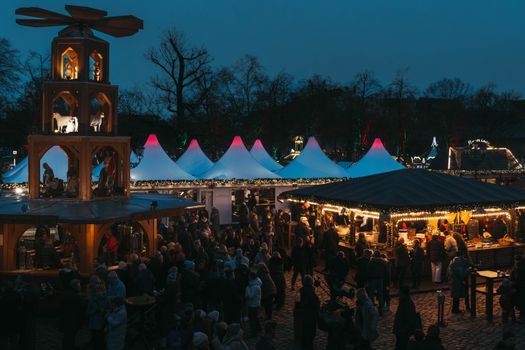
Forget the usual suspects! While Germany's Christmas markets are iconic, a world of lesser-known, equally enchanting festive wonders awaits across Europe. Join us as we pull back the tinsel curtain on the secret markets locals cherish, offering unparalleled magic without the overwhelming crowds. Prepare to discover your new favorite winter wonderland! ---
Beyond the Bratwurst: Europe's Secret Christmas Markets Locals Don't Want You to Know About
The year was 2019. I was standing shoulder-to-shoulder in the heart of Nuremberg, a mug of Glühwein clutched precariously, trying to catch a glimpse of the famous Christkindlmarkt. It was beautiful, undeniably. But amidst the throng of tourists, the sheer volume of German-themed souvenirs, and the familiar scent of grilled sausages, a thought gnawed at me: Is this it? Is this the authentic European Christmas market experience everyone raves about?
Don't get me wrong, German Christmas markets are magical. They are the benchmark, the gold standard. But after a few visits, the magic can start to feel a little… commercialized. A little too popular. That year, I vowed to seek out something different. Something more intimate. More authentic. Markets where the local dialect flowed freely, where the crafts were genuinely handmade, and where the mulled wine had a unique, regional twist.
What I discovered was a treasure trove of festive joy, spread across countries you might not immediately associate with Christmas market grandeur. These are the places where locals gather, where traditions run deep, and where you can genuinely feel the warmth of the season without battling for elbow room. They’re the hidden gems, the whispered secrets, the markets locals would probably prefer to keep to themselves. But lucky for you, dear Tripsora readers, I’m spilling the beans.
Get ready to bookmark this page, because your next unforgettable winter adventure starts now.
1. Trento, Italy: Alpine Charm with Italian Flair
Nestled in the heart of the Italian Dolomites, Trento is a revelation. Forget the bustling, German-influenced markets of Bolzano or Merano. Trento offers a distinctly Italian take on the festive season, infused with a crisp alpine air and the stunning backdrop of snow-capped peaks.
My first visit to Trento's Piazza Fiera market was a revelation. Unlike the often-uniform stalls you find elsewhere, here, each wooden hut felt unique, adorned with delicate, hand-painted signs. The scent of vin brûlé (the Italian answer to mulled wine, often spiced with local apples and berries) mingled with fresh strudel and polenta. I remember watching an elderly artisan meticulously carving wooden nativity figures, his hands moving with decades of practiced grace. He smiled warmly as I admired his work, explaining in broken English how each piece told a story.
What makes it special: The focus on high-quality, local crafts – think intricate wood carvings, handmade ceramics, and exquisite woolens. The food is also a standout: hearty Trentino specialties like canederli (dumplings), rich cheeses, and an abundance of local wines and grappas. The atmosphere is cozy, family-friendly, and feels genuinely lived-in.
Tripsora Insider Tip: Don’t miss the Kaiserschmarren, a fluffy shredded pancake served with fruit compote – it’s a nod to the region's Austrian heritage and absolutely divine. For an Instagram-worthy moment, capture the market with the imposing Castello del Buonconsiglio in the background, especially at dusk when the lights twinkle against the ancient walls.
Practicalities:
- When: Late November to January 6th.
- Cost: A mug of vin brûlé around €3-4, a hearty snack like a panino con speck for €5-7. Crafts vary but are generally excellent value for the quality.
- Getting there: Easily accessible by train from Verona or Bolzano.
2. Wrocław, Poland: A Fairytale in the Heart of Silesia
If you’ve only ever heard of Krakow’s Christmas market, you’re missing out on Wrocław. This vibrant city, often called the "Venice of Poland" due to its numerous bridges and islands, transforms into a true fairytale wonderland during Advent. The market sprawls across the Rynek (Market Square) and surrounding streets, creating a labyrinth of festive delights.
I distinctly recall the first time I stepped into Wrocław’s Rynek during December. The sheer scale of the market was impressive, yet it never felt overwhelmingly crowded. Giant, illuminated gnomes (krasnale) dotted the square, each with a unique story, adding a whimsical touch that children (and adults!) adored. I found myself drawn to a stall selling handmade ceramic mugs, each painted with traditional Polish folk art. The vendor, a cheerful woman named Ania, insisted I try her grzane wino (mulled wine) served with a slice of orange and cloves. It was sweeter, spicier, and more complex than any I’d tasted.
What makes it special: The unique Polish touch, from the traditional oscypek (smoked sheep's cheese from the Tatra mountains, often grilled and served with cranberry jam) to the pierogi (dumplings) and bigos (hunter's stew). The crafts are stunning, especially the amber jewelry, wooden toys, and intricate paper cut-outs. The "Christmas Pyramid" here is particularly impressive, soaring high above the stalls.
Tripsora Insider Tip: Look out for the "Hobbit House" – a unique, multi-level gingerbread-like structure selling festive drinks and treats. It’s perfect for a cozy break and an excellent photo opportunity. Also, try the langosz – a Hungarian-style fried flatbread with various toppings, a popular cross-cultural delight here.
Practicalities:
- When: Mid-November to December 31st.
- Cost: Grzane wino around 15-20 PLN (€3-4), oscypek with cranberries 10-15 PLN (€2-3). Amber jewelry can range from 50 PLN to several hundred PLN depending on size and craftsmanship.
- Getting there: Wrocław has its own international airport and is well-connected by train from major Polish cities.
3. Tallinn, Estonia: Medieval Magic in the Baltics
Tallinn's Christmas market in the historic Town Hall Square has repeatedly been voted one of Europe's best, yet it still retains a charm and intimacy that larger, more famous markets often lose. Perhaps it's the medieval setting, the cobblestone streets, or the constant threat of snow transforming the scene into a genuine winter wonderland.
My enduring memory of Tallinn's market is the crisp, cold air, the scent of gingerbread and roasted almonds, and the almost ethereal glow of the lights against the backdrop of the gothic Town Hall. One evening, after a particularly exhilarating sled ride down a small hill near the market (yes, they often have one!), I huddled around a fire pit with a group of locals, sipping hot blackcurrant wine. We chatted about Estonian folklore and the legend of the first public Christmas tree, supposedly erected right there in Tallinn in 1441. It was a moment of pure, unadulterated hygge.
What makes it special: The genuine medieval atmosphere, the focus on authentic Estonian handicrafts (think wool sweaters, wooden bowls, and intricate felted items), and the delicious local food like blood sausages (verivorst), sauerkraut, and marzipan. The central Christmas tree is always magnificent, and often surrounded by small reindeer.
Tripsora Insider Tip: Don’t leave without trying piparkook (Estonian gingerbread cookies), often intricately decorated. They make perfect souvenirs. For a truly unique experience, visit on a weekday morning when the crowds are minimal, and you can truly appreciate the market's serene beauty.
Practicalities:
- When: Mid-November to January 7th.
- Cost: Hot wine €3-5, a portion of verivorst with sauerkraut €7-9. Hand-knitted woolens can range from €30-€100+.
- Getting there: Tallinn is easily accessible by direct flights from many European cities, or by ferry from Helsinki.
4. Ljubljana, Slovenia: Riverside Romance and Green Charm
Slovenia's capital, Ljubljana, might just be Europe's most underrated Christmas destination. The city itself is a fairytale, with a dragon-guarded castle overlooking a picturesque river, and during December, it transforms into a magical spectacle. The Christmas market isn't confined to one square but stretches along the Ljubljanica River, creating a festive promenade.
I remember strolling along the riverbanks in Ljubljana, the reflections of the twinkling lights dancing on the water, the castle illuminated on the hill above. It felt less like a market and more like a city-wide celebration. A musician played a melancholy accordion tune near the Triple Bridge, and the air was filled with the aroma of kranjska klobasa (Carniolan sausage). I bought a beautiful handcrafted ceramic mug from a local artisan, which now holds a special place in my kitchen, a constant reminder of that enchanting evening.
What makes it special: The stunning riverside setting, the emphasis on Slovenian design and crafts (from intricate lacework to unique wooden items), and the vibrant program of free concerts and events. The city's famous "Praznični december" (Festive December) light display is truly spectacular and worth a visit in itself.
Tripsora Insider Tip: Grab a cup of kuhano vino (mulled wine) or vroča medica (hot mead) and find a spot along the river to simply soak in the atmosphere. For a unique souvenir, look for items made with local Slovenian honey or pumpkin seed oil. Don't forget to visit the "Good Fairy" stall, where you can donate to charity and receive a wish from the fairy!
Practicalities:
- When: Early December to January 2nd.
- Cost: Kuhano vino around €2.50-€3.50, kranjska klobasa €5-7. Crafts are reasonably priced, with smaller items starting from €10.
- Getting there: Ljubljana Jože Pučnik Airport (LJU) serves many European destinations. The city is also easily reachable by train or bus from neighboring countries.
5. Ghent, Belgium: Gritty Charm Meets Festive Sparkle
While Bruges often steals the spotlight for Belgian charm, Ghent offers a more authentic, slightly edgier, and equally beautiful Christmas experience. Its market, Winterfeesten, spreads through the historic city center, centered around Sint-Baafsplein and Korenmarkt, with the stunning medieval architecture providing a dramatic backdrop.
My first impression of Ghent's Christmas market was its lively, almost bohemian feel. It wasn't as polished as some others, but that was its charm. I remember discovering a stall selling artisanal Belgian chocolates, each piece a tiny work of art. The chocolatier, a passionate young woman, insisted I try a salted caramel truffle, which melted in my mouth. Later, I watched a group of friends laughing over jenever (Belgian gin) in tiny ceramic cups, their breath misting in the cold air. It felt like a true local gathering, vibrant and unpretentious.
What makes it special: The distinct Belgian atmosphere, the emphasis on local food and drink (Belgian beers, jenever, speculoos cookies, and waffles), and the backdrop of Ghent's impressive medieval buildings, including the Gravensteen Castle. There's often an ice-skating rink and a Ferris wheel offering panoramic views.
Tripsora Insider Tip: Beyond the usual suspects, seek out the mattentaart (a local cheese tart) or smoutebollen (fried dough balls, similar to doughnuts). And of course, try as many different Belgian beers as you can! For an Instagram shot, capture the market from the top of the Ferris wheel, or with the majestic Ghent Altarpiece-housing St. Bavo's Cathedral in the background.
Practicalities:
- When: Early December to January 1st.
- Cost: Jenever shots €3-4, waffles €3-5, a small box of artisanal chocolates €10-15.
- Getting there: Ghent is a short train ride from Brussels and has excellent rail connections across Belgium and to neighboring countries.
6. Budapest, Hungary: Thermal Baths and Festive Cheer
Budapest offers not one, but two magnificent Christmas markets that truly capture the spirit of the season with a unique Hungarian flair. While Vörösmarty Square is the oldest and largest, the market in front of St. Stephen's Basilica, with its impressive light show projected onto the facade, is a true local favorite and often feels more intimate despite its popularity.
I recall a particularly chilly evening in Budapest, having spent the afternoon relaxing in the Szechenyi thermal baths. Refreshed and warm, I headed to the Basilica market. The aroma of kürtőskalács (chimney cake) was irresistible, and I watched, mesmerized, as a vendor expertly rolled dough around a wooden spit, baking it over an open flame until golden and crispy. I chose a cinnamon sugar one, and its warmth in my hands was pure comfort. Later, I stood watching the 3D light show on the Basilica, a breathtaking spectacle that made me feel like I was inside a living, breathing Christmas card.
What makes it special: The stunning backdrop of the Basilica and its unique light show, the emphasis on traditional Hungarian crafts (hand-embroidered textiles, ceramics, leather goods), and delicious Hungarian specialties like goulash, lángos (fried dough with various toppings), and pálinka (fruit brandy). The atmosphere is vibrant, sophisticated, and deeply rooted in Hungarian tradition.
Tripsora Insider Tip: Don’t just stick to the main squares. Wander down the side streets and explore smaller, local stalls that might offer even more unique crafts or homemade treats. For a truly authentic experience, try the forralt bor (mulled wine) from a lesser-known vendor, often with a unique blend of spices. Pair your kürtőskalács with a hot chocolate for an indulgent treat.
Practicalities:
- When: Mid-November to January 1st.
- Cost: Kütrőskalács around 2000-3000 HUF (€5-8), a bowl of goulash €8-12. Forralt bor €3-5.
- Getting there: Budapest Ferenc Liszt International Airport (BUD) is a major hub. The city is also well-connected by train and bus.
Your Actionable Guide to Unearthing Europe's Hidden Christmas Gems
Ready to ditch the crowds and discover your own secret Christmas wonderland? Here are my top tips for making it happen:
- Go Beyond the Big Names: While Vienna, Prague, and Munich are beautiful, consider their smaller neighbors or lesser-known cities within the same countries. Often, the magic is even more concentrated.
- Travel Mid-Week & Early Season: The first two weeks of December, particularly Tuesday to Thursday, offer the best balance of festive atmosphere and fewer crowds. Avoid weekends if you can.
- Embrace Local Transport: Trains and buses are often the best way to hop between smaller towns, allowing you to discover multiple markets in one trip.
- Learn a Few Local Phrases: A simple "hello," "thank you," and "merry Christmas" in the local language goes a long way in connecting with vendors and locals.
- Eat & Drink Like a Local: Don't just stick to Glühwein. Seek out regional specialties – be it vin brûlé, grzane wino, kuhano vino, or forralt bor. Sample the local pastries, sausages, and cheeses.
- Pack Smart: Layers are your friend! Thermal underwear, warm socks, waterproof boots, gloves, a hat, and a good quality winter coat are essential. A reusable travel mug is also a great idea for your mulled wine, reducing waste.
- Support Local Artisans: Instead of mass-produced souvenirs, look for handcrafted items. They tell a story and make for more meaningful gifts and keepsakes. Don't be afraid to haggle gently if it's customary in the region, but always be respectful.
- Do Your Research (Beyond Google): Check local tourism board websites, Instagram hashtags (e.g., #TrentoChristmasMarket, #WroclawChristmas), and smaller travel blogs for truly off-the-beaten-path recommendations. Locals often share their favorite hidden stalls!
- Book Ahead (Even for "Secret" Markets): Accommodation, especially, can fill up quickly in charming smaller towns during the festive season.
- Be Present & Enjoy: Put down your phone (after you've snapped your Instagram-worthy shots, of course!). Engage with the vendors, listen to the carols, savor the flavors, and let the unique magic of each market wash over you.
Your Next Chapter of Christmas Magic Awaits!
There’s a profound joy in discovering something new, in peeling back the layers of tourist-trap popularity to find the authentic heart of a place. These "secret" Christmas markets are more than just places to buy gifts and sip mulled wine; they are cultural experiences, windows into local traditions, and opportunities to create truly unforgettable memories.
So, this year, bypass the usual suspects. Venture beyond the familiar. Trust me, the locals won't mind sharing their cherished festive secrets once you've proven you're there to appreciate the magic, not just consume it.
Which of these hidden gems will you explore first? Share your thoughts and your own secret market discoveries in the comments below! And don't forget to tag #TripsoraSecrets and #BeyondGermany when you share your incredible festive journey on social media! Happy travels, and a very Merry (and authentic) Christmas!
---
More pictures


Tags
Share this guide
We may earn a commission if you click a link and buy a product or service, at no extra cost to you. How affiliate links work.
Been there?