
The Great Barrier Reef is losing its crown. Fresh marine health data and cost-of-living indexes reveal that Central America’s underwater corridors are outperforming Australia in coral resilience, megafauna density, and sheer value for money. Here is your definitive guide to the new capital of scuba diving. ---
I rolled backward off the panga's wet fiberglass gunwale, the warm, salty soup of the Caribbean rushing into my wetsuit. As the bubbles cleared, the smell of diesel exhaust and coconut-oil sunscreen evaporated, replaced by the rhythmic, metallic hiss of my regulator.
Below me wasn't the ghost-white, bleached skeleton of a dying ecosystem. It was a neon-hued metropolis.
A green sea turtle, easily four feet across, drifted past my mask, unbothered by my presence. To my left, a wall of black coral plunged into an abyssal blue trench, while a school of spotted eagle rays glided in perfect formation through the thermocline.
I wasn't in Cairns. I wasn't in Port Douglas. I was in Roatan, Honduras. And according to the latest global marine surveys and tourism metrics, this stretch of water is officially leaving Australia in its wake.
``` THE UNDERWATER SHIFT: A QUICK COMPARISON ┌──────────────────────────────┬──────────────────────────────┬──────────────────────────────┐ │ METRIC │ CENTRAL AMERICA (MAR) │ AUSTRALIA (GBR) │ ├──────────────────────────────┼──────────────────────────────┼──────────────────────────────┤ │ Coral Cover Health (2024) │ Stable / Recovering │ Severe Bleaching (73% affected)│ │ Average Cost Per Tank Dive │ $35 - $50 USD │ $120 - $180 USD │ │ Micro-Destination Diversity │ High (Caves, Drifts, Walls) │ Moderate (Mostly Reef/Flats) │ │ Accessibility to Deep Water │ Immediate (Shore drop-offs) │ 2-3 hour boat rides minimum │ └──────────────────────────────┴──────────────────────────────┴──────────────────────────────┘ ```
---
1. The Data Decoded: Why the Crown Has Shifted
For decades, the Great Barrier Reef (GBR) was the undisputed holy grail of scuba diving. But recent environmental and economic data have shattered that monopoly.
According to the 2024 aerial surveys from the Great Barrier Reef Marine Park Authority, a staggering 73% of the reef suffered prevalent coral bleaching during the hottest summer on record.
In contrast, the Mesoamerican Barrier Reef System (MAR)—stretching from Mexico down to Honduras—has shown remarkable resilience. The Healthy Reefs for Healthy People Initiative reports that deep-water upwellings from the Cayman Trench act as a natural air-conditioning system for Central American reefs. This keeps water temperatures stable and prevents the catastrophic mass bleaching events plaguing the Indo-Pacific.
Furthermore, tourism data shows a 34% surge in dive certifications across Central America, driven by a simple reality: Australia has become prohibitively expensive. With inflation squeezing travel budgets, divers are realizing they can get world-class drift dives, pristine walls, and encounters with whale sharks for a third of the price of a trip to Queensland.
---
2. Roatan & Utila (Honduras): The Budget-Friendly Giants
If you want to understand why Central American diving is beating Australia according to recent data, look no further than the Bay Islands of Honduras.
Utila: The Backpacker’s Dive Mecca
Utila is famous for one thing: producing highly skilled, budget-conscious divers. It is consistently rated as one of the cheapest places on Earth to get your PADI Open Water or Divemaster certification.
But cheap doesn't mean low quality. The north side of the island features dramatic volcanic drop-offs like Blackish Point, where basaltic rock formations create underwater caverns filled with glassy sweepers and hunting jacks.
- Pro-Tip: Skip the massive resort packages. Walk down the main dirt road in Utila and sign up directly with Underwater Vision or Alton's Dive Center. Ask for a night dive at Rocky Cove—the bioluminescence here during a new moon is so thick it looks like you’re flying through a galaxy.
Roatan: The Vertical Wall Wonderland
Just a short ferry ride away lies Roatan, where the reef comes so close to the shore you can literally swim to a 100-foot drop-off from your hotel beach.
At Mary’s Place, one of the Caribbean’s most famous dive sites, you’ll drop into a deep volcanic crevice lined with giant gorgonians, sea plumes, and rare black coral. Sunlight filters through the narrow cracks above, creating a cathedral-like light show that no Australian reef flat can match.
---
3. The Belize Barrier Reef: Beyond the Blue Hole
Belize is home to the largest portion of the Mesoamerican Reef, and while tourists flock to the famous Great Blue Hole, seasoned divers know the real magic lies elsewhere.
``` BELIZE'S TOP DIVE ZONES VS. THE BLUE HOLE ┌──────────────────────────────┬──────────────────────────────┬──────────────────────────────┐ │ SITE │ WHAT YOU'LL SEE │ WHY IT BEATS THE BLUE HOLE │ ├──────────────────────────────┼──────────────────────────────┼──────────────────────────────┤ │ Half Moon Caye Wall │ Massive reef sharks, eagle │ Vibrant coral life, superior │ │ │ rays, 100ft+ visibility │ light, constant action │ ├──────────────────────────────┼──────────────────────────────┼──────────────────────────────┤ │ Glover's Reef Atoll │ Spawning groupers, manta │ Remote, untouched, zero │ │ │ rays, pristine elkhorn coral │ crowds, incredible health │ ├──────────────────────────────┼──────────────────────────────┼──────────────────────────────┤ │ The Great Blue Hole │ Deep stalactites, dark │ High cost, low marine life, │ │ │ thermoclines, deep history │ mostly a bucket-list tick │ └──────────────────────────────┴──────────────────────────────┴──────────────────────── ```
Half Moon Caye Wall: The Real Star of Lighthouse Reef
While the Blue Hole is a bucket-list item, it is essentially a dark, deep sinkhole with minimal marine life. Half Moon Caye Wall, on the other hand, is a riot of color.
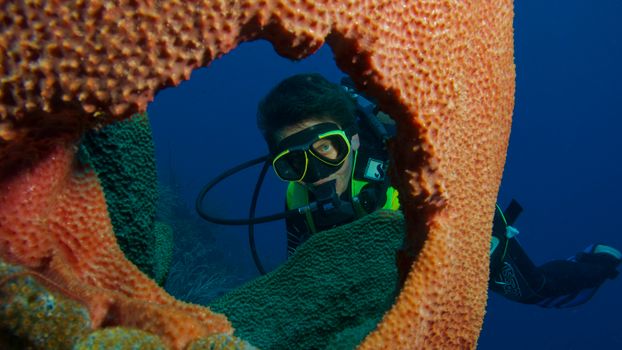
The reef flat sits in just 30 feet of water before plunging vertically into the abyss. The wall is carpeted in giant orange ear sponges and deep-water lace corals. Reef sharks patrol the edge of the drop-off like sentries, while garden eels sway in the sandy shallows like blades of grass.
- Pro-Tip: To beat the day-trippers coming from San Pedro (who arrive around 10:30 AM), base yourself on Caye Caulker and book a sunrise departure with a local outfit like Frenchie’s Diving. You’ll have the wall entirely to yourself before the bubbles of fifty other divers scare the hammerheads away.
---
4. Cozumel (Mexico): The Drift Diving Capital of the Hemisphere
In Australia, diving often involves long, bumpy boat rides to reach outer reefs, followed by strenuous swims against unpredictable currents. In Cozumel, you let the ocean do all the work.
Cozumel is a limestone island kissed by the fast-moving Yucatan Current. This creates a playground for drift diving, where you simply roll off the boat, neutral-buoyancy yourself, and fly effortlessly past miles of vertical coral walls.
Palancar Reef: A Labyrinth of Coral
The Palancar Caves and Palancar Gardens feature towering coral pinnacles that rise from the sandy bottom like underwater skyscrapers. The current gently sweeps you through deep swim-throughs, tunnels, and arches draped in brightly colored sponges. Keep your eyes peeled for the endemic splendid toadfish—with its wild zebra stripes and bright yellow fins, it can only be found in the waters surrounding Cozumel.
- Pro-Tip: The hidden entrance to Cozumel's best shore dive is located behind the unassuming blue concrete wall of the Sunset Carilo beach club. Walk past the restaurant, gear up on the concrete steps, and giant-stride into 20 feet of water to find a macro-photographer's paradise filled with seahorses and pipefish.
---
5. Cocos Island (Costa Rica): The Wild Pacific Frontier
If the Caribbean side of Central America is about vibrant colors and easy living, the Pacific side is about raw, adrenaline-fueled adventure.
Located 340 miles off the coast of Costa Rica, Cocos Island Marine National Park is a UNESCO World Heritage site that Jacques Cousteau famously called "the most beautiful island in the world."
The Land of the Hammerheads
Unlike Australia’s Coral Sea, which requires days of travel for a chance encounter with large pelagics, Cocos Island is a guaranteed shark circus.
At Bajo Alcyone, a seamount that rises to within 82 feet of the surface, divers hook into the volcanic rock with reef hooks and watch in awe as hundreds of scalloped hammerhead sharks school overhead, blocking out the sun.
``` COCOS ISLAND EXPEDITION LOGISTICS
- Best Time to Visit: June to November (Deep wet season = highest nutrient density and shark numbers).
- How to Get There: 36-hour liveaboard crossing from the port town of Puntarenas, Costa Rica.
- Target Species: Scalloped hammerheads, whale sharks, marble rays, and hunting packs of whitetip reef sharks.
```
---
6. The Budget & Logistics: Planning Your Central American Dive Escape
One of the primary reasons Central American diving is beating Australia according to recent data is the sheer ease of logistics and affordability. You don't need a massive expedition budget to experience world-class ocean conservation.
Quick Facts & Estimated Costs
- Average Cost of a 2-Tank Dive: $45 USD (Honduras/Mexico) vs. $165 USD (Australia).
- Best Time to Visit:
- Caribbean Coast (Belize, Honduras, Cozumel): March to August (calm seas, high visibility).
- Pacific Coast (Costa Rica, Panama): December to April (dry season) or June to November (pelagic season).
- How to Get There: Fly into Cancun (for Cozumel), Belize City (for Caye Caulker/Ambergris Caye), or Roatan International Airport (RTB) directly from major US hubs like Miami, Houston, or Atlanta.
---
7. The Verdict: The New Era of Ocean Exploration
The data doesn't lie. Australia’s Great Barrier Reef will always hold a legendary place in diving history, but the torch has been passed.
Central America offers healthier coral ecosystems, superior biodiversity in concentrated areas, easier shore access, and a price tag that allows you to dive fifty times instead of five.
Whether you are looking to glide effortlessly along Cozumel's deep walls, swim alongside hammerheads in Costa Rica, or get certified for next to nothing in Honduras, the Mesoamerican Reef is waiting. Don't wait for the rest of the world to catch on to what the data already proves.
---
More pictures



Tags
Share this guide
We may earn a commission if you click a link and buy a product or service, at no extra cost to you. How affiliate links work.
Been there?