
Tired of seeing the same carbon-heavy luxury trips on your feed? We're pulling back the curtain on the incredible, often overlooked, carbon-neutral transportation options that offer richer, more authentic travel experiences. Get ready to explore the world responsibly, one unforgettable journey at a time. ---
It was on a winding mountain road in Slovenia, the scent of pine needles sharp in the crisp air, that it hit me. I was on a press trip, whisked from one breathtaking vista to another in a comfortable, albeit gas-guzzling, SUV. My Instagram stories were popping – cascading waterfalls, emerald lakes, ancient castles – all the curated perfection we've come to expect from travel content. Yet, as I gazed out at the pristine landscape, a nagging feeling settled in. Was I truly experiencing this place, or just consuming it? And what was the real cost of getting here, and to all the other "must-see" spots on the influencer circuit?
That trip was a turning point. It sparked a quest: to discover ways to explore our incredible planet without leaving an outsized carbon footprint. I started looking beyond the private jets and luxury car transfers, past the perfectly staged airport lounges, and into the heart of what makes travel truly transformative. And what I found were not just eco-friendly alternatives, but richer, deeper, and often more memorable ways to journey. These are the carbon-neutral transportation options that Instagram influencers, chasing the next viral moment, often overlook or simply don't want you to know about. Why? Because they're about slow travel, connection, and genuine discovery – not just the 'gram.
So, buckle up (or rather, unbuckle from your fossil-fuel-powered worries) as I reveal the Tripsora guide to guilt-free exploration.
1. The Grand Escape by Rail: Your Global Green Express
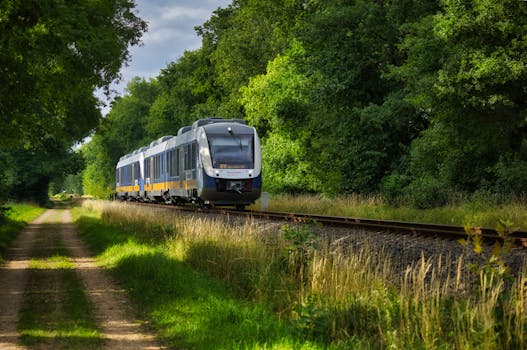
Forget airport security lines and cramped economy seats. Train travel isn't just a mode of transport; it's an experience, a journey in itself. It's the quintessential carbon-neutral adventure, offering unparalleled views, a chance to meet locals, and the sheer joy of watching landscapes transform outside your window.
My love affair with trains began years ago with a Eurail Pass. I remember a particular overnight journey from Rome to Munich. I tucked into a cozy sleeper cabin, the rhythmic clickety-clack of the wheels lulling me to sleep. Waking up to the snow-capped peaks of the Austrian Alps bathed in the first light of dawn was pure magic – a scene no airplane window could ever capture. It felt like stepping into a movie. Later, sipping coffee in the dining car, chatting with a German couple about their travels, I realized this wasn't just about getting from A to B; it was about the journey itself.
Why it’s awesome:
- Low Carbon Footprint: Trains are significantly more energy-efficient per passenger mile than planes or cars.
- Scenic Routes: Imagine the Swiss Alps, Norway's fjords, the Scottish Highlands, or Japan's bullet train slicing through Mount Fuji's backdrop – all from a panoramic window.
- Comfort & Space: More legroom, walk-around space, dining cars, and even private cabins.
- City Center to City Center: No long commutes to airports; trains drop you right in the heart of the action.
Tripsora's Practical Tips for Rail Travel:
- Invest in a Pass: For multi-country adventures, an Interrail (Europeans) or Eurail (non-Europeans) Pass can be incredibly cost-effective. Plan your routes in advance, especially for popular high-speed trains which might require reservations.
- Explore Night Trains: Save on accommodation and wake up in a new city. Companies like ÖBB Nightjet offer comfortable sleeper options across Europe.
- Go Beyond Europe: Japan's Shinkansen is legendary for efficiency, while Amtrak offers stunning routes like the Coast Starlight in the US.
- Booking Savvy: Use platforms like Omio, Trainline, or directly with national rail operators (e.g., Deutsche Bahn, SNCF, Trenitalia) for the best deals. Book well in advance for cheaper fares.
- Pack Smart: While trains allow more luggage than planes, lighter is always better for navigating stations.
Instagram-Worthy Moment: A perfectly framed shot of a mountain range from your train window, coffee cup in hand, or a candid photo of you enjoying a meal in the dining car as the world rushes by. #TrainTravel #SlowTravel #GreenTravel
2. Electric Road Trips: Guilt-Free Wheels on the Open Road
The open road calls to many of us – the freedom, the spontaneity, the curated playlist. But the carbon cost of traditional car travel can be heavy. Enter the electric vehicle (EV) road trip. This is where innovation meets exploration, allowing you to chase horizons with a conscience.
I recently rented a Tesla for a weekend trip along the Oregon coast. The silence was striking – just the gentle hum of the tires on the asphalt, the roar of the Pacific, and the wind through the trees. It felt incredibly futuristic, yet deeply connected to the natural world I was driving through. Yes, I had to plan my charging stops, but with apps like PlugShare and A Better Routeplanner, it became part of the adventure, leading me to charming small towns I might otherwise have missed. One stop was at a quirky coffee shop with a fast charger, where I discovered the best marionberry scone of my life.
Why it’s awesome:
- Zero Tailpipe Emissions: No exhaust fumes mean cleaner air for everyone.
- Quiet & Smooth Ride: EVs offer a remarkably peaceful driving experience.
- Cost Savings (Fuel): Electricity is often cheaper than gasoline, especially if you can charge overnight at your accommodation.
- Tech-Forward: Enjoy advanced navigation and infotainment systems.
Tripsora's Practical Tips for EV Road Trips:
- Rent an EV: Major rental companies (Hertz, Avis) now offer EVs. Look for specialists like Turo for a wider selection.
- Plan Your Route & Charging: This is key! Use apps like PlugShare, Electrify America, or the car's built-in navigation to map out charging stations. Look for fast chargers (Level 3/DCFC) for quicker stops.
- Consider Range Anxiety: Understand your chosen EV's realistic range and factor in terrain, weather, and speed. Don't push it too close to empty.
- Look for EV-Friendly Accommodations: Many hotels now offer charging stations, a huge convenience for overnight top-ups.
- Road Trip Essentials: Pack your charging cables (adapters might be needed for different networks), a portable charger for your phone, and a good sense of humor for unexpected detours.
Instagram-Worthy Moment: Your sleek EV parked against a dramatic coastal backdrop or mountain pass, a shot of the charging station in a surprisingly scenic location, or a time-lapse of your quiet drive through a forest. #EVRoadTrip #ElectricAdventures #SustainableDriving
3. Pedal & Pave: The Immersive Slow Burn
There’s no better way to truly experience a destination than by the power of your own two feet or two wheels. Walking and cycling offer an intimate connection with your surroundings, allowing you to discover hidden gems, interact with locals, and truly soak in the atmosphere at your own pace.
My most memorable European trip wasn't by train or car, but by bicycle. I spent a week cycling a segment of the Danube Cycle Path, from Passau in Germany to Vienna, Austria. Each day brought new discoveries: charming riverside villages, vineyards clinging to hillsides, and the incredible satisfaction of earning my schnitzel and strudel. I remember stopping at a small bakery in a tiny Austrian town, communicating with gestures and broken German, and leaving with the most delicious apricot pastry I’ve ever tasted. This kind of interaction is impossible when you're whizzing by in a vehicle.
More recently, I explored Barcelona on an e-bike. It amplified my urban exploration, allowing me to zip up to Parc Güell with ease, then cruise along the beachfront without breaking a sweat. It combined the best of both worlds: the freedom of a bike with an extra boost.
Why it’s awesome:
- Ultimate Immersion: Engage all your senses – the smells, sounds, and textures of a place.
- Physical & Mental Well-being: Great exercise and a fantastic way to de-stress.
- Access Hidden Gems: Reach places cars can't, discover quiet alleyways, and stumble upon local markets.
- Zero Emissions: Pure, human-powered (or human-assisted) exploration.
Tripsora's Practical Tips for Pedal & Pave:
- Long-Distance Cycling: Research famous routes like the EuroVelo network (Europe), the Shimanami Kaido (Japan), or specific regional trails. Consider guided tours or self-guided packages that move your luggage.
- City Cycling: Many cities offer bike-sharing programs (e.g., Vélib' in Paris, Citi Bike in NYC) or e-bike rentals. Always wear a helmet and understand local traffic laws.
- Walking Tours & Hiking: Join free walking tours in major cities, or plan multi-day hikes like the Camino de Santiago (Spain) or sections of the Appalachian Trail (US).
- Gear Up: Comfortable walking shoes are non-negotiable. For cycling, a good helmet, lights, and reflective gear are essential. Lightweight, breathable clothing is key.
- Navigation Apps: Apps like Komoot (cycling/hiking) or AllTrails (hiking) are invaluable for planning routes and staying on track.
Instagram-Worthy Moment: Your bike parked against a stunning backdrop (vineyards, ancient ruins), a candid shot of you mid-stride on a scenic hike, or a close-up of a delicious local treat discovered on a spontaneous detour. #BikeTravel #WalkExplore #SlowAdventure
4. Sailing Serenity: Ferry Hopping & Coastal Cruises
There's something inherently calming about being on the water, watching the coastline recede or a new island emerge on the horizon. Ferries, catamarans, and local boats offer a wonderfully low-impact way to traverse waterways, connect islands, and experience breathtaking coastal scenery.
My favorite ferry memory is undoubtedly island hopping in Greece. I spent two weeks bouncing between Santorini, Naxos, and Paros, using the local ferry network. Each journey was an event in itself. Sitting on the open deck, the salty air on my face, watching the dazzling blue of the Aegean Sea, I felt a profound sense of freedom. The sunsets from the ferry were particularly spectacular, painting the sky in fiery hues as we approached a new port. It was a stark contrast to the rush of flying, forcing me to slow down and appreciate the journey as much as the destination.
Why it’s awesome:
- Stunning Views: Unobstructed vistas of coastlines, islands, and open water.
- Relaxing Pace: A chance to unwind, read, or simply gaze out at the sea.
- Cultural Immersion: Ferries are often used by locals, offering a glimpse into everyday life.
- Access Remote Areas: Many islands and coastal towns are best reached by boat.
Tripsora's Practical Tips for Water Travel:
- Island Hopping: Research ferry companies and routes in popular destinations like the Greek Islands (Blue Star Ferries, Hellenic Seaways), Southeast Asia, or the Croatian coast. Book in advance during peak season.
- Coastal Exploration: Consider segments of Norway's Hurtigruten coastal express for breathtaking fjord scenery, or local ferries in places like the Scottish Isles.
- Day Trips: Many destinations offer scenic boat trips or river cruises that are often powered by more efficient engines or even electric motors.
- Pack Essentials: Sunscreen, a hat, a good book, and snacks are your best friends on a longer ferry ride.
- Embrace the Journey: Don't just see it as transport; find a good spot on deck and enjoy the ride.
Instagram-Worthy Moment: A dramatic sunset over the sea from the ferry deck, the colorful houses of an island village as your boat approaches, or a close-up of crystal-clear water with a beautiful coastline in the background. #FerryTravel #IslandHopping #SeaAdventures
5. Urban Transit Mastery: Live Like a Local, Car-Free
When exploring cities, ditching taxis and ride-shares for public transportation is not only significantly more sustainable but also an incredible way to truly feel the pulse of a place. Buses, trams, subways, and even funiculars are the lifeblood of urban centers, offering efficiency, affordability, and an authentic glimpse into daily life.
I'll never forget my first time navigating Tokyo's sprawling subway system. It felt daunting at first, a labyrinth of lines and stations. But with a Suica card and Google Maps, I quickly became a pro. I loved the respectful silence on the trains, the efficiency of the transfers, and the sheer joy of emerging from an underground station directly into a vibrant new neighborhood. It wasn't just about saving money or reducing my carbon footprint; it was about the subtle cultural cues I picked up, the snippets of conversation, and the feeling of being part of the city's rhythm. I felt like a true explorer, not just a tourist.
Why it’s awesome:
- Eco-Friendly: Mass transit drastically reduces individual carbon emissions.
- Cost-Effective: Often much cheaper than taxis or private transfers.
- Authentic Experience: Travel like the locals do, observe daily life, and discover unexpected corners.
- Efficient: Avoid traffic jams and often reach destinations faster in dense urban areas.
Tripsora's Practical Tips for Urban Transit:
- Get a Transit Card: Most major cities have rechargeable cards (e.g., Oyster Card in London, Suica/Pasmo in Japan, MetroCard in NYC) that make travel seamless and often cheaper.
- Download Apps: Google Maps, Citymapper, and Moovit are invaluable for real-time directions, schedules, and route planning.
- Learn Basic Etiquette: Observe local customs – quiet zones on trains, letting people off before boarding, offering seats to the elderly.
- Day Passes & Tourist Cards: Many cities offer daily or multi-day passes that can save you money if you plan to use public transport extensively. Some tourist cards include free transit.
- Embrace the Walk: Use public transport to get close, then walk the last mile or two. It’s a great way to discover hidden cafes or street art.
Instagram-Worthy Moment: A striking shot of iconic subway station architecture (e.g., Stockholm's T-Bana, Moscow Metro), a bustling tram winding through historic streets (e.g., Lisbon, San Francisco), or a candid photo of you blending in with the locals on a bus. #PublicTransport #CityExploration #LocalVibes
6. Wilderness & Water: Human-Powered Expeditions
For those seeking true adventure and an unparalleled connection with nature, human-powered expeditions offer the ultimate carbon-neutral experience. Kayaking, canoeing, stand-up paddleboarding (SUP), and long-distance hiking take you deep into the wilderness, far from the roar of engines and the crowds.
One of my most profound travel experiences was a multi-day kayaking trip in the fjords of Patagonia. There was no cell service, no roads, just the vast, silent expanse of mountains, glaciers, and the shimmering water. Each stroke of the paddle brought me closer to untouched nature. We camped on secluded beaches, cooked over open fires, and watched condors soar overhead. The physical effort was immense, but the reward – the absolute quiet, the raw beauty, the feeling of complete self-reliance – was immeasurable. It strips away all the superficialities of modern travel and leaves you with an authentic, primal connection to the earth.
Why it’s awesome:
- Deep Nature Connection: Immerse yourself fully in pristine environments.
- Physical & Mental Challenge: Push your limits and build resilience.
- Unforgettable Wildlife Encounters: Often the quietness allows for closer observation of animals.
- Zero Impact (with care): When practiced with Leave No Trace principles, these options have minimal environmental footprint.
Tripsora's Practical Tips for Human-Powered Expeditions:
- Start Small: Begin with day trips or guided tours if you're new to kayaking, canoeing, or multi-day hiking.
- Get Training & Gear: Ensure you have the proper skills, safety equipment (life vests, first aid), and appropriate gear for the conditions (waterproof bags, hiking boots, tent).
- Research Conditions: Understand weather patterns, water currents, and trail difficulty before you go.
- Leave No Trace: This is paramount. Pack out everything you pack in, stay on marked trails, respect wildlife, and minimize your impact.
- Go with a Guide: For more remote or challenging expeditions, a certified guide can provide expertise, safety, and local knowledge.
Instagram-Worthy Moment: Your kayak or canoe gliding through still, reflective water with dramatic mountains in the background, a campfire under a canopy of stars, or a candid shot of a unique wildlife encounter from a respectful distance. #WildernessAdventure #HumanPowered #LeaveNoTrace
---
The Unfiltered Truth: Why Influencers Don't Talk About It
So, why aren't these incredible, enriching, and deeply sustainable ways of traveling plastered all over your favorite influencer's feed? The answer is simple: they don't always fit the fast-paced, high-glamour, brand-sponsored narrative.
Sustainable travel often requires:
- More Time: Slow travel is, by definition, slow. It's about savoring the journey, not just the destination.
- Less "Luxury": While train travel can be luxurious, it's not a private jet. EV road trips might mean a charging stop in a small town, not a VIP lounge.
- More Effort: Cycling, walking, or kayaking require physical exertion.
- Less "Exclusive" Content: These experiences are accessible to many, making them less "exclusive" or aspirational in the traditional influencer sense.
- Fewer Sponsorships: There are fewer big-money deals for showcasing a local bus system compared to a first-class flight.
But here's the secret: these are the experiences that create truly unforgettable memories. These are the journeys that connect you to the heart of a place and its people. These are the moments that leave you feeling refreshed, fulfilled, and genuinely inspired, not just tired from chasing the next perfect shot.
Your Next Adventure Starts Now
The world is calling, and it's asking us to travel differently. To travel with intention, with respect, and with a lighter footprint. By choosing carbon-neutral transportation, you're not just reducing your environmental impact; you're unlocking a whole new dimension of travel – one filled with deeper connections, richer stories, and unparalleled personal growth.
Are you ready to challenge the status quo? To discover the magic that lies beyond the perfectly filtered feeds? Start planning your next carbon-neutral adventure today. Share your eco-travel dreams in the comments below, or better yet, embark on one of these journeys and show the world that sustainable travel isn't just a trend – it's the future of exploration.
What carbon-neutral adventure will you embark on next? Share your plans with #TripsoraGreenTravel and inspire others to join the movement!
---
More pictures


Tags
Share this guide
We may earn a commission if you click a link and buy a product or service, at no extra cost to you. How affiliate links work.
Been there?