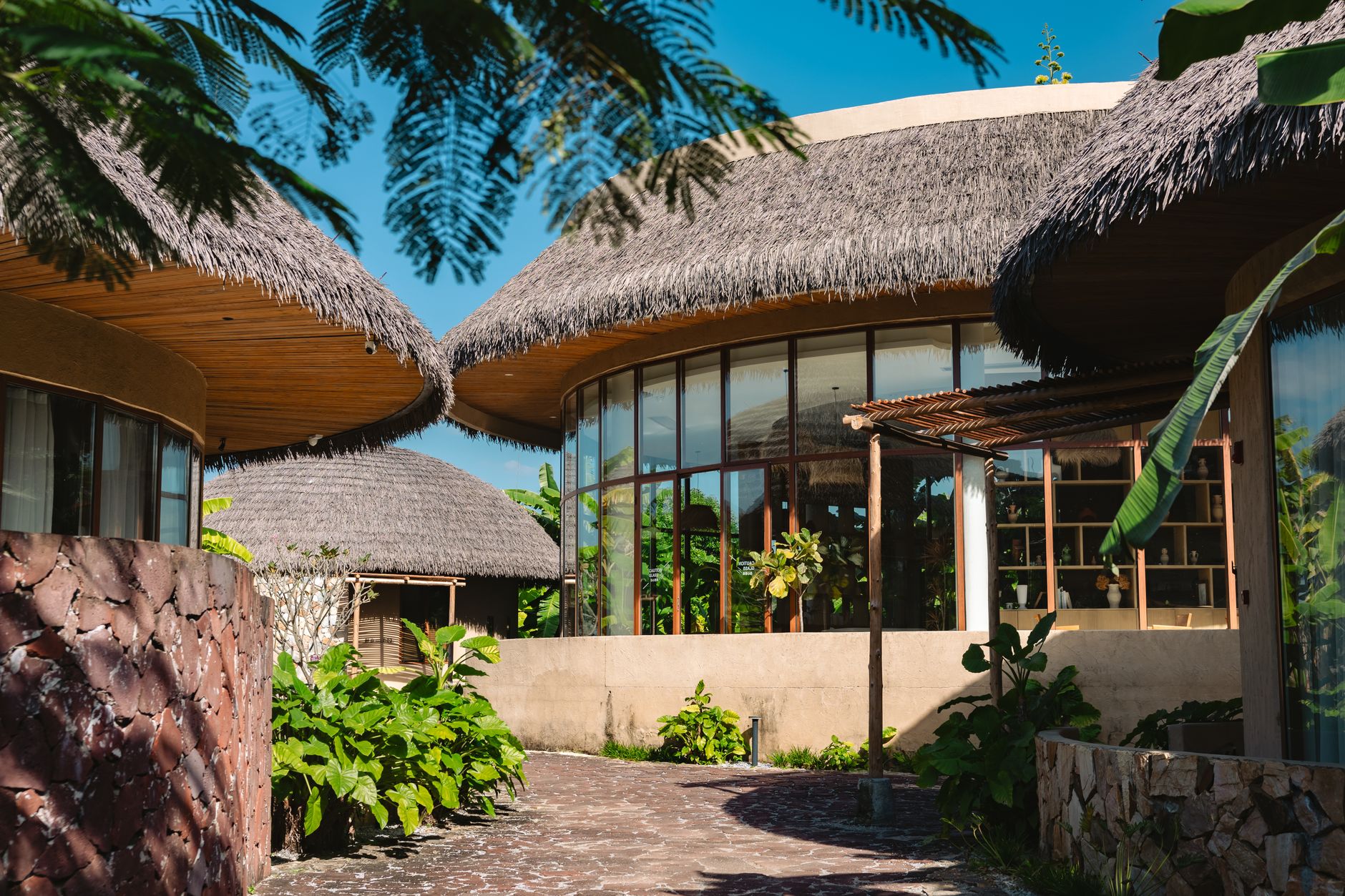
Tired of greenwashing? So am I. I spent months vetting off-grid luxury hideaways—from solar-powered overwater sanctuaries in the Indian Ocean to energy-positive circles above the Arctic Circle—to bring you the ultimate, no-bs guide to carbon-neutral resorts setting the new gold standard for eco-luxury hospitality. ---
Top Carbon-Neutral Resorts Leading Hospitality Right Now
I stepped off the wooden speedboat into the brilliant turquoise expanse of the Lhaviyani Atoll, bracing myself for the familiar, low-frequency hum of diesel generators that quietly haunts almost every remote island paradise.
Instead, I was greeted by absolute silence—broken only by the gentle lap of warm Indian Ocean waves against living reef rock and the distant, rhythmic rustle of coconut palm fronds.
Looking up, the resort's central hub didn’t hide its energy source; it celebrated it. The roof was a striking, angled canopy of midnight-blue photovoltaic glass, catching the equatorial sun like solar armor.
Welcome to the new era of high-end hospitality. The world’s elite travelers are no longer satisfied with linen-reuse cards or carbon-offset checkboxes at checkout. We want genuine, hyper-engineered net-zero stays that prove uncompromised luxury and total environmental neutrality can comfortably share the same acre.
Here are the carbon-neutral resorts leading hospitality right now, tested and verified on the ground.
---
1. Kudadoo Maldives Private Island: The Solar-Powered Overwater Benchmark
Most Maldivian resorts burn thousands of liters of diesel daily just to run their air conditioning and ice machines. Kudadoo completely flipped that script. Designed by renowned architect Yuji Yamazaki, this 15-residence private island is powered entirely by a stunning 300kW solar roof array angled precisely at 13 degrees to maximize tropical solar yield.
``` +-----------------------------------------------------------------------+ | INSIDER SNAPSHOT | | • Location: Lhaviyani Atoll, Maldives | | • Energy Source: 984 Photovoltaic Panels (100% Off-Grid Solar) | | • Vibe: Ultra-private, barefoot luxury with an eco-conscious spine | +-----------------------------------------------------------------------+ ```
The Uncompromising Luxury
The residences are built using sustainably sourced cedar wood from Canada and native bamboo. The open-plan design maximizes natural breeze cross-ventilation, meaning you rarely need to switch on the climate control. Every stay operates under an "Anything, Anytime, Anywhere" policy: personal butler service, unlimited spa treatments, and private sandbank dining are all included in your daily rate.
The Eco-Engineering
- Solar Self-Sufficiency: The central "Residence" building generates enough electricity to power the entire island, including its desalination plant and kitchen equipment, with surplus stored in state-of-the-art battery banks.
- Zero Single-Use Plastics: On-site glass bottling plants produce purified drinking and sparkling water using ocean-desalinated water.
- Reef Restoration: The resident marine biologist guides guest-led coral propagation nurseries directly under the overwater walkways.
> Pro-Tip: Book Villa 8 for the most private sunset views. Request an early-morning snorkel with the resident marine biologist at 6:30 AM before the tide turns—you’ll get the outer reef lagoon entirely to yourself while sea turtles feed.
---
2. Svart, Norway: The Arctic Circle’s Energy-Positive Pioneer
Hovering on stilts above the icy waters of the Holandsfjorden fjord, right at the foot of the Svartisen glacier, Svart isn't just carbon-neutral—it is the world’s first energy-positive hotel building. This ring-shaped architectural marvel consumes 85% less energy than a standard luxury hotel and generates more energy over its lifecycle than it took to build, operate, and eventually decommission.
``` +-----------------------------------------------------------------------+ | INSIDER SNAPSHOT | | • Location: Meløy Municipality, Northern Norway | | • Energy Source: Building-integrated solar & deep geothermal wells | | • Vibe: Space-age Scandinavian minimalism suspended over icy fjords | +-----------------------------------------------------------------------+ ```
Biophilic Design Meets Glacial Beauty
The ring structure is inspired by traditional Norwegian fiskehesje (wooden frames used for drying fish) and rorbuer (seasonal fishermen's cabins). Built from weather-resistant native larch wood, the property wraps around the fjord shoreline, offering every room uninterrupted 360-degree views of the Northern Lights or Midnight Sun.
The Zero-Impact Magic
- Geothermal Heating: Deep wells bore hundreds of meters into the granite Earth beneath the glacier, harvesting ambient heat to feed the underfloor radiant heating networks.
- Optimized Solar Harvesting: The roof is clad in Norwegian-produced solar panels tailored to low-angle Arctic sunlight, capturing power even during winter twilight hours.
- Zero-Emission Shuttles: Guests arrive exclusively via a custom-designed solar-electric boat operating from the mainland pier.
> Pro-Tip: Pack lightweight merino wool layers instead of heavy down jackets. The resort’s geothermal radiant heat keeps indoor temperatures precisely locked at 21°C (70°F), even when a blizzard rages outside.
---
3. Heckfield Place, Hampshire, UK: The Masterclass in Farm-to-Fork Circularity
Set within 400 acres of rolling Hampshire countryside, this restored Georgian manor proves that historic heritage properties can lead the zero-emissions charge. While many country estates hide behind centuries of drafty inefficiency, Heckfield Place underwent a decade-long eco-renovation to achieve exceptional sustainability metrics.
``` +-----------------------------------------------------------------------+ | INSIDER SNAPSHOT | | • Location: Hampshire, England (1 hr from London) | | • Energy Source: Advanced Biomass Pellet Boilers & Solar Warmth | | • Vibe: Aristocratic elegance grounded in earthy, biodynamic soul | +-----------------------------------------------------------------------+ ```
Regenerative Agriculture as Luxury
The heart of Heckfield’s philosophy is Home Farm, a 240-acre certified biodynamic farm supplying almost all produce, dairy, and livestock to the property's two culinary hotspots, Marle and Hearth, overseen by chef Skye Gyngell.
The Sustainability Matrix
- Biomass Heating Infrastructure: Two high-efficiency biomass boilers fed by sustainably harvested local wood pellets provide all heat and hot water across the estate.
- Rainwater Harvesting: An underground reservoir catches rain from every roof surface, directing it to irrigate the biodynamic orchards and market gardens.
- Plastic-Free Pioneer: Heckfield eliminated all single-use plastics long before it became an industry standard, extending to guest-room toiletries packaged in refillable terracotta pots.
> Pro-Tip: Skip the main dining room one night and book a table at Hearth, located inside the old stable block. Food is cooked entirely over open fires fueled by fallen oak from the estate. Order the wood-roasted heirloom squash dusted with farm-harvested rosemary salt.
---
4. The Brando, French Polynesia: Deep-Ocean Cooling in Tropical Paradise
Located on the breathtaking Tetiaroa Atoll—once Marlon Brando’s private sanctuary—The Brando is arguably the most complex high-tech eco-resort on Earth. Achieving LEED Platinum certification, the property operates with zero net carbon footprint while offering private plunge pools and high-end dining in a fragile, remote tropical ecosystem.
``` +-----------------------------------------------------------------------+ | INSIDER SNAPSHOT | | • Location: Tetiaroa Atoll, French Polynesia | | • Energy Source: SWAC (Sea Water Air Conditioning) & Coconut Oil Power| | • Vibe: Polynesian royal retreat meets cutting-edge green technology | +-----------------------------------------------------------------------+ ```
Thermal Innovation: SWAC
Air conditioning accounts for roughly 70% of energy consumption in island resorts. The Brando solved this using a Sea Water Air Conditioning (SWAC) system. A pipe stretches down 3,000 feet into the Pacific Ocean, drawing freezing 37°F (3°C) seawater to cool the resort’s air-conditioning closed loop system, slashing cooling energy consumption by 90%.
Additional Eco-Engineering Highlights
- Biofuel Power: Residual electricity needs are covered by a local power plant burning locally produced coconut oil (copra).
- Ecostation Research Hub: The resort hosts an on-site scientific station where international researchers study ocean acidification, shark migrations, and coral survival.
> Pro-Tip: Schedule a free tour of the backend energy station with the resident engineers. Seeing a 3,000-foot deep-sea pipeline deliver ice-cold ocean water directly to your villa’s cooling unit is nothing short of breathtaking.
---
5. Tierra Patagonia, Chile: Off-Grid Architectural Integration
Sitting on the wind-swept bluffs overlooking Lake Pehoé and the jagged granite horns of Torres del Paine, Tierra Patagonia looks like a natural landform shaped by southern gales. The resort was built using an innovative light-footprint design that allowed native vegetation to reclaim the ground directly beneath its timber frame.
``` +-----------------------------------------------------------------------+ | INSIDER SNAPSHOT | | • Location: Torres del Paine National Park, Chile | | • Energy Source: High-efficiency thermal mass & micro-turbine hybrid | | • Vibe: Windswept, sculptural wilderness sanctuary | +-----------------------------------------------------------------------+ ```
Architecture That Respects the Earth
Constructed entirely from local Chilean lenga wood, the building's aerodynamic curve deflects roaring Patagonian winds, minimizing structural stress and reducing interior heating demands. The building's thermal envelope keeps heat trapped inside without energy-intensive HVAC systems.
Earth-First Hospitality
- Native Reforestation: During construction, every native plant removed from the site was cataloged, kept in an on-site greenhouse, and replanted once structural work concluded.
- Water Management: On-site bio-digesters treat blackwater and greywater to agricultural purity standards, ensuring zero runoff reaches fragile Lake Pehoé.
> Pro-Tip: The wind in Patagonia calms down significantly near dusk. Head to the outdoor hydrotherapy pool at UMA Spa around 7:30 PM. The glass wall faces west, giving you ring-side seats to golden hour light illuminating the Torres towers.
---
The New Rules of Zero-Impact Travel: How to Spot Genuine Carbon Neutrality
Not all "green" resorts earn their badges honestly. When scouting destinations, I filter out surface-level marketing by auditing properties against five core eco-tech criteria:
``` THE 5 PILLARS OF TRUE ZERO-CARBON LUXURY
+---------------------------------------------------+ | 1. On-Site Renewable Generation (Solar/Geo/Hydro) | +---------------------------------------------------+ │ +---------------------------------------------------+ | 2. Closed-Loop Waste & Desalination Systems | +---------------------------------------------------+ │ +---------------------------------------------------+ | 3. Hyper-Local Sourcing & Biodynamic Farming | +---------------------------------------------------+ │ +---------------------------------------------------+ | 4. Embodied Carbon Offsetting in Construction | +---------------------------------------------------+ │ +---------------------------------------------------+ | 5. Certified Third-Party Audits (LEED/B-Corp/GSTC)| +---------------------------------------------------+ ```
- Energy Autonomy: Does the property generate renewable power on-site, or are they relying on sketchy third-party carbon offsets?
- Circular Water Systems: Is wastewater treated and recycled on-site, or dumped into local water tables?
- Embodied Construction Carbon: Was the resort built using local, sustainably harvested materials, or imported carbon-heavy concrete?
- Third-Party Verification: Look for independent certifications like LEED Platinum, B-Corp, GSTC (Global Sustainable Tourism Council), or EarthCheck Building Planning and Design.
- Biodiverse Community Investment: Does the property re-invest profits into local wildlife corridors, native land management, or community-owned farms?
---
Quick Logistics & Planning Guide for Eco-Luxury Travelers
Planning a zero-carbon luxury getaway requires attention to travel logistics. Below is an insider breakdown to help you budget and plan your itinerary effectively:
| Resort | Estimated Nightly Rate ($USD) | Best Time to Visit | How to Get There (Zero-Carbon Focused) | | :--- | :--- | :--- | :--- | | Kudadoo Maldives | $3,800 – $6,500 | Nov – April | Fly to Malé (MLE); take a combined electric boat/seaplane transfer. | | Svart Norway | $900 – $1,800 | June – Sept (Sun) / Dec – March (Aurora) | Train to Bodø; solar-electric fjord shuttle directly to resort pier. | | Heckfield Place | $650 – $1,400 | Year-round | Direct 50-minute train from London Waterloo to Winchfield; EV hire car. | | The Brando | $3,200 – $5,500 | May – November | Fly to Tahiti (PPT); 20-minute connection on Air Tetiaroa’s eco-fleet. | | Tierra Patagonia | $1,200 – $2,400 | Oct – April | Fly to Punta Arenas (PUQ); shared hybrid shuttle transfer through park. |
---
Final Thoughts: The Future of High-End Travel
Luxury and sustainability used to exist on opposite ends of the hospitality spectrum. One meant indulgence, consumption, and excess; the other meant short showers, scratchy bamboo towels, and lukewarm water.
These five carbon-neutral resorts prove that dynamic is dead. By combining high-tech engineering, biophilic design, and deep respect for local landscapes, they deliver experiences that aren't just equal to conventional luxury—they are unequivocally superior.
When you stay at a truly carbon-neutral resort, your luxury experience leaves behind nothing more than a lighter footprint and a renewed standard for how we explore our planet.
---
More pictures


Tags
Share this guide
We may earn a commission if you click a link and buy a product or service, at no extra cost to you. How affiliate links work.
Been there?