
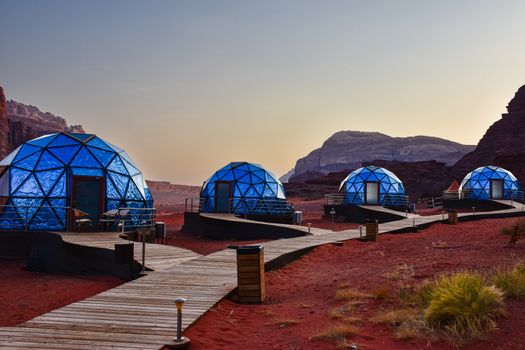
Tired of mundane campsites? Prepare to have your perception of Earth shattered as we unveil incredible camping spots that defy explanation, making you feel like you've landed on an alien world. Get ready for an adventure beyond your wildest dreams!
Ever stared up at a sky so vast, so star-studded, that you felt like a tiny speck in an infinite cosmos, wondering if you'd accidentally landed on Mars? I remember my first time backcountry camping in the Utah desert, waking up to bizarre rock formations bathed in a pre-dawn glow, and for a split second, my brain genuinely struggled to process if I was still on Earth. That feeling – that exhilarating, disorienting sense of being transported to another dimension – is what we, as avid adventurers, live for.
Here at Tripsora, we believe travel should be more than just seeing new places; it should be about experiencing the impossible, pushing boundaries, and finding wonder in the unexpected. And let me tell you, there are camping spots on this planet that do exactly that. They don't just offer a change of scenery; they offer a complete shift in reality. Forget your average picnic tables and fire pits; we're talking about landscapes so surreal, so utterly out of this world, they'll blow your mind and ignite your wanderlust like never before.
So, pack your sense of adventure, your widest lens, and prepare for liftoff. Here are my top picks for camping spots that feel like another planet, complete with personal anecdotes, practical tips, and all the juicy details you need to plan your own interstellar escape.
1. Martian Deserts & Goblin Gardens: Goblin Valley State Park, Utah, USA
Imagine stepping onto a landscape sculpted by mischievous extraterrestrial hands, where thousands of mushroom-shaped hoodoos, affectionately known as "goblins," rise from the desert floor. That's Goblin Valley State Park in Utah, and it's easily one of the most bizarre and beautiful places I've ever pitched a tent.
My Alien Encounter: I first visited Goblin Valley on a road trip through Utah's Mighty 5, and it was a detour I'll never forget. As the sun began to dip, painting the sky in fiery oranges and purples, the shadows stretched long and distorted, making the goblins seem to come alive. I remember wandering through the "valley of the goblins," feeling like a tiny explorer on an alien planet, completely alone amidst these silent, stony sentinels. The silence was profound, broken only by the crunch of my boots on the ancient sand. Later, under a blanket of stars so thick it felt like velvet, the goblins took on an even more ethereal quality, their silhouettes stark against the Milky Way. It was a truly humbling, otherworldly experience.
What Makes it Otherworldly: The sheer concentration of unique, eroded sandstone formations is unlike anything else. It's an active playground for all ages, but also a photographer's dream, especially at sunrise or sunset when the light plays tricks on your eyes. The dark skies here are also phenomenal for astrophotography, making you feel truly disconnected from Earth and connected to the cosmos.
Practicalities for Your Trip:
- Location: Green River, Utah. Easily accessible from Moab or Capitol Reef National Park.
- Camping: The park has a small, well-maintained campground with 25 sites and two yurts. Sites include picnic tables, fire rings, and shade shelters. Restrooms with flush toilets and showers are available.
- Cost: Park entrance fee (per vehicle) and campsite fees apply. Check the Utah State Parks website for current pricing and reservation details. Pro-tip: Book well in advance, especially during peak season!
- Activities: Hiking (no designated trails in the main valley, so you can wander freely!), exploring the goblins, stargazing, disc golf. Don't miss the Curtis Bench Trail for panoramic views.
- Gear Checklist: Sturdy hiking shoes, plenty of water (it's a desert!), sun protection, a wide-angle lens for capturing the vastness, and a headlamp for night explorations.
- Leave No Trace: Stay on established trails where they exist, and pack out everything you pack in. Respect the delicate formations.
2. Volcanic Vistas & Rainbow Mountains: Landmannalaugar, Iceland
If you want to feel like you've landed on a planet still in its primordial stages, look no further than Landmannalaugar in the Highlands of Iceland. This remote region is a geological marvel, famous for its vibrant rhyolite mountains, steaming hot springs, and stark, volcanic landscapes.
My Alien Encounter: Reaching Landmannalaugar is an adventure in itself, requiring a 4x4 vehicle and navigating unpaved F-roads and river crossings. But every bump and splash is worth it. As I emerged from the black lava fields into the valley, I gasped. The mountains weren't just mountains; they were painted in impossible shades of red, green, yellow, and blue, streaked with obsidian and framed by patches of snow. It felt like walking through a giant, psychedelic painting. After a long day of hiking through these surreal landscapes, soaking in the natural hot spring, with steam rising around me and the cool Icelandic air on my face, I truly felt like I was on another world. The sheer raw power of the Earth here is palpable.
What Makes it Otherworldly: The unique combination of colorful rhyolite mountains, black lava fields, hot springs, and sometimes even patches of snow creates a landscape that is both beautiful and incredibly alien. It’s a place where you can witness the Earth's geological processes up close.
Practicalities for Your Trip:
- Location: Fjallabak Nature Reserve, Icelandic Highlands. Only accessible during summer (typically June to September) via F-roads.
- Camping: The campsite at Landmannalaugar is basic but well-equipped, managed by Ferðafélag Íslands (Iceland Touring Association). It has a large common area for tents, a small hut for cooking, and basic toilets. Showers are available for a small fee.
- Cost: Campsite fees apply per person, per night. There are also fees for hut accommodation if you prefer.
- Activities: World-class hiking (from short walks to multi-day treks like the Laugavegur trail), bathing in the natural hot spring, photography, and simply marveling at the scenery.
- Gear Checklist: Layered, waterproof, and windproof clothing (weather can change rapidly!), sturdy hiking boots, a good sleeping bag (even in summer), cooking supplies, and a robust camera with extra batteries.
- Safety & Environment: Respect the fragile environment. Stay on marked trails. Be prepared for all weather conditions. It's advisable to inform someone of your hiking plans if you're venturing far.
3. Infinite Horizons & Mirror Worlds: Salar de Uyuni, Bolivia
Imagine a canvas so vast, so flat, that the horizon disappears, and the sky melts into the ground. Welcome to Salar de Uyuni, the world's largest salt flat, covering over 10,000 square kilometers in the Bolivian Altiplano. It's a place where perspective bends, and reality blurs.
My Alien Encounter: My journey to Salar de Uyuni was part of a 3-day jeep tour from Uyuni. The first glimpse of the endless white expanse was breathtaking. But it was during the wet season, when a thin layer of water transforms the salt flat into the world's largest mirror, that the "other planet" feeling truly took hold. We camped in a basic "salt hotel" (literally built from salt blocks!) on the edge of the flat. Waking up before dawn, I stepped outside and was met with an infinite expanse of stars above and below me, reflected perfectly on the glassy surface. It felt like I was floating in space, surrounded by galaxies. The silence was absolute, the air crisp and thin at 3,656 meters (11,995 ft) above sea level. It was a profound, almost spiritual experience, playing with depth and dimension in ways I never thought possible.
What Makes it Otherworldly: The sheer scale and flatness create optical illusions, making it a playground for unique photography (think forced perspective shots!). During the wet season, the mirror effect is simply stunning, making you feel like you're walking on clouds or floating in the sky.
Practicalities for Your Trip:
- Location: Southwest Bolivia, near the town of Uyuni.
- Camping/Accommodation: While traditional tent camping isn't common directly on the main salt flat, most multi-day tours include overnight stays in basic "salt hotels" or guesthouses in nearby villages. These are rustic but offer a unique experience.
- Cost: Tours are typically 1 to 3 days and vary in price depending on the operator and inclusions. Expect to pay anywhere from $150-$300 USD for a 3-day tour, often including food and basic accommodation.
- Activities: Iconic forced-perspective photography, visiting Incahuasi Island (a "fish island" covered in giant cacti), exploring the train cemetery, watching sunrises/sunsets, and stargazing.
- Gear Checklist: Warm sleeping bag (nights are very cold!), layers of warm clothing, sun protection (hat, sunglasses, high SPF sunscreen – the reflection is intense!), lip balm, plenty of water, and a good camera with a wide-angle lens.
- Health: The high altitude can cause altitude sickness. Acclimatize in a place like La Paz or Sucre before arriving. Drink plenty of water and avoid alcohol.
4. Ancient Stone Forests & Painted Deserts: Petrified Forest National Park, Arizona, USA
Imagine walking through a forest where the trees turned to stone millions of years ago, scattered across a vast, colorful desert. Petrified Forest National Park isn't just a park; it's a journey through deep time, a landscape painted with ancient stories and mineral hues that defy imagination.
My Alien Encounter: I've always been fascinated by geology, and Petrified Forest felt like stepping into a living, breathing textbook. I opted for a backcountry permit, which allows primitive camping away from designated sites. After a day exploring the Crystal Forest and Blue Mesa, where the badlands shimmered in purples, blues, and grays, I found a secluded spot among some smaller petrified logs. As the sun set, the colors of the desert intensified, and the petrified wood gleamed with an inner fire. Later, under a moonless sky, the ancient logs seemed like fallen giants from another era, silent witnesses to eons. The silence was profound, and the sense of history overwhelming. It felt like I had stumbled upon a forgotten world, frozen in time.
What Makes it Otherworldly: The transformation of living trees into vibrant, mineralized stone is a phenomenon that feels almost magical. Coupled with the painted desert badlands, which display incredible hues from erosion, it creates a landscape that's both prehistoric and futuristic.
Practicalities for Your Trip:
- Location: Northeastern Arizona, along historic Route 66.
- Camping: Primitive backcountry camping is allowed with a free permit, obtainable at the visitor centers. There are no designated sites or amenities, requiring self-sufficiency. RV camping or developed camping is not available inside the park, but nearby options exist outside.
- Cost: Park entrance fee applies (per vehicle). Backcountry permits are free.
- Activities: Hiking amidst petrified logs (Long Logs, Crystal Forest, Giant Logs trails), exploring the Painted Desert overlooks, photography, and stargazing (it's an International Dark Sky Park!).
- Gear Checklist: Navigation tools (map, compass, GPS - trails are not always marked), plenty of water (minimum 1 gallon per person per day), sun protection, sturdy hiking boots, and all necessary camping gear for primitive conditions.
- Respect the Park: Do NOT remove any petrified wood or other natural features. Leave no trace. Be aware of wildlife and weather changes.
5. Glacial Grandeur & Granite Giants: Torres del Paine National Park, Patagonia, Chile
Towering granite spires piercing the clouds, electric-blue glaciers calving into pristine lakes, and windswept pampas stretching to the horizon. Torres del Paine is Earth at its most dramatic, a landscape so epic and raw, it feels like the setting for an interstellar epic.
My Alien Encounter: I undertook the famous "W Trek" in Torres del Paine, spending several nights camping at different refugios along the route. Each morning, waking up to a new, monumental vista, felt like stepping onto a different alien planet. One particular morning, at Campamento Británico, nestled deep within the French Valley, I unzipped my tent to see the full grandeur of the 'French Wall' – a colossal amphitheater of granite peaks, some still streaked with snow, and the thundering sound of ice falling in the distance. The sheer scale of it was mind-boggling. It made me feel incredibly small, yet part of something ancient and magnificent. The powerful Patagonian winds, often fierce and unpredictable, added to the feeling of being in a truly wild, untamed world.
What Makes it Otherworldly: The iconic granite "Towers" and "Horns" (Cuernos del Paine), massive glaciers, and the vibrant turquoise and emerald lakes create a landscape of unparalleled grandeur and stark beauty. It’s a testament to the Earth’s powerful geological forces.
Practicalities for Your Trip:
- Location: Southern Patagonia, Chile.
- Camping: Torres del Paine offers multiple camping options, from free CONAF campsites (basic, often requiring reservations far in advance) to paid campsites managed by Fantastico Sur and Vertice Patagonia (with facilities like hot showers, kitchens, and even stores). Most trekkers combine camping with stays in "refugios" (mountain lodges).
- Cost: Park entrance fee applies. Campsite and refugio fees vary widely depending on the provider and services. Crucial Tip: Reservations for all campsites and refugios, especially for the W or O circuits, are absolutely mandatory and must be booked months in advance.
- Activities: Multi-day treks (W Trek, O Circuit), day hikes, wildlife viewing (guanacos, condors, pumas), kayaking on glacial lakes, and photography.
- Gear Checklist: High-quality, windproof, and waterproof layered clothing, sturdy hiking boots, a four-season tent, a warm sleeping bag (rated for sub-zero temperatures), cooking gear, and a camera with a wide-angle lens and telephoto for wildlife.
- Safety & Environment: Be prepared for extreme and unpredictable weather. Respect park regulations and stay on marked trails. Leave no trace. Physical fitness is essential for trekking.
6. Bioluminescent Bays & Starlit Seas: Mosquito Bay, Vieques, Puerto Rico
While not a traditional land-based campsite, the experience of witnessing a bioluminescent bay is so profoundly alien that it had to make this list. Imagine kayaking through water that lights up with every stroke, like swimming through liquid starlight.
My Alien Encounter: After a day of exploring the pristine beaches of Vieques, I booked a night kayak tour to Mosquito Bay. We camped at Sun Bay, a beautiful public beach, and then headed out after dusk. As our kayaks cut through the inky black water, something magical happened. With every paddle stroke, the water erupted in a brilliant, ethereal blue-green glow. Tiny dinoflagellates, disturbed by our movement, lit up the bay as if it were filled with millions of microscopic stars. Dragging my hand through the water felt like conjuring pure light. It was utterly surreal, like being transported to a neon-lit alien ocean, a living galaxy beneath my fingertips. The stars above were equally incredible, completing a truly cosmic experience.
What Makes it Otherworldly: The natural phenomenon of bioluminescence turns the ocean into a glowing, living entity. It's an intimate, immersive experience that feels like you've stumbled upon a secret, magical corner of the universe.
Practicalities for Your Trip:
- Location: Vieques, an island municipality of Puerto Rico. Accessible by ferry or small plane from the main island. Mosquito Bay is on the southern coast.
- Camping: While you can't camp in Mosquito Bay, there are excellent camping facilities nearby, most notably at Sun Bay (Playa Sun Bay), a beautiful public beach with designated campsites, restrooms, and showers. Reservations are recommended.
- Cost: Bioluminescent bay tours typically cost $30-$50 USD per person. Campsite fees at Sun Bay are very reasonable.
- Activities: Bioluminescent kayak tours, exploring Vieques' other incredible beaches (many are secluded and pristine), snorkeling, horseback riding, and visiting the historic lighthouse.
- Gear Checklist: Swimsuit, quick-dry clothes, bug spray (apply after your bio bay tour, away from the water), waterproof camera, and basic camping gear for Sun Bay.
- Conservation: Choose an eco-friendly tour operator. Do not wear bug spray, sunscreen, or lotions when entering the bay, as these chemicals harm the delicate ecosystem. No swimming is allowed in Mosquito Bay itself to protect the organisms.
Ready for Your Interstellar Adventure?
These aren't just camping trips; they're voyages to the farthest reaches of your imagination, right here on Earth. They challenge your perceptions, humble your spirit, and fill your soul with an unparalleled sense of wonder. From the crimson sands of Utah to the icy peaks of Patagonia and the glowing waters of Vieques, these destinations offer a chance to disconnect from the mundane and reconnect with the extraordinary.
So, what are you waiting for? Stop dreaming about Mars and start planning your next otherworldly camping adventure. The universe, in all its incredible forms, is waiting for you to explore it.
Which of these "alien" campsites calls to you first? Or have you discovered an otherworldly spot that we absolutely need to add to our list? Share your thoughts and adventures in the comments below! And don't forget to share this post with your fellow space-cadet adventurers – let's inspire more mind-blowing journeys!
More pictures
Tags
Share this guide
We may earn a commission if you click a link and buy a product or service, at no extra cost to you. How affiliate links work.
Been there?