Looking to fast-track inner transformation? High-altitude breathwork leverages oxygen-sparse environments to induce profound shifts in mental clarity, somatic emotional release, and cellular adaptation. From the rugged passes of Ladakh to the sacred peaks of Peru’s Sacred Valley, this ultimate travel guide details six world-class sanctuaries where thin air meets deep breathing—complete with insider logistics, costs, and altitude prep strategies. ---
Beyond Thin Air: The Definitive Guide to High-Altitude Breathwork Retreats
I stepped off the narrow-gauge train into the icy, razor-thin air of Ollantaytambo, Peru, and my lungs immediately panicked. At 9,200 feet above sea level, every inhale felt like trying to sip a thick smoothie through a cocktail straw. My temples throbbed with the faint, telltale hum of soroche—altitude sickness. But an hour later, lying on a woven alpaca rug inside a adobe shala while cedar wood smoke drifted through the rafters, a facilitator instructed me to drop into a rhythmic, two-part conscious connected breath.
Within ten minutes, something wild happened. The combination of hyperventilation and ambient hypoxia dissolved the edges of my physical body. A tingling rush of electricity swept from my toes to my crown, washing away weeks of urban burn-out in a flood of euphoric release.
Breathwork in high-altitude environments isn't just a trend; it’s an ancient somatic catalyst backed by modern neurobiology. When you combine conscious breathing techniques with thin air, you accelerate autonomic nervous system shifts, stimulate cellular adaptability, and drop into non-ordinary states of consciousness far faster than at sea level.
If you are ready to trade coastal beach retreats for rarefied mountain peaks, here are the absolute best breathwork retreats in high-altitude locations worth considering.
---
1. The Science of Breathing High: Why Elevation Amplifies Somatic Healing
Before packing your bags for 10,000 feet, you need to understand what happens to your physiology when you combine high altitude with intentional breathwork patterns.
``` [ Sea Level ] [ High Altitude (8,000+ ft) ] Oxygen Availability: High Oxygen Availability: Reduced (Hypoxia) Nervous System: Baseline Nervous System: Elevated Sensitivity Breathwork Impact: Standard Breathwork Impact: Amplified Neuro-Somatic Shift ```
At higher elevations, atmospheric pressure drops. Although the air still contains 21% oxygen, there are fewer molecules per breath. Your body adapts by releasing EPO (erythropoietin), producing more red blood cells, and dialing up vagal nerve sensitivity.
When you practice rhythmic hyperventilation (such as Holotropic, Conscious Connected, or Wim Hof methods) at high altitude, you temporarily blow off carbon dioxide rapidly while already operating under mild hypoxia. This hypercapnic-hypoxic paradox creates a rapid shift in blood pH, quietening the Brain’s Default Mode Network (DMN)—the hyper-analytical region responsible for self-criticism, anxiety, and rumination. The result? Deep emotional catharsis, vivid imagery, and profound mental clarity.
---
2. Sacred Valley, Peru: Andean Shamanism & Conscious Breathing
- Average Elevation: 9,200 – 11,150 feet (2,800 – 3,400 meters)
- Primary Techniques: Conscious Connected Breathing, Pranayama, Rebirthing
- Vibe: Mystical, grounding, deeply ancient
``` /\ / \ [ Urubamba River Valley ] / \ - Ancient Incan Terraces / /\ \ - Sacred Peaks (Apus) / / \ \ - Traditional Muña & Coca Brews /__/____\__\ ```
The Sacred Valley between Cusco and Machu Picchu is the undisputed global epicenter for high-altitude spiritual work. The air smells of burning eucalyptus, wet terra-cotta, and crushed wild sage (salvia).
Sanctuaries like Willka T’ika (Urubamba) and smaller boutique breathwork shalas near Pisac offer targeted multi-day breath immersion programs. Here, facilitators combine Holotropic-style circular breathing with native Quechua traditions. You'll spend mornings doing pranayama surrounded by Incan agricultural terraces and evenings taking part in Despacho (offering) ceremonies with local Pampamesayok healers.
Pro-Tip for Peru
Do not head straight to Pisac or Cusco (11,150 ft) on Day 1. Fly into Cusco, take a pre-arranged taxi down into Urubamba or Ollyantaytambo (around 9,000 ft) immediately, and spend two days acclimating before your first intensive breath session. Drink fresh muña (Andean mint) tea—it settles altitude-induced nausea far better than synthetic pharmaceuticals.
---
3. Ladakh, India: Himalayan Tummo & High-Altitude Yantra Yoga
- Average Elevation: 11,500 – 13,000 feet (3,500 – 3,960 meters)
- Primary Techniques: Tummo (Inner Fire), Tibetan Yantra Yoga, Himalayan Pranayama
- Vibe: Monastic, austere, intensely transcendent
``` [ Monastic Breath Tradition ] / \ [ Cold Air Exposure ] [ Tummo Visualization ] \ / [ Autonomic Nervous Mastery ] ```
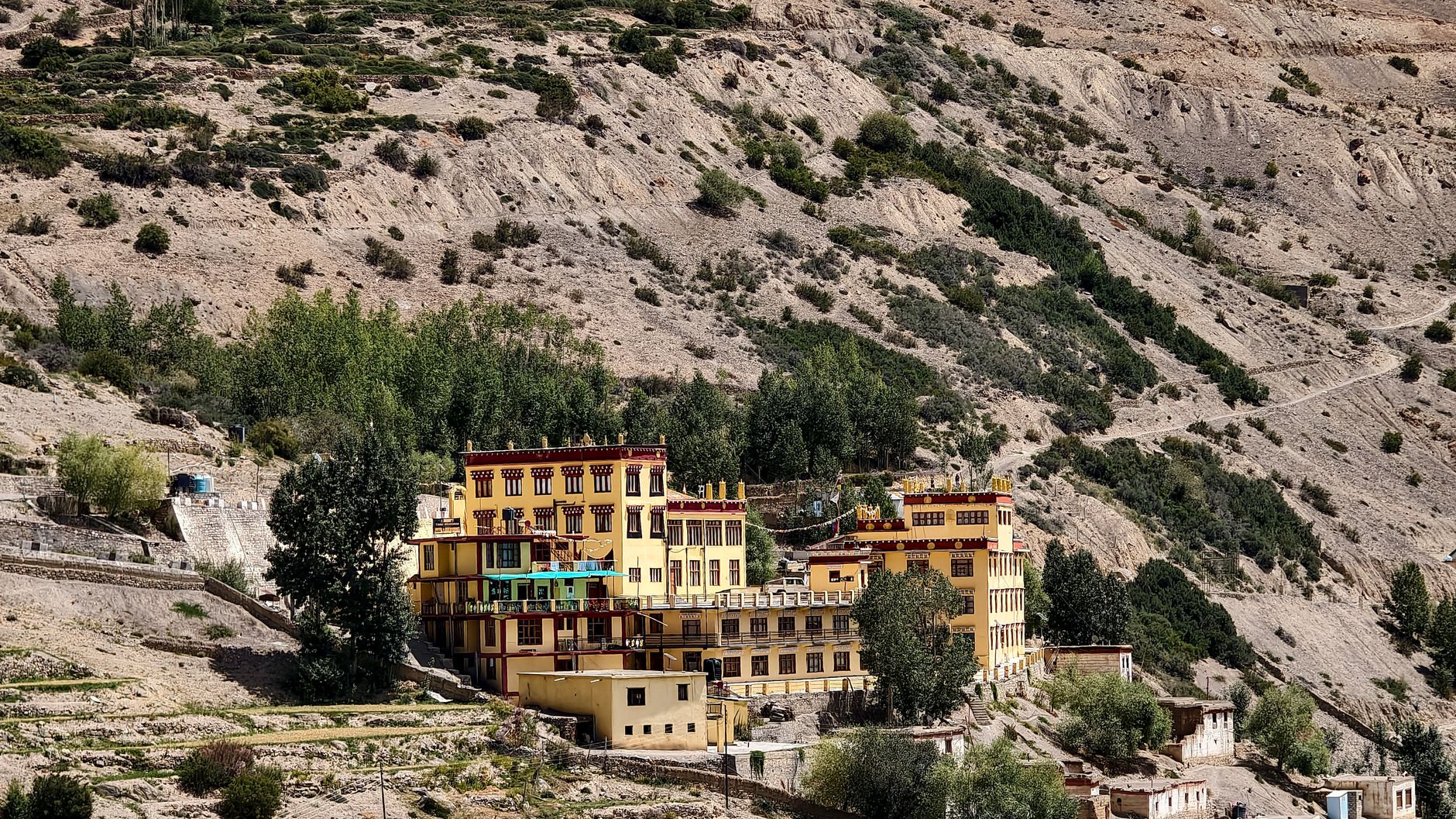
Situated in the rain-shadow of the Indian Himalayas, Ladakh is a stark, high-altitude desert framed by barren, copper-colored mountains and ancient Tibetan monasteries clinging to sheer cliffs.
This is the birthplace of Tummo breathwork—the ancient practice of inner thermal heat production popularized in the West by Wim Hof. Retreats based out of Leh and the remote Nubra Valley offer rare access to traditional lineage holders and Tibetan yogis.
A typical day starts at 5:30 AM in an unheated stone gompa. As the sun strikes the snow-capped peaks of the Stok Range, you'll learn to draw breath into your lower abdomen (dantian or hara), using precise muscular locks (bandhas) and visualization to ignite physical warmth despite the biting cold.
Pro-Tip for Ladakh
The entrance to the quietest meditation caves near Hemis Monastery isn't marked on Google Maps. Ask your local guide for the trail behind the upper butter-lamp shrine; the local monks allow quiet breathwork practices there between morning and afternoon chanting rounds.
---
4. Engadin Valley, Switzerland: Alpine Cold Exposure & Luxury Somatics
- Average Elevation: 6,000 – 8,200 feet (1,800 – 2,500 meters)
- Primary Techniques: Wim Hof Method, Functional Oxygen Advantage, Cold-Water Immersion
- Vibe: Ultra-refined, crisp, biologically optimizing
For those who prefer luxury linens, private saunas, and precise bio-optimization over rustic floor mats, the Swiss Alps present an extraordinary landscape for breath mastery.
Retreat centers around St. Moritz and Pontresina specialize in combining Patrick McKeown’s Oxygen Advantage principles with high-altitude cold exposure. Instead of tropical sweat lodges, you'll engage in controlled breath-holds while submerged in ice-carved alpine lakes like Lej da Staz, followed by hyper-targeted nervous system down-regulation in panoramic cedarwood saunas.
The air here is famously dry and mineral-rich, smelling intensely of Swiss pine (Arve) and cold granite. Facilitators utilize biological tracking devices (like Oura or WHOOP) to measure real-time Heart Rate Variability (HRV) shifts before and after altitude breathwork cycles.
Pro-Tip for Switzerland
To experience sub-zero breath retention without frostbite risks, request an early morning session at the outdoor thermal baths in Samedan. The contrast between 104°F (40°C) mineral water and 20°F (-6°C) mountain air elevates your respiratory drive naturally.
---
5. San Juan Mountains, Colorado: Rocky Mountain Neuro-Somatic Journeys
- Average Elevation: 8,800 – 9,500 feet (2,680 – 2,900 meters)
- Primary Techniques: Somatic Release Breathwork, Biodynamic Breath, Sound Journeys
- Vibe: Wilderness-focused, bohemian-chic, deeply restorative
``` [ Colorado Sub-Alpine Forest Ecosystem ] ----------------------------------------
- Aspen Canopy (High Oxygen Output)
- Glacial Runoff Creeks (Negative Ions)
- Pure Dry Mountain Air (Zero Smog)
```
Tucked deep within the rugged peaks of Telluride and Crested Butte, Colorado’s high-altitude wellness scene blends cutting-edge trauma-release somatic breathwork with rugged mountain wilderness integration.
Retreats in this region focus heavily on the relationship between breathwork and trauma release in the psoas muscles ("the muscle of the soul"). Sessions are typically held in converted timber-frame barns or high-alpine domes surrounded by whispering golden aspen trees.
After a 90-minute conscious connected breathwork session, integration involves silent hiking along high-country alpine lakes, allowing the vast horizon to quiet lingering sensory overload.
Pro-Tip for Colorado
Avoid high-caffeine espresso drinks on the morning of an intense somatic breathwork session in Colorado. The combination of altitude-induced dehydration, high caffeine, and fast-paced circular breathing can trigger unexpected muscle cramping (tetany) in your hands and face.
---
6. Cotopaxi Province, Ecuador: Volcanic Energy & Ancestral Smoke Cleanses
- Average Elevation: 10,000 – 12,500 feet (3,050 – 3,800 meters)
- Primary Techniques: Shamanic Breathwork, Hypoxic Breath Retentions, Sound Baths
- Vibe: Wild, raw, deeply volcanic
Shadowed by the magnificent, snow-covered cone of the active Cotopaxi Volcano, the high Ecuadorian páramo (alpine tundra) is one of the most energetically charged places on Earth to practice breath control.
Here, eco-lodges offer immersive breathwork programs that combine indigenous Andean cosmovision with intense breath-hold protocols. You'll breathe through intense, drum-driven shamanic journeys while inhaling smoke from burning Palo Santo and copal resin. The volcanic soil gives the landscape a primordial, almost lunar feel that instantly strips away modern psychological noise.
Pro-Tip for Ecuador
Pack an insulated, windproof down jacket inside your breathwork kit. During deep hypoxic breath retention at 10,000+ feet, your core body temperature drops significantly faster than it does at sea level.
---
Logistics, Costs & Planning: High-Altitude Breathwork Matrix
Plan your trip efficiently using this quick reference breakdown:
| Location | Best Time to Visit | Est. Nightly Cost ($) | Primary Airport Hub | Acclimatization Period | | :--- | :--- | :--- | :--- | :--- | | Sacred Valley, Peru | April – October (Dry Season) | $150 – $450 | Cusco (CUZ) | 48 Hours | | Ladakh, India | June – September | $80 – $250 | Leh (IXL) | 72 Hours | | Engadin, Switzerland | Dec – March (Snow) / Jul – Sep | $400 – $1,200+ | Zurich (ZRH) | 24 Hours | | Telluride, Colorado, USA | June – September / Oct (Aspens) | $300 – $800 | Montrose (MTJ) | 24–48 Hours | | Cotopaxi, Ecuador | June – September | $120 – $350 | Quito (UIO) | 48 Hours |
---
Ultimate High-Altitude Breathwork Preparation Protocol
To maximize your retreat and prevent altitude sickness from ruining your breathwork breakthroughs, follow this field-tested preparation routine:
``` [ 5 Days Prior ] ---> Start liquid chlorophyll supplements & double water intake. [ 48 Hours Prior ] ---> Arrive at base elevation; zero alcohol, heavy meals, or intense cardio. [ Retreat Day ] ---> Electrollyte loading, light protein meals, warm layer clothing. [ Post-Session ] ---> Grounding root-vegetable meal & deep integration journaling. ```
1. Electrolyte & Hydration Loading
At high altitudes, you lose water vapor twice as fast through respiration alone. Start drinking water supplemented with liquid trace minerals and ionic magnesium at least five days before departure.
2. The Chlorophyll Secret
Start taking liquid chlorophyll or spirulina three days before your trip. Chlorophyll's molecular structure is nearly identical to human hemoglobin, assisting your blood in transporting precious oxygen molecules efficiently across cell membranes.
3. Gradual Respiratory Warm-Ups
On your first day at altitude, do not dive straight into 90 minutes of rapid Holotropic breathwork. Instead, practice simple, slow-paced Box Breathing (4 seconds in, 4 seconds hold, 4 seconds out, 4 seconds hold) or Coherence Breathing (5.5 seconds in, 5.5 seconds out) to gently stretch your intercostal muscles without blowing off critical carbon dioxide reserves prematurely.
4. Post-Session Grounding
Because high-altitude breathwork mobilizes intense somatic and emotional shifts, immediate physical grounding is essential. Skip the light fruit salads after a session; eat warm, mineral-rich foods like quinoa, roasted native tubers, lentils, or bone broth to draw energy back down into your root system.
---
Final Thoughts: The Mountain is Waiting
There is a reason spiritual traditions have climbed mountains for millennia to seek clarity. Up here, where the cloud ceiling sits below your feet and every breath is earned, the mental noise of everyday life evaporates.
When you intentionally harness your breath in these rarefied air environments, you aren't just taking a vacation—you are upgrading your nervous system, expanding your vital capacity, and stepping into an ancient, powerful space of deep personal transformation. Pack your warm layers, bring an open mind, and prepare to breathe higher than you ever have before.
---
More pictures

Tags
Share this guide
We may earn a commission if you click a link and buy a product or service, at no extra cost to you. How affiliate links work.
Been there?