
Tired of overcrowded tourist traps and pricey entry fees? We're taking you off the well-trodden path to uncover Europe's most magnificent abandoned castles – hidden gems that influencers *don't* want you to know about because they're absolutely free to explore. Get ready for an adventure into history, mystery, and unparalleled photo opportunities. ---
The Secret's Out: Abandoned Castles You Can Explore for Free (Influencers Don't Want You to Know!)
There’s a moment etched into my memory, a feeling of pure, unadulterated discovery that still sends shivers down my spine. It was a crisp autumn morning in the French countryside. My partner and I had been following a faint, overgrown track on an old hiking map, the kind where the lines blur into wishful thinking. We pushed through a thicket of brambles, climbed a small rocky incline, and then… there it was.
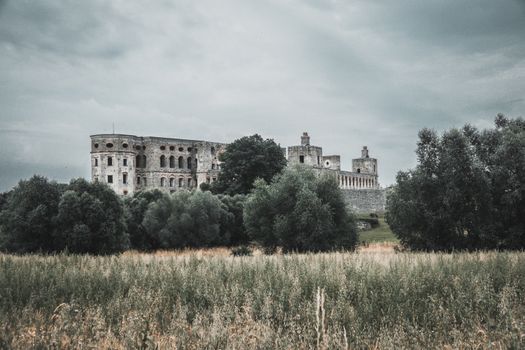
Rising from the mist, framed by ancient oak trees, stood the skeletal remains of a medieval fortress. No ticket booth, no gift shop, no selfie-stick-wielding crowds. Just us, the whispering wind, and centuries of forgotten history. Castello del Lupo, or ‘Wolf Castle’ as the locals called it, lay before us, a silent testament to a grandeur long past. We spent hours there, clambering over crumbling walls, imagining knights and ladies, feeling the raw, untamed spirit of the place. We took photos that felt like art, not just snapshots, and left with a sense of awe that no perfectly curated, paid-entry castle could ever replicate.
This, my fellow travelers, is the magic I want to share with you. While the Instagram elite flock to the meticulously restored, brightly lit, and often expensive castles of Europe, there’s an entire world of forgotten fortresses waiting to be discovered. These are the abandoned castles you can explore for free – the true hidden gems that offer an authentic, thrilling, and incredibly photogenic experience. And yes, they’re the secrets the influencers don't want getting out, because true discovery doesn't come with an affiliate link.
Why Abandoned Castles Trump the Tourist Traps: The Allure of the Forgotten
Let’s be honest: while places like Neuschwanstein or Edinburgh Castle are undeniably stunning, they often come with a hefty price tag, timed entry slots, and a perpetual sea of humanity. You spend more time queuing than exploring, and your photos are inevitably photobombed by a stranger’s elbow.
Abandoned castles, on the other hand, offer a completely different vibe. They are wild, untamed, and deeply atmospheric.
- Raw History: There’s no polished veneer here. You’re touching stones laid by hands centuries ago, seeing the unvarnished truth of time's passage. Every crumbling archway and overgrown courtyard tells a story, often more compelling because it’s left to your imagination.
- Unrivaled Serenity: Imagine exploring in near-silence, the only sounds being the rustle of leaves, the chirping of birds, or the distant bleating of sheep. This is a chance for true contemplation and connection with the past, away from the constant chatter of tour groups.
- Authentic Adventure: Finding these places often involves a bit of a trek – a scenic hike, a careful scramble, or navigating a less-traveled road. This adds an element of adventure that makes the reward of discovery even sweeter.
- Photographic Goldmines: Forget staged backdrops. The natural decay, the play of light through broken windows, the ivy reclaiming ancient walls – these are the elements that create truly unique and dramatic photographs. Every corner is a potential masterpiece, begging to be captured.
- It's FREE! In an age where travel costs can quickly add up, the fact that these incredible historical sites are completely free to explore is the ultimate bonus. More money for local food, experiences, or extending your trip!
This isn't just about saving a few bucks; it's about a richer, more profound travel experience. It's about earning your view, connecting with history on a deeper level, and discovering something truly unique.
Your Castle-Hunting Toolkit: Preparation is Key
Embarking on an abandoned castle adventure requires a little more planning than simply showing up at a tourist attraction. Here’s how to prepare for a safe, respectful, and rewarding exploration:
- Do Your Research (Beyond Google Maps):
- Satellite View is Your Best Friend: Use Google Maps satellite view to spot potential ruins. Look for unusual shapes, clearings in forests, or structures on hilltops that don't look like modern buildings.
- Local Forums & Historical Societies: Sometimes, local history buffs or hiking groups will have information on lesser-known ruins. Search for regional forums or ask in local Facebook groups (e.g., "Abandoned places in [Region Name]").
- Old Maps: If you can find historical maps of an area, they often mark ancient structures that might now be ruins.
- Word of Mouth: Once you're in a region, chat with locals! They often know about hidden gems that aren't on any official tourist radar. A friendly conversation in a village cafe can lead to the greatest discovery.
- Safety First, Always!
- Sturdy Footwear: This is non-negotiable. Expect uneven terrain, loose rocks, mud, and potentially slippery surfaces. Hiking boots with good ankle support are ideal.
- Dress Appropriately: Long pants and sleeves can protect against brambles, ticks, and scrapes. Layers are always a good idea.
- First-Aid Kit: A small kit with bandages, antiseptic wipes, pain relievers, and any personal medications is essential.
- Water & Snacks: You might be off the grid for a while.
- Headlamp/Flashlight: Even in daylight, some interior spaces might be dark or require careful navigation.
- Inform Someone: Always let someone know where you’re going and when you expect to be back. Cell service can be spotty in remote areas.
- Assess Stability: Exercise extreme caution when entering any structure. Assume nothing is stable. Look for cracks, leaning walls, or loose stones. If in doubt, stay out. Never climb on unstable structures.
- Local Regulations: While many ruins are freely accessible, some might be on private land or have restricted access for safety reasons. Always respect local signage.
- Leave No Trace & Respect the Ruins:
- Pack It In, Pack It Out: Whatever you bring with you, take it back out. Leave no litter, not even organic waste.
- Leave Things As You Found Them: Don't move stones, take souvenirs, or disturb anything. These are historical sites, and their preservation is paramount.
- Respect Wildlife: These ruins are often home to birds, bats, and other creatures. Observe from a distance and avoid disturbing their habitats.
- No Graffiti: This should go without saying, but please, do not deface these incredible places.
European Gems: My Top Picks for Free Exploration
Europe is a treasure trove of forgotten history, and almost every country boasts its share of magnificent, free-to-explore ruins. While I can't give you every single location (part of the fun is the hunt!), here are a few types of experiences and fictional-yet-plausible examples to get your imagination stirring and your research engines revving.
1. The Tuscan Hilltop Sentinel: Castello di Montelupo, Italy
Imagine driving through the rolling hills of Tuscany, past cypress trees and vineyards, when you spot it – a jagged silhouette against the horizon. This is the kind of discovery that leads you to places like the fictional Castello di Montelupo. Perched dramatically on a rocky outcrop, its weathered stone walls tell tales of medieval skirmishes and forgotten noble families.
My own journey to a similar Tuscan ruin involved a narrow, unpaved road that wound through olive groves, eventually leading to a small, abandoned parking area. From there, it was a short, moderately steep hike through fragrant wild herbs. The reward? A panoramic view of the valley below, stretching for miles, and the silence broken only by the buzz of cicadas. Inside, ancient archways framed distant vistas, and wildflowers bloomed in the cracks of crumbling battlements. We brought a simple picnic of local bread, cheese, and wine, and it was perhaps the most memorable meal I’ve ever had.
- Practical Tips: Look for castles marked as 'ruderi' (ruins) on Italian maps. Many are freely accessible. Wear good hiking shoes. Visit in spring or autumn for comfortable temperatures and stunning light.
2. The Forest's Embrace: Château de Bellefleur, France
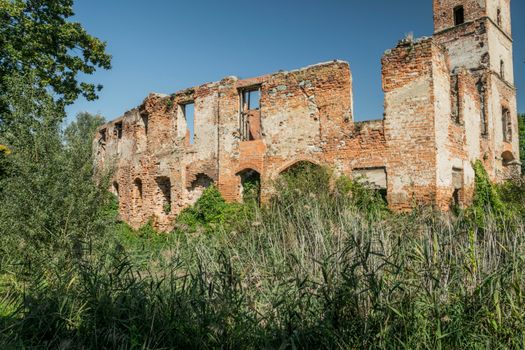
Deep within the ancient forests of France, particularly in regions like the Dordogne or Brittany, lie countless forgotten châteaux, slowly being reclaimed by nature. One such hypothetical gem is the Château de Bellefleur, its elegant towers now cloaked in thick ivy, its courtyards carpeted with moss.
I remember stumbling upon a similar ruin in rural France, nestled so perfectly within the woods that it felt like stepping into a fairytale. The air was cool and damp, and the only sound was the rustling of leaves and the distant call of a cuckoo. We pushed through a tangle of ferns to find a grand entrance archway, still adorned with intricate carvings, leading into a sun-dappled interior. A spiral staircase, surprisingly intact, beckoned us upwards, offering glimpses of the forest canopy through arrow-slit windows. It was eerie, beautiful, and profoundly peaceful.
- Practical Tips: Be prepared for dense vegetation. Long sleeves and pants are a must to protect against scratches and ticks. Check for unstable floors, especially in upper levels. Mornings, when the mist still clings to the trees, offer incredible photographic opportunities.
3. The German Mountain Stronghold: Burg Falkenstein, Black Forest
Germany, with its rich history of feudal lords and warring states, is dotted with countless 'Burgruinen' (castle ruins). Imagine hiking through the dense, dark woods of the Black Forest, the scent of pine needles heavy in the air, until you emerge onto a rocky spur to find the dramatic remains of Burg Falkenstein.
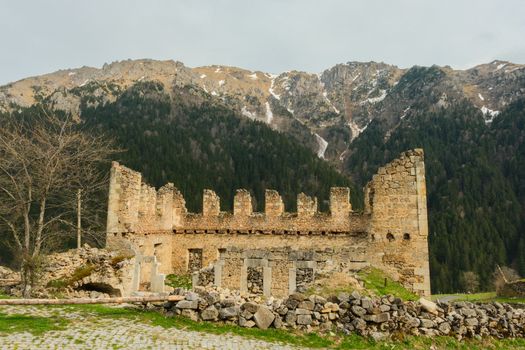
My adventure to a similar German ruin involved an early morning ascent. The path was well-maintained initially, then narrowed into a rocky scramble as we neared the summit. The castle itself was a shell – a towering keep, a few defensive walls, and a deep, dry moat. But the sheer audacity of its placement, high above a winding river valley, was breathtaking. The morning fog swirled around the ancient stones, creating an almost mythical atmosphere. I found myself sitting on a moss-covered stone, gazing out at the vast expanse of forest, feeling like a lone sentinel guarding centuries of secrets.
- Practical Tips: Many German castle ruins are accessible via hiking trails. Check the local 'Wanderweg' (hiking path) maps. The weather can change quickly in mountainous regions, so pack layers and rain gear. Look for information boards at the base of the trails, which sometimes offer historical context.
4. The Coastal Fortress: Dunluce-esque Ruins, Northern Ireland/Scotland
While the famous Dunluce Castle in Northern Ireland has an entry fee, the rugged coastlines of Ireland and Scotland are home to numerous lesser-known, equally dramatic ruins that are free to explore. Picture a windswept promontory, battered by the wild Atlantic, upon which stands the defiant skeleton of a fortress, like the fictional Carrickbrae Castle.
I recall a day exploring a similar coastal ruin in Scotland, the salty spray of the sea on my face, the cry of gulls overhead. The castle, or what remained of it, clung precariously to the cliff edge, its foundations eroded by centuries of crashing waves. It was a place of wild beauty and fierce history. We spent hours simply watching the waves, imagining Viking longboats and clan battles, feeling utterly insignificant yet completely connected to the raw power of nature and time.
- Practical Tips: Coastal ruins are exposed to the elements. Dress warmly, even in summer, and be prepared for rain and strong winds. Check tide times if the ruin is near the water's edge to avoid getting cut off. Be extremely cautious near cliff edges – they can be unstable.
The Art of the Shot: Instagramming Abandoned Castles
You've found your hidden gem, now how do you capture its magic? These places are a photographer's dream, offering unique challenges and unparalleled rewards. Forget the perfect influencer pose; focus on storytelling.
- Embrace the Mood: Abandoned castles are inherently melancholic, mysterious, and dramatic. Use this to your advantage. Shoot in soft, diffused light (overcast days are great) or during the golden hours of sunrise/sunset for dramatic shadows and warm tones.
- Focus on Details: Don't just shoot wide shots. Look for the intricate carvings overgrown with moss, the textures of crumbling stone, the way light filters through a broken window, or a lone archway framing the landscape. These details tell a deeper story.
- Perspective is Key: Get low, get high, shoot through an archway, use leading lines of walls or paths to draw the eye. Experiment with different angles to find what best conveys the scale and atmosphere.
- Human Element (Optional): A solitary figure (you or your travel companion) can add a sense of scale and wonder, highlighting the vastness of the ruins. Just make sure the focus remains on the castle.
- Gear Up (But Don't Overpack): A wide-angle lens is fantastic for capturing the grandeur. A tripod is invaluable for low-light shots or long exposures (especially if you want to blur out any subtle movement or capture star trails at night, if safe). A drone, if you have one and it's legal/safe to fly, can offer truly breathtaking aerial perspectives.
- Editing for Impact: Enhance the mood with your editing. Play with contrast, shadows, and highlights. Desaturate colors slightly for a more historic feel, or boost greens and blues for a vibrant, reclaimed-by-nature look.
- Hashtags for Discovery: #AbandonedCastles #HiddenGemsEurope #FreeExploration #CastleRuins #OffTheBeatenPath #TravelPhotography #HistoricSites #ForgottenPlaces #AdventureTravel #EuropeTravel #TripsoraAdventures (and specific location hashtags like #TuscanyRuins or #BlackForestCastles).
Remember, the goal isn't just a pretty picture; it's to evoke the feeling of discovery, the grandeur of history, and the thrill of adventure that these places offer.
Beyond the Walls: Immerse Yourself in Local Culture
Often, these forgotten castles are nestled near charming, tiny villages that rarely see mass tourism. This is your opportunity to truly immerse yourself in local life.
- Support Local Businesses: After your exploration, head to the nearest village. Grab a coffee at the local café, enjoy a traditional meal at a family-run tavern, or pick up some local produce. Your patronage directly supports these small communities.
- Chat with Locals: Don't be shy! Strike up a conversation. Locals often have incredible stories, tips for other hidden spots, or insights into the history of the castle you just explored. A simple "Bonjour" or "Guten Tag" can open doors to unexpected encounters.
- Stay in a Guesthouse: Instead of a chain hotel, opt for a local guesthouse or B&B. You'll get a more authentic experience, delicious homemade breakfasts, and often invaluable local advice from your hosts.
- Explore the Surroundings: The castle might be the highlight, but the journey there and the surrounding area are part of the adventure. Discover local hiking trails, small chapels, or even just enjoy the serene countryside.
This holistic approach makes your trip not just about seeing a ruin, but about experiencing a culture, connecting with people, and leaving with a deeper understanding of the region.
Your Adventure Awaits: Go Forth and Discover!
The world is full of incredible, untouched history, waiting for curious adventurers like you. These abandoned castles are more than just piles of old stones; they are portals to the past, canvases for your imagination, and playgrounds for your photography. They offer a rare chance to step away from the curated, commercialized tourist experience and embrace the thrill of genuine discovery.
So, ditch the guidebooks that only point to the paid attractions. Pull up your satellite maps, lace up your hiking boots, and set off on an adventure that will fill your camera roll with stunning, unique shots and your heart with unforgettable memories.
What's your favorite hidden gem? Or which abandoned castle are you dreaming of exploring next? Share your thoughts and inspire fellow travelers in the comments below!
Go forth, explore responsibly, and share your incredible discoveries (but maybe keep the exact coordinates to yourself for the truly hidden gems – let's preserve the magic of discovery for others!).
---
More pictures


Tags
Share this guide
We may earn a commission if you click a link and buy a product or service, at no extra cost to you. How affiliate links work.
Been there?