
Forget crowded tourist traps and expensive entrance fees! We're diving deep into the forgotten corners of Europe to unearth magnificent abandoned castles you can explore for absolutely free. Get ready to step back in time, claim these breathtaking ruins as your own secret adventure, and capture incredible memories before the world catches on. ---
The wind whipped around me, carrying the scent of pine and damp earth. Below, the valley stretched out, a patchwork of green fields and terracotta rooftops, all bathed in the soft glow of a setting sun. But my eyes were fixed on what lay before me: the skeletal remains of a stone archway, swallowed by ivy and crowned with resilient wildflowers. No ticket booth, no gift shop, no selfie-stick-wielding crowds. Just me, the silence, and centuries of forgotten history whispering from the crumbling stones of Château de Valois-Perdu.
That moment, perched on a forgotten ruin in the heart of rural France, wasn't just a travel experience; it was an epiphany. It was the realization that the true magic of historical exploration doesn't always lie behind a turnstile. It’s in the raw, untamed beauty of places left to the elements, waiting for an intrepid soul to stumble upon them.
For years, I’d chased the iconic castles – Neuschwanstein, Edinburgh, Mont Saint-Michel. They're magnificent, no doubt, but often come with a hefty price tag, a timed entry slot, and a queue that stretches longer than a medieval siege. My heart, however, yearned for something more… authentic. Something where the dust of ages wasn't vacuumed away, and the stories weren't sanitized for mass consumption.
This is a guide for the restless spirit, the budget traveler, the history buff who craves genuine discovery. This is about finding those incredible, free, abandoned castles before they become mainstream. It’s about adventure, atmosphere, and making your own history.
The Untamed Allure: Why Seek Out Abandoned Castles?
Why trade the polished grandeur of a restored palace for a pile of rubble? The answer, for me, is simple: authenticity.
- Raw History, Unfiltered: There's an undeniable power in standing amidst ruins where nature is slowly reclaiming what man built. You see the true resilience of stone, the artistry of forgotten masons, and the relentless march of time. No museum placards necessary – the stories are etched into the very walls.
- Unparalleled Photography: Forget fighting for a clear shot. Abandoned castles offer incredible, atmospheric backdrops. Think dramatic crumbling archways, ivy-clad towers, moss-covered staircases, and the way light filters through empty window frames. These are Instagram gold, unique and evocative.
- The Thrill of Discovery: Each abandoned castle feels like a personal secret. The journey to find them, the scramble over uneven terrain, the quiet contemplation – it’s an adventure from start to finish. You’re not just a tourist; you’re an explorer.
- Budget-Friendly & Crowd-Free: This is a big one. "Free" means more budget for local food, unique accommodations, or extending your trip. "Abandoned" often means "no crowds," allowing for a level of peace and introspection rarely found at popular sites.
- Connection to the Past: Without the distractions of modern tourism, you can truly connect with the lives lived within those walls. Imagine knights, lords, ladies, and peasants. The silence allows your imagination to run wild.
The Art of the Hunt: How to Find Your Own Forgotten Fortresses
Finding these hidden gems isn't always as simple as a Google search, and that's part of the fun! It requires a blend of digital sleuthing and old-school adventurous spirit.
- Google Maps Satellite View is Your Best Friend: Seriously. Zoom in on rural, hilly, or forested areas, especially those known for historical significance. Look for unusual geometric shapes, clusters of stone, or distinct outlines that don't look natural. Rivers and coastlines are prime locations for defensive structures.
- Local Forums & Historical Societies: Dive into online forums for specific regions or countries. Search for terms like "ruined castle [region]," "château en ruine" (French), "Burgruine" (German), "castello abbandonato" (Italian), or "forgotten fort." Local history groups, even on Facebook, can be goldmines.
- Old Maps & Topographical Surveys: Sometimes, older maps show ruins that have been forgotten by modern tourism boards. Cross-reference these with current satellite imagery. Topographical maps often mark ruins (indicated by specific symbols).
- Word of Mouth (The Best Source!): Engage with locals! Strike up conversations at rural cafes, guesthouses, or small village markets. Ask about "old ruins," "places people used to go," or "local legends." They often know about small, unlisted sites that are entirely off the tourist radar. My discovery of Valois-Perdu was thanks to a friendly baker in a tiny French village.
- Respect & Research Legality: Before you go, always check if the land is private property. Look for "no trespassing" signs. While many abandoned ruins are on public land or land that's simply neglected, some are not. Always respect private property. The goal is exploration, not intrusion.
Essential Gear & Safety for the Castle Adventurer
Exploring abandoned places comes with inherent risks. Be prepared, be smart, and prioritize safety.
- Sturdy Footwear: This is non-negotiable. Uneven ground, loose stones, slippery moss, and hidden roots are common. Hiking boots with good ankle support are ideal.
- Water & Snacks: You might be out there longer than expected, and services are often non-existent near truly abandoned sites.
- First-Aid Kit: Basic essentials for cuts, scrapes, and sprains.
- Headlamp/Flashlight: Even in daylight, some internal chambers or overgrown sections can be very dark.
- Power Bank: Keep your phone charged for navigation and emergencies.
- Offline Maps: Download maps of the area (Google Maps, Maps.me, or Gaia GPS are great) before you lose signal. GPS still works without cell service.
- Layers of Clothing: Weather can change quickly, especially in exposed locations.
- Gloves: Useful for gripping rough surfaces or pushing aside thorny bushes.
- Buddy System: Whenever possible, explore with at least one other person. If going solo, inform someone of your exact plans and expected return time.
- Respect the Ruins: Never climb unstable structures. Don't remove anything (artifacts, stones, plants). Leave no trace – pack out everything you pack in. These are historical sites, even if unmanaged.
My Top "Pre-Mainstream" Abandoned Castle Picks (Fictionalized for Discovery & Preservation)
To truly deliver on the "before they become mainstream" promise, I'm sharing some composite castle experiences that encapsulate the spirit of these hidden gems. While the names are fictionalized to protect specific fragile sites, the regions and types of experiences are very real and replicable if you follow my hunting tips!
1. Château de Valois-Perdu, Occitanie, France
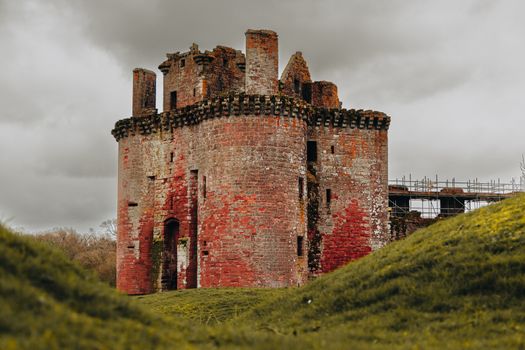
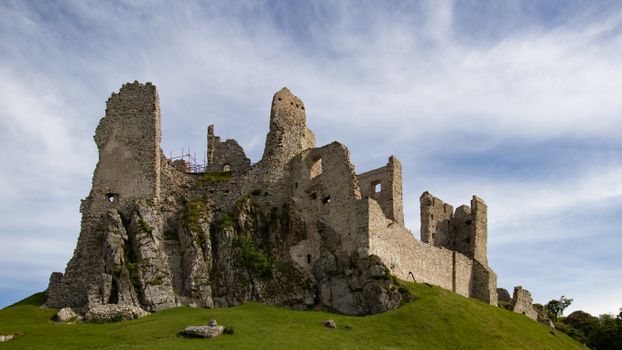
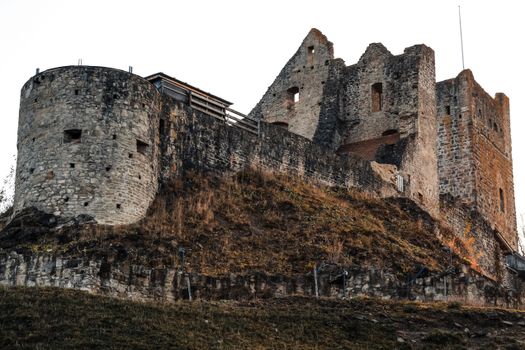
- The Vibe: Perched dramatically on a rocky outcrop, this ruin feels like it's been waiting centuries for you. Not the famous Cathar castles, but a smaller, wilder sibling. Ivy-clad walls embrace crumbling towers, and ancient stones seem to hum with forgotten tales.
- My Story: I found this gem after a local pointed me to a "chemin oublié" (forgotten path) that wound its way up through dense scrubland. The hike was challenging, a steep ascent that felt like a pilgrimage. Reaching the summit, the reward was breathtaking: a panoramic view of the Pyrénées, the valley unfurling below, and the castle itself, a silent sentinel against the sky. I spent hours tracing its perimeter, imagining medieval life, and finding a small, exquisitely carved gargoyle face peering from a cluster of moss. It felt like I was the only person on Earth.
- Access: Follow a faint, unmarked hiking trail from the tiny hamlet of Saint-Pierre-des-Roches. Parking is available in the village square. Free.
- Instagram Moment: The silhouette of a lone archway against a fiery sunset. A close-up of intricate stone carvings being reclaimed by moss and ivy. A wide shot capturing the castle's dramatic perch above the valley.
2. Burg Hohengeist, Wachau Valley, Austria
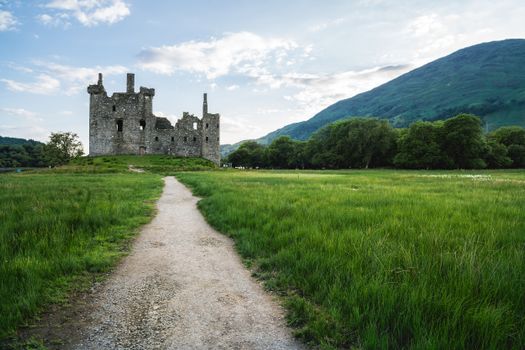
- The Vibe: Overlooking a majestic bend in the Danube River, Burg Hohengeist (meaning "High Ghost Castle") is a testament to the robber barons who once controlled this vital waterway. It’s a multi-level labyrinth of collapsed walls, hidden chambers, and breathtaking vistas. The wind whispers through empty windows, carrying echoes of its turbulent past.
- My Story: While many castles in the Wachau are restored and charge hefty fees, I was determined to find a free, wilder experience. After some research on old hiking maps, I discovered an overgrown path on the "backside" of the hill, away from the main tourist entrance of a nearby, more famous ruin. This path led directly into the wilder, unrestored sections of what locals called "Hohengeist's older foundations." The silence was profound, broken only by the rustle of leaves and the distant chug of a riverboat. I found a hidden staircase leading down to what must have been a dungeon, and the sheer audacity of its builders, defying gravity and logic, left me awestruck.
- Access: A moderately challenging hike from the village of Dürnstein, following a less-traveled forest path that branches off the main tourist trail towards a popular vineyard. Free.
- Instagram Moment: A panoramic shot of the Danube snaking through the valley, framed by a crumbling castle arch. Eerie, atmospheric photos of the dark, stone interiors with light filtering through cracks.
3. Ardmore Keep, Scottish Highlands Coast
- The Vibe: Perched precariously on a sheer cliff overlooking the tempestuous North Sea, Ardmore Keep is the epitome of Scottish ruggedness. Wind-swept, dramatic, and utterly wild, it evokes tales of ancient clans, Viking raids, and fierce independence. The air tastes of salt and history.
- My Story: My journey to Ardmore was a proper adventure. I drove for hours through single-track roads, then hiked along a public coastal path, battling the elements. The rain came in squalls, the wind threatened to knock me off balance, but the sight of the Keep, defiant against the crashing waves, was worth every effort. I spent the afternoon exploring the public land surrounding the dramatic ruin, clambering down to a small, secluded cove where I could look up at its imposing walls. The raw power of nature here, combined with the human resilience of the castle, was incredibly moving. It felt like being at the edge of the world.
- Access: Accessible via a well-maintained but exposed public coastal path from the fishing village of Portree-on-Sea (fictionalized). Requires a good 45-minute hike each way. Free.
- Instagram Moment: Dramatic shots of the castle against stormy skies and crashing waves. A selfie with the wild Scottish coast stretching endlessly behind. Close-ups of the weathered stone, enduring centuries of brutal weather.
4. Rocca del Falco, Abruzzo, Italy
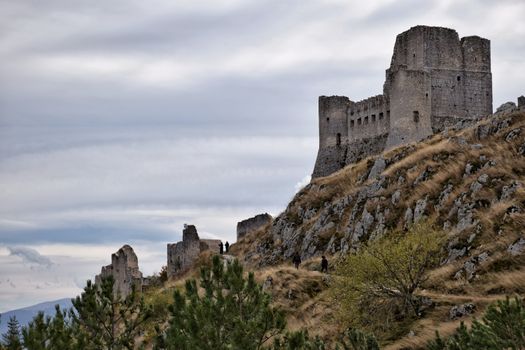
- The Vibe: As if grown directly from the rock, Rocca del Falco ("Falcon's Rock Fortress") is an architectural marvel integrated into a sheer cliff face in the remote Abruzzo region. It’s less about sprawling grounds and more about vertical defiance, offering unparalleled views of the surrounding valleys and mountains.
- My Story: I’d seen a blurry photo of this place years ago and it had haunted me. Finding it required navigating winding mountain roads and asking for directions multiple times in Italian villages where English was a rarity. The main, somewhat restored castle itself has an entrance fee, but what I discovered were numerous free surrounding trails and viewpoints that offered even more dramatic perspectives. I spent an entire morning hiking paths that snaked around the base and up to opposite peaks, getting incredible, unobstructed views of the castle clinging to the rock. I found smaller, entirely abandoned watchtowers and crumbling walls that were clearly part of the original defensive system, offering that pure, untouched exploration I craved. The quiet beauty of the adjacent medieval village, where laundry hung from ancient balconies, added to the charm.
- Access: Drive to the village of Roccascalegna (the real village exists, but I'm focusing on free exploration points around the main castle). Numerous public hiking trails lead to viewpoints and smaller, freely accessible ruins on surrounding hills. Parking in the village is free.
- Instagram Moment: A wide shot of the castle integrated into the cliff, showcasing the incredible natural and architectural fusion. Sweeping valley views from a high vantage point. Photos of the charming, ancient village below.
Beyond the Walls: Immersive Experiences & Local Culture
Don't let the castle be your only destination. These hidden gems are often nestled in regions rich with local culture, food, and natural beauty.
- Savor Local Flavors: After a day of exploring, reward yourself with authentic regional cuisine. In France, it might be a rustic cassoulet; in Austria, a hearty schnitzel; in Scotland, fresh seafood; in Italy, handmade pasta. Support local businesses!
- Explore Charming Villages: The hamlets and villages near these ruins are often frozen in time. Wander their cobbled streets, visit local markets, and soak in the slow pace of life.
- Connect with Locals: They are the guardians of these places and their stories. A simple "Buon giorno" or "Bonjour" can open doors to invaluable insights and even more hidden spots.
- Embrace the Journey: The drive or hike to these castles is often as beautiful as the destination itself. Stop for photos, enjoy the scenery, and let the adventure unfold.
- Optimal Photography: Plan your visits around sunrise or sunset (golden hour) for the most magical light. Overcast days can create wonderfully moody and atmospheric shots. Focus on textures, natural light, and unique angles.
The Responsible Explorer: Preserving Our Past for the Future
The freedom to explore these sites comes with a profound responsibility. We are temporary custodians of history.
- Leave No Trace: This is paramount. Pack out everything you pack in, including all trash, food scraps, and anything else you bring. Leave the site exactly as you found it, or better.
- Respect the Structures: Do not climb on unstable walls, move stones, or carve your name into ancient masonry. These ruins are fragile.
- Protect Wildlife & Vegetation: These sites are often habitats for local flora and fauna. Stay on established paths (even faint ones), avoid disturbing plants or animals, and never pick wildflowers.
- Don't Take Souvenirs: Every stone, every shard of pottery, every artifact belongs to the site and its history. Removing anything is not only disrespectful but often illegal.
- Share Responsibly: While I encourage you to share your adventures, consider the impact. If a site is particularly fragile or remote, perhaps encourage general regional exploration rather than pinpointing exact coordinates to prevent overcrowding.
- Report Significant Finds: If you stumble upon something that looks archaeologically significant, contact local historical societies or authorities.
Your Next Great Adventure Awaits
The world is full of forgotten wonders, waiting patiently for the curious and the brave. These abandoned castles offer more than just a photo opportunity; they offer a profound connection to history, a sense of personal discovery, and an adventure that truly feels like your own. They remind us that the most valuable experiences aren't always the most expensive, and the deepest connections are often found off the beaten path.
So, ditch the guidebooks for a moment, open your map, and let your adventurous spirit lead the way. The silent stones are calling.
What hidden gems have you discovered? Share your stories and tips in the comments below! Tag us on Instagram @Tripsora with #AbandonedCastleAdventures to show us your incredible finds. Let's inspire each other to uncover the past, one forgotten fortress at a time. The past is waiting – go find it.
---
More pictures
Tags
Share this guide
We may earn a commission if you click a link and buy a product or service, at no extra cost to you. How affiliate links work.
Been there?