
Ever dreamt of gliding across fresh powder or carving ice, but thought it takes years to learn? Think again! We're revealing the most exhilarating winter sports you can conquer in a single weekend, transforming your chilly days into unforgettable adventures. Get ready to embrace the snow and ice like never before!
The crisp air bites at your cheeks, the scent of pine needles and woodsmoke hangs heavy, and a pristine blanket of snow stretches out before you, begging to be explored. For years, I used to view winter as a season to endure – a time for cozy blankets, hot cocoa, and hibernating indoors. I’d watch those graceful skiers and snowboarders on TV, carving down mountains with effortless cool, and think, "That's for them. That's for the pros. I could never do that."
My winter transformation began on a whim. A friend, tired of my "winter is for reading" mantra, dragged me to a local ski resort for a "beginner's weekend." I was terrified. Clumsy. Convinced I’d break something. But after just two days of falling, laughing, and a surprisingly patient instructor, something clicked. I wasn't just surviving winter; I was living it. I wasn't an expert, not by a long shot, but I was confident enough to link turns, navigate a gentle slope, and feel the exhilarating rush of the wind in my face. That weekend proved to me that winter sports aren't just for the seasoned pros; they're incredibly accessible, and many can be learned to a comfortable, enjoyable level in just a couple of days.
Since then, my Tripsora adventures have taken me across snowy landscapes, trying everything from graceful glides to exhilarating plunges. And trust me, if I can do it, you can too! Forget waiting for a lifetime; here are 5 incredible winter sports you can learn (or at least get a fantastic foundation in) over a single weekend, promising an experience you absolutely need to have before you kick the bucket.
---
1. Downhill Skiing: The Classic Carve (or Wedge!)
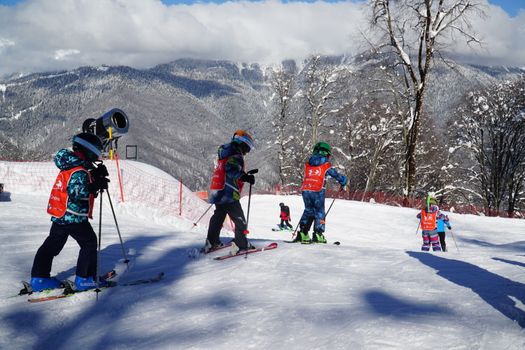
Let's start with the granddaddy of winter sports. Downhill skiing is synonymous with winter adventure, and surprisingly, you don't need to be an Olympian to enjoy it. The key is starting small and embracing the "pizza slice" (or snowplow/wedge) technique.
My Weekend Revelation: My first ski lesson was a blur of tangled limbs, cold snow down my pants, and the constant mantra of "pizza, french fries, pizza, french fries!" My instructor, a seasoned local named Gary, had the patience of a saint. We started on the "bunny slope" – a gentle incline so mild it felt more like a slight tilt. He taught us how to put on our skis, stand up (surprisingly hard at first!), and then, crucially, how to stop using the snowplow. By the end of Saturday, I was confidently gliding down the bunny slope, making controlled stops. Sunday saw me tackling a slightly longer, slightly steeper green run, linking hesitant turns. The feeling of finally controlling my descent, the wind whistling past, and the stunning mountain views was nothing short of euphoric. I wasn't carving like a pro, but I was skiing, and it felt incredible.
Why You Can Learn It in a Weekend: Modern equipment is incredibly forgiving. Shorter, shaped skis make turning easier, and patient instructors focus on getting you comfortable and safe on beginner terrain quickly. The goal isn't to conquer a black diamond, but to enjoy the sensation of gliding and controlling your speed on green runs.
Practical Tips & Actionable Advice:
- Book a Beginner Package: Many resorts offer fantastic "learn to ski" packages that include rentals, a lift ticket for beginner areas, and a group lesson. This is the most cost-effective and efficient way to start.
- Dress in Layers: Think waterproof outer shell, insulating mid-layers (fleece), and moisture-wicking base layers. Don't forget waterproof gloves, a warm hat, and ski goggles.
- Embrace the Falls: You WILL fall. It's part of the learning process. The snow is soft, and modern bindings are designed to release to prevent injury. Laugh it off and get back up!
- Focus on the Basics: Master the snowplow for control and stopping before trying to parallel turn. Good instructors will build your skills progressively.
- Hydrate & Snack: Skiing is a workout! Bring water and energy bars.
Specifics & Details:
- Cost: A beginner package (lift, rental, group lesson) can range from $150-$300+ per day, depending on the resort. Multi-day packages often offer better value.
- Locations: Look for resorts known for their excellent ski schools and extensive beginner terrain.
- East Coast USA: Killington (VT) has a massive beginner area called Snowshed. Mount Snow (VT) and Hunter Mountain (NY) also offer great learning environments.
- West Coast USA: Breckenridge (CO) has Peak 9's "Ski & Ride School" area. Park City (UT) is also very beginner-friendly.
- Europe: Many resorts in the Alps (e.g., Mayrhofen in Austria, Les Deux Alpes in France) have dedicated 'nursery slopes' and excellent English-speaking instructors.
---
2. Snowboarding: Glide on a Board, Find Your Balance
Often seen as the "cooler" younger sibling to skiing, snowboarding offers a different kind of thrill. While the initial learning curve can feel steeper (lots of falling on your bum!), once you get the hang of it, it's incredibly rewarding.
My Weekend Revelation: My first attempt at snowboarding felt like trying to walk with my feet glued together. I spent Saturday mastering the "falling leaf" – sliding down sideways, using my edges to control speed. My tailbone took a beating, but the sheer joy of linking my first two "C-turns" on Sunday afternoon was an adrenaline rush unlike any other. It felt like surfing on snow, a fluid, graceful motion that was completely different from skiing. The feeling of strapping into that board and pointing it downhill, knowing I could control my ride, was pure freedom.
Why You Can Learn It in a Weekend: Similar to skiing, modern snowboard gear is designed for beginners. Shorter, softer boards make turning easier, and focused lessons can quickly get you comfortable with balancing, stopping, and making basic turns.
Practical Tips & Actionable Advice:
- Get a Lesson: This is non-negotiable for snowboarding. An instructor will teach you how to fall safely, how to use your edges, and how to link turns – crucial for progression and avoiding injury.
- Rent the Right Gear: Ensure your boots are snug but not painful, and the board is appropriate for your height and weight. The rental shop staff can guide you.
- Protect Your Derriere: Consider wearing padded shorts (impact shorts) – your tailbone will thank you! Wrist guards can also be helpful.
- Edge Control is Key: Snowboarding is all about using your heel edge and toe edge to turn and stop. Practice lifting your toes and heels to feel the board's edges engage.
- Look Where You Want to Go: Your body naturally follows your gaze. Look down the slope, not at your feet.
Specifics & Details:
- Cost: Similar to skiing, beginner snowboard packages (lift, rental, group lesson) range from $150-$300+ per day.
- Locations: Most ski resorts that offer skiing will also have excellent snowboarding schools and beginner-friendly terrain.
- USA: Mammoth Mountain (CA) and Copper Mountain (CO) are often cited for their great beginner terrain and excellent snowboard schools.
- Canada: Whistler Blackcomb (BC) has fantastic learning areas like the 'Magic Carpet' zone.
- Japan: Niseko (Hokkaido) is world-renowned for its powder and has several excellent English-speaking snowboard schools.
---
3. Cross-Country Skiing: Serenity on Skis
If the idea of high-speed descents gives you pause, cross-country (Nordic) skiing might be your perfect winter introduction. It's less about gravity and more about gliding, exploring serene winter landscapes, and getting an incredible full-body workout.
My Weekend Revelation: After the adrenaline of downhill skiing and snowboarding, I craved something more peaceful. A friend suggested cross-country skiing in a national forest. The gear felt alien at first – long, skinny skis, free-heel bindings, and poles. But once I got the rhythm of the "diagonal stride" (imagine walking, but gliding), it was pure magic. We glided through a silent, snow-covered forest, the only sounds the swish of our skis and the crunch of snow underfoot. Sunlight filtered through snow-laden branches, painting dappled patterns on the pristine white. It felt less like a sport and more like an immersive nature experience. By the end of the weekend, I could comfortably navigate rolling terrain, and my lungs felt invigorated.
Why You Can Learn It in a Weekend: The basic movements of cross-country skiing are intuitive – essentially, a gliding walk. You're not battling gravity in the same way as downhill, making it less intimidating for beginners.
Practical Tips & Actionable Advice:
- Rent the Right Gear: There are classic (stride) and skate skiing techniques. For beginners, rent classic cross-country skis, boots, and poles. The boots are more flexible, and the skis have grip zones underfoot.
- Take a Lesson (Optional but Recommended): While you can self-teach, a short lesson (even just an hour) will teach you the diagonal stride, how to go up and down small hills, and how to stop effectively.
- Choose Groomed Trails: Start on groomed trails at a Nordic center or state park. These are flat and well-maintained, making learning easier.
- Dress Lightly (but in layers): Cross-country skiing is a fantastic cardio workout. You'll warm up quickly, so avoid over-dressing. Moisture-wicking layers are essential.
- Enjoy the Scenery: This sport is as much about the journey and the beautiful surroundings as it is about the physical activity.
Specifics & Details:
- Cost: Rentals are typically $25-$45 per day. Trail passes (if required) can be $10-$25. Lessons are often $50-$100 for a group session. It's generally much more affordable than downhill skiing.
- Locations:
- USA: National Parks like Yellowstone (WY) and Rocky Mountain (CO) offer incredible cross-country trails. Dedicated Nordic centers like Craftsbury Outdoor Center (VT) or Bear Valley Nordic Center (CA) are fantastic for lessons and groomed trails.
- Canada: Banff National Park (AB) has extensive, well-maintained trails.
- Europe: Many alpine regions have dedicated Nordic trail networks, often less crowded and more peaceful than downhill resorts.
---
4. Snowshoeing: Winter Hiking Reimagined
If you can walk, you can snowshoe. Seriously. This is arguably the most accessible winter sport, requiring minimal instruction and offering immediate gratification. It’s perfect for exploring untouched winter wilderness.
My Weekend Revelation: My first snowshoeing trip was purely out of curiosity. I strapped on a pair of modern, lightweight snowshoes and felt an instant sense of liberation. Suddenly, deep snow wasn't an obstacle; it was a pathway. We hiked through a local nature preserve, where the summer trails were now blanketed in a foot of fresh powder. The silence was profound, broken only by the soft crunch of my snowshoes and the distant call of a bird. I felt like an explorer, venturing into places inaccessible to regular hikers. We even packed a thermos of hot tea and enjoyed it surrounded by sparkling, untouched snow. It was incredibly meditative and surprisingly good exercise.
Why You Can Learn It in a Weekend: It literally takes minutes to learn the mechanics. The "learning" comes from adapting to walking in snowshoes and choosing appropriate terrain.
Practical Tips & Actionable Advice:
- Rent or Buy Snowshoes: Rentals are inexpensive ($15-$30/day). If you plan to go often, a good pair of all-purpose snowshoes (e.g., MSR Evo Trail or Tubbs Flex VRT) is a worthwhile investment.
- Use Trekking Poles: Poles provide balance and stability, especially on uneven terrain or when going uphill/downhill.
- Dress in Layers: Just like cross-country skiing, you'll warm up quickly. Wear waterproof boots, gaiters (to keep snow out of your boots), and dress in moisture-wicking layers.
- Choose Your Trail Wisely: Start on relatively flat, packed trails. As you gain confidence, you can venture into deeper snow or gentle hills.
- Bring Essentials: Water, snacks, a map, compass/GPS, and extra warm layers are crucial, especially in the backcountry. Always tell someone your plans.
Specifics & Details:
- Cost: Very low. Rentals are cheap, and many trails are free (e.g., state parks, national forests). Some dedicated snowshoe parks might have a small trail fee ($5-$15).
- Locations:
- USA: Any area with significant snowfall and hiking trails can be a snowshoeing paradise. Popular spots include Rocky Mountain National Park (CO), Adirondack Mountains (NY), and countless state parks across the Northern US.
- Canada: Banff, Jasper, and Yoho National Parks offer stunning snowshoeing routes.
- Europe: The Black Forest in Germany, the Dolomites in Italy, and many areas in Scandinavia are fantastic for snowshoeing.
---
5. Ice Skating: Elegance on Blades
From graceful spins to clumsy tumbles, ice skating is a timeless winter activity that's incredibly fun and surprisingly quick to pick up the basics. Plus, it's often accessible right in your city!
My Weekend Revelation: I grew up with fleeting memories of wobbling on skates during school field trips, but I never truly "learned." A few winters ago, during a weekend trip to New York City, I decided to tackle the iconic rink at Bryant Park. My first few laps were a comedy of errors – clinging to the wall, shuffling rather than gliding. But with a rented "skate aid" (a plastic frame for balance) and a few tips from a friendly local, I started to find my center. By the end of the weekend, I was confidently gliding forward, making wide turns, and even attempting a shaky stop. The energy of the rink, the festive music, and the glittering city lights made it feel like I was in a movie. It's a fantastic way to feel elegant and active, even if you're just doing laps.
Why You Can Learn It in a Weekend: The basics – standing, gliding forward, and stopping – can be learned quite quickly, especially if you have good balance. Many rinks offer short, inexpensive group lessons.
Practical Tips & Actionable Advice:
- Rent Skates That Fit Well: This is crucial! Skates should be snug around your ankle to provide support, but not painfully tight. Ask the rental staff for help.
- Wear Warm, Comfortable Clothes: Layers are good, but avoid anything too bulky that restricts movement. Gloves are a must, both for warmth and protection if you fall.
- Start with the Basics: Don't try to be an Olympian immediately. Focus on standing upright, pushing off with one foot to glide, and then switching feet.
- Learn to Stop: The "snowplow stop" (similar to skiing, pushing your heels out) or a gentle T-stop are good beginner stopping techniques.
- Use the Walls (or a Skate Aid): Don't be ashamed to use the rink walls for support. Many rinks also offer "skate aids" for beginners, which are fantastic for building confidence.
Specifics & Details:
- Cost: Rink admission typically ranges from $10-$30. Skate rentals are usually $5-$15. Group lessons (if available) can be $20-$50 for an hour.
- Locations:
- USA: Iconic rinks like Rockefeller Center and Bryant Park (NYC), Millennium Park (Chicago), and countless local indoor and outdoor rinks across the country.
- Canada: Rideau Canal Skateway (Ottawa) is the world's largest naturally frozen skating rink.
- Europe: Vienna City Hall (Austria), Somerset House (London), and many Christmas markets across Germany and France feature beautiful temporary rinks.
---
Your Weekend Winter Adventure Awaits!
Learning a new winter sport in a weekend isn't about becoming a pro; it's about breaking free from your comfort zone, embracing the season, and discovering a new passion. It's about the exhilarating feeling of progress, the crisp mountain air, the stunning snowy vistas, and the pure joy of movement.
Don't let another winter pass you by. Pick one of these incredible sports, book that lesson, pack those layers, and prepare for an unforgettable adventure. You'll not only gain a new skill but also a newfound appreciation for the magic of winter.
Ready to make your winter dreams a reality? Share your favorite winter sport aspirations in the comments below, or better yet, tag us on Instagram with #TripsoraWinterWeekend when you embark on your own snowy adventure!
---
More pictures



Tags
Share this guide
We may earn a commission if you click a link and buy a product or service, at no extra cost to you. How affiliate links work.
Been there?