
January offers distinct travel advantages, from dry tropical seasons in the southern hemisphere to crowd-free sightseeing across historic European capitals. Whether you want sunny coastlines, snow sports, or cultural festivals, choosing the right destination depends on the climate and pace you prefer.
The best places to travel in January depend entirely on whether you want to escape winter or lean into it. For dry, sunny beach weather, parts of Southeast Asia, the Caribbean, and Central America are typically at their prime. If you prefer crisp city walks without peak-season crowds, southern Europe offers mild conditions and quiet museums. For dedicated winter sports and northern lights viewing, northern Scandinavia, the Canadian Rockies, and northern Japan deliver reliable snow and dark skies.
At Trip-Planner.ai, we monitor seasonal travel patterns to help you match destinations to your preferred style of travel. Here is our breakdown of where to go in January across five distinct trip styles, followed by a decision framework and practical planning checklist.
Warm weather and beach escapes
For travellers based in the northern hemisphere, January is prime time to trade freezing temperatures for tropical heat. Many equatorial and southern regions experience their driest, sunniest months during this period.
Phuket and the Andaman Coast, Thailand
January sits firmly in the dry season along Thailand's southwest coast. The Andaman Sea is usually calm, clear, and warm, making conditions suitable for swimming, island hopping, and sea kayaking around Phang Nga Bay.
- Typical conditions: Temperatures usually reach roughly 31°C to 33°C (88°F to 91°F) with minimal rainfall and low humidity relative to the rest of the year.
- Key highlights: Day boat trips to the Phi Phi Islands, exploring the historic Sino-Portuguese architecture of Old Phuket Town, and visiting the white-sand bays of Kata Noi and Nai Harn.
- Crowd level: High. January is peak holiday season across Thailand, so booking accommodation and internal transit in advance is recommended. You can map out coastal transfers using RoutePlanner to avoid backtracking.
Guanacaste and the Nicoya Peninsula, Costa Rica
Costa Rica's Pacific slope enjoys the dry summer season, known locally as verano, starting in late December and continuing through April. Guanacaste is typically the driest province in the country, providing dependable sunshine.
- Typical conditions: Daily highs often reach about 32°C (90°F) near the coast, with clear skies and strong offshore winds.
- Key highlights: Surfing at Playa Tamarindo or Playa Guiones, wildlife watching in Rincon de la Vieja National Park, and exploring the mangrove estuaries of Las Baulas.
- Crowd level: Moderate to high. Coastal resorts see steady visitation, but inland reserves and national parks remain manageable if you start your days early.
Barbados
Barbados is an accessible choice for a midwinter Atlantic getaway. Positioned east of the main Caribbean island chain, it typically experiences warm trade winds, low rainfall, and steady sunshine throughout January.
- Typical conditions: Daytime temperatures usually hover around 28°C to 30°C (82°F to 86°F), accompanied by cooling breezes.
- Key highlights: The calm swimming beaches along the west coast near Holetown, walking through historic Bridgetown, and seeing the rugged Atlantic waves at Bathsheba on the east coast.
- Crowd level: Peak winter season. Flight availability tightens, making early planning essential.
European and regional city breaks
January is one of the quietest months for city tourism across Europe and parts of East Asia. If you do not mind brisk weather and shorter daylight hours, you can see world-class landmarks without the long queues typical of summer.
Seville, Spain
While northern Europe freezes, Andalusia remains relatively mild. Seville experiences cool, bright winter days that are comfortable for walking between historic districts.
- Typical conditions: Daily highs are typically around 16°C (61°F), dropping to around 6°C (43°F) at night. Rain is possible but usually infrequent.
- Key highlights: The Royal Alcázar, the vast Seville Cathedral, the Plaza de España, and walking through the narrow lanes of the Santa Cruz quarter.
- Crowd level: Low to moderate. You will encounter far fewer visitors than during the spring festivals or autumn months.
Rome, Italy
Visiting Rome in January allows you to experience ancient architecture and world-renowned art galleries at a relaxed pace. Outside of the New Year holiday period, flight and hotel prices often drop to their lowest levels of the year.
- Typical conditions: Brisk and occasionally wet, with afternoon temperatures usually around 12°C to 14°C (54°F to 57°F).
- Key highlights: The Colosseum, the Roman Forum, and the Vatican Museums. With fewer tour groups, exploring these sites takes substantially less waiting time.
- Crowd level: Low. January provides a quiet window to build an unhurried, multi-day walking itinerary with TripBuilder.
Tokyo, Japan
Tokyo in January is crisp, dry, and predominantly sunny. Winter air tends to be the clearest of the year, frequently offering unobstructed views of Mount Fuji from observation decks across the city.
- Typical conditions: Temperatures usually range from 2°C to 10°C (36°F to 50°F). Snow in central Tokyo is uncommon.
- Key highlights: Exploring historic Asakusa and Senso-ji temple, walking the gardens of the Imperial Palace, and taking in urban views from Shibuya Sky or the Tokyo Skytree.
- Crowd level: Moderate. Early January sees domestic holiday crowds around major shrines for Hatsumode (first shrine visits of the year), but tourism stabilizes by the second week.
Nature, snow, and outdoor adventures
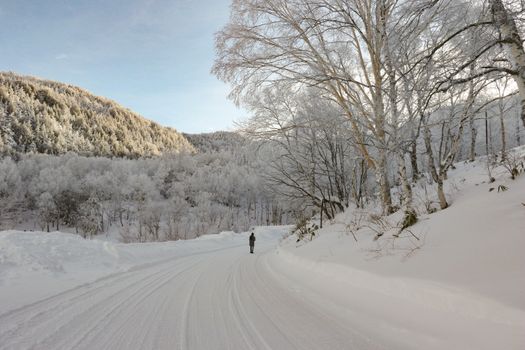
If you prefer deep powder, frozen landscapes, and polar skies, January offers dramatic conditions across northern latitudes.
Hokkaido, Japan
Cold winds from Siberia pick up moisture across the Sea of Japan, dumping consistent, light powder snow across Hokkaido. It is recognized globally as one of the most reliable places for winter sports.
- Typical conditions: Freezing temperatures, typically between -2°C and -10°C (28°F to 14°F), with frequent snowfall throughout the month.
- Key highlights: Skiing and snowboarding in Niseko or Rusutsu, unwinding in traditional hot spring towns like Jozankei, and tasting fresh regional seafood in Sapporo.
- Crowd level: High in resort towns. Skiers and snowboarders arrive from around the world, so book mountain passes and transfers well ahead.
Banff National Park, Canada
The Canadian Rockies turn into a dramatic landscape of frozen lakes and snow-covered pines in January. It is an ideal setting for both resort skiing and gentle winter walking.
- Typical conditions: Sub-zero temperatures, often ranging between -5°C and -15°C (23°F to 5°F), with colder drops during clear nights.
- Key highlights: Skiing at Lake Louise Ski Resort and Sunshine Village, walking along the ice trail in Johnston Canyon, and viewing the snow-draped peaks around Lake Minnewanka.
- Crowd level: Moderate. Ski hills are active on weekends, but weekdays are generally calm compared to summer traffic along the Trans-Canada Highway.
Tromsø, Norway
Located roughly 350 kilometres (about 217 miles) north of the Arctic Circle, Tromsø experiences Polar Night through early to mid-January. The sun does not rise above the horizon, leaving the sky in a prolonged twilight that transitions into dark night.
- Typical conditions: Winter maritime climate, usually around -4°C to -1°C (25°F to 30°F), though inland valleys can be much colder.
- Key highlights: Aurora borealis excursions, dog sledding through snow-covered valleys, and learning about Sami culture in the surrounding Troms region.
- Crowd level: Moderate to high. January is prime season for northern lights tourism, so guided activities should be reserved before arrival.
Culture and winter festivals
January hosts several notable seasonal events that transform their host cities, offering distinctive cultural experiences.
Harbin, China
Every winter, Harbin hosts the Harbin International Ice and Snow Sculpture Festival. Sculptors build full-sized buildings, towers, and monuments out of massive ice blocks harvested from the frozen Songhua River, illuminating them with multi-coloured lights at night.
- Typical conditions: Extremely cold, with average daytime temperatures around -13°C (9°F) and night lows frequently dropping below -24°C (-11°F).
- Key highlights: The Ice and Snow World exhibition grounds, Sun Island snow sculptures, and walking along the historic Russian-influenced architecture of Central Street.
- Crowd level: High during the festival peak. Check this year's dates for opening ceremonies and related regional events.
Jaipur, India
Rajasthan's winter climate is pleasant and dry, making January one of the most comfortable times to explore historic forts, palaces, and busy bazaars. The city also regularly hosts the renowned Jaipur Literature Festival in late January.
- Typical conditions: Mild, sunny days averaging 22°C (72°F) with cool evenings dropping to about 8°C (46°F).
- Key highlights: Amber Fort, the City Palace, Hawa Mahal, and literary sessions featuring international authors. Check this year's dates for the festival schedule before finalizing dates.
- Crowd level: High, particularly around festival days. Central boutique hotels and transport options fill quickly.
Budget-friendly January destinations
Travelling in January can be cost-effective if you choose regions with naturally lower day-to-day costs or destinations entering their low tourism season.
Vietnam (Central and Southern Regions)
Vietnam provides exceptional value for lodging, local food, and domestic transportation. In January, the south (Ho Chi Minh City and the Mekong Delta) is dry and warm, while the central coast around Hoi An begins to clear from late-year rains.
- Typical conditions: Southern areas usually stay around 30°C (86°F); central areas are cooler, roughly 22°C to 25°C (72°F to 77°F).
- Key highlights: Exploring the street food markets of Ho Chi Minh City, taking river boats through the Mekong Delta, and cycling through the lantern-lit streets of Hoi An.
- Crowd level: Moderate, though domestic travel surges dramatically around the Lunar New Year (Tet). Check this year's dates for Tet, as businesses often close during the celebration week.
Budapest, Hungary
Central Europe in January is cold, but Budapest offers budget-friendly accommodation and plenty of indoor culture. The city's extensive thermal bath network provides an easy way to stay warm throughout the winter days.
- Typical conditions: Daytime temperatures usually hover between 1°C and 4°C (34°F to 39°F) with occasional snow dusting the hills.
- Key highlights: Soaking in the historic Széchenyi or Gellért thermal baths, touring the Hungarian Parliament Building, and walking across the Chain Bridge between Buda and Pest.
- Crowd level: Very low. Winter brings affordable hotel rates and short lines for historic attractions.
How to choose your January destination
To narrow down your options, weigh these four factors before booking:
- Daylight hours vs. temperature: Destinations near the Arctic offer memorable winter scenery and auroras, but daylight is minimal. If short days affect your energy, prioritize equatorial regions or southern Europe.
- Dry season timing: Tropical regions have distinct wet and dry seasons. Costa Rica and the Andaman coast of Thailand are typically dry in January, whereas other tropical spots, such as Bali, are in their rainy season.
- Holiday spillover: The first week of January remains busy and expensive worldwide due to New Year holidays. If you have schedule flexibility, departing after the first week often yields lower accommodation costs and quieter sights.
- Logistical ease: If you plan to drive, evaluate winter road safety. Mountain driving in Canada or northern Japan requires winter tires, snow chains, and experience on ice. For driving routes, use RoutePlanner to check estimated travel times and road conditions.
January travel planning checklist
- [ ] Check entry requirements: Confirm visa guidelines, passport validity thresholds (often six months minimum), and travel insurance conditions through official government portals.
- [ ] Verify event dates: If travelling for a specific event (such as the Harbin Ice Festival, Jaipur Literature Festival, or Lunar New Year), check this year's dates to avoid booking the wrong calendar week.
- [ ] Pack for extreme ranges: For winter sports trips, bring dedicated thermal base layers, moisture-wicking socks, and windproof outer shells. For tropical regions, pack high-SPF sunscreen and lightweight, breathable fabrics.
- [ ] Book key connections in advance: High-demand ski resorts, Arctic wilderness lodges, and dry-season tropical beachfronts often book out months ahead for January.
- [ ] Organize your daily schedule: If you have questions about regional routes or seasonal closures, consult Tripsora, or arrange your stops with TripBuilder to keep daily travel realistic.
Frequently asked questions
Where is the warmest place to travel in January?
Equatorial regions and parts of the southern hemisphere offer the warmest weather. Destinations like southern Thailand, Central America, and the Caribbean regularly see temperatures around 30°C (86°F) with consistently dry conditions. Southern hemisphere hubs like Australia and South Africa also experience their warmest summer months during January.
Is January a good month for budget travel?
Yes, particularly if you travel after the New Year holiday week. Major cultural cities across Europe, including Rome, Budapest, and Seville, experience lower hotel rates and fewer tourists during this period. Long-haul destinations across Southeast Asia also provide low day-to-day spending for accommodation and food year-round.
How can I see the northern lights in January?
Northern destinations like Tromsø in Norway, Abisko in Sweden, and Fairbanks in Alaska provide high chances of sightings due to long winter nights. Look for clear skies away from urban light pollution and monitor regional aurora forecasts. We suggest dedicating at least three to four nights in the Arctic region to improve your odds of clear weather.
Start planning
More pictures
Tags
Share this guide
We may earn a commission if you click a link and buy a product or service, at no extra cost to you. How affiliate links work.
Been there?