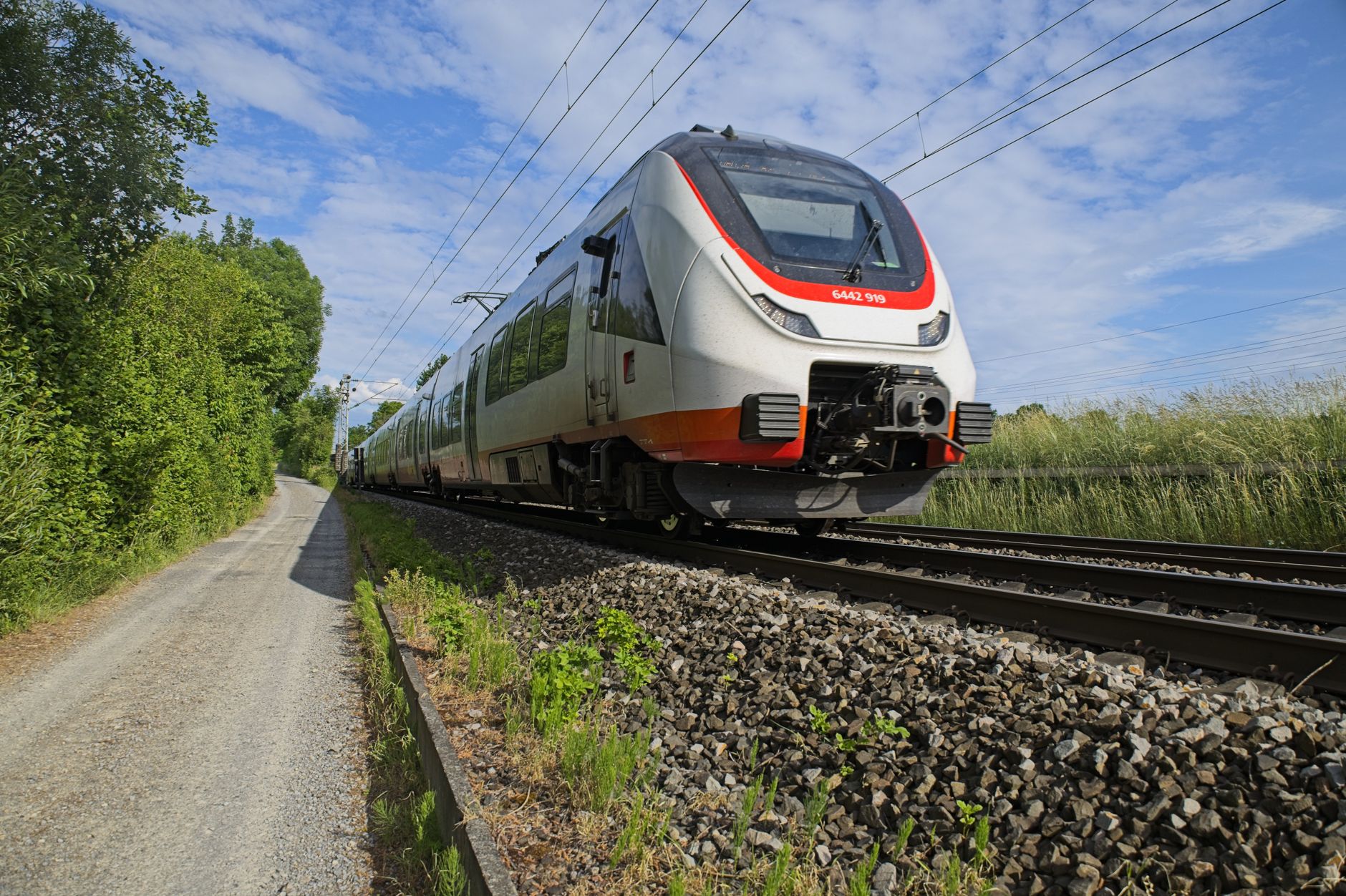
A tour of seven well-known corridors where fast trains now carry most of the traffic that once flew, with what makes each one work and how to ride it.
Some of the busiest air routes of the twentieth century have quietly faded. Not because airlines stopped caring, but because a fast train that leaves from the middle of one city and arrives in the middle of another is very hard to beat once the journey gets under about three hours. This article walks through seven corridors where rail has become the default choice, why each works, and what to know before you ride.
A note on evidence: rail operators and regulators regularly publish market-share figures, and they change from year to year. Rather than quote numbers that may be out of date, this guide describes the general pattern and encourages you to check current timetables and operator announcements before you plan.
Why trains win on short routes
A flight is fast in the air but slow everywhere else. A realistic door-to-door flight includes getting to an airport on the edge of town, arriving early for security, waiting to board, taxiing, flying, waiting for bags, and getting into the city again. A high-speed train removes most of those steps.
The tipping point tends to arrive somewhere between two and three hours of train time. Below that, rail usually wins on total journey time. Above roughly four hours, flying often claws the advantage back, although comfort, price and carbon footprint can still favor the train.
Things that help a rail corridor beat the plane:
- Stations in city centers, often connected to local transit.
- Frequent departures, so you do not need to plan around one train a day.
- Flexible tickets and generous luggage rules.
- Reliable travel times with fewer weather disruptions.
- Onboard space to work, eat, or simply look out of the window.
1. Madrid to Barcelona
Spain built one of the largest high-speed networks in the world, and the line between its two biggest cities is the showpiece. The journey takes roughly two and a half to three hours depending on the service, linking Atocha or Chamartin in Madrid with Barcelona Sants.
Competition changed this route in recent years. Several operators now run services, which has pushed fares and frequency in the traveler's favor. Flights between the two cities still exist, but many travelers simply prefer the train because it avoids the airport trek at both ends.
Practical tips:
- Compare operators; the cheapest and the most flexible tickets are often on different brands.
- Book early for weekends, holidays and big trade fairs in Barcelona.
- Sants is a major hub, so onward trains to Girona or Tarragona are easy.
2. London to Paris and Brussels
The Channel Tunnel route is the classic case. Eurostar trains connect London St Pancras with Paris Gare du Nord and Brussels-Midi in a few hours, and the line from London to Paris in particular has long carried far more passengers than the air shuttle.
Border formalities are part of the trip. You pass through passport and security checks before boarding, so arrive at the station well ahead of departure, following the operator's current guidance. Rules around passport checks, entry systems and baggage change over time, so check official government and operator pages before you travel.
Why it works: both ends are right in the center of enormous cities, and the tunnel crossing is short and weatherproof.
3. Paris to Lyon, Bordeaux and Nantes
France is probably the best-known example of policy nudging travelers toward rail. A law passed in 2021 and applied from 2023 restricted certain domestic flights where a direct rail journey of under two and a half hours was available. Its practical reach turned out to be narrower than headlines suggested, but it reflected a real shift in thinking.
The TGV network already made these routes attractive. From Paris Gare de Lyon you can be in Lyon in about two hours, and the Atlantic line from Paris Montparnasse reaches Bordeaux in roughly the same ballpark after newer track opened. Nantes is a little further but still manageable.
If you are connecting to an international flight, note that some stations connect directly to airports, such as Lyon-Saint-Exupery and Paris Charles de Gaulle, which makes rail-to-air itineraries more practical than they sound.
4. Tokyo to Osaka and Kyoto
Japan's Shinkansen, which opened in 1964, is the model for much of what followed. The Tokaido line connects Tokyo with Nagoya, Kyoto and Osaka in around two to two and a half hours for the fastest services. For most travelers this is simply how you make the trip, with flights playing a smaller role.
Why travelers love it:
- Trains run very frequently through the day.
- Punctuality is a point of national pride.
- Stations are in the middle of town, with excellent local connections.
- You can reserve seats, or sometimes ride unreserved cars on certain services.
Check current pass options if you are visiting from abroad, since national rail passes and their prices have changed in recent years. Look at the official Japan Rail and operator websites rather than third-party summaries.
5. Beijing to Shanghai
China built the world's largest high-speed network in a short period, and the line between Beijing and Shanghai is among its most famous. The fastest trains cover roughly 1,300 kilometers in a little over four hours, which is a long journey by train terms but still competitive with flying once airport time is included.
For visitors, the journey is easy to book through official apps and agents, and you will usually need your passport to buy tickets and enter stations. Station design is airport-like, with ticket checks and security screening, so arrive with a comfortable buffer. Foreign payment and booking arrangements have been simplifying, but it is wise to check what currently works for visitors.
6. Amsterdam to Brussels and Paris
Here is a corridor where an airline publicly acknowledged the shift. For years, major carriers have encouraged connecting passengers to use rail for short hops between Amsterdam and Brussels, and the cross-border high-speed services run between Amsterdam Centraal, Brussels-Midi and Paris Gare du Nord.
The direct Amsterdam to Brussels trip takes just under two hours on the fast service, and Paris is a little over three. Many travelers combine Amsterdam, Brussels and Paris in a single loop without ever visiting an airport.
Things to keep in mind:
- Fast cross-border trains may require reservations, unlike some regional services.
- Slower regional connections exist as cheaper alternatives, though they take longer.
- Disruptions occasionally affect international services, so keep some slack in your plan.
7. Milan to Rome and Florence
Italy's high-speed rail has transformed domestic travel. Two operators run fast services along the spine of the country, with Milan to Rome taking roughly three to three and a half hours and Florence sitting conveniently in between.
Because Italian airports are often a significant trip from the historic centers, the train can feel dramatically easier. Arriving at Roma Termini or Milano Centrale puts you within reach of hotels and the metro.
Tips for Italy:
- Validate tickets only if the ticket type requires it; reserved high-speed tickets generally do not need validation, but rules vary by ticket.
- Book popular departures ahead, especially Friday and Sunday evenings.
- Both big operators offer different fare tiers; flexible fares cost more but allow changes.
When the plane still makes sense
It would be dishonest to say trains always win. A few cases tilt the other way:
- Very long distances. Once a train journey passes four to five hours, flights often save significant time.
- Islands and mountain barriers. Some regions simply lack track.
- Late-night or very early departures. Rail timetables can be thinner.
- Tight, cheap bookings. Occasionally a budget airline fare undercuts a last-minute train ticket, though baggage fees and airport transfers can narrow the gap.
The best approach is to compare total cost and total time for your own situation, including how you will get to and from the airport or station.
How to choose between train and plane
A quick decision routine:
- Check the train time between station centers, not just in-motion time.
- Estimate your airport transfer and security time on both ends.
- Look at how flexible each ticket is if plans change.
- Think about luggage: trains are often far more relaxed.
- Consider how much you value working or relaxing en route.
If the train is under about three hours and leaves from where you are staying, it will usually be the easier choice.
Booking advice that applies almost everywhere
- Use the national operator's website or app as a baseline, then compare with aggregators.
- Tickets usually go on sale a few months ahead, but the exact window varies; check the operator.
- Cheaper fares tend to be less flexible. Read the change and refund conditions.
- Keep your ID or passport handy for cross-border services.
- Download tickets for offline use in case of weak signal on board.
Frequently asked questions
Is the train always greener than flying? Generally, rail produces far lower emissions per passenger on electrified lines than short flights, but the exact comparison depends on the energy mix and occupancy. For a specific trip, operators and independent calculators can give estimates, so treat any single figure with some caution.
Do I need to arrive early for high-speed trains? Often much less than for flights. Some networks need only a few minutes, while Eurostar and Chinese high-speed services expect you to allow time for security and border checks. Follow your operator's guidance.
Can I bring a lot of luggage? Luggage rules are usually more generous than airlines, although some operators set limits or recommend keeping bags where you can see them. Look up your operator's current policy.
What if my train is delayed? Many operators and countries have compensation schemes, which differ by route and ticket type. Keep your ticket and read the conditions before you travel.
Summary
Fast trains have replaced short flights in many places because they remove the hidden hours around flying and deliver you to the heart of the city. Madrid to Barcelona, London to Paris, Tokyo to Osaka, Beijing to Shanghai, Amsterdam to Brussels and Paris, the French TGV lines and Italy's Milan to Rome corridor each show a slightly different version of the same story. Check current timetables, fares and entry rules with official sources, compare door-to-door time rather than just time in motion, and give yourself some slack. On routes under about three hours, the train is often both the kinder and the simpler choice.
More pictures

Tags
Share this guide
We may earn a commission if you click a link and buy a product or service, at no extra cost to you. How affiliate links work.
Been there?