
Tired of surface-level tourism? Imagine learning a centuries-old melody from a true master, a secret shared only with those who seek it. This isn't just a lesson; it's a profound cultural immersion locals often keep to themselves, and I'm here to show you how to find it. ---
The air in Ubud was thick with the scent of frangipani and burning incense. I’d just finished a yoga class, feeling zen, but also a familiar itch. I’d seen the beautiful Balinese dances, heard the enchanting Gamelan music at temple ceremonies, and bought the obligatory sarong. But something was missing. I wanted to feel it, not just observe. I wanted to scratch beneath the pristine surface of "Bali paradise" and touch its authentic, vibrating soul.
That night, as I wandered through a quieter lane, a rhythmic pulse drew me in. It wasn't the polished performance from a tourist brochure; this was raw, resonant, alive. Peeking through a gate, I saw a group of men, young and old, gathered in a banjar (community hall), their faces alight with concentration as they played a Gamelan orchestra. An elderly man, his skin like parchment, sat at the front, his eyes closed, conducting not with a baton, but with the subtle sway of his body, the ancient rhythms flowing through him.
This wasn’t a show. This was life. This was the music locals cherish, teach their children, and often, keep quietly to themselves, away from the clamor of tourist demands. And in that moment, I knew: this was the secret I was chasing. This was the authentic connection I craved, the kind of experience that transforms a trip into a journey. I wanted to learn from him, from a true master, not just a performer. And I did.
What I discovered on that trip, and subsequent journeys, is that these profound musical encounters are out there, waiting. They are the hidden melodies, the whispered traditions, the lessons from masters whose wisdom is passed down through generations. And yes, they are often the experiences locals might not actively advertise to tourists, not out of malice, but because they are sacred, intimate, and deeply embedded in their cultural fabric. But with a little effort, respect, and the right approach, you too can unlock these secret rhythms.
The Quest for Authenticity: Why Seek the Unseen Melodies?
In our hyper-connected, easily-Googled world, true discovery feels increasingly rare. We tick off landmarks, snap photos, and move on. But what if you could do more than just see a culture? What if you could participate in it, learn its language through its music, and feel its history resonate through your very hands?
That's the magic of seeking out traditional music lessons from local masters. It’s not about becoming a virtuoso overnight (though you might surprise yourself!). It's about:
- Deep Cultural Immersion: You're not just observing; you're doing. You step into the shoes of a local, learning a skill that’s fundamental to their identity. This opens doors to understanding customs, beliefs, and social structures in a way no museum or guided tour ever could.
- Unforgettable Human Connection: These lessons often take place in homes, community centers, or quiet studios. You’ll share tea, stories, and laughter with your teacher, often forming bonds that transcend language barriers. These are the interactions that truly define a trip.
- A Unique Skill & Souvenir: Forget mass-produced trinkets. You leave with a new skill, a melody etched into your memory, and a story far richer than any postcard. Imagine playing a simple tune on a Peruvian pan flute or tapping a basic rhythm on a Moroccan djembe, knowing you learned it from a true lineage holder.
- Supporting Local Artisans & Traditions: By seeking out these independent teachers, you’re directly contributing to the preservation of ancient art forms and supporting individuals who dedicate their lives to keeping these traditions alive, often against the tide of modernization.
- The Thrill of Discovery: Let's be honest, there's a certain thrill in uncovering something truly special, something that feels like your own secret. It’s the ultimate "insider" experience.
So, how do you find these elusive masters? It takes a bit more than a quick Google search, but the rewards are immeasurable. Let me share some of my own adventures and the practical tips I've gathered along the way.
Unlocking Bali's Rhythms: The Gamelan's Secret Heartbeat
My first true quest began in Bali, with that serendipitous encounter. The Gamelan orchestra isn't just music; it's a spiritual experience, a complex tapestry of interlocking rhythms played on bronze gongs, metallophones, and drums. It’s central to Balinese ceremonies and daily life.
My Experience: After peeking into that banjar, I waited respectfully until the session ended. With the help of my rudimentary Bahasa Indonesia and a lot of pointing, I approached the elder master, Pak Wayan. He initially seemed surprised, perhaps even a little amused, that a solo female traveler wanted to learn. But my genuine enthusiasm and respect for the music quickly won him over. He didn't speak much English, and my Indonesian was basic, but music became our language.
For a week, I spent a couple of hours each afternoon in that banjar, learning to strike the gangsa (a metallophone) with the correct, precise technique. He taught me by rote, demonstrating a phrase, then having me repeat it until it became muscle memory. There were no sheet music or fancy explanations, just pure imitation and absorption. It was humbling, frustrating, and ultimately, profoundly rewarding. I wasn't just learning notes; I was learning patience, community, and the meditative power of rhythm.
How YOU Can Find Your Balinese Master:
- Go Local, Literally: Stay in a guesthouse or homestay outside the main tourist drag. Your hosts are your best resource. Ask them about local banjars or community groups that practice Gamelan.
- Visit Temple Ceremonies: Observe where the musicians are. After a ceremony, respectfully approach them.
- Cultural Centers (the right kind): Look for smaller, community-focused cultural centers rather than large performance venues. Ask if they offer informal lessons or can connect you.
- Instrument Shops: A local shop selling Gamelan instruments might know teachers.
- Expect to Bargain/Pay Respectfully: My lessons with Pak Wayan were incredibly affordable, perhaps 50,000-100,000 IDR (approx. $3-7 USD) per hour, often including tea. Don't haggle aggressively; offer a fair price that shows respect for their time and art.
- Patience & Presence: Show up, listen, be present. Don't expect a structured "course." This is organic learning.
Hanoi's Whispering String: Mastering the Dan Bau
From the communal grandeur of Balinese Gamelan, my next musical quest led me to the delicate, haunting beauty of the Vietnamese Dan Bau, a monochord zither. Its ethereal, almost human-like voice is instantly recognizable, often heard floating from quiet cafes or traditional theaters.
My Experience: In Hanoi, I was captivated by the melancholic vibrato of the Dan Bau. I knew it was a challenging instrument, requiring incredible finesse with a single string and a flexible rod. I started my search in the Old Quarter, visiting small instrument repair shops. Most pointed me to tourist shows. But one shop owner, a wizened man with spectacles, saw my genuine interest. He made a call.
A few days later, I found myself in a modest apartment in a quiet alley, sipping green tea with a woman named Ms. Linh, a retired music teacher. Her apartment was filled with instruments, and the air hummed with a quiet reverence for music. She spoke excellent English, having taught at a local conservatory before her retirement. Her lessons were structured but deeply personal. She taught me the fundamentals of plucking, bending the rod to create pitch changes, and the delicate art of harmonics. It was incredibly difficult to produce a clear, resonant sound, but Ms. Linh's patience was boundless. She would gently adjust my wrist, guide my finger, and hum the melody until I found it.
Learning the Dan Bau felt like learning a secret language, each note a whisper of Vietnamese history and emotion. It was a stark contrast to the bustling streets outside, a quiet sanctuary of sound.
How YOU Can Find Your Vietnamese Master:
- Instrument Repair Shops: These are goldmines. The people who fix instruments often know the people who play and teach them.
- Small, Independent Cafes/Tea Houses: Especially those that host traditional music evenings, even if informal. Strike up conversations.
- Local Universities/Conservatories: Even if you can't enroll, their staff or students might know retired teachers looking for private students.
- Expat Forums/Facebook Groups: Search for "Hanoi expats" or "Vietnam music." Locals often share recommendations here.
- Language Barrier: While Ms. Linh spoke English, many won't. Be prepared with Google Translate or a local phrasebook. The music will bridge the gap.
- Cost: My lessons with Ms. Linh were around 200,000-300,000 VND (approx. $8-12 USD) per hour, a fair price for a private, expert lesson.
Andean Echoes: Charango & Siku in Cusco's Soul
The vibrant markets and ancient stones of Cusco, Peru, hum with the sound of the Andes. The melancholic cry of the siku (pan flute) and the bright, percussive strumming of the charango (a small, ten-stringed lute, often with an armadillo shell back) are inseparable from the region's identity.
My Experience: I’d always been drawn to the raw, earthy sounds of Andean music. In Cusco, it's everywhere – street performers, market stalls, restaurants. But I wanted more than a performance; I wanted to understand the soul behind the sound. I started my search in the artisan district of San Blas, known for its artists and musicians. I spent days just listening, observing, and drinking coca tea.
I noticed a humble workshop tucked away on a side street, not selling tourist trinkets, but repairing and crafting charangos and sikus. Inside, an elderly man, Don Ricardo, was meticulously carving wood. He spoke only Quechua and Spanish. My Spanish was passable, but his Quechua was his heart language. I explained, as best I could, my desire to learn. He chuckled, then invited me to sit.
He didn't teach me in a formal sense. Instead, he would play, then hand me a simple siku and encourage me to imitate. For the charango, he showed me basic chords, his gnarled fingers moving with astonishing agility. We communicated through smiles, gestures, and the music itself. He shared stories of his family, of the mountains, of how the music connected them to their ancestors. It was less a lesson, more an apprenticeship, an immersion into a living tradition. I learned to appreciate the subtle breath control for the siku and the rhythmic strumming of the charango, feeling the spirit of the Andes flow through the instruments.
How YOU Can Find Your Andean Master:
- Artisan Workshops & Instrument Makers: These are your absolute best bet. The people who make the instruments are often masters of playing them and are deeply connected to the local music scene.
- Local Markets (beyond the tourist zone): Look for musicians who aren't just performing for tips but seem to be part of the local fabric. Engage them in conversation.
- Cultural Houses/Community Centers: Ask around for "casa de cultura" or similar organizations that might promote traditional arts.
- Hostel Staff (the right ones): Smaller, locally-owned guesthouses often have staff with deep local connections. Avoid large chain hotels.
- Be Patient and Respectful: Andean culture is deeply respectful. Don't rush. Take time to build rapport. Offer to buy them a coffee or a meal.
- Cost: Don Ricardo refused payment initially, saying my genuine interest was enough. I insisted on leaving a respectful amount (around 50-70 PEN / $13-18 USD per session) and bought some of his handcrafted items, which he appreciated greatly.
Marrakech's Trance: The Mystical Gnawa Rhythms
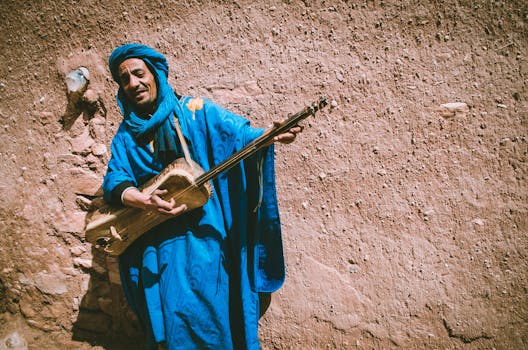
Marrakech is a sensory overload, especially in the Djemaa el-Fna. Amidst the snake charmers and storytellers, you'll hear the powerful, hypnotic rhythms of Gnawa music – a spiritual and healing tradition brought by descendants of West African slaves. Its core instruments are the three-stringed guembri (a bass lute) and the metallic qraqeb (large iron castanets).
My Experience: I’d heard Gnawa music before, but never truly understood its depth. I wanted to learn the qraqeb, the metallic clappers that drive the trance-like rhythms. My initial inquiries in the main square led nowhere; everyone just wanted to sell me a CD.
I decided to venture into the mellah (Jewish quarter), a less touristy part of the medina, and then further into the local neighborhoods. I stumbled upon a small, unassuming cultural association dedicated to preserving Gnawa heritage. Inside, a young man, Hassan, was teaching a group of local children. He was a maâlem (master) in training, deeply committed to his roots.
Hassan was initially hesitant about teaching a tourist, but my persistence and explanation of my deep respect for the tradition eventually won him over. He taught me the basic qraqeb rhythms, which are deceptively complex. It’s not just about hitting them; it’s about the subtle wrist movements, the interlocking patterns, and the call-and-response with the guembri. We practiced in a small, dusty courtyard, the sun warming the ancient walls. He explained the spiritual significance of the music, the healing rituals, and the history of the Gnawa people. It was a profound education, far beyond just learning an instrument.
How YOU Can Find Your Moroccan Master:
- Cultural Associations/Foundations: Search for organizations dedicated to traditional music or heritage preservation. These are often non-profits and eager to share.
- Gnawa Houses (Zaouias): These are spiritual lodges where Gnawa practitioners gather. Approaching respectfully during non-ceremonial times might open doors.
- Local Guides (the right ones): Hire a local guide, not one from a big tour company. Explain your specific interest and ask them to help you navigate. They often have family or community connections.
- Beyond the Djemaa el-Fna: Venture into quieter parts of the medina or local neighborhoods where daily life unfolds.
- Language is Key: Basic Darija (Moroccan Arabic) or French will be incredibly helpful.
- Cost: My lessons with Hassan were donation-based, as it was a community center. I contributed generously (around 100-150 MAD / $10-15 USD per hour) to support the center and his work.
Your Own Musical Odyssey: Practical Tips for Finding a Master
The common thread in all these experiences is the same: move beyond the obvious, be respectful, and be persistent. Here’s your actionable playbook:
- Do Your Homework (But Not Too Much): Research the traditional instruments of your destination. Know what you’re looking for. But don't pre-book expensive "cultural experiences" online – these are often tailored for tourists and lack authenticity.
- Ask Locals, Not Tour Guides (Initially):
- Homestay/Guesthouse Owners: Your hosts are your best resource. They know their community.
- Shopkeepers: Especially those selling local crafts, instruments, or even just daily necessities. They’re embedded in the community.
- Cafe/Restaurant Staff: If you frequent a local spot, build a rapport and then ask.
- Avoid: Hotel concierges or official tour agencies, as they often have partnerships with larger, tourist-oriented operations.
- Visit Cultural Centers & Community Halls: Look for places where locals gather for cultural activities, music practice, or community events. These are often less advertised but are hubs of traditional life.
- Seek Out Instrument Makers & Repair Shops: These artisans are often musicians themselves or know all the musicians in town. They are custodians of the musical tradition.
- Attend Local Performances (Respectfully): If you see a performance outside of a designated tourist venue (e.g., a wedding, a local festival, a spontaneous gathering), observe respectfully. If appropriate, approach musicians after their performance to express your admiration and inquire about lessons.
- Learn Basic Phrases: "Hello," "Thank you," "Please," "Do you teach music?" in the local language goes a long, long way. It shows respect and opens doors.
- Be Patient & Flexible: These aren't structured classes with fixed schedules. Be prepared to wait, adjust to local timing, and embrace an organic learning process.
- Offer Fair Compensation: While some masters might initially refuse payment, always insist on offering a respectful amount. Ask your local contacts what a fair price would be. This is their livelihood and their art.
- Bring a Small Gift: A thoughtful small gift from your home country (e.g., local chocolates, a postcard, a small craft) can be a wonderful gesture of goodwill and appreciation.
- Show Genuine Interest & Respect: This is paramount. Be humble, listen intently, and show sincere appreciation for their culture and their art. Don't treat it like just another "activity" to tick off your list.
- Be Open to Unexpected Connections: Sometimes, the best lessons come from chance encounters, not planned searches. Keep an open mind and heart.
The Melody Lingers On: A Transformative Journey
Learning traditional music from a local master isn’t just about the notes; it’s about the stories, the history, the community, and the profound human connection. It’s about being welcomed into a world that few tourists ever get to see, let alone participate in. It’s an experience that transcends language and cultural barriers, leaving you with more than just memories – it leaves you with a piece of a culture's soul.
These are the moments that define true travel, the experiences that make you feel alive, connected, and utterly transformed. So, next time you're planning an adventure, pack your curiosity, open your ears, and prepare to embark on a musical odyssey that locals just might want to keep to themselves.
Have you ever learned a traditional instrument abroad? Do you have a secret tip for finding local masters? Share your stories and wisdom in the comments below! Let's inspire each other to seek out these unforgettable, hidden melodies.
---
More pictures
Tags
Share this guide
We may earn a commission if you click a link and buy a product or service, at no extra cost to you. How affiliate links work.
Been there?