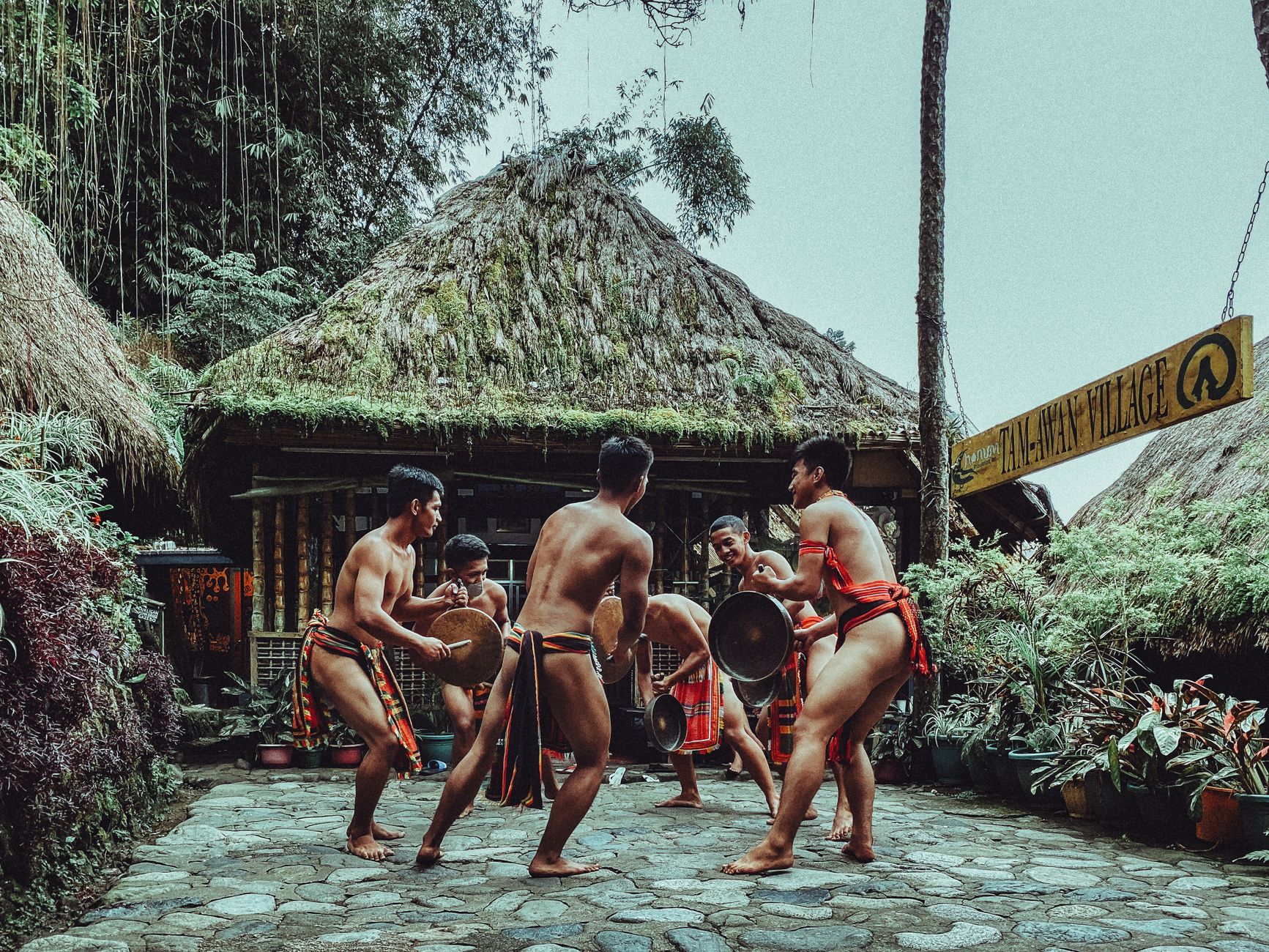
Tired of the same old tourist trails? True travel magic happens when you connect with locals, and what better way than through the universal language of play? Get ready to ditch the guidebooks and dive into vibrant cultural experiences by mastering these traditional games, taught to you by the very heart of each destination. ---
The setting sun cast long, dancing shadows across the dusty village square in rural Laos. I was tired, sweaty, and utterly defeated. A group of local teenagers, barely half my age, were giggling uncontrollably as they watched me botch yet another attempt at Sepak Takraw. My feeble kicks sent the rattan ball wildly off course, while their feet, knees, and even heads moved with an effortless grace that seemed to defy gravity. I felt clumsy, out of place, and yet… utterly alive.
It was one of those travel moments you can’t plan, can’t book on an app, and certainly can’t find in a glossy brochure. It was raw, authentic, and born from a simple invitation: "Hey farang, want to play?"
We often chase the big sights – the ancient temples, the iconic skylines, the pristine beaches. And while those are undoubtedly incredible, the true heart of a place often beats in its quieter corners, in the shared laughter, the friendly competition, and the universal language of play. Learning a traditional game from a local isn't just about mastering a new skill; it's about breaking down barriers, forging genuine connections, and experiencing a culture from the inside out. It's about feeling like you belong, even if just for an afternoon.
These aren't just games; they're living traditions, passed down through generations, each telling a story of resilience, community, and joy. And trust me, the memories you make trying to master a local game, surrounded by new friends and genuine smiles, will last far longer than any souvenir. So, pack your adventurous spirit, ditch your inhibitions, and get ready to add these unforgettable experiences to your travel bucket list. Because before you kick the bucket, you need to kick a Sepak Takraw ball.
1. Sepak Takraw (Southeast Asia): The Aerial Ballet of Feet
Imagine volleyball, but instead of hands, you use only your feet, knees, chest, and head. Now imagine a rattan ball, no bigger than a grapefruit, flying through the air with incredible speed and precision. Welcome to Sepak Takraw, a sport that is as mesmerizing to watch as it is challenging to play.
What it is: Originating in Southeast Asia (Malaysia, Thailand, Laos, Cambodia, Philippines, Indonesia), Sepak Takraw is often called "kick volleyball." Two teams of three players (a 'regu') stand on either side of a net, aiming to send the woven rattan ball over the net and onto the opponent's side, preventing them from returning it. The athleticism required is astounding – players execute bicycle kicks, mid-air splits, and gravity-defying headers with breathtaking agility.
My Experience: My first encounter, as mentioned, was in a small Laotian village. I'd seen it played in parks in Bangkok and Kuala Lumpur, but it was always from a distance, like watching a martial arts demonstration. When those teenagers invited me, I thought, "How hard can it be?" The answer: very. My legs, accustomed to walking and occasional jogging, suddenly felt like lead. My attempts at kicking the ball over the net usually resulted in a painful toe stub or the ball ricocheting into the crowd. But the kids were patient, laughing with me, not at me, as they demonstrated the basic "inside kick" with ease. They'd slow down, mimic my awkward movements, and cheer genuinely when I finally managed a half-decent return. The feeling of finally getting the ball over the net, even if it was a clumsy lob, was pure exhilaration.
How to get involved:
- Where to find it: Look for groups playing in public parks, village squares, or even empty lots, especially in Thailand, Malaysia, Laos, Myanmar, and the Philippines. Early mornings or late afternoons are common times.
- How to ask: A simple "Can I join?" or "May I play?" with a smile, often accompanied by pointing at the ball and then yourself, is usually enough. If there's a language barrier, actions speak louder than words.
- Cost: Free! Just bring your enthusiasm.
- Pro Tip: Start by focusing on the "inside kick" – using the inside of your foot. Don't worry about the fancy aerial moves until you can keep the ball in play. And wear comfortable, flexible clothing!
- Instagram Moment: A dynamic shot of you mid-kick (even if it's a terrible one!) with a backdrop of locals expertly playing, or a group photo with your new Sepak Takraw friends, all sweaty and smiling.
2. Mancala / Oware (Africa & Middle East): The Ancient Game of Strategy
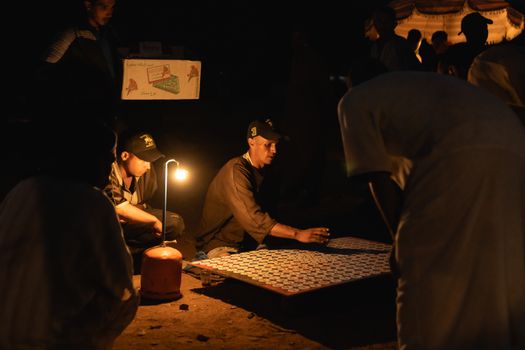
From the bustling souks of Morocco to the tranquil villages of Ghana, you'll find groups gathered around wooden boards, their hands rhythmically moving seeds or stones. This is Mancala, or Oware (one of its many regional variants), a family of ancient board games that are as much about strategy and calculation as they are about community and storytelling.
What it is: Mancala games involve a board with a series of pits or holes, and a set number of seeds, stones, or beans. Players take turns "sowing" the seeds around the board, aiming to capture more seeds than their opponent. The rules vary significantly by region – some are simple enough for children, while others require complex forward-thinking worthy of a chess master.
My Experience: I first learned to play Oware in a small guesthouse in Accra, Ghana. My host, a wise-looking man named Kwame, noticed my curiosity as I watched him play with his neighbor. He patiently explained the rules, using a board carved from a single piece of wood and smooth, polished 'wawa' seeds. My initial attempts were disastrous; I'd focus on one move, only for Kwame to swoop in and capture a huge pile of my seeds with a move I hadn't even considered. He'd chuckle, offer a piece of advice ("always look two moves ahead, my friend"), and reset the board. We played for hours, sipping sweet bissap tea, and as the evening deepened, our conversation drifted from the game to local life, family, and the history of Ghana. It felt like a true cultural exchange, not just a game.
How to get involved:
- Where to find it: Common across Africa, the Middle East, and parts of Asia. Look for people playing in markets, guesthouses, community centers, or even on street corners.
- How to ask: Express genuine interest! "What game is that?" or "Can you teach me?" with a respectful demeanor. Many locals are proud of their traditional games and happy to share.
- Cost: Usually free. If you're really keen, you might find beautiful carved wooden boards for sale in markets (prices vary, but expect around $10-30 USD depending on craftsmanship).
- Pro Tip: Don't be afraid to lose! The joy is in the learning and the interaction. Pay close attention to how your opponent plays, and don't be afraid to ask for clarification on the rules.
- Instagram Moment: A close-up shot of the Mancala board with seeds in the pits, hands mid-move, capturing the strategic intensity and beautiful craftsmanship of the board. Or a candid shot of you and your local teacher, deep in concentration.
3. Petanque (France & Europe): The Art of the Perfect Toss
Picture a sunny square in Provence, the gentle clinking of metal balls, and the murmur of conversation punctuated by bursts of laughter. This is the quintessential soundscape of Petanque, a beloved French pastime that has spread its relaxed charm across Europe and beyond.
What it is: Petanque is a form of boules (lawn bowling) where players throw hollow metal balls as close as possible to a small wooden target ball called a 'cochonnet' (piglet). It's played on a variety of surfaces, from gravel courts to dusty village squares. While strategy is key – deciding whether to "point" (throw close) or "shoot" (knock an opponent's ball away) – the atmosphere is almost always convivial and social.
My Experience: I stumbled upon a game of Petanque in a small park in Nice, France, completely by chance. An elderly gentleman, sporting a jaunty beret and a mischievous twinkle in his eye, noticed me watching. "Venez, mon ami!" he called, gesturing with a boules ball. He handed me a weighty metal sphere and, with a series of theatrical gestures, explained the basics. My first few throws were woefully off target, but he patiently corrected my grip and stance, emphasizing the gentle flick of the wrist. Soon, I was part of their friendly game, a motley crew of retirees and a lone traveler, all united by the simple pleasure of the game. We shared stories (my broken French and their limited English somehow meeting in the middle), sips of pastis, and many laughs. It was an afternoon of pure, unadulterated French charm.
How to get involved:
- Where to find it: France is the heartland, but you'll find Petanque (or Bocce, its Italian cousin) played in parks, town squares, and dedicated courts across Europe, especially in the south. Look for groups gathered around a patch of gravel or dirt.
- How to ask: A polite "Bonjour, puis-je joindre?" (Hello, can I join?) or simply "Puis-je regarder?" (Can I watch?) is a good start. Most players are welcoming.
- Cost: Free to play. You can buy a set of boules balls relatively cheaply (around €20-50 for a basic set) if you want to practice.
- Pro Tip: Observe for a bit to understand the flow. The key is a gentle, accurate toss, not brute force. Don't be afraid to ask for tips on technique.
- Instagram Moment: A classic shot of a Petanque game in progress, with the cochonnet visible, boules scattered, and players in concentration. Bonus points for a picturesque European backdrop (lavender fields, ancient buildings, etc.).
4. Guli Danda (India & South Asia): The Rustic Bat-and-Ball Challenge
Step into any dusty village or bustling urban alleyway across India, Pakistan, Bangladesh, or Nepal, and you might encounter the rhythmic thwack of wood on wood. This is Guli Danda, a traditional street game that is both simple in its tools and surprisingly engaging in its play.
What it is: Guli Danda is a bat-and-ball game played with two pieces of wood: a larger stick (the 'danda') used as a bat, and a smaller, spindle-shaped piece (the 'guli') which is struck. The player uses the danda to flick the guli into the air, then strikes it as far as possible. Points are scored based on the distance the guli travels, or by hitting it in the air before it lands. It's often compared to cricket or baseball but with a much more raw, earthy feel.
My Experience: During a backpacking trip through Rajasthan, India, I found myself in a small village near Pushkar. Kids were playing Guli Danda in a vacant lot, their laughter echoing off the mud-brick houses. One boy, no older than ten, noticed my interest and, with a shy smile, offered me the danda. The guli, with its tapered ends, was deceptively tricky to flick. My first attempts were comical failures, the guli barely moving an inch. The kids erupted in good-natured teasing, then quickly demonstrated the technique again. The trick, they showed me, was to hit the tapered end just right, making it spring into the air before delivering the powerful second strike. When I finally managed to send the guli soaring, the cheers were deafening. We played until the sun dipped below the horizon, the simplicity of the game creating a shared moment of pure joy that transcended any cultural differences.
How to get involved:
- Where to find it: Most commonly found in rural areas and smaller towns across India, Pakistan, Bangladesh, and Nepal. Look for groups of boys and young men playing in open fields, parks, or even wide streets.
- How to ask: A friendly wave and a gesture towards the game is often enough. Most kids are thrilled to have an adult (especially a foreigner) join their game.
- Cost: Absolutely free. The equipment is usually just found wood!
- Pro Tip: Watch closely how the locals flick the guli. It's all about timing and a quick, precise strike to the end. Don't be afraid to get a little dusty!
- Instagram Moment: A candid shot of you mid-swing with the danda, perhaps a blurred guli in the air, against a vibrant South Asian backdrop. Or a close-up of the simple wooden danda and guli, highlighting the rustic charm.
5. Jianzi (China & East Asia): The Graceful Shuttlecock Dance
Wander into any park in China, and you're likely to hear the rhythmic thud of a shuttlecock being kicked, often accompanied by a graceful dance of feet and bodies. This is Jianzi, a beautiful and ancient game that combines elements of sport, art, and meditation.
What it is: Jianzi, also known as 'featherball' or Chinese shuttlecock, involves players using their feet, knees, and sometimes chest to keep a weighted shuttlecock (similar to a badminton shuttlecock, but heavier and with more feathers) in the air. It can be played individually, in a circle, or over a net. The goal is simply to keep the shuttlecock from touching the ground, often with impressive displays of agility and balance.
My Experience: I first saw Jianzi being played in Beijing's Temple of Heaven Park. Elderly men and women, with incredible flexibility, were moving with a fluid grace that belied their age. I was mesmerized. One afternoon, I approached a group, my Mandarin limited to "hello" and "thank you." A woman with a kind smile, seeing my interest, simply nodded and gestured for me to join their circle. She handed me a Jianzi and demonstrated the basic 'inside kick' with her instep. My first attempts were clumsy, the shuttlecock veering wildly. But with each gentle correction and encouraging nod, I slowly got the rhythm. It wasn't about winning; it was about cooperation, keeping the shuttlecock airborne, a shared meditative dance. The feeling of the shuttlecock bouncing off my foot, then seeing it gracefully passed to the next person, was wonderfully satisfying.
How to get involved:
- Where to find it: Very common in public parks across China, Vietnam, and other East Asian countries. Early mornings and late afternoons are prime playing times.
- How to ask: A polite "Ni hao" (hello) and a gesture towards the game is a good start. Many older players are happy to share their traditions.
- Cost: Free to play. You can buy your own Jianzi for a few USD at local markets or toy stores.
- Pro Tip: Focus on soft, controlled kicks with the instep or the side of your foot. It's more about control and rhythm than power. Wear flexible shoes or go barefoot if comfortable.
- Instagram Moment: A slow-motion video of the Jianzi being kicked with graceful movements, or a wide shot of a group playing in a beautiful park setting, capturing the serene and active atmosphere.
6. Tejo (Colombia): The Explosive Game of Aim and Bang!
If you're looking for a truly unique and explosive traditional game, head to Colombia and prepare for Tejo. This isn't just a game; it's a social ritual, often accompanied by cold beer and the satisfying THWACK! of metal hitting gunpowder.
What it is: Tejo is Colombia's national sport, a game where players throw heavy metal discs (the 'tejos') across a clay pit, aiming for a metal ring (the 'bocín') embedded in the clay. The trick? Small triangular packets of gunpowder (the 'mechas') are placed around the bocín. A direct hit that causes the gunpowder to explode is called a 'mecha' and scores big points. It's loud, exhilarating, and surprisingly addictive.
My Experience: I first tried Tejo in Bogotá, at a bustling Tejo hall that felt more like a community center than a sports venue. The air was thick with the smell of clay, beer, and a faint whiff of gunpowder. My Colombian friends, sensing my apprehension about throwing heavy metal at explosives, gave me a quick rundown. "Aim for the middle, try for the mecha!" they urged. My first few throws were embarrassingly weak, the tejo barely making it halfway down the lane. But after a few beers and some pointers on my throwing stance, I felt a surge of confidence. I wound up, threw, and heard a glorious, satisfying BANG! The whole hall erupted in cheers. I had hit a mecha! The sheer thrill of that explosion, the celebratory high-fives, and the shared laughter made it an unforgettable night. It was loud, chaotic, and wonderfully Colombian.
How to get involved:
- Where to find it: Tejo halls (often called 'canchas de Tejo') are common throughout Colombia, especially in cities like Bogotá, Medellín, and Cali. Ask locals for the nearest 'cancha de Tejo.'
- How to ask: Most Tejo halls are set up for casual play. Just walk in, ask for a lane ("una cancha, por favor"), and they'll set you up with tejos and mechas.
- Cost: Playing Tejo itself is often free or very cheap (you pay for the beer!). Expect to spend around 5,000-15,000 COP (approx. $1.50-$4 USD) for beers per person.
- Pro Tip: Embrace the loud noises and the casual atmosphere. Don't be afraid to ask for help with your throwing technique. And definitely try the local beer, it's part of the experience!
- Instagram Moment: A video of a Tejo throw culminating in a mecha explosion, capturing the sound and excitement. Or a photo of you, tejo in hand, in front of the clay pit, with friends cheering you on.
---
Practical Tips for Becoming a Local Game Master
Ready to dive in? Here's how to make the most of your traditional game adventures:
- Be Approachable and Respectful: A warm smile, eye contact, and a friendly demeanor go a long way. Always ask permission before joining or even just watching closely. Show respect for their game, their rules, and their culture.
- Embrace the Language Barrier: Don't let a lack of shared language deter you. Gestures, pointing, and a willingness to mimic will often bridge the gap. Laughter is truly universal.
- Lose Gracefully (and Often): You're learning! Expect to be terrible at first. Focus on the experience, the interaction, and the fun, not on winning. Locals will appreciate your effort and good sportsmanship.
- Observe First: Before jumping in, take a few minutes to watch how the game is played, the general flow, and the unspoken rules. This will help you understand the basics and show your respect.
- Offer to Buy a Round (If Applicable): In places like Colombia (Tejo) or France (Petanque), it's common to share drinks. If you've been welcomed into a game, offering to buy a round of beers or soft drinks is a nice gesture of gratitude.
- Be Patient and Persistent: Some games are harder than others. Don't get discouraged if you don't pick it up immediately. Keep trying, keep smiling, and you'll get there.
- Safety First: While most traditional games are safe, always be aware of your surroundings, especially if playing in a busy street or an unfamiliar area. Trust your gut.
- Capture the Moment (Respectfully): Ask permission before taking photos or videos. A quick "Can I take a picture?" (or gesture) is usually fine, especially if you offer to share the photos with them. These moments are incredibly shareable!
The Ultimate Travel Souvenir
Forget the fridge magnets and generic keychains. The real souvenirs from these adventures aren't tangible objects; they're the stories, the laughter, the shared glances, and the genuine connections you make. They're the memories of feeling clumsy and triumphant, of learning something new, and of truly stepping into someone else's world.
Learning a traditional game is an act of cultural immersion, a bridge between worlds. It’s an experience that humanizes travel, transforming strangers into temporary teammates and creating bonds that transcend language and borders. So, on your next adventure, keep an eye out for those local games. Don't just watch; jump in. Ask to be taught. You might just find that the most profound travel experiences aren't found on a map, but in the palm of a friendly hand, guiding you through a simple, beautiful game.
What's your favorite traditional game you've played or want to try? Share your stories in the comments below, and let's inspire each other to play more! Don't forget to share this post with your fellow wanderlusters!
---
More pictures
Tags
Share this guide
We may earn a commission if you click a link and buy a product or service, at no extra cost to you. How affiliate links work.
Been there?