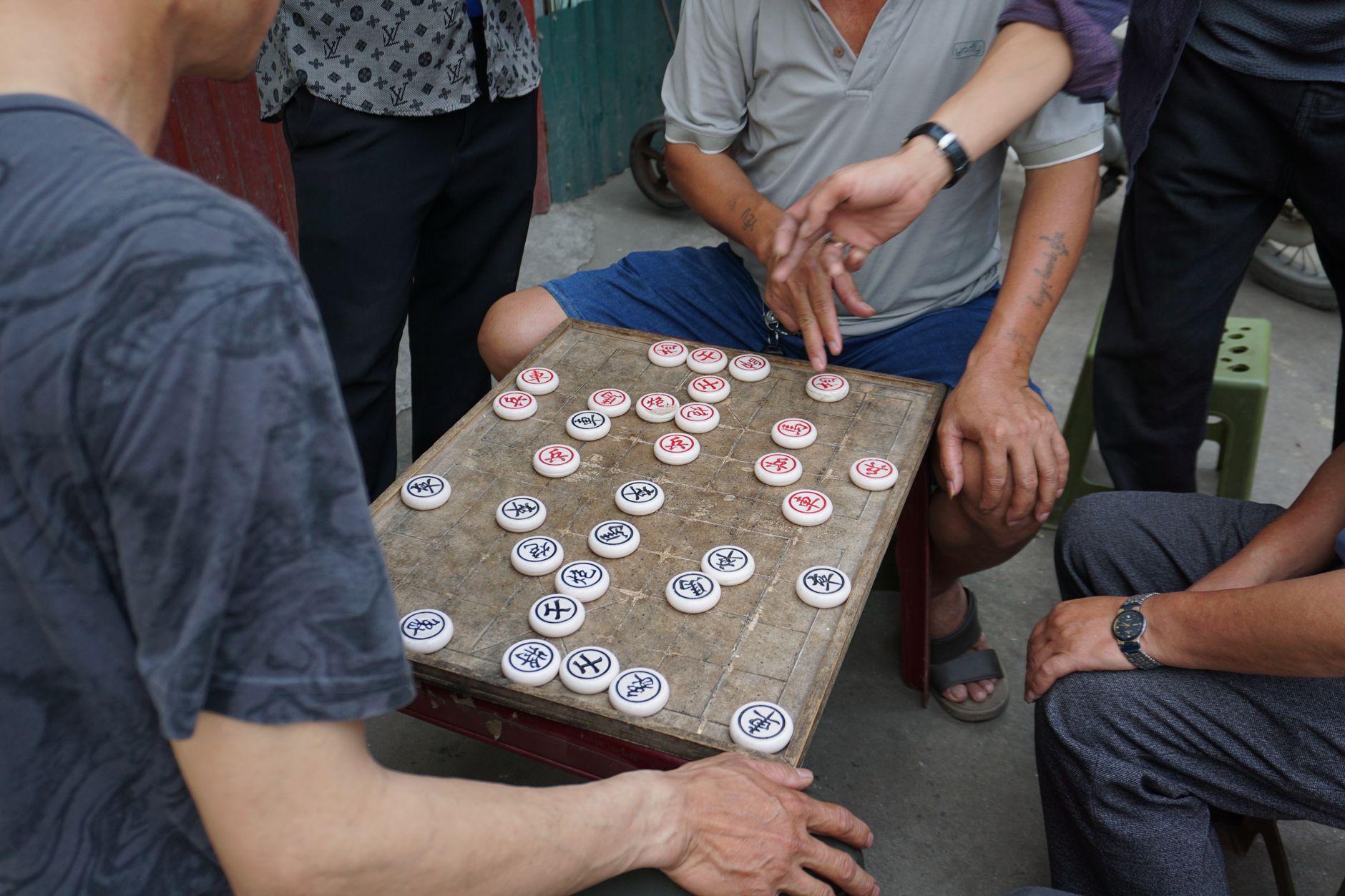
Tired of travel that feels more like a photoshoot than an adventure? This post dives deep into the world of traditional games, offering a unique passport to genuine local connection. Forget staged influencer shots; prepare for raw, unfiltered fun that will leave you with stories far richer than any filter could capture. ---
Uncover Local Games: The Real Travel Experiences Instagrammers Miss!
I remember standing on a pristine beach in Bali, the sunset painting the sky in fiery hues. My phone was out, tripod set, trying to capture that perfect golden hour shot. A few feet away, a group of local kids were laughing, kicking a rattan ball with incredible agility. They weren’t posing; they were playing. And in that moment, something shifted. My "perfect shot" felt hollow, a performance for an algorithm, while their unbridled joy was the real, vibrant story unfolding right beside me.
That's the paradox of modern travel, isn’t it? We chase picture-perfect moments, often missing the very essence of a place – its people, its rhythms, its spontaneous magic. We scroll through endless feeds of impossibly glamorous shots, convinced that’s what authentic travel looks like. But what if the most profound connections, the most unforgettable stories, lie not in the backdrop of a famous landmark, but in the simple act of sharing a game with a stranger?
This isn't about shaming anyone's travel style. It's about opening your eyes to a different kind of adventure, one that Instagram influencers, with their meticulously curated feeds, often overlook. It’s about the traditional games locals will teach you – experiences that are messy, unpolished, and utterly, beautifully real. These aren't just games; they're invitations to culture, history, and genuine human connection.
Ready to put down the phone (just for a bit!) and pick up a new skill, a new story, and a new friend? Let’s dive into the world of authentic play.
The Anti-Influencer Travel Movement: Why Games Matter More Than Filters
In a world saturated with "travel porn," where every meal is photographed and every vista geotagged, it's easy to feel like you're not doing travel "right" unless it looks like a magazine spread. But the truth is, the most impactful travel often happens off-camera, in the spaces between the famous sights. This is where traditional games come in.
Think about it: what better way to break down cultural barriers than through play? Games are a universal language. They transcend linguistic differences, social status, and even age. When you're focused on a shared objective – whether it's sinking a stone in a hole or kicking a ball over a net – you're no longer just a tourist. You're a participant, an equal, a friend.
These are the moments influencers don't capture, not because they're not beautiful, but because they're not easily packaged into a 15-second reel. They're too raw, too spontaneous, too deeply human. They're about laughter lines, not filtered skin; about shared glances, not perfect poses. They’re about the joy of learning, the thrill of competition, and the warmth of community.
Practical Tip for Connection: The key to unlocking these experiences is simple: curiosity and humility. Don't be afraid to observe, smile, and respectfully ask to join. A simple "Can I watch?" or "Can you teach me?" (even with gestures) can open doors to incredible moments. Locals are often delighted to share their traditions with an interested traveler.
1. Sepak Takraw: The Aerial Ballet of Southeast Asia
My first encounter with Sepak Takraw was in a dusty park in Chiang Mai, Thailand. I’d seen a few quick clips online, but nothing prepared me for the sheer athleticism of it in person. It’s often described as "kick volleyball," played with a small, hand-woven rattan ball (or synthetic plastic). Teams of three use their feet, knees, chest, and head to get the ball over a net, but never their hands. The players were leaping, twisting, and serving with incredible bicycle kicks – a true aerial ballet!
I watched, mesmerized, for a good twenty minutes, the rhythmic thwack of the ball and the excited shouts of the players filling the air. Eventually, one of the players, a young man named Somchai, noticed my lingering presence and gestured for me to join them. My heart pounded. I was terrible, of course. My attempts to kick the ball often resulted in it flying wildly off-course or me tripping over my own feet. But Somchai and his friends roared with laughter, not at me, but with me. They patiently showed me how to control the ball, how to pass, how to serve.
Where to Find It & How to Play:
- Locations: Widely played across Southeast Asia, especially in Thailand, Malaysia, and the Philippines. Look for groups playing in public parks, schoolyards, beaches, or even open village spaces, particularly in the late afternoon or early evening when the heat subsides.
- The Game: Two teams of three players (a "regu") on a court similar to badminton. The objective is to send the ball over the net and onto the opponent's side, preventing them from returning it.
- Connecting with Locals: Start by observing. Show genuine interest. A respectful smile and a simple gesture of wanting to learn ("Sepak Takraw?") usually works wonders. Don't be afraid to be bad; your willingness to try is what matters.
- Cultural Insight: Sepak Takraw is more than just a sport; it's a social activity, a display of agility, and a point of national pride. It fosters community and friendly competition.
My Anecdote: After a sweaty hour of flailing, I finally managed a decent serve that actually went over the net. The cheer from the locals was more satisfying than any perfectly filtered photo I’d ever taken. I left with aching muscles, a new appreciation for their skill, and an invitation to join them again the next day. That genuine connection was priceless.
2. Mancala (Oware/Kalaha): The Ancient Strategy Game of the World
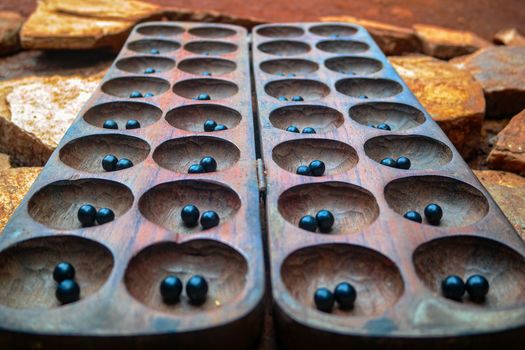
From the bustling markets of Accra, Ghana, to the quiet homes of the Caribbean, I’ve encountered variations of Mancala – a family of ancient board games involving moving seeds or stones around a series of pits. My most memorable experience was in a small village in Ghana, where I was invited into a home for tea. An elder, with eyes that held centuries of wisdom, sat quietly carving intricate patterns into a wooden board. It was an Oware board, a specific Mancala variant.
He noticed my fascination and, with a slow smile, gestured for me to sit. With patient movements and minimal words (as our languages differed), he began to teach me the game. It was deceptively simple in concept – 'sowing' seeds and 'capturing' them – but incredibly deep in strategy. Each move required foresight, planning, and a deep understanding of the board.
Where to Find It & How to Play:
- Locations: Mancala games are found globally, but are particularly prevalent in Africa (e.g., Oware in Ghana, Ayo in Nigeria), the Middle East, and parts of Asia and the Caribbean. Look for hand-carved wooden boards in markets, community centers, or simply people playing on the street or in homes.
- The Game: Typically involves a board with rows of pits (often 6 per player) and a collection of seeds, beans, or stones. Players take turns "sowing" seeds from one pit into subsequent pits, aiming to capture opponents' seeds based on specific rules.
- Connecting with Locals: This is often a game played by older generations, offering a unique opportunity to connect with community elders. Show respect, observe quietly, and express genuine interest in learning. Be prepared for a slow, thoughtful pace.
- Cultural Insight: Mancala games are more than just entertainment; they are tools for teaching strategy, arithmetic, and patience. They are often passed down through generations and serve as a focal point for social gatherings and storytelling.
My Anecdote: I lost every single game against the elder. But with each loss, I gained a deeper understanding of the game’s nuances and a profound respect for his quiet mastery. The tea was warm, the conversation (mostly through smiles and gestures) rich, and the feeling of shared humanity was palpable. It was a lesson in patience and connection, far removed from any guidebook.
3. Pétanque/Bocce: The Social Art of the Boules in Europe
Picture this: a sun-drenched afternoon in a charming village square in Provence, France. The cicadas are humming, the scent of lavender hangs in the air, and the gentle clink of metal balls hitting each other drifts from under the plane trees. This is the sound of Pétanque, France’s beloved game of boules, and its Italian cousin, Bocce.
I was enjoying an espresso, people-watching, when an elderly couple, mid-game, waved me over. Their faces were etched with sun and laughter. They barely spoke English, and my French was rudimentary, but the game needed no translation. They handed me a heavy metal boule, showed me how to hold it, and pointed to the small target ball, the cochonnet.
Where to Find It & How to Play:
- Locations: Pétanque is ubiquitous in France, especially in the South. Bocce is popular throughout Italy. You’ll find designated gravel courts (boulodromes) in parks, village squares, and even some restaurants with outdoor seating.
- The Game: Players (individually or in teams) take turns throwing metal boules as close as possible to a small wooden target ball (the cochonnet or pallino). Strategy involves both precision and knocking opponents’ boules out of the way.
- Connecting with Locals: This is an incredibly social game. Players are often relaxed, enjoying an aperitif, and happy to have an audience or even an extra player. A simple "Bonjour/Ciao, May I watch?" is a great start.
- Cultural Insight: Pétanque and Bocce are deeply ingrained in the local culture, embodying the spirit of leisure, community, and friendly competition. It's a game that encourages slow living and convivial conversation.
My Anecdote: My first throw was disastrous, rolling far past the target. But the couple simply chuckled, offering encouraging words in French. As the afternoon wore on, my throws improved, and so did our communication. We shared pastis, laughter, and the simple joy of a shared activity under the warm Mediterranean sun. It felt like I wasn't just visiting France; I was living a piece of it.
4. Lotería: Mexico's Lively Illustrated Bingo
My trip to Mexico City led me to a vibrant fiesta in a local neighborhood. Amidst the mariachi music and the scent of street tacos, I spotted a large group gathered around a table, holding colorful cards and laughing uproariously. It was Lotería, a traditional Mexican game often described as "Mexican Bingo," but with a whimsical, artistic twist.
Instead of numbers, Lotería uses a deck of 54 beautifully illustrated cards, each with a unique image and name – "El Gallo" (The Rooster), "La Sirena" (The Mermaid), "El Borracho" (The Drunkard). A designated caller rapidly calls out the names, often with witty riddles or improvised poems, and players mark the corresponding images on their boards (called tablas) with beans or stones. The first to complete a pattern shouts "¡Lotería!"
Where to Find It & How to Play:
- Locations: Lotería is a staple in Mexican homes, community gatherings, and often found in markets or even some restaurants, especially during holidays or family events. You can easily buy your own Lotería deck in any Mexican market for a few dollars.
- The Game: Each player has a tabla (board) with 16 images. A caller draws cards and announces them. Players mark their tablas. The first to complete a row, column, or specific pattern shouts "¡Lotería!"
- Connecting with Locals: This is an excellent game for language immersion. Ask at local markets or community centers if there are games being played, or if you see a family playing, politely ask if you can observe or even join. Many will be thrilled to teach you.
- Cultural Insight: Lotería is a beloved tradition, often played during family gatherings, parties, and festivals. It's a fantastic way to learn Spanish vocabulary, experience Mexican humor, and immerse yourself in the country’s rich visual culture.
My Anecdote: I stumbled through my first few rounds, struggling to keep up with the rapid-fire Spanish. But a kind grandmother beside me patiently pointed to the images on my tabla as they were called. Soon, I was recognizing "La Luna" (The Moon) and "El Sol" (The Sun) without help. When I finally yelled "¡Lotería!" (a little too late, but with gusto), the whole table erupted in cheers and laughter. It wasn't just a game; it was a joyful, noisy, immersive language lesson.
5. Carrom: The Finger Billiards of South Asia
During a backpacking trip through India, I often found myself seeking refuge from the midday heat in small, bustling tea shops. It was in one such shop in Jaipur that I first saw Carrom being played. Two men, their faces etched with intense concentration, were hunched over a smooth wooden board, flicking small wooden discs with their fingers. It looked like a cross between billiards and air hockey, but entirely manual.
The game involves using a heavier "striker" disc to pocket lighter "carrom men" into four corner pockets. The precision required was astounding. The players moved with a quiet, almost meditative focus, occasionally breaking into hushed strategy discussions or triumphant grunts.
Where to Find It & How to Play:
- Locations: Carrom is immensely popular across India, Pakistan, Sri Lanka, Bangladesh, and Nepal. You'll find boards in tea stalls, cafes, community centers, and homes. It's often a common sight in public spaces where people gather to socialize.
- The Game: A square wooden board with four corner pockets. Players use a "striker" to flick "carrom men" (similar to checkers pieces) into the pockets. The goal is to pocket all your pieces before your opponent.
- Connecting with Locals: Carrom is a fantastic way to engage with locals in a casual setting. Simply watch, show interest, and ask if you can play. Players are usually happy to share their board and teach the rules.
- Cultural Insight: Carrom is a widespread social game, bringing together people of all ages and backgrounds. It's a game of skill, strategy, and precision, often accompanied by lively banter and a shared cup of chai.
My Anecdote: I sat and watched for a long time, sipping sweet chai, completely captivated by the rhythmic thwack of the striker. Eventually, one of the players, noticing my keen interest, gestured for me to take a turn. My initial attempts were clumsy, sending the striker flying off the board more often than hitting a piece. But with friendly pointers and much laughter, I slowly got the hang of it. That afternoon, surrounded by the scent of spices and the hum of conversation, I wasn’t just a tourist; I was part of the local fabric, one flick of the finger at a time.
Beyond the Filter: Your Passport to Real Connection
These traditional games are more than just pastimes; they are cultural touchstones, living traditions that offer a profound window into the heart of a community. They're not designed for a perfect photo op or a viral video. They're designed for connection, for laughter, for shared moments that transcend language and cultural barriers.
While influencers might chase the next aesthetically pleasing backdrop, you'll be creating memories that are far richer, far more personal, and far more meaningful. You'll be collecting stories of human connection, not just likes. You'll be leaving with a deeper understanding of the world, not just a prettier feed.
So, on your next adventure, challenge yourself. Put down the phone, look up from the map, and seek out the rhythmic thwack of a rattan ball, the clink of metal boules, or the quiet click of a Mancala stone. Ask to join. Be open to learning, to losing, and to laughing.
You might just find that the most authentic travel experiences are the ones Instagram influencers don’t even know they’re missing. And trust me, those are the stories you'll truly want to share.
What traditional game will you seek out first? Share your experiences with us using #RealTravelGames and let's inspire a movement of authentic connection!
---
More pictures
Tags
Share this guide
We may earn a commission if you click a link and buy a product or service, at no extra cost to you. How affiliate links work.
Been there?