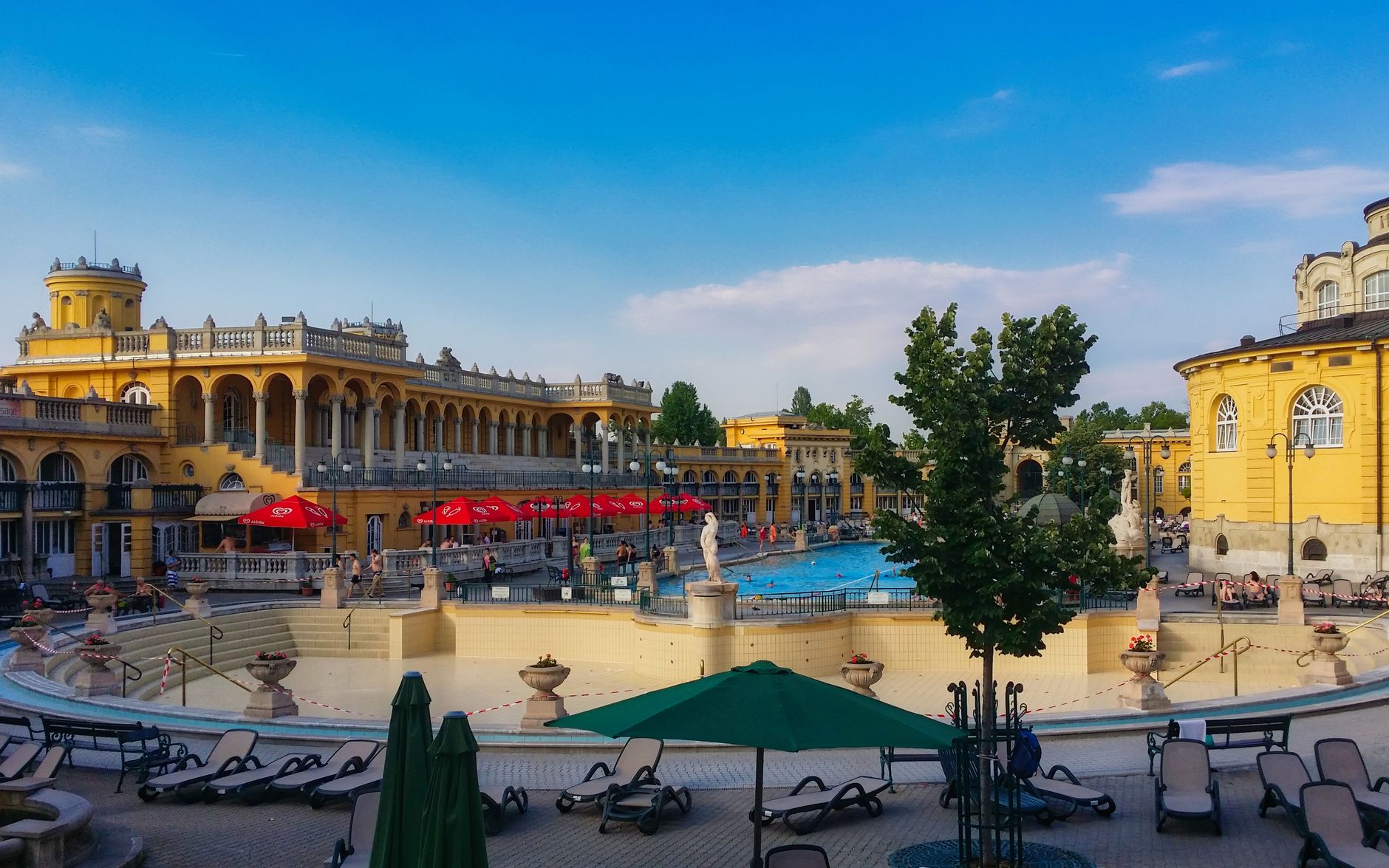
Skip the overcrowded tourist traps of Széchenyi and the Blue Lagoon. This summer, seasoned travelers are heading off the beaten path to find the clandestine, mineral-rich sanctuaries that locals have quietly guarded for decades. From an Ottoman-era dome hidden inside a Hungarian hospital to steaming granite pools overlooking the French Pyrenees, this is your definitive guide to the secret thermal waters trending right now. ---
The Hook: A Secret Carved in Stone and Steam
I stepped off the local tram in Budapest’s low-key second district, the sharp, clean scent of wet slate and eucalyptus cutting through the heavy summer heat of the city. I wasn’t heading toward the grand, yellow neo-Baroque palace of Széchenyi, nor was I joining the selfie-stick-wielding crowds at Gellért. Instead, I walked past a nondescript, mid-century hospital building, slipped through a glass sliding door that looked entirely clinical, and handed a few Hungarian Forints to a receptionist who didn't speak a word of English.
Ten minutes later, I was floating beneath a 450-year-old stone dome, watching shafts of dusty afternoon light pierce through tiny, star-shaped glass skylights. The water was a perfectly still, mineral-dense 39°C (102°F). Aside from two elderly Hungarian men playing a silent game of chess in the corner pool, I was entirely alone.
This is the reality of the world’s best thermal baths: the true sanctuaries aren't advertised on giant billboards at the airport. They are tucked behind hospital wings, hidden down dirt tracks in Galician forests, or carved into the sides of windswept French peaks. As overtourism clogs the world's famous hot springs, these secret, local-approved sanctuaries are quietly trending among travelers who crave authenticity over aesthetic curation.
Here are six secret thermal baths that locals have kept under wraps—until now.
---
1. Veli Bej Baths (Budapest, Hungary)
The Ottoman Sanctuary Hidden in Plain Sight
``` ___________________________________________ / \ | THE OTTOMAN OCTAGON (VELI BEJ) | | | | [ Dome ] | | / | \ | | [Pool] [Pool] [Pool] | | \ | / | | [Hospital Entrance] | \___________________________________________/ ```
While tourists wait in two-hour lines at Széchenyi, Budapest’s savviest residents head to Veli Bej (historically known as Császár Baths). Built in 1574 by Sokollu Mustafa Pasha, this is one of the oldest and most beautiful Turkish baths in Europe. During the Soviet era, it was incorporated into a hospital complex run by the Hospitaller Order of Saint John of God, which kept it shielded from mass tourism.
The architecture here is stunningly authentic. The central pool is octagonal, set beneath a massive cupola supported by four pointed arches. Because the water is constantly refreshed from natural springs underneath the building, Veli Bej does not use chlorine or other harsh chemicals—a rarity for public baths in Budapest.
- The Vibe: Quiet, reverent, and deeply therapeutic. The steam smells faintly of sulfur and chamomile.
- The Water: Rich in calcium, magnesium, hydrogen-carbonate, and sulfate, making it incredible for joint pain and circulation.
- Pro-Tip: The entrance is literally inside the Császár Hotel/hospital lobby. Walk past the medical reception desk to find the bath entrance. They limit capacity to 80 people at a time to preserve the quiet atmosphere, so go around 2:00 PM on a weekday when locals are at work.
---
2. Termas de Prexigueiro (Galicia, Spain)
A Japanese-Style Onsen in the Celtic Woods
Deep in the green, rain-slicked province of Galicia, near the historic wine-producing town of Ribadavia, lies Termas de Prexigueiro. This place is a surreal architectural fusion: a series of clean, minimalist, slate-lined pools designed in the traditional Japanese onsen style, but completely surrounded by a dense, wild forest of Galician pines and eucalyptus trees.
The thermal circuit consists of five hot outdoor pools and one cold plunge pool, laid out along a wooden boardwalk that winds through the trees. The water here bubbles up from the earth at a scorching temperature before being cooled down to comfortable bathing levels.
- The Vibe: Zen-meets-Celtic-mythology. The only sounds you will hear are the wind rustling through the pine needles and the gentle rush of the nearby Cerves River.
- The Water: Hyper-thermal and sulfurous, highly recommended for skin conditions like eczema and psoriasis.
- Pro-Tip: Book the last slot of the night (usually 9:00 PM to 10:30 PM). The pools are subtly lit by amber LEDs, and because Galicia has exceptionally clean air, you can stargaze through the forest canopy while soaking in 40°C water. Afterward, head to Ribadavia for a glass of local, crisp Ribeiro white wine.
---
3. Fosso Bianco / Bagni di San Filippo (Tuscany, Italy)
The "White Whale" of the Tuscan Forest
``` /\ / \ <-- Limestone "White Whale" / \ ~~~~~~~~~~[ Pool ]~~~~~~~~~~ <-- Hottest, deepest pool \ / \____/ ```
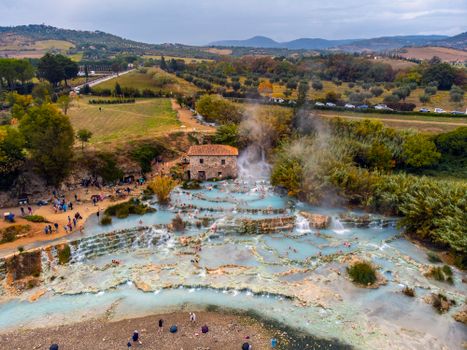
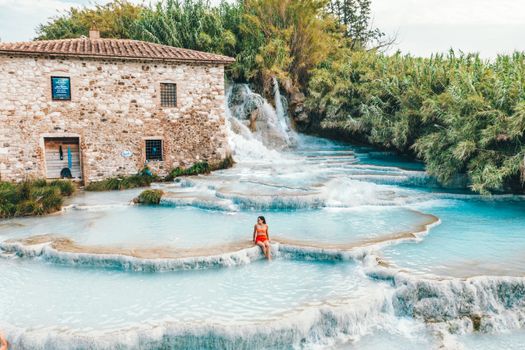
Forget Saturnia. The famous blue pools of Saturnia are now so crowded that you’ll likely end up with a stranger’s elbow in your face. Instead, drive deep into the Val d’Orcia to the tiny village of Bagni di San Filippo. Here, hidden in a shady deciduous forest, lies Fosso Bianco, a wild, free-to-access thermal river.
The star of the show is the Balena Bianca (the White Whale), a colossal, surreal formation of white calcium carbonate that looks like a frozen waterfall or a melting glacier emerging from the green trees. Hot mineral water cascades down the "whale," filling several natural mud-bottomed pools at its base.
- The Vibe: Bohemian, wild, and rustic. You’ll see locals scraping the mineral-rich white clay from the rocks and plastering it onto their faces as a natural mud mask.
- The Water: High concentration of sulfur, calcium, and magnesium. It leaves your skin feeling incredibly soft, though you will smell like sulfur for at least 24 hours.
- Pro-Tip: Do not stop at the first shallow pools near the road. Walk at least ten minutes down the dirt path, past the wooden footbridge, to find the deep, hot pools directly beneath the White Whale. Wear an old swimsuit; the sulfur and clay will stain delicate fabrics.
---
4. Bains de Dorres (Pyrenees, France)
Ancient Roman Baths at 1,450 Meters
High in the French Pyrenees, close to the Spanish border enclave of Llívia, the Bains de Dorres offer one of the most spectacular views of any thermal bath in the world. Used since Roman times, these outdoor granite baths sit on a south-facing mountain terrace, looking out over the rolling green valleys and jagged peaks of the Cerdagne region.
The complex is delightfully old-school. There are two outdoor pools carved directly out of solid granite blocks, plus an ancient washhouse pool. The water flows from the spring at a reliable 38°C to 40°C (100°F to 104°F).
- The Vibe: High-altitude rustic simplicity. It feels like stepping back into the 19th century.
- The Water: Extremely soft, alkaline, and rich in sulfur and silica, which acts as a natural moisturizer.
- Pro-Tip: Visit in the late afternoon when the summer sun begins to dip behind the Pyrenean peaks. The golden hour light hitting the granite tubs is spectacular. Bring a €2 coin for the old-fashioned wooden lockers, and stop by the tiny artisanal goat cheese farm just 200 meters up the road on your way out.
---
5. Specchio di Venere (Pantelleria, Italy)
The Volcanic "Mirror of Venus"
Pantelleria is a rugged, windswept volcanic island located in the Mediterranean between Sicily and Tunisia. Because it has no sandy beaches, tourists often overlook it—which is exactly why the locals love it. The island's crown jewel is the Specchio di Venere (Mirror of Venus), a natural lake inside an extinct volcanic crater.
Fed by thermal springs, the lake's water temperature ranges from 40°C to 50°C (104°F to 122°F) along the southern shore. The lakebed is covered in a thick, nutrient-dense black volcanic mud that is prized for its cosmetic and therapeutic properties.
- The Vibe: Otherworldly and dramatic. The contrast between the brilliant turquoise water, the black volcanic mud, and the green Mediterranean scrub is breathtaking.
- The Water: Loaded with sulfur, soda, and mineral salts.
- Pro-Tip: Walk to the southern edge of the lake where the thermal vents bubble up. Scoop up the dark mud from the lakebed, slather it over your entire body, and let it bake dry in the Mediterranean sun until it cracks. Once dry, dive into the cool, turquoise center of the lake to rinse off. Your skin will feel like polished silk.
---
6. Laugarfell Natural Hot Springs (East Iceland)
The Highland Escape the Crowds Missed
``` [ Highland Lodge ] | [ Upper Pool ] (Hot - 40°C) | [ Lower Pool ] (Warm - 36°C) | ~~~~~~~~~~~~~~~~~~~~~~~~~~~~~ <-- Endless Highland Tundra ```
While tourists queue up at the Blue Lagoon or the Sky Lagoon in Reykjavik, those in the know head east. Located in the remote, empty highlands of East Iceland, near the base of Mount Snæfell, Laugarfell is a tiny oasis of warmth in a landscape of stone, moss, and ice.
Laugarfell features two natural, stone-lined hot springs located right outside a rustic mountain lodge. According to local folklore, the water from these springs has deep healing powers, a belief that dates back to the Viking age.
- The Vibe: Absolute solitude. On a clear summer day, you can soak in the hot water while looking out over endless miles of untouched tundra, with nothing but the occasional reindeer for company.
- The Water: Pure, mineral-rich geothermal water with low sulfur content, meaning you get all the benefits of a hot soak without the rotten-egg smell.
- Pro-Tip: To get here, you’ll need to drive Route 910. While the road is paved for most of the way, the final stretch is a gravel road. Rent a 4x4 vehicle to ensure you can navigate the highland gravel safely. Combine your soak with the short, 8-kilometer waterfall hike that starts right from the lodge.
---
The Budget & Logistics: Planning Your Secret Soak
To make your trip seamless, here is a quick-reference guide to the logistics, costs, and best times to visit these trending local sanctuaries.
| Thermal Bath | Location | Estimated Cost ($) | Best Time to Visit | How to Get There | | :--- | :--- | :--- | :--- | :--- | | Veli Bej | Budapest, Hungary | ~$10 USD (3,500 HUF) | Weekdays, 2:00 PM | Tram 4/6 to Margit híd, then walk 5 minutes north. | | Termas de Prexigueiro | Galicia, Spain | ~$7 USD (€6.50) | Night slot (9:00 PM) | Fly to Santiago de Compostela, rent a car, drive 1 hour south. | | Fosso Bianco | Tuscany, Italy | Free | 7:30 AM (avoid midday) | Drive via SR2 from Siena, park along SP61 near Bagni di San Filippo. | | Bains de Dorres | Pyrenees, France | ~$6 USD (€5.50) | 5:00 PM (Golden Hour) | Train from Perpignan to Latour-de-Carol, then local taxi. | | Specchio di Venere | Pantelleria, Italy | Free | Early morning or sunset | Flight or ferry from Palermo/Trapani to Pantelleria, then rent a scooter. | | Laugarfell | East Iceland | ~$15 USD (2,000 ISK) | Mid-afternoon | Drive Route 910 from Egilsstaðir (4x4 vehicle highly recommended). |
---
The Insider's Code: How to Visit Like a Local
When visiting these delicate, community-centric thermal baths, it is crucial to respect the local customs to ensure these spaces remain preserved for years to come.
- Shower Thoroughly (Without Clothes): In places like Iceland and Japan-inspired onsens, showering naked before entering the water is a non-negotiable hygiene rule. Don't bypass this step; locals will notice, and it is considered highly disrespectful.
- Keep Your Voice Down: These baths are spaces for quiet contemplation and healing, not pool parties. Keep your conversations to a low, respectful murmur.
- Leave No Trace: Especially at wild, free sites like Fosso Bianco and Specchio di Venere, pack out every single piece of trash you bring in. Do not use soaps or shampoos in natural riverbeds.
- Embrace the Mineral Smell: Don't complain about the sulfur smell. That "rotten egg" scent is the signature of high-quality, healing earth-water. Wear it like a badge of honor.
---
More pictures


Tags
Share this guide
We may earn a commission if you click a link and buy a product or service, at no extra cost to you. How affiliate links work.
Been there?