
Skip the standard, sterile audio guides. We’ve curated the world’s absolute best museum experiences designed specifically for Deaf and hard-of-hearing travelers—featuring world-class ASL, LSF, and BSL docents who bring art and history to life through expressive, spatial storytelling. ---
I stepped off the subway at 86th Street, the crisp, autumn wind off Central Park carrying the faint scent of roasted chestnuts and diesel. Walking up the monumental granite steps of the Metropolitan Museum of Art, I bypassed the tourist herd clutching their plastic audio-guide receivers. I wasn't here to listen to a dry, pre-recorded voice drone on about dates and dynasties. Instead, I was joining an American Sign Language (ASL) gallery tour.
Watching our Deaf docent stand before Emanuel Leutze’s monumental Washington Crossing the Delaware, I realized I was witnessing something far superior to a voiceover. Through the fluid, cinematic grammar of ASL, the docent didn't just describe the painting; they became the jagged ice scraping against the wooden boat, the biting wind whipping through Washington's cloak, and the desperate, quiet resolve of the soldiers. The air in the gallery practically crackled with energy.
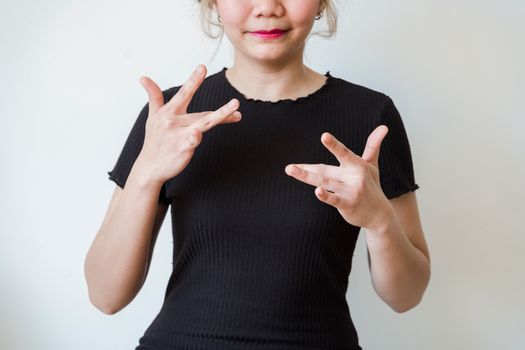
For culturally Deaf and hard-of-hearing travelers—as well as hearing sign language users—experiencing a museum through a native signer is a revelation. It transforms art from a static, passive viewing experience into a dynamic, three-dimensional dialogue.
If you are planning your next cultural pilgrimage, these are the definitive sign language tours in major museums worth considering.
---
1. The Metropolitan Museum of Art (The Met) — New York City, USA
The Vibe: Beaux-Arts Grandeur Meets High-Expression Storytelling
The Met is an absolute powerhouse when it comes to accessibility, but their ASL programs are the crown jewel of their educational outreach. Led by native Deaf cultural educators, these tours do not merely translate English wall labels; they offer deep, intellectually rigorous art historical analysis directly in ASL.
On my last visit, we gathered in the sun-drenched Charles Engelhard Court of the American Wing. Surrounded by monumental stained glass and neoclassical marble, our guide unpacked the subtle political commentary hidden within 19th-century American sculptures. The spatial nature of ASL is uniquely suited to sculpture, allowing the guide to map the physical dimensions and emotional weight of the bronze and marble directly into the air.
- Language Offered: American Sign Language (ASL). Voice interpretation is typically not provided for these specific tours, making them a fully immersive Deaf-space experience.
- Pro-Tip: Skip the chaotic main entrance on Fifth Avenue. Instead, enter through the ground-level Uris Center for Education entrance at 81st Street. It’s quieter, wheelchair accessible, and puts you right next to the accessibility desk where you can confirm your tour docent.
- How to Book: The Met offers these tours free with museum admission, but they run on specific dates. Check their online events calendar under "ASL Programs" or email `[email protected]` to coordinate.
---
2. The Louvre Museum — Paris, France
Deciphering Masterpieces in Langue des Signes Française (LSF)
The Louvre can be a sensory nightmare. The echoing marble halls, the sea of selfie sticks in front of the Mona Lisa, and the sheer scale of the former royal palace can leave you feeling utterly depleted. However, stepping into an LSF (French Sign Language) tour here is like finding an oasis of calm.
The Louvre’s LSF guides are masters of theatricality. When discussing the Winged Victory of Samothrace, a native LSF guide doesn't just point out the drapery of the marble; they use the highly visual, classifiers-heavy nature of LSF to mimic the rush of Mediterranean wind against the ship’s prow. It is breathtaking to watch.
- Language Offered: Langue des Signes Française (LSF).
- Pro-Tip: Never queue under the glass Pyramid. It is an amateur move that will cost you two hours of your life. Instead, use the Porte des Lions entrance on the south wing of the palace. It is vastly less crowded, and it leads you directly into the Greek, Etruscan, and Roman antiquities sections.
- How to Book: You must book these specialized tours at least 14 days in advance via the Louvre's dedicated handicap-accessibility portal on their official website.
---
3. Tate Modern — London, United Kingdom
Contemporary Art Decoded in British Sign Language (BSL)
If classical oil paintings aren't your vibe, head to the south bank of the River Thames. Housed in the colossal, brutalist former Bankside Power Station, Tate Modern is the world capital of contemporary art. But contemporary art can often feel abstract, cold, or confusing.
This is where Tate’s BSL Multimedia Guides and live BSL tours shine. Abstract art requires conceptual translation, and BSL—with its rich capacity for metaphor and spatial mapping—is the perfect tool to decode Rothko's dark, brooding color fields or the massive, industrial installations in the Turbine Hall. The smell of damp concrete and river air mixes with the vibrant energy of a community of signers debating the meaning of modern sculpture.
- Language Offered: British Sign Language (BSL).
- Pro-Tip: Before your tour, grab a flat white at the Natalie Bell Building Level 9 Bar. The floor-to-ceiling windows offer the absolute best, crowd-free panoramic views of St. Paul’s Cathedral and the London skyline.
- How to Book: Tate Modern offers free, bi-monthly BSL gallery tours led by Deaf art historians. No booking is required for the scheduled tours, but you should check their "BSL and Accessibility" web page for exact dates and meeting points.
---
4. Museo Nacional del Prado — Madrid, Spain
Spanish Masterpieces in Lengua de Señas Española (LSE)
The Prado is home to some of the most dramatic, emotionally raw art in human history. From the dark, haunting brushstrokes of Francisco de Goya’s Black Paintings to the complex, meta-narrative of Diego Velázquez’s Las Meninas, this museum demands an expressive medium.
The Prado’s Prado Inclusivo program offers magnificent tours in LSE (Spanish Sign Language). The physical expression, facial grammar, and intense emotional delivery of LSE docents perfectly mirror the dramatic chiaroscuro and theatricality of the Spanish Baroque. Watching a guide sign the tragedy of Goya's The Third of May 1808 is an unforgettable emotional experience that transcends spoken language.
- Language Offered: Lengua de Señas Española (LSE).
- Pro-Tip: The Prado is free to the public from 6:00 PM to 8:00 PM Monday through Saturday. However, the queues are legendary. If you book an LSE tour, you are granted priority access, allowing you to bypass the general admission line entirely.
- How to Book: Contact the accessibility department at `[email protected]` at least three weeks before your visit to secure an LSE guide.
---
5. Smithsonian National Museum of American History — Washington, D.C., USA
History in Motion on the National Mall
Washington, D.C. is home to Gallaudet University, the world's only liberal arts university for Deaf and hard-of-hearing students. Because of this, the city is a global hub for Deaf culture, and the Smithsonian museums reflect this rich heritage.
At the National Museum of American History, ASL tours don't just focus on the artifacts; they contextualize the Deaf community's massive contributions to American history. From the star-spangled banner to the history of the civil rights movement, these tours are deeply patriotic, incredibly informative, and highly engaging.
- Language Offered: American Sign Language (ASL).
- Pro-Tip: Avoid the school-bus chaos at the Madison Drive entrance. Use the Constitution Avenue entrance instead. It is much quieter, and the security lines move twice as fast.
- How to Book: Request an ASL interpreter or a Deaf-led tour at least two weeks in advance by emailing `[email protected]`.
---
The Logistics & Budget Blueprint
Planning a trip around accessible cultural tours requires a bit of strategy. Here is a quick-reference guide to help you plan your itinerary, estimate costs, and secure your bookings.
| Museum | Language | Estimated Cost | Best Time to Visit | How to Get There | Lead Time for Booking | | :--- | :--- | :--- | :--- | :--- | :--- | | The Met (NYC) | ASL | Free (with $30 general admission) | Friday evenings (5 PM - 9 PM) | Take the 4, 5, or 6 subway to 86th St. | 2 Weeks | | The Louvre (Paris) | LSF | Free for disabled visitors + 1 companion | Wednesday nights (open until 9 PM) | Metro Line 1 or 7 to Palais Royal-Musée du Louvre | 14 Days | | Tate Modern (London) | BSL | Free | Thursday mornings (10 AM - 12 PM) | Jubilee Line to Southwark or Blackfriars | No booking needed for public calendar | | Museo del Prado (Madrid) | LSE | Free for disabled visitors + 1 companion | Weekdays between 2 PM and 4 PM | Metro Line 2 to Banco de España | 3 Weeks | | Smithsonian (D.C.) | ASL | Free | Late afternoon on weekdays | Blue, Orange, or Silver Metro lines to Federal Triangle | 2 Weeks |
---
How to Advocate and Request a Tour Like a Pro
What happens if you are visiting a major museum that doesn't have a sign language tour listed on their public events calendar? Don't let that stop you.
Under accessibility laws like the Americans with Disabilities Act (ADA) in the United States and the Equality Act in the United Kingdom, public museums are legally obligated to provide "reasonable accommodations"—which includes qualified sign language interpreters—at no extra cost to you.
Here is my step-by-step strategy for securing a private interpreter:
- Email Early: Send an email to the museum’s general info or dedicated "Access" email address at least three to four weeks before your visit.
- Be Specific: State your arrival date, the specific galleries or exhibits you want to see, and the exact language you require (e.g., "I am requesting a qualified ASL interpreter for a 2-hour tour of the European Paintings wing on October 14th at 10:00 AM").
- Confirm, Confirm, Confirm: Museums have to source these interpreters from external agencies. Confirm the booking three days before your arrival to ensure the interpreter is locked in.
Art is a universal human right. By choosing sign language tours, you aren't just gaining access to a museum; you are participating in a rich, visual, and deeply expressive form of cultural storytelling that makes the world of art feel infinitely larger.
---
More pictures
Tags
Share this guide
We may earn a commission if you click a link and buy a product or service, at no extra cost to you. How affiliate links work.
Been there?