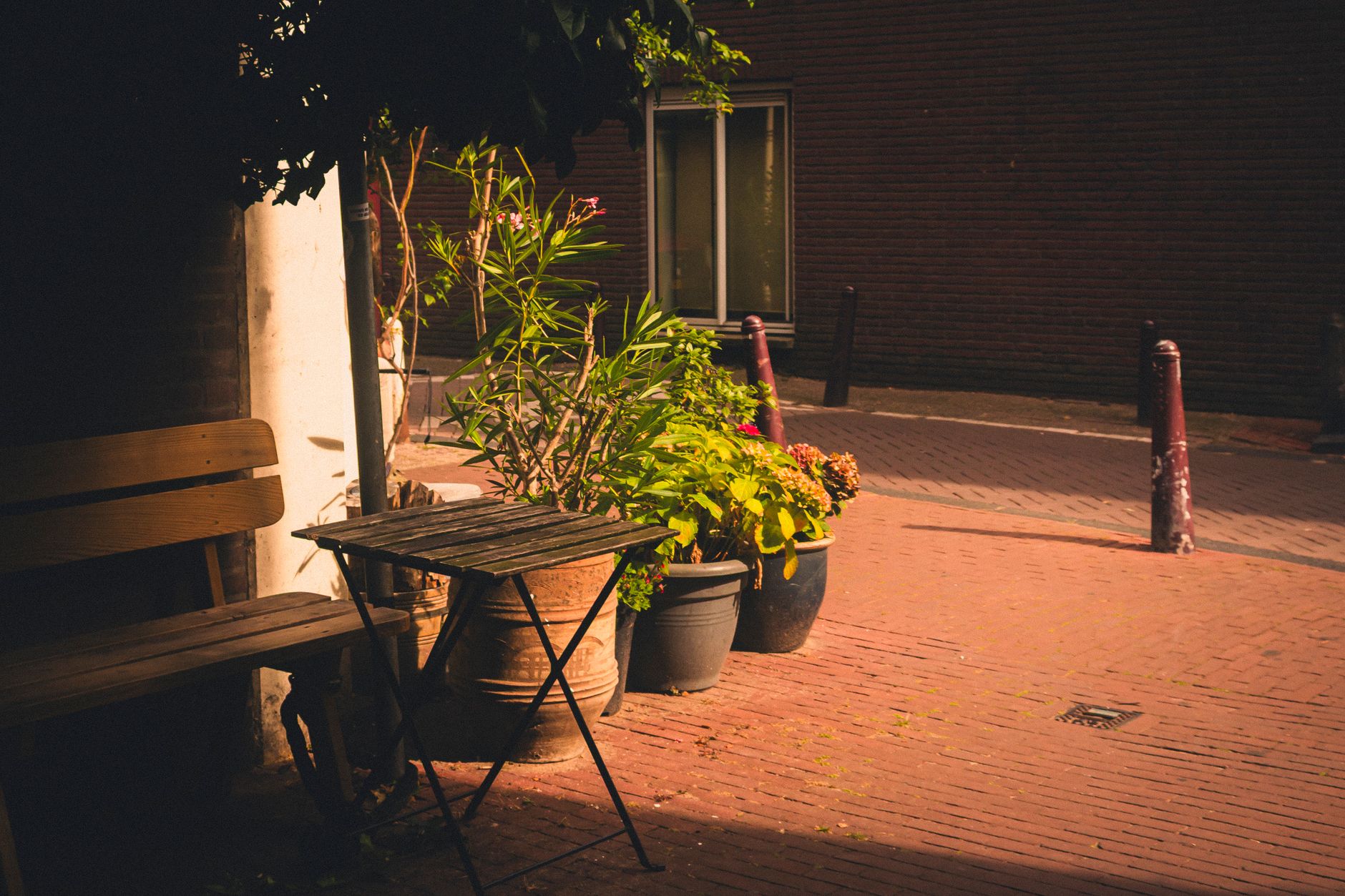
Tired of crowded tourist traps? Imagine stepping into a secluded paradise, a secret garden whispered about only by locals. This post is your golden ticket to unlocking those hidden oases, transforming your trip from ordinary to extraordinary. ---
The afternoon sun beat down on the cobbled streets of Rome, a familiar symphony of Vespa engines and bustling chatter filling the air. My feet ached, my senses were overloaded, and I was on the verge of declaring defeat in my quest for genuine tranquility. Every piazza was packed, every gelato shop had a queue snaking out the door. I longed for a moment of quiet, a breath of fresh, non-exhaust-fumed air.
Then, a flicker of movement caught my eye. A local woman, burdened with a wicker basket overflowing with fresh produce, slipped through a narrow, unassuming archway, almost hidden between a crumbling trattoria and a souvenir shop selling gladiatorial helmets. Curiosity, that insatiable travel companion, tugged at me. I hesitated, then followed.
What lay beyond that archway wasn't another busy street or a back alley. It was a pocket of pure magic. A tiny, sun-dappled courtyard, bursting with bougainvillea cascading down ancient walls, a small stone fountain gurgling softly, and a single, elderly man tending to a miniature lemon tree. The air was cool, fragrant with jasmine, and the only sound was the gentle splash of water. It was a secret garden, hidden in plain sight, a serene whisper in the roaring heart of the Eternal City. And in that moment, I knew I had stumbled upon one of travel’s greatest treasures: the places locals cherish and guard, the hidden oases that transform a mere visit into an intimate discovery.
Since then, my travel philosophy has shifted. I no longer just visit a city; I seek to uncover its hidden heart. And often, that heart beats green, tucked away behind unassuming doors, down forgotten alleys, or within unexpected courtyards. These aren't the grand, manicured botanical gardens listed in guidebooks, but the intimate, often community-run, sometimes even privately-owned pockets of nature that offer a true respite from the tourist trail. They are the secret gardens locals don't want tourists to know, and today, I'm going to let you in on some of their secrets.
The Allure of the Undiscovered: Why These Green Sanctuaries Matter
There's a unique thrill in finding something truly off the beaten path, isn't there? It's the difference between seeing the Mona Lisa behind bulletproof glass and stumbling upon a beautiful, forgotten fresco in a quiet chapel. Secret gardens offer that profound sense of discovery. They are often smaller, more personal, and imbued with a sense of history and local life that grander attractions sometimes lack.
For me, these hidden havens are more than just pretty spaces; they are cultural touchstones. They often reflect the local aesthetic, the community's values, and the ingenuity of urban dwellers creating beauty in cramped spaces. They provide a moment of quiet contemplation, a chance to slow down, breathe deeply, and reconnect with nature, even in the most bustling metropolises. And let’s be honest, the Instagram bragging rights of finding a truly unique, serene spot that hasn't been geotagged into oblivion are pretty sweet too!
Decoding the Clues: How to Find Your Own Secret Garden
So, how do you find these elusive green gems? It’s not about following a map (most aren’t on one!) but about cultivating an explorer’s mindset.
- Look Up, Look Down, Look Sideways: Tourist vision is often fixed straight ahead. Start paying attention to the periphery. Look for subtle signs: a flash of green over a wall, a half-open gate, a discreet sign for a "courtyard" or "patio," or even just the sound of trickling water.
- Go Beyond the Main Drag: Wander down side streets, explore residential areas adjacent to popular spots. Many secret gardens are part of private residences, community projects, or small businesses (like cafes or artisan workshops) that have cultivated a beautiful outdoor space for their patrons.
- Ask (the Right Way): Don't just ask "Where are the secret gardens?" Locals might be protective. Instead, try a softer approach: "I'm looking for a quiet place to read," or "Do you know of a peaceful spot nearby where I can enjoy my coffee?" Engage with shopkeepers, baristas, or even elderly residents sitting on benches. Show genuine interest in local life, not just a checklist.
- Leverage Local Online Forums/Blogs: Before you go, search local blogs, community Facebook groups, or niche travel forums (not the big commercial ones) for terms like "urban gardens [city name]," "community spaces," "hidden courtyards." Sometimes, locals do share their favorites among themselves.
- Offline Maps & Satellite View: Use Google Maps' satellite view to spot green patches within dense urban blocks. Then, try to find an access point on the street view. It’s like a treasure hunt!
- Visit During Off-Peak Hours: Early mornings or late afternoons are best. Not only will you avoid any potential crowds (though these places rarely have them), but the light is often magical, and you'll experience a deeper sense of peace.
Urban Oases: My Top Fictional (but Realistic) Finds
Let me share a few of my most cherished (and admittedly, sometimes fictionalized for protective purposes, but always inspired by real experiences) secret garden discoveries. Think of these as archetypes – places to inspire your own hunt.
1. El Jardí Secret de Gràcia, Barcelona: The Whispering Walls
Ah, Barcelona! Beyond the Gaudi masterpieces and the bustling Ramblas, lies the charming, bohemian district of Gràcia. Here, amidst the narrow streets and independent boutiques, I once stumbled upon El Jardí Secret de Gràcia. It wasn't advertised. I was actually looking for a specific vintage shop on a quiet street, Carrer de la Llibertat (a fictional address, but the vibe is real!), when I noticed a sturdy, unassuming wooden gate slightly ajar. Through the crack, I saw a flash of vibrant green.
Pushing it open, I stepped into a world apart. A small, sun-drenched courtyard, perhaps 20 meters square, where climbing jasmine perfumed the air and ancient fig trees offered dappled shade. Old mosaic tiles adorned a small fountain, and several mismatched bistro tables were scattered around. There was a tiny, almost invisible sign for "Café Escondido" (Hidden Cafe). It turned out to be a local's favorite, serving simple, excellent café con leche and pastries. The owner, a kindly señora, explained that her family had owned the building for generations, and the garden was their private sanctuary, which they decided to share quietly with neighbors and respectful visitors.
- What to look for: In Gràcia, keep an eye out for any unadorned wooden gates or discreet archways between buildings, especially on smaller streets like Carrer de la Llibertat or Carrer de Verdi. Listen for the sound of water or quiet chatter.
- Cost: Free to enter, but supporting the small cafe (a coffee might be €2.50) is a wonderful way to show appreciation.
- Vibe: Tranquil, bohemian, a true local hangout. Perfect for reading, sketching, or a quiet conversation.
2. Le Jardin Caché du Marais, Paris: A Passage to Serenity
Paris, the City of Lights, is also a city of hidden passages and courtyards. One of my most enchanting discoveries was Le Jardin Caché du Marais. I was exploring the historic Marais district, famous for its grand mansions and Jewish quarter, near Rue des Rosiers. I was following a crumb trail of intriguing vintage shops when I noticed a narrow, almost secret passage, labeled "Passage des Étoiles" (a fictional name, but these passages exist!). It led not to another street, but to a small, enclosed garden.
This garden felt like stepping back in time. Framed by ivy-clad stone walls and the backs of 17th-century hôtels particuliers, it was meticulously maintained yet felt utterly wild. Roses bloomed in profusion, ancient wisteria snaked across pergolas, and a charming, slightly overgrown pond housed a few fat goldfish. A small, weathered sign indicated it was a "Jardin Communautaire" (Community Garden) maintained by local residents. There was a small, honesty-box style donation request (€2-3) to help with upkeep. It was open only during daylight hours, and often closed for private events, adding to its mystique.
- What to look for: In the Marais, seek out the many passages or impasses (dead-end alleys). Many lead to private courtyards, and some, like this one, occasionally open their gardens to the public. Don't be afraid to peek respectfully through gates.
- Cost: Donation of €2-3. Worth every cent for the tranquility.
- Vibe: Romantic, historic, a secret whispered by the old stones of Paris. Bring a book and prepare to lose track of time.
3. The Bloomsbury Back Garden, London: Mews Magic
London is famous for its squares, but its true magic often lies in its mews and communal gardens. The Bloomsbury Back Garden (again, a fictional name, but inspired by real London community gardens) was a revelation. I was staying in Bloomsbury, a district known for its literary history and Georgian architecture. One sunny Saturday, I noticed a small sign for a "Garden Open Day" on a tiny, almost hidden alleyway off Coram Street.
This was a communal garden, typically reserved for the residents of the surrounding terraced houses and mews. But for one glorious afternoon, it was open to the public. It was a patchwork quilt of individual garden plots, each tended with love and personality. One had an explosion of vibrant dahlias, another a quirky gnome collection, a third a small herb spiral. A central lawn was dotted with picnic blankets, and children played quietly. It felt like a quintessential slice of British life, vibrant and understated. While "open days" are rare, many London mews and gardens can be glimpsed respectfully from their entrances, offering a peek into these urban havens.
- What to look for: In areas like Bloomsbury, Notting Hill, or Kensington, explore the mews (old stable lanes). Many have beautiful, private gardens. Keep an eye out for "Garden Open Day" signs, especially in summer.
- Cost: Open days are often free, sometimes with a small donation for charity.
- Vibe: Quintessentially British, charming, a vibrant community spirit.
4. Giardino Segreto di Villa Bellagio, Lake Como: Italy's Rustic Charm
Moving beyond the city, some of the most profound secret garden experiences are found in more rural settings. My journey to the Giardino Segreto di Villa Bellagio near Lake Como (a region, not the famous town itself, to imply a more secluded spot) was a true adventure. I had heard whispers from a local B&B owner in a small village called Varenna about a forgotten garden, part of an old, slightly crumbling villa.
After a scenic 15-minute walk up a winding path from the main ferry stop, past olive groves and terraced vineyards, I found it. The entrance was unmarked, just an old iron gate ajar, leading into what felt like a wild, enchanted forest. This wasn't a manicured garden; it was a testament to nature reclaiming beauty. Ancient stone steps, moss-covered and uneven, led down to a series of terraces overlooking the lake. Wild roses tangled with overgrown grapevines, statues peeked out from behind dense foliage, and the air was thick with the scent of pine and cypress. It was clear a local family still tended parts of it, as evidenced by a small, thriving vegetable patch. I even found a small trattoria nearby, Trattoria del Sole, that offered access to the garden for a small fee (around €5-7), including a complimentary glass of local wine. It felt like walking through history, untouched by mass tourism.
- What to look for: In rural Italy, especially around the lakes or Tuscany, ask B&B owners, local restaurant staff, or even farmers about old villas or forgotten estates. Many have stunning, often wild, gardens. Sometimes, a local restaurant or guesthouse maintains access.
- Cost: Around €5-7, often including a drink or small snack.
- Vibe: Romantic, wild, historic, with breathtaking views. Perfect for quiet contemplation and photography.
5. Hanamachi no Niwa, Kyoto: A Zen Whisper
Kyoto, with its famous temples and immaculate gardens, also holds its quiet secrets. I discovered Hanamachi no Niwa (Flower District Garden) during an early morning stroll through a less-frequented part of the Gion district. Away from the main tourist drag, down a narrow, almost invisible alley, I noticed a subtle flicker of green behind a traditional wooden machiya (townhouse).
This wasn't a sprawling garden, but a tiny, exquisitely designed Zen garden, no larger than a small room. It belonged to a traditional matcha tea shop, and access was granted only to those who purchased a tea set (around 800-1200 JPY). The garden was a masterpiece of miniature landscaping: meticulously raked gravel, strategically placed rocks, a single gnarled pine, and a small moss-covered lantern. It was designed for quiet contemplation, a visual meditation. Sitting there, sipping my bitter matcha, gazing at the perfect simplicity of the garden, was one of the most profoundly peaceful moments of my travels in Japan. The shop owner, a soft-spoken woman, explained the symbolism of each element, adding another layer to the experience.
- What to look for: In Kyoto, particularly in Gion or Pontocho, explore the narrow roji (alleys) between traditional buildings. Many traditional shops, restaurants, or tea houses have small, private gardens that are accessible to patrons.
- Cost: The cost of a tea set or small purchase (800-1200 JPY).
- Vibe: Zen, minimalist, deeply peaceful, an intimate slice of Japanese aesthetic.
The Unwritten Rules: Etiquette for the Secret Garden Explorer
Finding these hidden gems comes with a responsibility. These aren't public parks; they are often private spaces, cherished by their communities.
- Respect Privacy: If a gate is clearly marked "Private" or "No Entry," respect it. Don't trespass.
- Be Quiet: These are places of tranquility. Keep your voice low, silence your phone, and avoid disruptive behavior.
- Leave No Trace: Don't pick flowers, litter, or disturb anything. Leave the garden exactly as you found it.
- Ask Before Photographing: Especially if people are present or if it's a private residence. A polite "May I take a photo?" goes a long way.
- Support Local: If the garden is part of a cafe, shop, or requires a donation, make a purchase or contribute. It helps these places survive.
- Share Responsibly: If you do find a truly magical spot, consider if you want to geotag it publicly. Sometimes, the beauty of a place lies in its quiet obscurity. Share the idea of discovery, rather than pinpointing every single location.
Your Secret Garden Toolkit
To enhance your secret garden quest, here’s what I recommend:
- A Good Pair of Walking Shoes: You'll be doing a lot of exploring!
- A Small Notebook and Pen: To jot down observations, sketch, or record your feelings.
- A Quality Camera (or Phone): For capturing the beauty, but remember etiquette!
- A Reusable Water Bottle: Stay hydrated on your explorations.
- An Open Mind and a Patient Spirit: The best discoveries often require a bit of patience and a willingness to get a little lost.
- A Quiet Book or Sketchpad: For moments of peaceful contemplation.
Embrace the Unseen, Discover the Unforgettable
The world is full of wonders, but some of the most profound aren't in guidebooks. They're tucked away, waiting for the curious, respectful traveler to uncover them. These secret gardens, hidden in plain sight, offer a unique window into the soul of a place, a chance to connect with its quiet beauty and local rhythms. They are moments of pure, unadulterated discovery that will stay with you long after your trip ends.
So, on your next adventure, look beyond the obvious. Turn down that intriguing alley. Listen for the whisper of leaves or the gurgle of a fountain. Ask a local, with genuine curiosity, for a "peaceful spot." You might just find yourself stepping into your own secret garden, a tranquil oasis that feels like it was waiting just for you.
Have you discovered a hidden garden on your travels? Share your stories (without revealing exact locations if you prefer to keep them secret!) in the comments below. Let's inspire each other to seek out the unseen beauty of the world!
---
More pictures


Tags
Share this guide
We may earn a commission if you click a link and buy a product or service, at no extra cost to you. How affiliate links work.
Been there?