
Ever wondered how some travelers snag incredible flight deals while you're paying full price? Airlines actively try to keep these "secret" booking strategies under wraps. Get ready to dive into the world of hidden flight deals, error fares, and under-the-radar websites that will revolutionize the way you book travel. ---
The Flight That Changed Everything: My $280 Trip to Tokyo
I remember it like it was yesterday. The year was 2018, and I was scrolling through Instagram, green with envy, watching friends jet off to exotic locales while my bank account screamed "staycation." My wanderlust was at an all-time high, but my budget was firmly stuck in economy class, literally. I’d always booked my flights the "traditional" way – going directly to airline websites or using major aggregators like Expedia or Kayak. I thought I was savvy, always comparing, always trying to get the best deal. But deep down, I knew there had to be more.
That’s when I stumbled upon a forum, a digital whisper network for travel fanatics. Someone mentioned "error fares" and "hidden city ticketing." My curiosity was piqued. I spent hours, then days, diving down the rabbit hole of advanced flight search, niche aggregators, and strategies that felt almost... illicit. My friends thought I was crazy, spending so much time looking for flights when I didn't even have a destination in mind.
Then it happened. A notification popped up on my phone: "NYC to Tokyo (NRT) - $280 roundtrip." My heart pounded. $280? For Tokyo? That was less than my monthly coffee budget! It felt too good to be true. I double-checked, triple-checked. It was real. A major airline, a legitimate route, and a price that seemed to defy gravity. Within minutes, I had booked it, my fingers trembling with excitement. That trip to Tokyo, exploring ancient temples, devouring street food, and getting lost in the neon glow of Shibuya, all for a fraction of what most people pay, wasn't just a vacation. It was a revelation. It proved that there’s a whole universe of flight deals out there that airlines really don’t want you to find.
Welcome to the world of travel hacking, Tripsora readers. Today, I’m pulling back the curtain on the secret booking websites and strategies that will empower you to fly further, for less, before they become mainstream.
Section 1: The Airfare Algorithm: Why Airlines Play Hard to Get (and How to Beat Them)
Before we dive into the secret sauce, let’s understand the enemy – or rather, the system. Airlines operate on incredibly complex pricing algorithms. They use dynamic pricing, which means the price of a seat can change by the minute based on demand, time of day, competitor pricing, booking trends, and even the device you're using. They want to maximize profit, which means getting you to pay the highest price you're willing to shell out. They segment their audience, offering different prices to business travelers, last-minute bookers, and budget-conscious tourists.
This is where our "secret" weapons come in. These tools and techniques don't break the law, but they exploit the very same algorithms and inventory systems that airlines use, often uncovering discrepancies or special fares that aren't advertised widely. Think of it as finding a backdoor into a heavily guarded vault. The airlines hate it because it democratizes access to cheaper travel, cutting into their carefully constructed profit margins.
My first lesson in this was understanding that the price you see isn't always the price. It's a price. And there are always other prices floating around.
Section 2: The Error Fare & Glitch Hunters: Your Digital Deal Detectives
This is arguably the most thrilling frontier of budget travel: error fares. These are genuine mistakes in airline pricing systems – a misplaced decimal, an unadvertised promotion, a currency conversion glitch. They don't last long, often just hours, before the airline corrects them. But if you're fast, they can lead to unbelievable savings.
I once snagged a roundtrip from London to Buenos Aires for $400 because of an error fare. My friend, who booked the same flight a day later, paid over $1200! The key is being alerted to them immediately.
Here are the platforms and strategies that act as your digital deal detectives:
- Going (formerly Scott's Cheap Flights): This isn't a booking website, but it's your absolute best friend for finding error fares and genuinely cheap flights. Going monitors millions of flight routes, and when they find a deal (often 40-90% off), they email it directly to their subscribers. Their premium membership, which I highly recommend, gives you access to international error fares and even business/first-class deals. I’ve personally used Going to find flights from my home city to places like Rome for $500 roundtrip and a spontaneous trip to Iceland for $350. It’s not just error fares; they find incredible legitimate sales too.
- Secret Flying & Fly4Free: These are similar to Going but often update even more frequently, sometimes catching errors within minutes of their appearance. They monitor flights globally and post deals as they find them. You'll often find deals like "Europe to Asia for under $300" or "US to South America for $200." The trick here is speed. These deals can disappear in a flash, so you need to be ready to book. I once saw a deal for New York to Paris for $180 roundtrip on Secret Flying, but by the time I clicked through, it was gone. Lesson learned: act fast.
- Google Flights Explore Map: While not a "secret" site, its "Explore" feature is often underutilized. Instead of typing in a specific destination, just enter your departure city and dates (or leave them flexible), then click "Explore." You'll see a map populated with prices to various destinations worldwide. This is phenomenal for inspiring trips you hadn't considered and for spotting unusually low prices to regions. I've used it to find last-minute weekend getaways to places like Montreal from Boston for under $150.
- Skyscanner's "Everywhere" Search: Similar to Google Flights Explore, Skyscanner allows you to search "Everywhere" as your destination. If you're flexible with your dates and destination, this can unearth incredibly cheap flights to unexpected places. I once discovered a flight to Marrakech for $300 from a regional airport using this feature – a destination I hadn't even considered!
Actionable Tip: Sign up for email alerts from Going, Secret Flying, and Fly4Free. Set up notifications so you're among the first to know when a deal drops. When you see an error fare, don't hesitate. Book it, then plan the rest of your trip!
Section 3: The Niche Aggregators & Hidden City Hackers: Playing by Different Rules
Beyond the error fare hunters, there's another class of booking sites and strategies that leverage unique inventory or exploit airline routing rules. These are the ones that truly make airlines squirm.
- Skiplagged: The Hidden City Ticketing Maverick: This website is perhaps the most notorious for airlines. Skiplagged specializes in "hidden city ticketing," which means you book a flight to a final destination but get off at a layover city, which is your actual desired destination. For example, a flight from New York to Orlando with a layover in Atlanta might be more expensive than a flight from New York to Atlanta with a layover in Orlando. Skiplagged finds these discrepancies.
- My Experience: I used Skiplagged for a trip from Denver to San Francisco. The direct flight was $350. Skiplagged found a flight from Denver to Seattle with a layover in San Francisco for $180. I booked it, got off in San Francisco, and saved nearly $200.
- The Catch (and why airlines hate it): Airlines explicitly forbid this in their terms and conditions. If caught, they can cancel your return ticket, void your frequent flyer miles, or even charge you the difference for the "true" fare.
- Practical Advice:
- NEVER check luggage. Your bags will go to the final destination, not your hidden city. Carry-on only!
- Only do this for one-way trips or the first leg of a roundtrip. If you miss a segment, the rest of your itinerary will be canceled.
- Don't link your frequent flyer number to these bookings if you're worried about repercussions.
- Use sparingly. This is a high-reward, moderate-risk strategy.
- WayAway: Cashback on Flights & Travel: This platform is gaining traction for its unique approach. WayAway isn't just a search engine; it offers cashback on flights, hotels, car rentals, and other travel services. While it might not always find "error" fares, the cashback adds up, effectively reducing your overall cost. Their premium membership, WayAway Plus, offers even higher cashback rates and additional travel benefits. It’s like getting paid to travel, which airlines definitely don’t promote!
- Matrix ITA Software: The Power User's Secret Weapon: This is the underlying technology behind many major travel search engines, including Google Flights. It's not user-friendly for the average traveler, but it offers incredibly powerful search capabilities. You can specify complex routing rules, minimum/maximum layover times, exact fare codes, and even search for specific aircraft types. While you can't book directly through it, it's an unparalleled tool for researching the absolute cheapest routing and then taking that information to book elsewhere. I’ve used it to understand why certain flights were cheaper, then applied those insights to my Google Flights searches. It’s like looking at the airline's internal pricing sheet.
- VPNs for Geo-Arbitrage: This is less about a specific website and more about a strategy. Airlines and online travel agencies (OTAs) often display different prices based on your geographical location (IP address). By using a Virtual Private Network (VPN) to change your virtual location, you can sometimes trick the system into showing you cheaper fares.
- My Anecdote: I was once booking a flight from the US to Thailand. The price was around $900. I switched my VPN to India, and suddenly the same flight on the same airline's website was showing for the equivalent of $750. I booked it, saved $150, and had an amazing trip to Phuket!
- How to do it:
- Clear your browser cookies or use incognito mode.
- Turn on your VPN and select a server in a country with a lower cost of living or where the airline might be trying to stimulate demand (e.g., Mexico, India, Turkey, specific European countries).
- Search for your flight. If you don't see a difference, try another country.
- Sometimes, paying in the local currency of that country can also yield savings, but watch out for foreign transaction fees on your credit card.
Section 4: The Art of Flexibility: Dates, Airports, and Hidden Connections
Airlines thrive on predictability and convenience. The less flexible you are, the more they can charge. Conversely, embracing flexibility is one of the most powerful ways to unlock those secret deals.
- Flexible Dates: If you can travel mid-week (Tuesday-Thursday) or during the shoulder seasons, you'll almost always find cheaper flights. Most people want to fly out on Friday and return on Sunday, driving up demand and prices. Use tools like Google Flights' calendar view or Skyscanner's "Cheapest Month" feature to visually see when prices dip. I once flew to Lisbon in February for half the price of a June flight, and the weather was still pleasant!
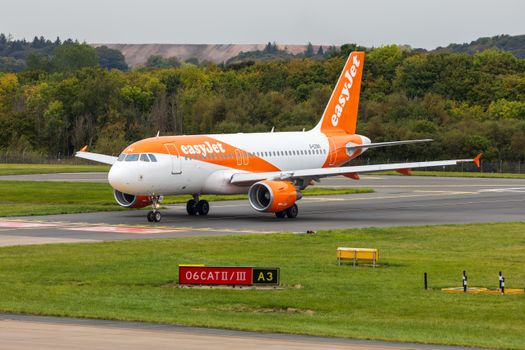
- Alternative Airports: Don't just search for your main city's airport. Look for smaller, regional airports nearby. Often, budget airlines fly into these, and while you might have an extra train or bus ride, the savings can be substantial. For instance, flying into London Stansted (STN) or Luton (LTN) instead of Heathrow (LHR) can save you hundreds, especially if you're flying with a low-cost carrier like Ryanair or EasyJet. I saved over $100 flying into Milan Bergamo (BGY) instead of Malpensa (MXP) for my trip to Lake Como.
- Self-Transfer & Multi-Leg Bookings: Sometimes, booking two separate flights (e.g., NYC to London, then London to Rome) can be cheaper than a single direct flight from NYC to Rome, especially if a budget airline covers one of the legs. Websites like Kiwi.com specialize in finding these self-transfer itineraries. Be aware, however, that if your first flight is delayed, you're responsible for any missed connections on your second, separately booked flight. Always leave ample layover time (4+ hours) if you opt for this.
- Open-Jaw Flights: This is when you fly into one city and out of another (e.g., arrive in Paris, depart from Rome). This can sometimes be cheaper than a roundtrip to a single city, and it's fantastic for exploring more of a region without backtracking. Use Google Flights' multi-city option to experiment with this. My Europe trip was built around an open-jaw: flying into Dublin and out of Amsterdam, saving me time and money on return flights.
Section 5: Beyond Flights: Applying the Hacker Mentality to Hotels & More
The "secret booking" mindset isn't just for flights. The same principles of finding loopholes, leveraging dynamic pricing, and looking beyond mainstream options apply to other aspects of your trip.
- Hotel Booking Hacks:
- Opaque Booking Sites (e.g., Hotwire, Priceline Express Deals): These sites hide the hotel's name until after you've booked, but in exchange, offer significantly discounted rates. You choose the star rating, general location, and amenities, and they reveal the hotel after purchase. I’ve scored 4-star hotels in major cities for 2-star prices using this method.
- Hotel Tonight: Great for last-minute bookings. Hotels often release unsold rooms at a discount to Hotel Tonight, especially closer to check-in.
- Google Hotels Map: Similar to Google Flights, this allows you to see hotel prices on a map, making it easy to spot deals in different neighborhoods or nearby towns.
- Direct Booking Perks: Sometimes, calling a hotel directly or booking through their website (after comparing prices elsewhere) can get you exclusive perks like free breakfast, upgrades, or slightly better rates, especially if you mention you've seen a lower rate elsewhere.
- Car Rental Secrets:
- Third-Party Aggregators: Sites like Rentalcars.com or Auto Europe can often find better deals than going directly to major rental companies.
- Small, Local Companies: Don't overlook smaller, local car rental agencies, especially in Europe or Asia. They often have more competitive rates.
- Booking in Advance & Re-checking: Car rental prices fluctuate. Book when you find a good rate, but keep checking as your trip approaches. If the price drops, cancel and rebook!
Section 6: The Mindset of a Travel Hacker: Patience, Persistence, and a Dash of Daring
Becoming a master travel hacker isn't just about knowing which websites to use; it's about cultivating a specific mindset. It requires patience, persistence, and a willingness to step outside your comfort zone.
- Set Price Alerts: This is non-negotiable. Use Google Flights, Skyscanner, and specific deal sites to set alerts for your desired routes. You'll get notified as soon as prices drop.
- Be Flexible: I cannot stress this enough. The more flexible you are with dates, times, airports, and even destinations, the more deals you'll uncover.
- Act Fast: Especially with error fares, deals vanish quickly. Have your passport details and credit card ready.
- Clear Your Cookies/Use Incognito: Some booking sites track your searches and may increase prices if they see you repeatedly looking at the same route. Clear your browser cookies or use incognito/private browsing mode to get fresh pricing.
- Don't Be Afraid to Experiment: Try different combinations of departure/arrival airports, add layovers, or search for multi-city options. The more creative you are, the more likely you are to find an unexpected deal.
- Stay Informed: Follow travel hacking blogs (like Tripsora!), forums, and social media accounts dedicated to flight deals. The community is a treasure trove of information.
My last big score was a roundtrip to Medellín, Colombia, for $250. It wasn't an error fare, but a combination of flexible dates found via Google Flights' calendar, booking from a smaller regional airport, and snagging a deal that popped up after setting a price alert. It was a perfect example of combining several strategies. The vibrant street art, the delicious arepas, the warmth of the Colombian people – all made possible by a little bit of digital detective work.
Your Next Adventure Awaits: Stop Paying Full Price!
The world is waiting, and it doesn't have to break the bank to see it. Airlines have spent decades perfecting their pricing strategies to extract the maximum amount from your wallet. But now, you're armed with the knowledge and the tools to fight back. These "secret" booking websites and strategies aren't just about saving money; they're about empowering you to travel more, experience new cultures, and create unforgettable memories without the financial burden.
So, stop paying full price. Start exploring. Start hacking. Your next incredible adventure is just a few clicks away, and trust me, the airlines will hate that you found it.
Which of these strategies will you try first? Share your biggest flight deal score in the comments below! And don't forget to bookmark this guide and share it with your fellow travel hackers – let's make sure these secrets get out!
---
More pictures




Tags
Share this guide
We may earn a commission if you click a link and buy a product or service, at no extra cost to you. How affiliate links work.
Been there?