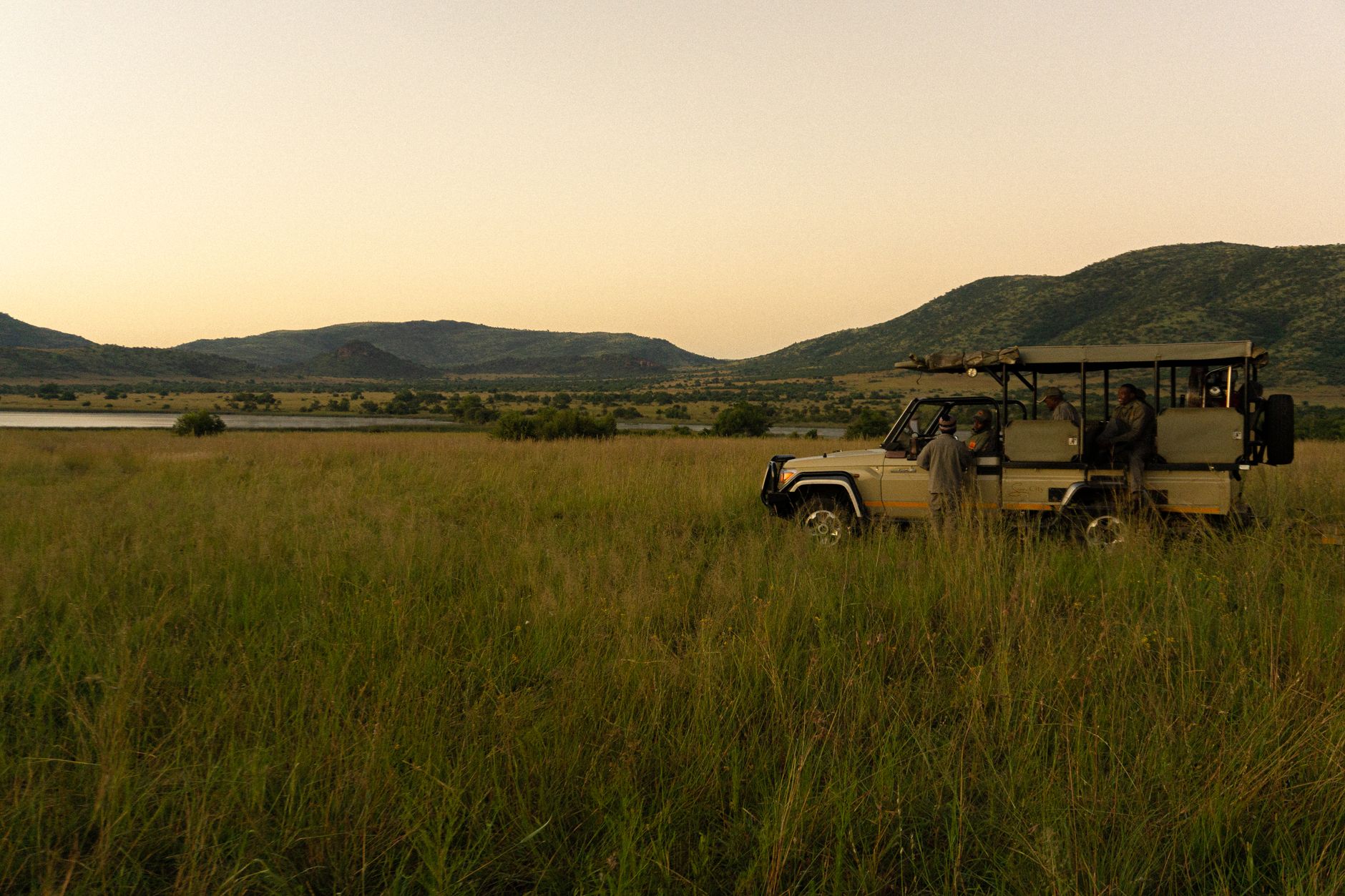
Kenya's Maasai Mara is currently plagued by eye-watering $200/day park fees and bumper-to-bumper tourist minivans surrounding single lion prides. If you want pristine wilderness, raw wildlife encounters, and actual value for your money, it's time to look elsewhere. From walking with giants in Zambia to gliding through Botswana's water channels, here are 6 wild safari destinations outclassing Kenya right now. ---
Beyond the Mara: 6 Safari Destinations Better Than Kenya Right Now
I stepped off the doors-off Cessna onto the gravel airstrip at Mfuwe, and the immediate wall of heat hit me like an open kiln. It didn’t smell like diesel or tarmac; it smelled of dried elephant dung, scorched sweet sage, and the metallic tang of the nearby Luangwa River. Ten minutes later, I wasn't trapped in a line of twenty glass-topped minivans radioing each other over a stressed cheetah. I was standing on my own two feet in knee-high golden grass, watching a pride of twelve lions sleep off a buffalo meal while my guide, dressed in worn olive drill, checked the wind with a pinch of fine river dust.
For decades, Kenya was the undisputed king of African safaris. But the reality on the ground in 2025 has shifted dramatically. With Maasai Mara non-resident park fees surging to a staggering $200 per person per 12-hour period, rampant over-tourism along the Talek River, and safari vehicles competing like commuter traffic at every leopard sighting, the magical illusion of "untamed Africa" is fraying at the edges.
If you are spending thousands of dollars to experience the wild, you deserve true wilderness—not a crowded theme park drive. Here are six extraordinary African safari destinations delivering richer, wilder, and far more exclusive experiences than Kenya right now.
---
1. South Luangwa National Park, Zambia
The Birthplace of the Pure Walking Safari
If Kenya represents safari as a spectator sport, South Luangwa is safari as an immersive physical art form. Located in eastern Zambia, this park is defined by the meandering Luangwa River, which harbors one of the highest concentrations of hippos and leopards on the planet.
``` Luangwa River Bend [Hippo Pods & Crocs] / \ (Open Woodland) (Oxbow Lagoons) Leopard Territory Elephant Herds ```
Unlike Kenya, where you are strictly confined to closed-top or pop-top 4x4 vehicles in most national parks, Zambia pioneered the walking safari. Tracking a male lion on foot through open mahogany groves—listening for the crisp alarm call of a puku antelope—instantly recalibrates your nervous system.
- The Vibe: Authentic, bush-literate, and deeply conservation-focused.
- Why It Beats Kenya: Spotting guides in Zambia undergo a rigorous multi-year apprenticeship before leading walks. You aren't driven around by a city driver reading a GPS; you are walking with master trackers who interpret every broken twig and scuffed paw print.
- Pro-Tip: Book a "mobile walking safari" between July and October. You'll trek from one rustic fly-camp to another, sleeping under mosquito nets on sandbars beneath the glittering Southern Cross, far beyond cell reception or vehicle tracks.
---
2. The Okavango Delta & Khwai Concession, Botswana
Waterborne Magic and Low-Impact Exclusivity
When the winter rains from the Angolan highlands trickle down into the Kalahari Desert, they create a 15,000-square-kilometer wetland oasis: the Okavango Delta. While Kenya’s plains are dusty and exposed, the Delta is a lush, emerald maze of lily-covered channels, palm islands, and deep lagoons.
Botswana deliberately chose a high-value, low-density tourism model decades ago. You will rarely see more than one or two other vehicles at a sighting, even near major predator kills.
``` Angolan Highlands Rains │ ▼ Okavango Delta Channels ──► Khwai Concession (Mokoro Water Safaris) (Night Drives & Off-Roading) ```
Instead of roaring engines, your soundtrack here is the soft slap of water against the hull of a mokoro (a traditional dugout canoe), propelled silently by a local poler using a long wooden pole (ngashi). You glided past half-submerged reed frogs no bigger than your thumbnail while wild elephants cross the channel twenty yards ahead.
- The Vibe: Pristine luxury meets wet-and-wild safari adventure.
- Why It Beats Kenya: Private concessions in Botswana allow true off-roading, night drives with spotlights (to track elusive pangolins and aardvarks), and walking safaris—activities strictly forbidden in Kenya's major national parks.
- Pro-Tip: Skip the eye-watering $2,500/night ultra-luxury lodges in the inner Delta core. Stay in the Khwai Community Concession bordering Moremi Game Reserve. You get identical wildlife movements—including massive wild dog packs—at a fraction of the cost, while your money directly supports local villager cooperatives.
---
3. Nyerere National Park (formerly Selous), Tanzania
Raw, Unscripted Wilderness on a Massive Scale
While international tourists flock to Tanzania's Northern Circuit (Serengeti and Ngorongoro) and run straight into the same crowds spilling over from Kenya, Tanzania’s Southern Circuit remains wonderfully wild and neglected.
Nyerere National Park is larger than the entire country of Switzerland. Yet, it receives less than 5% of the visitors that swamp the Serengeti or Maasai Mara.
``` +-------------------------------------------------------------+ | NYERERE NATIONAL PARK | | (Size: >30,000 km² / Visitors: <5% of Serengeti levels) | | | | Rufiji River System: Boat Safaris / Nile Crocs / Hippos | | Miombo Woodlands: African Wild Dogs / Big Cat Coalitions | +-------------------------------------------------------------+ ```
The landscape is dominated by the mighty Rufiji River, which feeds a network of interconnected oxbow lakes filled with mammoth Nile crocodiles and heavy pods of hippos. Boat safaris here offer a totally different angle on game viewing: watching majestic elephant herds drinking at sunset from the middle of a wide river channel while sipping a cold Kilimanjaro beer.
- The Vibe: Vast, untamed, humid, and dramatic.
- Why It Beats Kenya: Nyerere is one of the last strongholds for the endangered African wild dog (painted wolf). Seeing a pack of thirty dogs hunt through the dense miombo woodland is an adrenaline rush that no Mara minivan line can ever match.
- Pro-Tip: Request a camp near Lake Manze. Visit between August and October when the water sources shrink, forcing massive herds of giraffe, buffalo, and elephant to concentrate around the lake shores in astonishing numbers.
---
4. Mana Pools National Park, Zimbabwe
Up-Close Encounters and Unmatched Adrenaline
If you are looking for an intimate, heart-in-your-throat wild experience, Mana Pools in northern Zimbabwe is unmatched anywhere on the African continent. Situated along the lower Zambezi River, this UNESCO World Heritage site is famous for its iconic, cathedral-like forests of Faidherbia albida (winter thorn) trees.
Here, game viewing isn't conducted from behind safe wooden railings. Guests regularly walk unguided or with expert private guides right up to ancient bull elephants. Famous local bulls, like the legend named "Boswell," have learned to balance on their hind legs, stretching their trunks six meters into the air to shake down rich seed pods from the canopy.
``` [Zambezi River] │ ▼ [Winter Thorn Forests] │ ┌─────────┴─────────┐ ▼ ▼ Canoe Safaris Walking with (Tigerfish/Crocs) Bull Elephants ```
- The Vibe: Intrepid, raw, photogenic, and exhilarating.
- Why It Beats Kenya: In Mana Pools, you are treated like an intelligent adult human who respects nature, rather than a tourist stuck in a steel cage. You can paddle down the Zambezi in a two-person canoe while tracking elephants bathing along the sandbars.
- Pro-Tip: The hidden entry point for incredible low-angle photography is the Chitake Springs area in the park’s interior during late dry season (September/October). Game rushes to this single water source, triggering intense predator-prey dynamics right in front of your setup.
---
5. Damaraland & Etosha, Namibia
Desert-Adapted Giants and Surreal Landscapes
Kenya’s classic endless savannahs are beautiful, but Namibia offers stark, surreal landscapes that feel like another planet entirely.
In Damaraland, prehistoric dry riverbeds wind through rugged iron-red volcanic mountains. Here, unique populations of desert-adapted elephants, black rhinos, and lions have evolved to survive weeks without direct access to surface water, marching miles over stony ridges to dig for sub-surface roots.
``` NAMIBIA SAFARI CIRCUIT │ ┌────────────────┴────────────────┐ ▼ ▼ DAMARALAND ETOSHA SALT PAN
- Desert Elephants & Black Rhino - Vast White Horizon
- Tracking on Foot - Natural Waterhole "Theaters"
```
Further north lies Etosha National Park, dominated by a colossal, shimmering white salt pan so vast it can be seen from space. During the dry season, wildlife viewing couldn't be simpler: you park your vehicle next to one of the natural artesian waterholes and watch the drama unfold as lions, hyenas, jackals, and thousands of zebras queue up for a drink in orderly shifts.
- The Vibe: Cinematic, open, desert-chic, and self-drive friendly.
- Why It Beats Kenya: Cost and autonomy. Namibia is the absolute self-drive capital of Africa. You can rent a fully equipped 4x4 Toyota Hilux with fold-out rooftop tents for $130 a day, buy groceries at a local Spar supermarket, and design your own luxury wilderness expedition without paying $1,000+ per night for safari lodges.
- Pro-Tip: Spend at least two nights at the Okaukuejo Resort inside Etosha. The floodlit waterhole directly adjacent to the chalets allows you to sit with a glass of South African Pinotage at 2 AM while rare black rhinos engage in courting rituals five yards away.
---
6. Kidepo Valley National Park, Uganda
Africa’s Forgotten Golden Savannah
Most travelers head to Uganda strictly for gorilla trekking in Bwindi Impenetrable Forest, completely unaware that tucked away in the far northeastern corner—bordering South Sudan and Kenya—lies one of the grandest savannah landscapes in East Africa.
Kidepo Valley feels like the Maasai Mara did sixty years ago. Tucked between the rugged Napore Ranges and Mount Morungole, this isolated valley is carved by two seasonal rivers (Narus and Kidepo) that dry into sandy ribbons, leaving lush, permanent oases in the Narus Valley.
``` Mount Morungole / Napore Ranges │ ▼ [Kidepo Valley Basin] │ ┌───────────────┴───────────────┐ ▼ ▼ Narus Valley Kidepo River Bed (Year-round Water / Big Cats) (Borassus Palm Forests) ```
Because of its remote location, Kidepo sees fewer than 10,000 tourists a year (compared to Kenya’s Mara, which sees hundreds of thousands). You can spend four days game-driving through vast herds of 1,000+ buffalo without seeing a single safari vehicle except your own.
- The Vibe: Isolated, untamed, panoramic, and deeply peaceful.
- Why It Beats Kenya: Exceptional value. National park entry fees in Uganda are a fraction of Kenya's ($45 vs. $100-$200), and the sense of exclusivity is built-in due to the low visitor numbers.
- Pro-Tip: Stay at Apoka Safari Lodge or the community-run UWA Bandas. Schedule your morning game drive in the Narus Valley at precisely 06:15 AM, right as the mist lifts off the valley floor; lions frequently use the granite kopjes along the main track as elevated hunting vantage points.
---
Logistics, Costs & Planning: The Quick Comparison
Planning a safari requires matching your budget, physical capabilities, and timeline with the right terrain. Here is how these top Kenya alternatives stack up side-by-side:
| Destination | Best Time to Visit | Estimated Daily Budget (Per Person USD) | Primary Flight Hub | Standout Wildlife Focus | | :--- | :--- | :--- | :--- | :--- | | South Luangwa (Zambia) | June – October | $350 - $850 | Lusaka (LUN) -> Mfuwe (MFU) | Walking Safaris, Leopards, Hippos | | Okavango Delta (Botswana) | July – October | $650 - $1,800+ | Maun (MUB) | Water Safaris, Wild Dogs, Elephants | | Nyerere NP (Tanzania) | July – October | $400 - $900 | Dar es Salaam (DAR) | River Cruises, Wild Dogs, Crocodiles | | Mana Pools (Zimbabwe) | August – October | $500 - $1,100 | Harare (HRE) -> Kariba | Canoe Safaris, Bull Elephants, Walking | | Etosha/Damaraland (Namibia)| May – October | $150 - $500 (Self-Drive) | Windhoek (WDH) | Desert Elephants, Black Rhino, Salt Pan | | Kidepo Valley (Uganda) | December – March | $250 - $600 | Entebbe (EBB) -> Kidepo | Huge Buffalo Herds, Lions, Untouched Vistas |
---
Strategic Insider Tips for Booking Your Alternative Safari
To max out your trip and keep costs sensible, run these playbooks:
- Avoid the "Green Season" Trap Unless You Love Birds: While November to April offers discounted room rates across Southern Africa, dense vegetation makes wildlife hard to spot, and heavy rains can make remote dirt tracks impassable. Stick to the transition months (May/June or Late October/Early November) for the best balance of lower rates and solid wildlife viewing.
- Combine Gorilla Trekking with Kidepo: If you are already flying to Uganda for mountain gorillas, don't fly out immediately after Bwindi. Book a internal charter flight straight up to Kidepo Valley for a full East African game safari without Kenya’s crowds or double-taxation park fees.
- Master the Shoulder Season in Botswana: Book Botswana’s Khwai or Savuti regions in Late May or Early June. The water levels in the Delta are rising, weather is crisp and dry, and shoulder season rates save up to 35% compared to peak August pricing.
- Choose Local Field Guides: When booking lodges, check if the property employs local field guides from surrounding villages. Destinations like Zambia and Zimbabwe invest heavily in national guide certifications; local guides bring deep cultural context, tracking skills, and oral traditions that turn an ordinary drive into a masterclass in ecology.
The era of defaulting automatically to Kenya for an African safari is over. By pointing your compass toward Zambia, Botswana, Zimbabwe, Namibia, southern Tanzania, or Uganda, you will discover the raw, uncrowded, and deeply authentic wilderness magic that made travelers fall in love with the African continent in the first place.
---
More pictures
Tags
Share this guide
We may earn a commission if you click a link and buy a product or service, at no extra cost to you. How affiliate links work.
Been there?