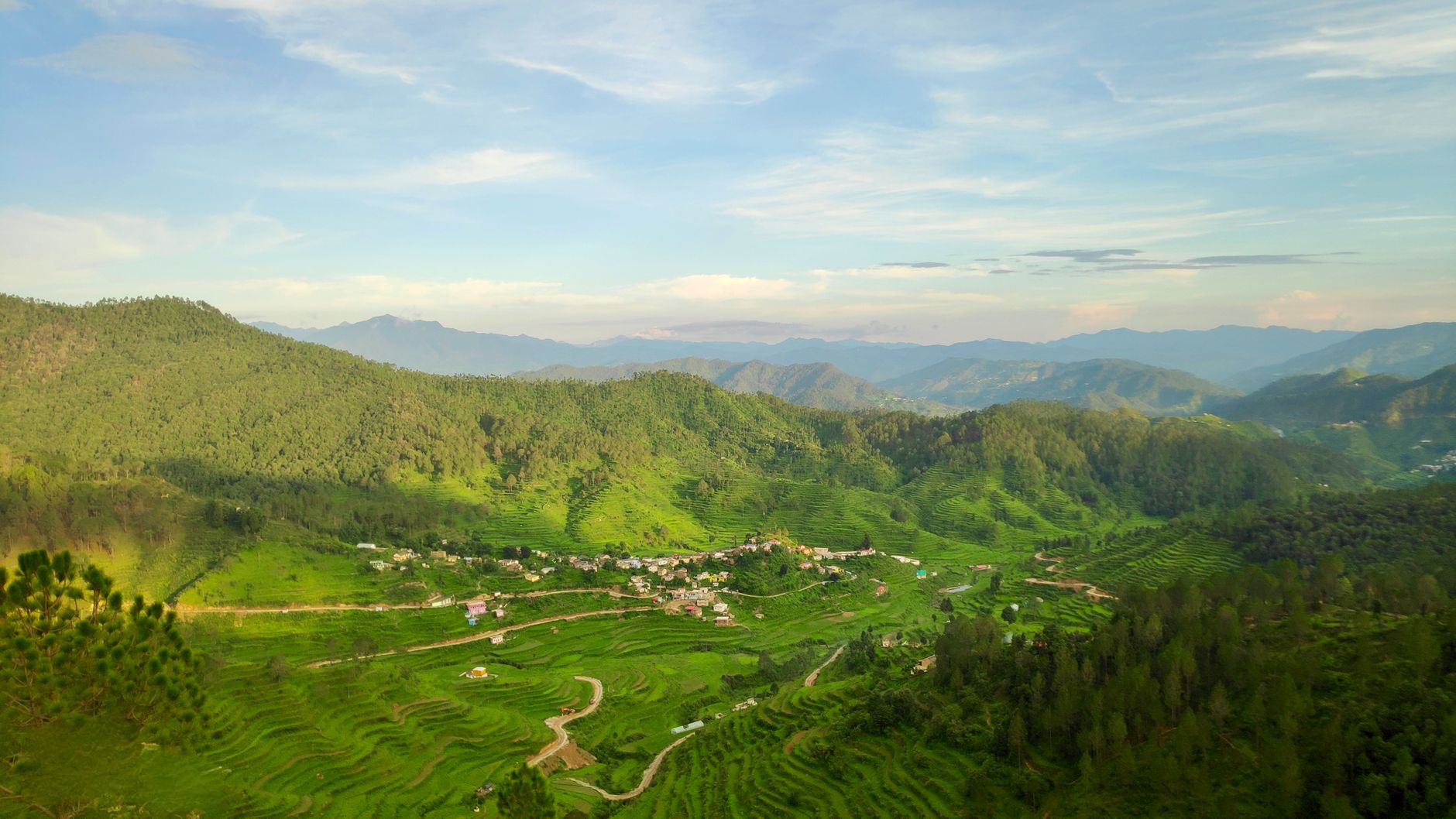
The world has traded boardrooms for boardwalks. Recent data confirms a massive shift toward the great outdoors. This definitive guide breaks down the "Green Rush," highlighting the destinations, data, and insider secrets you need to navigate the wilder side of travel in a post-pandemic world.
The Great Reconnection: Why We’re Trading Skyscrapers for Sequoias
I stepped off the local train in the Julian Alps, and the first thing that hit me wasn't the view—it was the smell. It was the scent of damp limestone, wild cyclamen, and air so crisp it felt like drinking a glass of ice water. After two years of staring at the flickering blue light of a Zoom screen, my lungs didn't quite know what to do with oxygen this pure. I wasn't alone. On that small platform in Slovenia, there were hikers from Tokyo, solo travelers from New York, and families from Berlin, all clutching trekking poles like holy relics.
This wasn't just a vacation; it was a pilgrimage. And according to the latest industry metrics, it’s a global phenomenon.
1. The Hard Data: Nature Tourism Booming Post-Pandemic According to Recent Data
Let’s look at the numbers, because they don't lie. According to the World Tourism Organization (UNWTO), interest in rural and nature-based tourism has surged by over 40% compared to 2019 levels. A recent Tripadvisor sentiment report noted that "proximity to nature" is now the number one filter used by travelers aged 25–45.
But why now? The "Great Disconnect" of 2020-2022 created a psychological deficit. We realized that the "concrete jungle" was a gilded cage. Data from Google Search Trends shows that queries for "remote cabins" and "national park permits" have hit all-time highs in 2023 and 2024. We aren't just looking for a tan anymore; we’re looking for a nervous system reset.
Pro-Tip: If you're eyeing a popular US National Park like Zion or Yosemite, the "data-backed" way to secure a spot is to use the Recreation.gov app’s "released-daily" window at exactly 7:00 AM MST. The bots are fast, but a refreshed browser and a pre-saved credit card are faster.
2. Beyond "Eco-Friendly": The Rise of Regenerative Travel
The buzzword used to be "sustainability"—doing no harm. But the post-pandemic traveler is more ambitious. We’ve entered the era of Regenerative Travel. This means leaving a place better than you found it.
In places like the Azores, tourism boards are now incentivizing travelers to participate in "voluntourism" activities, such as clearing invasive ginger plants to save the endemic laurel forests. It’s no longer enough to just "take only pictures"; the new elite traveler wants to plant a tree, track a rhino with a ranger, or fund a local school.
Insider Language: Don't call it a "tour." Call it an "Impact Experience." When you're in the Highlands of Scotland, look for "Rewilding Estates" rather than traditional hotels. You’ll find yourself sleeping in a carbon-negative cabin made of local larch wood, eating venison culled to protect young saplings.
3. The "Second-City" Nature Strategy
With nature tourism booming, the "greats" (think Yellowstone, Banff, or the Swiss Alps) are becoming victims of their own success. Smart travelers are pivoting to "Second-City" nature destinations—places with the same geological jaw-drop but half the crowds.
- Instead of the Swiss Alps: Try the Accursed Mountains (Prokletije) in Albania and Montenegro. The peaks are just as jagged, the hospitality is fiercer, and the "Peaks of the Balkans" trail offers a raw, unfiltered mountain experience that feels like Europe 50 years ago.
- Instead of Bali: Head to Sumba, Indonesia. It’s twice the size of Bali with a fraction of the tourists, featuring wild sandalwood horses galloping across white-sand beaches.
Pro-Tip: When visiting Albania’s Theth National Park, don't stay in the modern hotels at the valley entrance. Walk 20 minutes further to the "Kulla" (stone lock-in towers) converted into guesthouses. Ask for the homemade flija (layered pancake)—it’s cooked over open coals and tastes like woodsmoke and honey.
4. The Digital Nomad in the Wild: Work-from-Woods (WFW)
The pandemic proved we can work from anywhere. Now, "anywhere" is a yurt in Mongolia or a treehouse in Costa Rica. Recent data from MBO Partners indicates that the number of digital nomads has increased by 131% since 2019.
This has birthed the "High-Tech/Low-Touch" accommodation. Properties are now being judged not by their thread count, but by their Starlink speeds and the ergonomic quality of their outdoor desks.
Logistics Check: If you're planning a WFW stint in the jungle, your biggest enemy isn't a jaguar—it's humidity.
- The Gear: Invest in a silica-gel-lined dry bag for your MacBook.
- The Secret: In the tropics, the best Wi-Fi is often found in local "Co-working Cafes" rather than private Airbnbs. In Santa Teresa, Costa Rica, look for the spots that have their own backup generators.
5. Wilderness Therapy and the "Quiet Parks" Movement
As the world gets louder, "Silence" is becoming the ultimate luxury. There is a growing movement called Quiet Parks International, which certifies locations with no man-made noise pollution.
According to recent data, "Silence retreats" and "Dark Sky" tourism (traveling specifically to see the Milky Way) are the fastest-growing niches in the nature sector. I recently spent three days in the Boundary Waters of Minnesota, where the only sound was the rhythmic thwack of a paddle hitting the water and the eerie, haunting tremolo of a loon. By day two, my resting heart rate had dropped by 10 beats per minute.
Pro-Tip: To find the best Dark Sky spots, use the Light Pollution Map (lightpollutionmap.info). Aim for "Bortle Class 1 or 2" zones. If you’re in the US, the Big Bend National Park in Texas offers some of the darkest skies on the planet. Bring a red-light headlamp to preserve your night vision; white light is a rookie mistake.
6. Quick Facts: Logistics & Budgeting for the Nature Boom
Navigating this new landscape requires a bit more planning than the "fly and wing it" days of 2018.
| Category | Budget (Low) | Mid-Range | Luxury/Elite | | :--- | :--- | :--- | :--- | | Accommodation | Dispersed Camping / Hostels ($0 - $40/nt) | Glamping Pods / Eco-Lodges ($150 - $350/nt) | Private Wilderness Estates ($1,000+/nt) | | Transport | Public Transit / Bus ($10 - $50) | Rental Car / Campervan ($80 - $200/day) | Private Bush Planes / Heli-transfers ($500+) | | Best Time | Shoulder Season (May/Sept) | Summer Peak (July/Aug) | Year-round (Boutique micro-climates) | | Key Gear | Decathlon Basics | Patagonia / Arc'teryx | Custom-fitted technical gear |
How to get there: The boom has led to new "Nature Express" routes. Airlines like United and Delta have added direct flights to smaller hubs like Bozeman (MT) and Jackson Hole (WY). In Europe, the Nightjet sleeper trains are expanding, allowing you to fall asleep in Vienna and wake up at the foot of the Dolomites.
7. The Ethical Dilemma: How to Not "Love Nature to Death"
With nature tourism booming post-pandemic according to recent data, we face a paradox: our desire to escape the crowds is creating new crowds. Social media "geo-tagging" has decimated fragile ecosystems like the poppy fields of California or the mossy canyons of Iceland.
The Insider Code of Conduct:
- Stop Geo-tagging Specific Coordinates: Tag the general region (e.g., "Iceland" or "Southern Highlands") rather than the exact GPS pin of a hidden waterfall. Let others earn the view.
- The "Blue Door" Rule: In many rural villages, the most authentic experiences aren't on Google Maps. In the Atlas Mountains of Morocco, the "hidden entrance" to the best communal bakery is literally just a blue door with no sign. Ask a local "Where is the bread born?" and follow your nose.
- Pack it Out (And Then Some): Carry a spare bag. If you see a plastic bottle on a trail in Patagonia, pick it up. This is the "Regenerative" mindset in action.
Final Thoughts: The Wild is Calling, and We’re Finally Answering
The pandemic was a hard reset. It stripped away the fluff and left us with a primal urge to see the sun set over a horizon that isn't made of glass and steel. Nature tourism isn't just a "trend"; it's a return to form.
Whether you’re trekking the O-Circuit in Torres del Paine or just finding a quiet corner of your local state park, remember: the wild doesn't need us, but we desperately need the wild. So, pack your boots, download your offline maps, and go. The trees have been waiting.
More pictures



Tags
Share this guide
We may earn a commission if you click a link and buy a product or service, at no extra cost to you. How affiliate links work.
Been there?