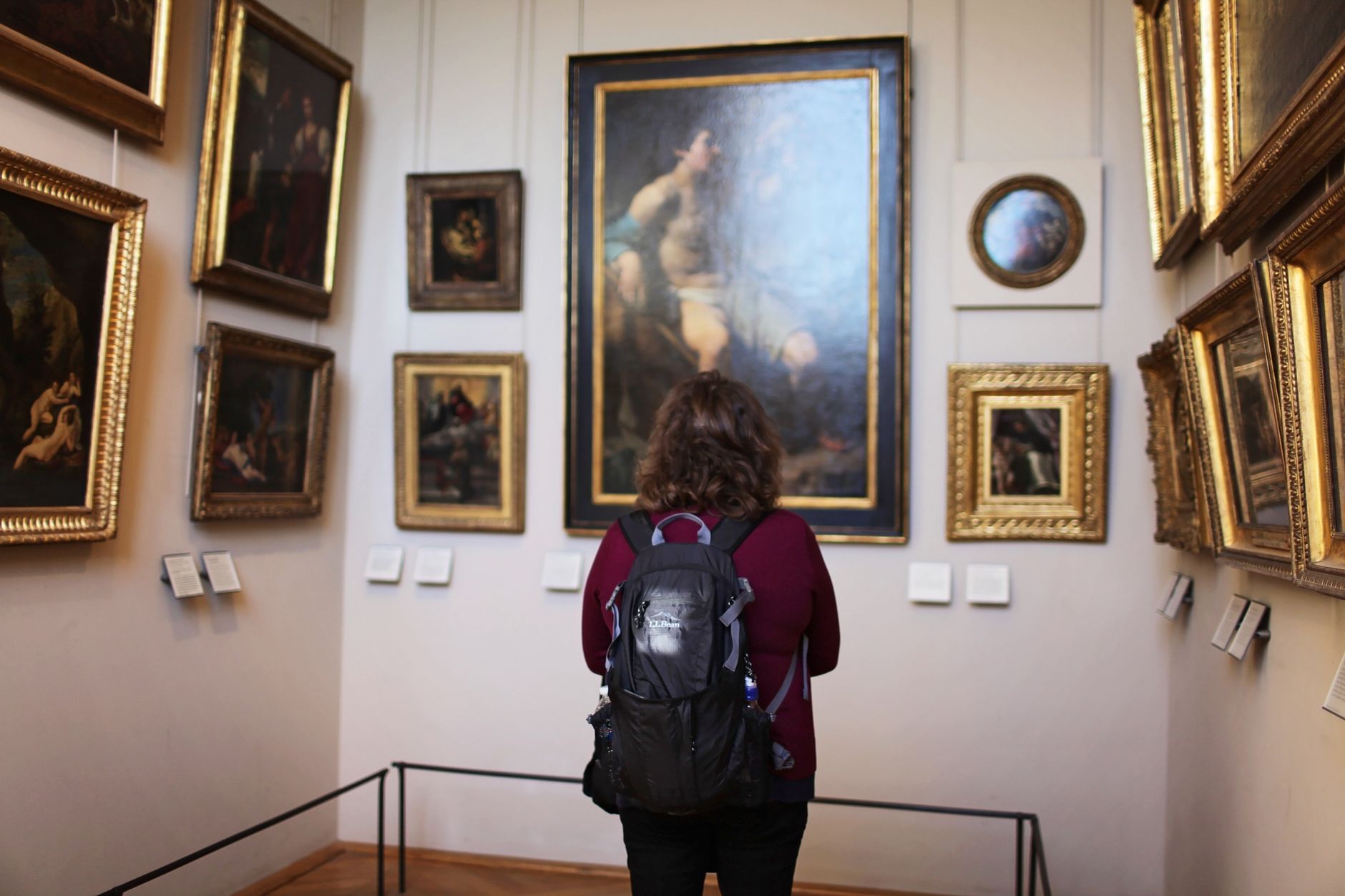
Tired of squinting at the Mona Lisa through a sea of selfie sticks? We’ve rounded up 6 world-class museums across Europe that offer breathtaking art, jaw-dropping architecture, and absolutely zero soul-crushing lines. From secret Parisian townhouses to Vienna’s imperial palaces, this is your ultimate guide to crowd-free cultural immersion. ---
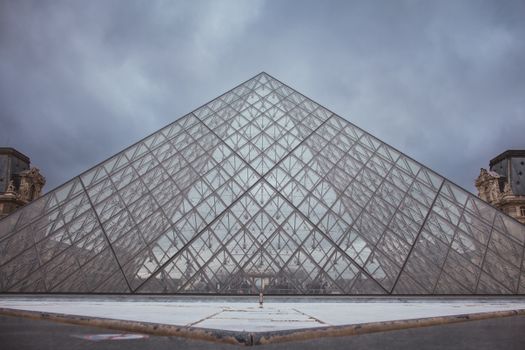
I stood in the freezing drizzle on the Rue de Rivoli, watching a security queue wrap around the Louvre’s glass pyramid like a miserable, wet snake. The air smelled of damp wool, diesel exhaust, and the collective frustration of three thousand tourists who had spent €22 each just to stand shoulder-to-shoulder in front of a bulletproof glass case, squinting at a 30-inch portrait of Lisa Gherardini.
I stepped out of that line. I walked twenty minutes north, ducked through a quiet stone archway, and found myself in a room that smelled of aged oak, beeswax polish, and quiet history. I was entirely alone with a masterpiece. No selfie sticks, no screaming tour groups, no security guards barking "keep moving."
As a travel journalist, I’ve spent a decade seeking out these quiet sanctuaries. The truth is, the world’s mega-museums are suffering from their own success. But you don't have to suffer with them. If you want to actually feel something when you look at art, skip the blockbusters and head to these six incredible, line-free alternatives instead.
---
1. Musée Gustave Moreau (Paris, France)
The Ultimate Parisian Jewel Box
``` _________________________________________________ | PRO-TIP: The spiral staircase is on the third | | floor. Walk up slowly; the creak of the wood | | is the only sound you'll hear in the afternoon.| |_________________________________________________| ```
If you want to experience art in Paris without the claustrophobia of the Louvre, head straight to the 9th arrondissement. This was the home and studio of Symbolist painter Gustave Moreau, left exactly as it was when he died in 1898.
The first two floors are a charming, cramped apartment filled with personal memorabilia, but the real magic happens when you ascend to the third and fourth floors. Here, Moreau designed massive, double-height workshops with towering windows that flood the rooms with soft, northern light.
Inside the Artist's Mind
The walls are literally tiled with paintings—massive, dramatic canvases depicting mythological scenes, shimmering with gold leaf and moody, jewel-toned oils. But the architectural showstopper is the magnificent, cast-iron spiral staircase that connects the two studio floors. It looks like a ribbon of black lace suspended in mid-air.
- The Vibe: A bohemian time capsule of late 19th-century Paris.
- Insider Secret: Look for the custom-built wooden cabinets lining the walls. Draw open the heavy, hinged frames to reveal thousands of Moreau’s private watercolor sketches and drawings. It feels like reading someone’s diary.
---
2. The Wallace Collection (London, UK)
Rococo Splendor and Secret Armourries in Marylebone
While tourists choke the halls of the British Museum, smart travelers head to Manchester Square. The Wallace Collection is housed in Hertford House, a grand 18th-century townhouse that feels more like a private palace than a public institution.
``` _________________________________________________ | PRO-TIP: Entry is 100% free. No ticket required.| | Walk in, head to the Back State Room, and look | | for Fragonard's "The Swing." | |_________________________________________________| ```
The collection was amassed by the Marquesses of Hertford and Sir Richard Wallace, who had the exquisite taste (and astronomical wealth) to acquire some of the finest French Rococo art, Renaissance majolica, and medieval armor in existence.
A Feast for the Senses
Walk through the Silk Drawing Rooms, where the walls are upholstered in gold and crimson damask. You can stand inches away from Jean-Honoré Fragonard’s The Swing—the absolute pinnacle of Rococo playfulness—without a single barrier or crowd barrier in your way.
Then, wander into the glazed courtyard restaurant for a lavender scone and a pot of Earl Grey. It’s an oasis of calm right in the center of London.
---
3. Museo Nazionale del Bargello (Florence, Italy)
Michelangelo and Donatello Without the Accademia Queues
Everyone goes to Florence to see Michelangelo’s marble David at the Accademia, resulting in four-hour lines and a room that feels like a subway platform at rush hour.
Instead, walk ten minutes over to the Bargello. Housed in a menacing, castellated medieval fortress that once served as a prison and execution site, this museum holds a collection of Renaissance sculpture that easily rivals the Uffizi.
``` _________________________________________________ | PRO-TIP: Buy your ticket at the door. There is | | almost never a line, even in July. | |_________________________________________________| ```
Standing in the Shadow of Geniuses
In the high-ceilinged stone halls, you will find:
- Michelangelo’s early masterpiece, Bacchus (depicting the god of wine in a state of tipsy grace).
- Donatello’s bronze David—the cheeky, controversial, and deeply sensual sculpture that predates Michelangelo's version by decades.
- The original bronze panels submitted by Brunelleschi and Ghiberti for the famous Baptistery door competition of 1401.
The courtyard, decorated with the stone coats of arms of medieval city magistrates, is one of the most atmospheric, quiet spots in all of Tuscany.
---
4. Kunsthistorisches Museum (Vienna, Austria)
Imperial Grandeur and Bruegel Masterpieces
Built by Emperor Franz Joseph to house the formidable art collection of the Habsburg dynasty, the Kunsthistorisches Museum is an architectural marvel. The grand staircase alone, featuring early frescoes by Gustav Klimt, is worth the price of admission.
``` _________________________________________________ | PRO-TIP: Visit on a Thursday evening. The | | museum stays open late, and you can book a | | gourmet dinner inside the palatial dome hall. | |_________________________________________________| ```
While the Louvre’s Grand Gallery is a battleground of tour groups, the Picture Gallery here is a temple of quiet contemplation. It houses the world’s largest collection of works by Pieter Bruegel the Elder, including The Tower of Babel and The Hunters in the Snow.
The Velvet Couch Test
The museum is designed for slow looking. Generously padded, deep-red velvet sofas are positioned in the center of every room. You can sit for an hour, undisturbed, staring directly into the dark, dramatic depths of Caravaggio’s David with the Head of Goliath.
---
5. Ny Carlsberg Glyptotek (Copenhagen, Denmark)
Palm Trees, Picassos, and Ancient Marbles
Founded by Carl Jacobsen, the visionary magnate behind the Carlsberg brewery, the Glyptotek is a stunning fusion of art, architecture, and nature.
``` _________________________________________________ | PRO-TIP: Go on a Tuesday morning. The soft | | Scandinavian light filtering through the glass | | dome makes the marble sculptures look alive. | |_________________________________________________| ```
The heart of the museum is a massive, subtropical Winter Garden. Towering palm trees, lush ferns, and a central pool of waterlilies sit beneath a soaring glass and cast-iron dome. It is the ultimate antidote to Copenhagen’s chilly winter days.
Where Antiquity Meets Impressionism
Branching off from the garden are wings dedicated to:
- Ancient Sculpture: An unparalleled collection of Greek, Roman, and Egyptian marble busts, arranged in minimalist, color-blocked rooms of terracotta, deep blue, and olive green.
- French Modernism: A spectacular collection of Rodin bronzes, Degas dancers, and masterpieces by Picasso and Gauguin.
It is a museum designed for well-being, where the space between the artworks is just as beautiful as the art itself.
---
6. The Courtauld Gallery (London, UK)
The Impressionist Holy Grail Hidden in Somerset House
If you love French Impressionism but dread the chaotic crowds of Paris's Musée d'Orsay, the Courtauld Gallery is your salvation. Located within the neoclassical grandeur of Somerset House, this boutique museum recently underwent a multi-million-pound restoration.
``` _________________________________________________ | PRO-TIP: Book the last entry slot of the day. | | You will often get the LVMH Great Room entirely| | to yourself. | |_________________________________________________| ```
The collection is small but jaw-droppingly elite. There is no filler here; almost every single canvas is a textbook masterpiece.
The Hall of Icons
In the newly restored LVMH Great Room, you can stand face-to-face with:
- Édouard Manet’s A Bar at the Folies-Bergère (study the melancholy eyes of the barmaid and the shimmering reflection in the mirror).
- Vincent van Gogh’s Self-Portrait with Bandaged Ear.
- Georges Seurat’s pointillist masterpiece, The Bridge at Courbevoie.
It offers an intimate, respectful encounter with genius that the larger national galleries simply can no longer provide.
---
Quick Facts & Logistics
| Museum | Location | Cost (€/£/DKK) | Best Time to Visit | How to Get There | | :--- | :--- | :--- | :--- | :--- | | Musée Gustave Moreau | Paris, France | €10 | Wed Afternoon (2 PM) | Metro: Saint-Georges (Line 12) | | The Wallace Collection | London, UK | Free | Weekday mornings | Tube: Bond Street | | Bargello Museum | Florence, Italy | €11 | 2 PM (Post-lunch lull) | 5-min walk from Piazza della Signoria | | Kunsthistorisches Museum | Vienna, Austria | €21 | Thursday Evening (6 PM) | U-Bahn: Volkstheater (U3) | | Ny Carlsberg Glyptotek | Copenhagen, Denmark | 125 DKK (~€16) | Tuesday Morning | 5-min walk from Central Station | | The Courtauld Gallery | London, UK | £10-14 | Last entry slot (4:30 PM) | Tube: Temple or Covent Garden |
---
The Verdict: Why We Need to Travel Differently
Art was never meant to be consumed at a sprint while peering over the shoulder of a stranger. It was meant to be a conversation.
The next time you plan a trip to a cultural capital, resist the urge to tick the "big box" museums off your bucket list just because an algorithm told you to. Seek out the small, the quiet, and the beautifully preserved. Your soul—and your feet—will thank you.
---
More pictures



Tags
Share this guide
We may earn a commission if you click a link and buy a product or service, at no extra cost to you. How affiliate links work.
Been there?