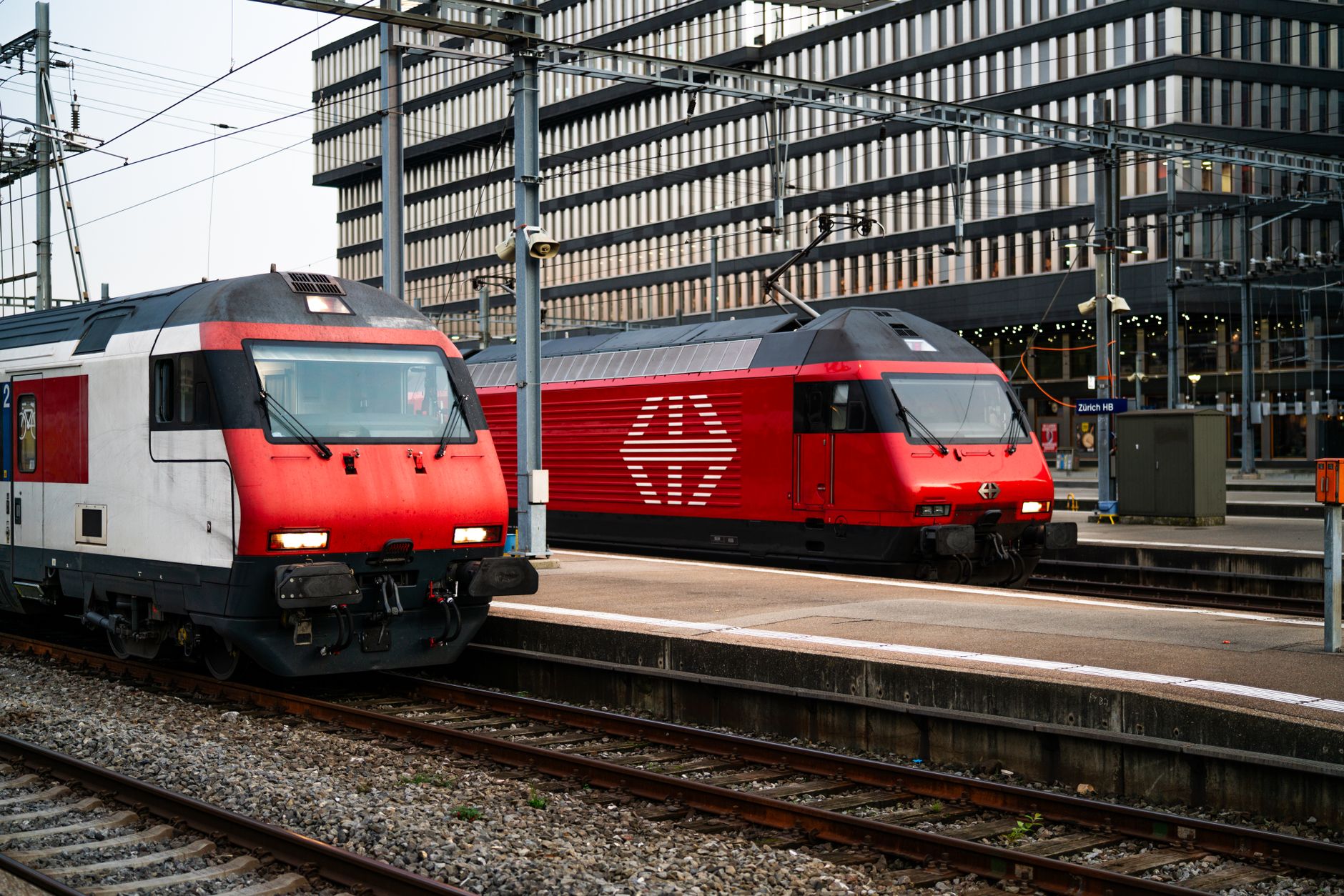
Ditch the soul-crushing airport security lines and baggage drop fees. Europe is undergoing an unprecedented Rail Renaissance: new sleeper networks, direct cross-border high-speed routes, and fierce budget competition make flightless travel faster, cheaper, and infinitely more romantic. This is your definitive, field-tested blueprint to conquering the continent entirely on tracks this year. ---
The Morning the Sky Turned Pink Over the Tyrolean Alps
I woke up at 6:15 AM to the gentle, rhythmic clack-clack of continuous welded rail beneath my berth. Pushing aside the heavy velvet curtain of my private Mini-Cabin on the ÖBB Nightjet, the world outside was a gallery of slate-grey peaks dusted in fresh powder, framed by the rose-gold blush of dawn over the Tyrolean Alps.
Ten minutes later, the attendant knocked softly, handing me a porcelain cup of steaming dark roast Meinl coffee, a warm Kaiser roll, and a sliver of alpine butter. No metal detectors. No TSA agents shouting about shoe removal. No sitting on dirty airport carpets near overloaded power strips. I had boarded in the heart of Amsterdam the previous evening at 7:30 PM, dined on fresh stroopwafels while watching the Rhine valley slip past, slept in a crisp, climate-controlled cabin, and was now pulling directly into Innsbruck Hauptbahnhof—refreshed, showered, and entirely on schedule.
Europe’s rail network isn't just back; it’s aggressively displacing air travel. Driven by deregulation, massive infrastructure investments, and a collective surge in conscious travel, moving across the continent by train has hit a golden era. Here is everything you need to know to navigate this new landscape effortlessly.
---
1. The Rail Renaissance: Why Flying Europe is Formally Outdated
For two decades, budget airlines duped us into believing $20 flights were a bargain. But when you factor in $60 airport transfer taxis, $80 checked bag fees, terminal security queues that eat three hours of your life, and the depressing suburban transit centers located 45 miles outside your actual target destination, the air-travel illusion crumbles.
``` FLIGHT REALITY: Hotel -> Taxi -> Outlying Airport -> 2hr Security -> Gate Wait -> Flight -> Luggage Carousel -> Taxi -> City Center TOTAL TIME: 7.5 Hours | STRESS LEVEL: Extreme | CARBON FOOTPRINT: High
RAIL REALITY: City-Center Hotel -> Walk to Station -> Board Train -> Work/Sleep/Eat -> Step off in City Center TOTAL TIME: 4.5 Hours | STRESS LEVEL: Zero | CARBON FOOTPRINT: -85% ```
The European Union’s Fourth Railway Package opened rail corridors to open-access private operators, sparking fierce price wars and service upgrades. In Spain, operator competition between Iryo, Ouigo, and RENFE dropped ticket prices on high-speed lines by up to 40%. In Italy, the rivalry between state-owned Trenitalia and private operator Italo transformed bullet train travel into a luxury-tier experience with four distinct service classes.
---
2. The Emerging Sleepers & High-Speed Corridors to Ride Now
If you haven't taken an international train in Europe over the past 12 months, the map looks radically different today.
The European Sleeper ("The Good Night Train")
This Belgian-Dutch cooperative has resurrected night rail with flair. You can now board in Brussels or Amsterdam in the early evening, drift asleep through Germany, and wake up as the train snakes alongside the sandstone canyons of Saxon Switzerland, arriving in Prague by breakfast.
- Insider Tip: Book the Deluxe Single Compartment with private washbasin. Request berth 31 or 35 for the quietest ride away from the bogies (wheels).
ÖBB Nightjet "New Generation"
Austrian Federal Railways (ÖBB) invested over €700 million in custom-built Siemens trains that look like sleek sci-fi hotels. Featuring cozy, lockable single-occupancy Mini-Cabins equipped with wireless phone chargers, integrated luggage lockers, and ambient mood lighting, these rolling hotels run on key cross-border arteries like Vienna–Hamburg and Munich–Rome.
The High-Speed Cross-Border Champions
- Paris to Berlin Direct (ICE/TGV): A brand-new daytime direct connection linking two of Europe's greatest capitals in under 8 hours on high-speed tracks, bypassing all transfer friction at Frankfurt or Mannheim.
- Madrid to Barcelona (Iryo): Covering 300+ miles in just 2 hours and 30 minutes at speeds of 190 mph (310 km/h) inside ultra-quiet Frecciarossa 1000 trainsets.
---
3. The Booking Matrix: How to Beat the System and Save Hundreds
Booking train tickets in Europe can feel like solving a rubik's cube designed by bureaucrats. Here is how you untangle it.
The "Origin Railway Agency" Price Discrepancy Secret
Because of international rail agreements, multiple national operators often sell tickets for the exact same train. However, their pricing algorithms vary wildly.
> Case Study: A ticket on the EuroCity train running from Prague to Berlin is sold by both Germany's Deutsche Bahn (`bahn.com`) and the Czech Railway Authority (`cd.cz`). > Purchasing on `bahn.com`: €89.00 > Purchasing the identical seat on `cd.cz`: 925 CZK (~€37.00)
Rule of Thumb: Always cross-reference your ticket purchase on the official website of the country where the train originates or terminates, particularly in Central and Eastern Europe.
Eurail Pass vs. Point-to-Point Tickets
Do not blindly buy a Eurail Pass. Use this decision engine:
``` [Are you traveling in Germany, Switzerland, Austria, or Great Britain?] / \ YES NO (France, Italy, Spain) / \ [Eurail Pass is King] [Point-to-Point is Better] Passes cover almost all trains without Mandatory, costly seat reservation fees mandatory seat reservations. Just hop on! (€10–€30 per leg) erase pass savings. ```
---
4. Onboard Masterclass: Etiquette, Dining, and Luggage Protocols
Mastering Onboard Dining
Skip the pre-packed plastic sandwiches at the station kiosk; Europe's dining cars (Speisewagen) are experience destinations in their own right.
- ÖBB Railjet (Austria): Offers freshly fried Wiener Schnitzel served on real porcelain plates, paired with cold glass bottles of Almdudler herb soda.
- SBB EuroCity (Switzerland): Enjoy local Swiss Gruyère cheese platters and crisp Valais white wines while flying past Lake Geneva.
- DB ICE (Germany): Draft Bitburger beer served directly to your seat in First Class, or at standing bistro tables in the restaurant car.
Luggage Strategies
Unlike airlines, trains have no weight limits or liquid restrictions. Bring your full-sized local olive oils and wine bottles right aboard.
- Where to place bags: Store small to medium suitcases on the overhead racks above your seat. Place oversized hard-shell luggage in the floor racks situated at the ends or mid-sections of the coach.
- Security Secret: Keep your high-value gear (laptops, cameras, passports) in a small pack at your feet. On overnight trains, loop your bag strap around your arm or leg while sleeping.
---
5. The Ultimate 14-Day "New Europe" Rail Itinerary
This seamless circuit captures the best of high-speed efficiency, scenic lines, and luxury night trains without a single commercial flight.
``` [London] --(Eurostar)--> [Brussels] --(Nightjet/European Sleeper)--> [Berlin] | (EC Train) v [Paris] <-- (TGV Lyria) -- [Zurich] <-- (Nightjet) -- [Venice] <-- [Prague] ```
Leg 1: London St Pancras to Brussels Midi (Eurostar)
- Duration: 2 hours 01 minute
- Highlight: Zooming through the Channel Tunnel at high speed. Enjoy breakfast while crossing northern France.
Leg 2: Brussels to Berlin Hauptbahnhof (European Sleeper)
- Duration: Overnight (Departure ~7:20 PM, Arrival ~6:15 AM)
- Highlight: Board in Belgium, enjoy drinks in the lounge, and wake up in Germany's capital city center.
Leg 3: Berlin to Prague Hlavní Nádraží (ČD EuroCity)
- Duration: 4 hours 30 minutes
- Highlight: The Elbe Valley Railway section. Sit on the left side of the train direction of travel between Dresden and Decin for spectacular views of riverside cliffs and medieval castle ruins.
Leg 4: Prague to Venice Santa Lucia (ÖBB Nightjet)
- Duration: Overnight
- Highlight: Waking up as the train crosses the Venetian Lagoon causeway, pulling directly up to the edge of the Grand Canal.
Leg 5: Venice to Zurich Hauptbahnhof (SBB Giruno)
- Duration: 6 hours
- Highlight: Traversing the Gotthard Base Tunnel—the longest railway tunnel in the world—and gliding along the pristine shores of Lake Lucerne.
Leg 6: Zurich to Paris Gare de Lyon (TGV Lyria)
- Duration: 4 hours 04 minutes
- Highlight: Speeding across the French countryside at 200 mph (320 km/h) while sampling gourmet regional dishes created by Michelin-starred chefs.
---
Quick Logistics & Budget Breakdown
| Parameter | Budget / Economy | Mid-Range / Standard | Luxury / First Class | | :--- | :--- | :--- | :--- | | Daily Rail Transport Cost | €25 – €45 (Advance Point-to-Point) | €50 – €85 (Eurail Flexi Pass) | €110 – €220 (1st Class + Private Sleeper) | | Best Booking Window | 90 to 180 days in advance | 30 to 60 days in advance | 60 to 120 days in advance | | Essential Digital Apps | DB Navigator, Rail Planner | DB Navigator, Seat61, Trainline | DB Navigator, ÖBB Nightjet App | | Best Time of Year | May–June or Sept–Oct (Milder weather, fewer crowds) | May–June or Sept–Oct | May–June or Sept–Oct |
---
Local Station Secrets & Pro-Tips
- The 7 AM Station Rule: Large central stations like Frankfurt Hbf or Milano Centrale get chaotic by midday. If you have tight transfers, schedule your connections for early morning hours when platforms are clear and trains run with maximum punctual precision.
- Cross-Platform Transfers (Am selben Bahnsteig): German and Swiss railways design major interchange stations (like Mannheim or Zurich) so connecting high-speed trains arrive simultaneously on opposite sides of the same platform. You simply step off one train, walk 10 feet sideways, and step directly onto your connecting train.
- Find the "Wagenstandsanzeiger": These are physical or digital train composition diagrams located on station platforms. Look at your ticket for your car number (e.g., Wagen 24), check the chart for platform sector (A, B, C, or D), and wait right at that exact platform marker to eliminate last-minute luggage sprints.
Stepping off a train directly into the heart of a vibrant new city with your luggage in hand, zero jet lag, and a fresh coffee isn't just a nostalgic way to explore—it is unequivocally the smartest, most exhilarating way to see Europe today.
---
More pictures


Tags
Share this guide
We may earn a commission if you click a link and buy a product or service, at no extra cost to you. How affiliate links work.
Been there?